The article makes a point I had not considered before, that Jaafar was the right fit for the specific film this production was always going to be. A different director or a different mandate might have needed a different actor.
21
Sign up to see more
SignupAlready a member?
LoginBy continuing, you agree to Sociomix's Terms of Service, Privacy Policy
The article makes a point I had not considered before, that Jaafar was the right fit for the specific film this production was always going to be. A different director or a different mandate might have needed a different actor.
The scene I keep seeing clips of where Jaafar teaches the gang members the Beat It choreography looks genuinely electric. That specific moment is apparently one of the most praised sequences in the whole film.
Three months into this approach and my afternoon energy crash is completely gone. That was the thing that made me realize something was actually working, because I had written off afternoon energy as just how I was.
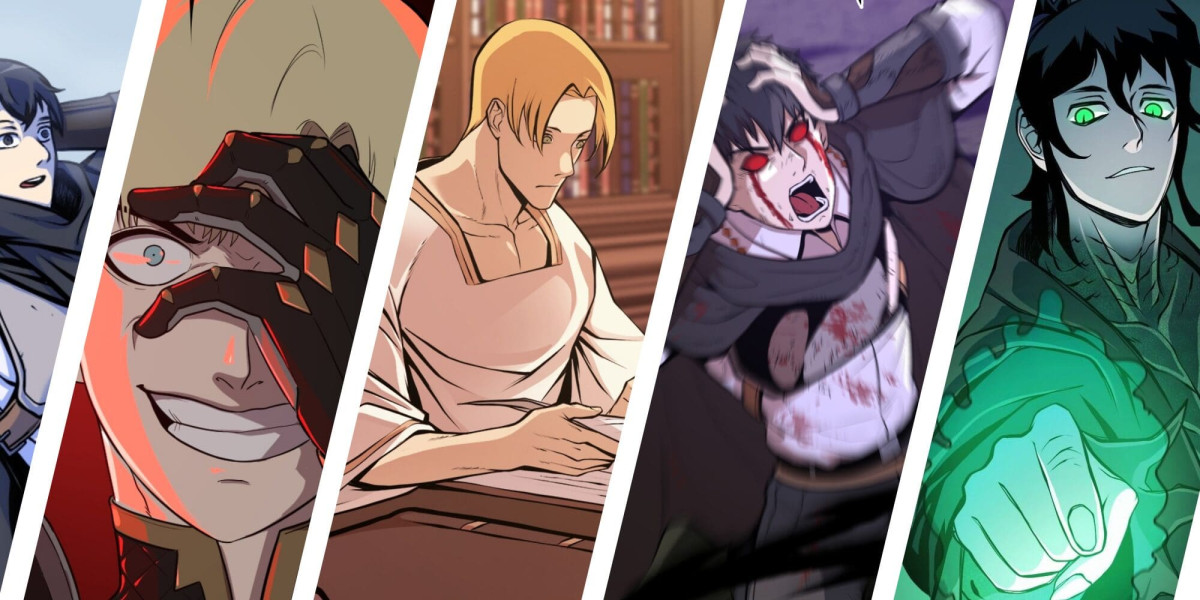
In a medium filled with talented artists producing stunning work, making a claim about any series having the "best" art feels bold. Yet Nano Machine consistently delivers combat sequences so fluid, detailed, and visually innovative that even readers who don't typically care about martial arts stories find themselves captivated by the sheer spectacle on display. The series combines traditional murim aesthetics with futuristic sci-fi elements, creating a unique visual identity that stands apart from typical cultivation manhwa. The nano machine implanted in protagonist Cheon Yeo-Woon's body doesn't just give him power. It becomes a storytelling device that allows the artist to visualize techniques, energy flows, and combat analysis in ways other series can't replicate.

Suho's self-doubt arc in the early chapters hit harder than expected. The idea of growing up knowing your father is essentially a god and then having to prove yourself worthy of even a fraction of that is genuinely compelling.
The year 2026 marks a pivotal moment in the evolution of manhwa as a medium. What started as a trickle of Korean comics receiving anime adaptations has become a flood, with at least fifteen confirmed projects bringing beloved manhwa to animated life. This explosive growth wasn't accidental but the inevitable result of Solo Leveling's massive success proving that manhwa adaptations can compete with traditional manga anime in quality, popularity, and profitability. Studios across Japan and Korea are investing heavily in manhwa properties, recognizing that Korean storytelling brings fresh perspectives, innovative premises, and built-in fanbases eager to see their favorite series animated. The diversity of genres receiving adaptations demonstrates that manhwa appeal extends far beyond action and fantasy into romance, psychological thriller, sports, and slice-of-life territories.
The bed attendant role is such an elegant trap. He goes from trying to avoid all contact with Arzen to sleeping in his chambers. The universe is not even subtle about conspiring against him.
The point about network effects and Runway's ecosystem is real. The community of creators sharing Gen-4.5 specific prompting techniques, motion brush presets, and camera control sequences creates compound value that raw benchmark scores do not capture.
Hot take: the developer community gatekeeping around tools like Bolt is less about code quality concerns and more about professional identity anxiety. Which is understandable but should be named for what it is.
Still skeptical that apps built by non-technical people through natural language prompts will hold up when user behavior gets weird, traffic spikes unexpectedly, or a dependency has a security update. The brittleness question is not answered by showing demos.
My developer friends who are resistant to this remind me of the people who resisted GitHub in 2010. The workflow feels wrong until it becomes the only workflow you can imagine. Give it eighteen months.
The artificial intelligence industry is entering a new phase of competition, one that extends far beyond the development of advanced language models and neural networks. Companies are now engaged in an intense struggle to secure the computational infrastructure necessary to train and deploy their AI systems. In this context, Anthropic has reportedly begun exploring the possibility of designing and manufacturing its own specialized processors to power Claude, its flagship conversational AI platform, along with its broader suite of artificial intelligence technologies. This strategic consideration emerges at a critical moment in the global AI sector. The exponential growth in model complexity and capability has created unprecedented demand for high-performance computing resources. Sources familiar with the matter indicate that Anthropic is conducting feasibility studies to determine whether developing proprietary semiconductor technology could reduce its dependence on external hardware vendors while ensuring reliable access to the computing power required for its operations.
The elastic waist on these shorts is genius. Finally leather pieces that are actually comfortable
This outfit is pure fire! That devil print shirt makes such a bold statement without trying too hard
Genius styling but I would probably skip the phone case and keep the roses to just one accent piece
This outfit screams effortless chic! So refreshing to see something both stylish and comfortable
Can we discuss how perfect this bag would be with literally everything in my closet? I'm trying to justify the splurge!