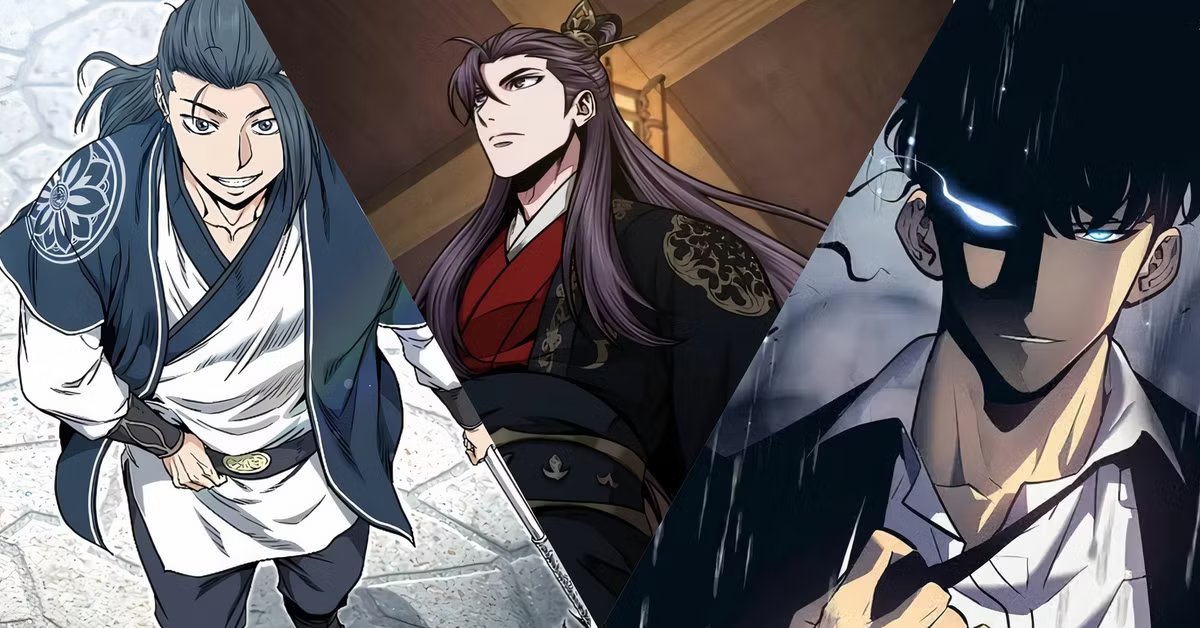
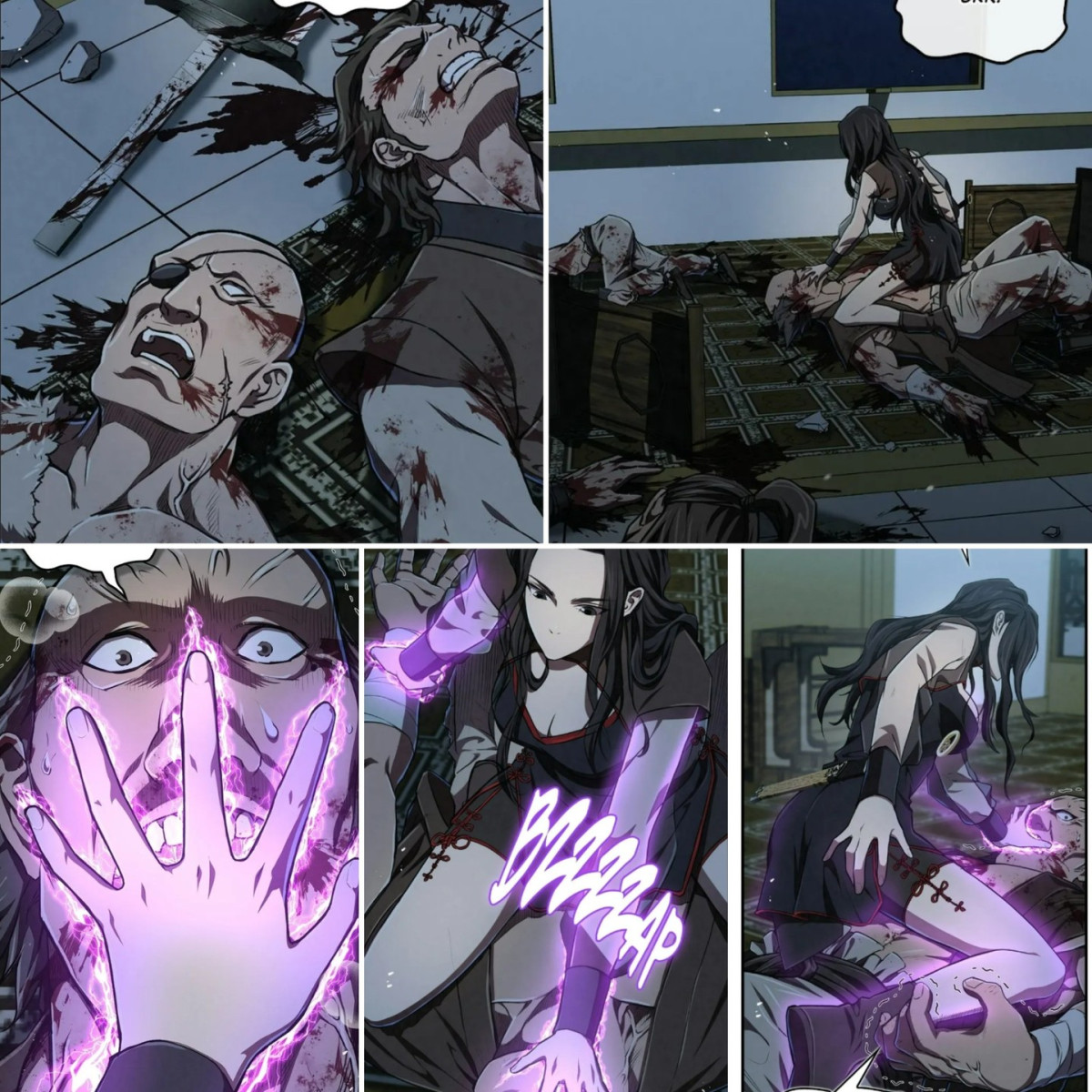
In a medium filled with talented artists producing stunning work, making a claim about any series having the "best" art feels bold. Yet Nano Machine consistently delivers combat sequences so fluid, detailed, and visually innovative that even readers who don't typically care about martial arts stories find themselves captivated by the sheer spectacle on display.
The series combines traditional murim aesthetics with futuristic sci-fi elements, creating a unique visual identity that stands apart from typical cultivation manhwa. The nano machine implanted in protagonist Cheon Yeo-Woon's body doesn't just give him power. It becomes a storytelling device that allows the artist to visualize techniques, energy flows, and combat analysis in ways other series can't replicate.
This deep dive explores what makes Nano Machine's artwork exceptional, how it elevates the story beyond its already compelling premise, and why combat scenes in this manhwa set the standard other series should aspire to match.
Understanding the Unique Visual Identity Nano Machine Created
Most murim manhwa follow established visual conventions. Flowing robes, martial arts stances, internal energy depicted as colored auras or swirling patterns. Nano Machine incorporates these traditional elements while adding a technological layer that transforms how power is visualized and understood.
The nano machine interface appears as holographic projections visible only to Cheon Yeo-Woon and readers. These displays show technique breakdowns, weak point analysis, and movement predictions during combat. This creates a visual language where ancient martial arts meet futuristic augmented reality displays.
What makes this brilliant is how it solves a common problem in martial arts stories. How do you show a protagonist learning and understanding techniques without stopping the action for lengthy explanations? The nano machine's visual interface allows real-time analysis that readers can see and understand instantly without disrupting combat flow.
The color palette distinguishes different energy types and techniques clearly. The Demonic Cult's darker, more aggressive martial arts use deep reds and purples. Orthodox faction techniques appear in brighter blues and whites. This visual coding helps readers track what's happening in chaotic multi-person battles where numerous techniques activate simultaneously.
Character designs balance realism with stylization. Bodies move with weight and momentum that feels grounded even during impossible acrobatic sequences. Facial expressions during combat show strain, determination, fear, and satisfaction in ways that make fights feel personal rather than choreographed demonstrations.
How the Artist Makes Every Fight Scene Feel Different
One challenge facing long-running action series is combat fatigue. When your protagonist fights constantly across hundreds of chapters, how do you keep battles feeling fresh and exciting? Nano Machine succeeds by ensuring no two significant fights look or feel the same.
The variety comes partly from opponent diversity. Each antagonist uses distinct martial arts styles with unique visual signatures. Fighting a poison specialist looks completely different from battling a heavy weapon user or someone who specializes in speed-based techniques. The art adapts to showcase what makes each fighting style dangerous.
Environmental interaction adds another layer of variety. Fights happen in throne rooms, forests, underground caverns, on rooftops, in narrow corridors, and open battlefields. The artist uses these settings creatively, showing how different spaces affect combat options and create strategic opportunities or limitations.
The nano machine's evolving capabilities provide fresh visual elements as the story progresses. Early fights show basic analysis and technique copying. Later battles incorporate predictive modeling, microscopic biological manipulation, and energy optimization that create increasingly complex and visually stunning displays.
Emotional context changes how fights are depicted. A duel fought for honor looks different from a desperate survival battle or a rage-fueled revenge fight. The panel composition, angle choices, and visual intensity shift to match the emotional stakes and character mental states during combat.
Breaking Down the Technical Mastery in Action Sequences
The smoothness of combat in Nano Machine comes from exceptional understanding of motion, momentum, and kinetic energy transfer. The artist clearly studies how bodies move during martial arts, how force travels through strikes, and how momentum shifts during exchanges.
Panel-to-panel continuity in action sequences is nearly flawless. You can follow exactly how a character moves from one position to another. There's no confusion about spatial relationships or sudden position changes that break believability. Each panel flows naturally into the next, creating seamless motion across static images.
The use of motion lines and speed effects enhances rather than obscures action. Some artists overuse these elements until you can't tell what's actually happening beneath the visual noise. Nano Machine employs them judiciously to emphasize specific moments while keeping the actual movements clear and readable.
Impact frames when strikes connect demonstrate perfect timing and weight. You can feel the force behind powerful blows through the visual presentation. The artist varies impact depiction based on attack type. Crushing blows, slicing cuts, piercing strikes, and energy blasts all have distinct visual languages that make them instantly recognizable.
The choreography shows genuine martial arts influence rather than random cool-looking poses. Stances have purpose, movements flow logically from one to another, and techniques demonstrate actual martial principles even when enhanced to superhuman levels through internal energy.
The Role of the Nano Machine in Creating Unique Visuals
The nano machine isn't just a plot device. It's a visual storytelling tool that allows the artist to present information and analysis in ways other series can't match. The holographic interface displays become integral to the series' visual identity.
When Cheon Yeo-Woon analyzes an opponent's technique, readers see the breakdown displayed as wireframe models showing movement patterns, energy flow diagrams, and weak point markers. This transforms learning scenes from static exposition into dynamic visual experiences that maintain reader engagement.
The predictive combat modeling creates unique tension. During difficult fights, the nano machine shows potential outcomes of different action choices. Readers see ghosted future possibilities alongside the present moment, adding layers of strategic thinking to pure physical combat.
Body enhancement visualization takes internal power systems that are usually invisible or depicted generically and makes them specific and detailed. When the nano machine optimizes Cheon Yeo-Woon's body for a technique, you see microscopic changes, energy pathway adjustments, and biological modifications happening in real-time.
The contrast between what Cheon Yeo-Woon sees through his nano machine and what other characters perceive creates interesting visual storytelling opportunities. Sometimes the art shows both perspectives, revealing information gaps and misunderstandings that drive plot developments.
Character Expression During Combat Sequences
While spectacular technique visualization impresses, what truly elevates Nano Machine's combat is how characters remain expressive and emotionally present during fights. The artist never sacrifices character for spectacle.
Facial expressions during battle reveal psychology and emotional state. You can see when a character realizes they're outmatched, when confidence shifts to desperation, when pain breaks through trained composure. These micro-expressions make fights feel like actual conflicts between people rather than action figure posing.
Body language communicates power dynamics without dialogue. The way a character stands after an exchange shows whether they're injured, confident, or uncertain. Posture reveals exhaustion, determination, or the relief of gaining an advantage. Readers understand fight momentum through visual cues alone.
The eyes receive particular attention. Even in panels showing wide-angle action, close-ups on eyes punctuate key moments. The intensity, focus, fear, or killing intent in a character's gaze often matters more than the techniques being thrown.
Villain expressions during their defeats are especially well-crafted. The artist captures the specific emotions of realizing you've lost, understanding you underestimated an opponent, or facing death with various reactions from dignity to pathetic desperation. These moments humanize antagonists even as they're being defeated.
How Internal Energy and Qi Are Visualized Distinctly
Cultivation and murim stories live or die on how they depict internal energy. Make it too subtle and readers can't follow what's happening. Make it too flashy and everything becomes visual noise. Nano Machine strikes the perfect balance through consistent, distinct energy visualization.
Different cultivation levels have different visual qualities. Basic internal energy appears as faint auras close to the body. Advanced practitioners generate more intense, vivid manifestations. Master-level energy takes on almost solid form with complex patterns and structures. This visual hierarchy lets readers gauge power levels at a glance.
Technique-specific energy patterns make individual martial arts recognizable. The Blade God's techniques generate sharp, cutting energy formations. The Poison King's arts create toxic, corrupting manifestations. Each major character's signature moves have distinctive visual identities that make battles easy to follow even with multiple participants.
Energy clashes create spectacular visual moments without descending into Dragon Ball-style beam struggles. When powerful techniques collide, the art shows the interaction and conflict between different energy types rather than generic explosion effects. You understand which technique is winning and why through visual presentation.
The nano machine's energy optimization creates unique visuals where Cheon Yeo-Woon's internal energy appears more refined and efficient than others at the same level. This subtle visual distinction reinforces his advantage without requiring explicit narration.
Environmental Destruction and Its Impact on Combat
The best action artists understand that environments aren't just backgrounds but active participants in combat. Nano Machine excels at showing how powerful techniques affect surroundings and how characters use environmental damage strategically.
Destruction feels consequential and persistent. When a technique shatters a pillar or cracks a floor, that damage remains visible in subsequent panels. The battlefield degrades throughout extended fights, creating visual progression that mirrors the escalating intensity of combat.
The scale of environmental damage communicates power levels effectively. Early-story fights might crack stone or splinter wood. Mid-story battles shatter walls and crater floors. Late-story confrontations level buildings and reshape terrain. This visual power creep feels earned rather than arbitrary.
Characters interact with damaged environments tactically. Destroyed floors create pitfalls, shattered pillars become weapons or obstacles, and environmental hazards force fighters to adapt strategies mid-combat. This creates dynamic battles that evolve beyond simple exchanges of techniques.
The artist balances spectacle with readability. Even in chaotic scenes with massive destruction, you can track character positions and understand spatial relationships. The destruction enhances rather than obscures the core action happening within it.
Comparing Nano Machine's Art to Other Top Tier Murim Manhwa
Solo Leveling set a high bar for manhwa action art with its clean, impactful style and excellent use of shadows and lighting. Nano Machine matches Solo Leveling's technical quality while adding greater complexity through its detailed martial arts choreography and nano machine interface elements.
The Return of the Crazy Demon features a more stylized, almost cartoonish art style that works brilliantly for its comedic tone. Nano Machine takes a more serious approach with realistic proportions and detailed rendering that suits its darker, more political narrative.
Volcanic Age showcases beautiful traditional murim aesthetics with flowing robes and classical martial arts depictions. Nano Machine incorporates these traditional elements while adding sci-fi components that create a unique hybrid visual identity no other series matches.
The Breaker series, particularly New Waves, influenced an entire generation of martial arts manhwa with its dynamic action and character designs. Nano Machine builds on this foundation with modern digital art techniques that allow for even more detailed and fluid combat sequences.
Legend of the Northern Blade delivers stunning atmospheric artwork with particular strength in environmental storytelling. Nano Machine's environments are equally well-crafted while also serving as more active participants in combat scenarios.
The Evolution of Art Quality Throughout the Series
Like many long-running manhwa, Nano Machine's art has evolved significantly from early chapters to current releases. This progression isn't just the artist getting better but represents deliberate refinement of the series' visual language.
Early chapters establish the core visual concepts but with simpler execution. The nano machine interface is more basic, combat is less fluid, and environmental detail is minimal. These chapters work fine but don't showcase the exceptional quality the series becomes known for.
The major leap in quality occurs around the time Cheon Yeo-Woon begins truly mastering his abilities. The art evolves alongside the protagonist, with more complex technique visualizations, more detailed combat choreography, and richer environmental rendering. This parallel evolution reinforces story progression visually.
Recent chapters display mastery of digital tools and techniques. The integration of 3D elements for complex architectural spaces, the sophisticated use of lighting and shadow, and the increasingly elaborate energy effect work demonstrate continuous improvement and experimentation.
Character designs become more distinct over time. Early chapters had some same-face issues common in manhwa. Later volumes ensure every significant character has unique features, expressions, and visual presence that makes them immediately recognizable even in crowd scenes.
How Color Enhances the Reading Experience
While many manhwa publish in black and white, Nano Machine benefits enormously from full color publication. The artist uses color strategically to enhance storytelling and guide reader attention.
The color coding of different faction energies helps readers track allegiances and power sources in complex political scenarios where multiple groups pursue conflicting agendas. You can identify which faction a technique belongs to through its color signature.
Lighting creates mood and atmosphere that black and white couldn't achieve as effectively. Torchlit throne room confrontations feel different from bright outdoor duels or shadowy assassination attempts. The color palette shifts to match scene tone and emotional content.
The nano machine interface uses distinct colors that stand out against normal environment colors. This ensures the holographic displays remain clearly visible and readable without overwhelming or obscuring the actual action happening simultaneously.
Blood and injury depiction benefits from color in ways that make combat consequences clear without being gratuitously graphic. You understand when someone is seriously injured versus superficially cut through color intensity and spread patterns.
What Other Manhwa Can Learn From Nano Machine's Approach
The most valuable lesson from Nano Machine is that clarity doesn't require sacrificing spectacle. You can have elaborate, visually stunning action sequences that remain completely readable and easy to follow. The two goals aren't mutually exclusive.
Consistent visual language helps readers understand complex power systems without constant exposition. When energy types, technique categories, and power levels have distinct visual signatures, readers learn to read battles like understanding a language. Information conveys through visuals alone.
Character expression during action sequences matters enormously for emotional investment. Readers need to see and feel what characters experience during combat, not just watch cool techniques clash. The human element must remain present even in superhuman conflicts.
Integration of unique visual elements that tie to your specific story creates identity. The nano machine interface isn't just window dressing but essential to Nano Machine's visual storytelling approach. Find what makes your series unique and build a visual language around it.
Evolution and experimentation keep long-running series fresh. Don't settle into comfortable patterns. Keep pushing technical boundaries, trying new compositional approaches, and refining your craft. Readers notice and appreciate the continuous improvement.
The Artist Behind the Mastery
While the writer creates the story framework, the artist transforms that framework into visual reality. The artistic team working on Nano Machine deserves recognition for their exceptional contribution to the series' success.
The level of detail in each chapter suggests significant time investment and possibly a full team rather than a single artist. The consistency of quality across hundreds of chapters indicates strong art direction and quality control processes.
Understanding both traditional martial arts and modern digital art techniques is necessary to achieve what Nano Machine accomplishes. The artist clearly studies real martial arts for authentic movement while also mastering digital tools that allow complex effect work.
The willingness to experiment with visual presentation keeps the series feeling fresh. The nano machine interface evolution, the increasingly elaborate technique visualizations, and the experimental panel layouts in major fights show artists who aren't content repeating successful formulas but push for innovation.
Why the Combat Art Matters Beyond Visual Appeal
Exceptional combat art serves the story rather than existing separately from it. In Nano Machine, the visual presentation enhances narrative understanding, character development, and thematic exploration in ways that text alone couldn't achieve.
Power progression becomes tangible through visual evolution. Readers don't just read that Cheon Yeo-Woon is getting stronger. They see his techniques becoming more refined, his energy control more precise, and his combat capabilities expanding through visual demonstration.
Character relationships develop through combat dynamics. How characters fight together, protect each other, or clash reveals their connections more effectively than dialogue. The visual choreography of team battles shows trust, coordination, and emotional bonds.
Thematic elements about tradition versus innovation manifest visually through the contrast between classical murim aesthetics and futuristic nano machine technology. This visual tension reinforces story themes without requiring explicit statement.
The political complexity of the Demonic Cult and its rival factions becomes clearer through visual faction coding. Readers track allegiances, betrayals, and power shifts through visual cues embedded in character designs and energy manifestations.
Final Thoughts on Why Nano Machine Sets the Standard
Claiming any series has the "best" anything invites disagreement because preferences vary. Some readers prefer different art styles, more stylized approaches, or alternative visual priorities. But based on technical execution, consistent quality, innovative visual storytelling, and pure spectacle, Nano Machine deserves recognition at the absolute top tier of manhwa combat art.
The series proves that murim stories can incorporate modern elements without losing traditional appeal. The fusion of classical martial arts aesthetics with sci-fi technology creates something fresh while respecting genre roots.
For artists and creators, Nano Machine demonstrates the importance of visual clarity, consistent language, and continuous evolution. Success comes from mastering fundamentals while innovating in ways that serve your specific story's needs.
For readers, the series offers a masterclass in visual storytelling through action. Every fight teaches you more about characters, advances the plot, and delivers spectacular entertainment. This is what all action manhwa should aspire to achieve.
Whether you're a murim enthusiast, action junkie, or someone who appreciates exceptional artistic craft, Nano Machine deserves your attention. Come for the unique premise of martial arts meets nanotechnology. Stay for some of the most beautifully executed combat sequences in the entire medium.
My one complaint is that some of the smaller filler fight chapters have noticeably lower art quality. The peak chapters are extraordinary but the consistency across two hundred plus chapters is not quite as airtight as the article suggests.
Return of the Blossoming Blade is gorgeous, agreed, but the visual language in Nano Machine does something that series cannot. When Cheon Yeo-Woon scans an opponent and you see the wireframe breakdown, you're getting analytical information and kinetic action in the same panel. That's a different category of achievement.
Still think Nano Machine peaked around chapter one fifty and has been on a slow plateau since. Peak was extraordinary. Recent chapters are very good. Best in the medium right now is debatable.
What is the best entry chapter for someone who wants to evaluate the combat art specifically? Like what chapter actually shows what this series can do at its peak?
Okay but Eleceed's fight art is absolutely elite and I feel like it gets forgotten in these conversations because the overall tone of the series is lighter.
God of High School's later arcs went off the rails visually though. Power scaling became so abstract the fights stopped being readable. Nano Machine maintains clarity even as the scale grows, which is exactly what GodHS lost.
The environmental destruction point hit me because I went back and checked a chapter where they fight in a training hall. Every pillar that gets hit stays cracked for the rest of the sequence. That kind of continuity discipline is invisible when it works and glaring when it is absent.
The color palette work is doing so much work I never appreciated. Once you know to look for the demonic dark reds versus orthodox blues you realize the artist has been guiding your eye the entire time.
Every murim manhwa fan I've recommended this to who was skeptical about the sci-fi elements ended up hooked within ten chapters. The visual identity just does not look like anything else in the genre.
The holographic interface the nano machine uses during fights is genuinely one of the most clever visual storytelling devices in any action comic right now, not just manhwa.
Peerless Dad is phenomenal for emotional weight in fights, no argument there. But Nano Machine has a technical precision that Peerless Dad does not really reach for. Different priorities in the art direction.
Still cannot believe this series does not have an anime adaptation confirmed yet. The fight choreography is so clearly animated already in your head when you read it.
The panel composition discussion in the article glosses over how difficult it actually is to maintain spatial coherence across a fight with more than two combatants. Any scene with three or more people fighting simultaneously is a layout nightmare and Nano Machine handles it with almost casual competence.
The demonic versus orthodox visual coding is so ingrained now that when Cheon Yeo-Woon uses orthodox-adjacent techniques the color confusion reads as intentional character development. That is artist and writer working in perfect sync.
The augmented reality aesthetic layered over traditional murim visuals is such a specific creative choice and it almost should not work. But it does. Completely.
Speaking as someone who reads both Korean and Japanese action comics regularly, the panel layout philosophy in manhwa lends itself to kinetic action better than traditional manga. The vertical scroll format means sequences can breathe in ways print manga cannot, and Nano Machine uses that advantage better than almost anyone.
The point about environmental destruction persisting across a fight is huge and I never consciously noticed it until this article pointed it out. Once you see it you cannot unsee it.
Nano Machine and Peerless Dad are the two series I use to explain to people why murim is worth their time. Different reasons but both completely rewarding.
The eyes. The article mentions this and it is exactly right. A single panel of Cheon Yeo-Woon's eyes narrowing is more dramatic than three pages of technique explosions in weaker series.
Speaking from experience reading murim manhwa for close to a decade, most series use qi visualization as an afterthought. Generic aura, maybe some floating particles. Nano Machine actually makes internal energy feel like a system with rules and logic, and that changes how fights read completely.
Murim manhwa is genuinely the most underappreciated genre in comics right now. People who only know Solo Leveling are missing an entire universe of brilliant work.
The biological manipulation visualization is so unsettling in the best possible way. Seeing the nano machine adjust Cheon Yeo-Woon at a microscopic level during fights creates this sense of alien precision that nothing else in murim does.
The article could have engaged more with Return of the Blossoming Blade. That series is neck and neck with Nano Machine for visual clarity in group fights and deserves a mention when making best-in-medium claims.
Does anyone actually know who the artist is? The writer gets mentioned constantly but I feel like the artist deserves way more credit for what makes this series special.
Genuinely asking, how does Nano Machine's art compare to Peerless Dad? Because that series also has some extraordinarily expressive combat art, especially in group fight sequences.
What got me was how different a fight in a narrow corridor looks versus an open courtyard. The artist genuinely redesigns the choreography around the space instead of just dropping the same action into different backgrounds.
There is real tension in fights against opponents who move too fast for the nano machine to analyze in real time though. Those sequences look completely different and the art shifts to reflect actual desperation rather than calm tactical processing.
The article is written in a way that presupposes Nano Machine readers are a monolith who all agree it has the best combat art. The actual community is more divided. Some longtime murim fans think the tech elements are a crutch.
What makes this different from just being a really good action manhwa is that the art is doing active narrative work. The difference between what Cheon Yeo-Woon sees through the nano machine and what other characters see creates information asymmetry that the story exploits constantly.
Hot take, the nano machine gimmick actually limits the art because every major fight starts to follow the same structure. Scan, analyze, adapt, dominate. The visual beats become predictable.
The part about how destruction persists across panels is the kind of craft detail that separates good action artists from great ones. Continuity in a fight scene takes enormous discipline.
The predictive modeling panels are the ones I reread most. Seeing multiple ghost futures superimposed over the present and then watching which one actually happens is genuinely addictive as a reading experience.
Been following this since close to the beginning and watching the artist grow over two hundred plus chapters has been its own kind of satisfaction. The early chapters are good. The recent chapters are operating at a completely different level of technical maturity.
Honestly the thing that keeps me coming back is that winning feels earned. The art builds up the threat of opponents so effectively that when Cheon Yeo-Woon figures it out the payoff lands. Cheap victories look cheap. These do not.
The article does not mention it but the calligraphy integrated into technique name displays is gorgeous. Even text is doing visual work in this series.
The article mentions the art making fights feel like conflicts between people rather than action figure posing. That sentence captures something I have always felt but never been able to articulate about why some fights hit different.
That criticism has merit for the later chapters for sure. But the article is specifically about the art, and the art remains consistently strong even when the story conveniences pile up.
Counterpoint, the nano machine conveniently solves every problem the plot creates for Cheon Yeo-Woon and at some point that removes tension. The art is excellent but the power scaling is not as thoughtfully handled as the article implies.
Making a claim about any single series having the absolute best anything in a medium this large and varied is going to invite pushback and it should. Nano Machine is exceptional. Best ever is a stretch.
God of High School had incredible fight art in its early arcs. Saying Nano Machine is the best right now is not wrong but let us not forget the ceiling that series set.
The technique copying mechanic visualized through the nano machine is so much more satisfying than the usual implication. You see exactly what was copied, why it works, and how the modification makes it better. Learning as spectacle.
Respectfully disagree. The Changbai Mountain arc recently has some of the most ambitious multi-opponent visual compositions the artist has ever attempted. The series is still evolving.
Hot take, the early chapters actually had better fight pacing than the recent ones. The later arcs lean heavily on the nano machine visualization gimmick and it can start to feel repetitive in its own way.
That is a fair observation. Long-running weekly series are going to have quality variation. The ceiling is exceptional. The floor is still competent. But the article frames it as consistently masterful and that is slightly overselling it.
Solo Leveling's art is gorgeous but almost every fight is Sung Jinwoo looking cool while things explode around him. Nano Machine fights have actual back and forth where you understand what each combatant is trying to do strategically.
The power level visual hierarchy described in the article, faint auras for beginners and almost-solid formations for masters, is so clean. You can gauge how dangerous someone is before a single punch is thrown.
Every time a new opponent gets introduced and you see their technique signature for the first time, there is genuine anticipation about how the artist is going to visualize it. That sustained anticipation over hundreds of chapters is a real achievement.
As a traditional martial arts practitioner the stances and weight transfer in the art actually track to real principles. It is clearly not motion captured but someone who worked on this clearly studied how bodies generate and absorb force.
The villain defeat expressions mentioned in the article are so underrated. The moment a major antagonist realizes they have lost and you see that specific kind of disbelief on their face, that is storytelling happening purely through the art.
The tech elements are what make it interesting to readers outside the murim fanbase though. Without the nano machine visual language this is a competent but not revolutionary series. The fusion is the point.
That is a fair point actually. The narrative beats follow a very standard pattern. Underestimated protagonist, escalating power ceiling, faction politics. The art genuinely elevates material that in weaker hands would feel generic.
Genuinely could not tell you what cultivation realm anyone is in for most of the series I read. In Nano Machine you know exactly where everyone stands at every moment because the art tells you.
Cheon Yeo-Woon's face during the moment he commits to a finishing technique is always perfectly drawn. That one expression communicates certainty and cost simultaneously and they nail it every single time.
The article mentions how characters remain expressive during fights, and this is the thing that gets ignored when people talk about combat art. You can have the most technically perfect choreography and it means nothing if the characters look like mannequins. The eyes close-up technique is used perfectly here.
The article nails it when it talks about combat fatigue being a real problem in long-running series. Nano Machine is well past two hundred chapters and I still get genuinely excited when a new fight starts. That does not happen with most murim series.
The motion line discipline mentioned in the article is real. Some series just bury their action in speed lines until everything looks like a blur. Nano Machine uses them like punctuation, not wallpaper.
As someone who studies visual communication, the way Nano Machine uses layered information design during fights is remarkable. Most action comics struggle to show thinking and physical action simultaneously, and this series solves that problem elegantly with the nano machine interface.
Read the first thirty chapters last week for the first time. The nano machine interface felt gimmicky at first then by chapter fifteen I realized I was using it to predict what Cheon Yeo-Woon was going to do before he did it. The art made me feel like I was also analyzing the fight.
The article's point about emotional context changing fight depiction is the most important one and the least obvious. A duel for honor and a survival fight should not look the same and in most series they do.
The cultivation level hierarchy visualization described here is something other murim series have been trying and failing to do since forever. Making power levels legible without exposition is an art form.
Different genre indeed but also a completely different artistic project. Comparing Nano Machine and The Boxer is like comparing action cinema to slow literary drama. Both can be excellent without competing.
The predictive combat modeling showing ghosted future possibilities is wild when you think about how technically difficult that is to draw. You have the present action AND the potential action in the same panel and somehow it never feels cluttered.
I showed a chapter to a friend who has never read manhwa and she immediately asked where she could read more. Did not even need to explain the premise. The visual storytelling is genuinely self-explanatory.
The article is correct that this is the standard other series should aspire to. Whether it is currently the best is a fun argument. That it has raised the bar is not really arguable.
Adaptation news has apparently been circulating for a while but nothing official. The challenge would be finding a studio that could do justice to the nano machine interface sequences, because cheap production would absolutely ruin what makes those moments work.
Okay but can we talk about how the color coding for different factions actually works? The deep reds and purples for Demonic Cult techniques versus the blues and whites for orthodox fighters means you never lose track of who is doing what in a chaotic multi-person brawl. That alone puts it above most of the competition.