
What about people who exercise in the evening? Does late workouts conflict with the idea of tapering food down by late afternoon?
9
Sign up to see more
SignupAlready a member?
LoginBy continuing, you agree to Sociomix's Terms of Service, Privacy Policy

What about people who exercise in the evening? Does late workouts conflict with the idea of tapering food down by late afternoon?
The novel is already complete at 125 chapters including side stories, so the full story exists, it is just the manhwa adaptation that is ongoing. If you want to read ahead the light novel translation community has been active on it for a while now.
Mild criticism, the pacing around chapters 15 through 25 in the manhwa is noticeably uneven. The story clearly knows where it's going but takes some awkward detours getting there.
Solo Leveling being the first manhwa anime to win Anime of the Year at the Crunchyroll Awards was a watershed moment. Not just for manhwa but for how the global anime community thinks about Korean storytelling.
Omniscient Reader's Viewpoint made me cry three times. A system manhwa made me cry. Let that sink in.
When Tomb Raider King first exploded onto the manhwa scene, it brought a fresh take on dungeon crawling stories by combining archaeological adventure with ruthless protagonist energy and a treasure-hunting premise that felt genuinely different from typical gate and dungeon narratives. The series built a dedicated fanbase through its satisfying blend of historical artifact powers, strategic relic acquisition, and a protagonist who wasn't afraid to be morally gray in pursuit of his goals. Now, with the anime adaptation confirmed for 2026 as one of the most anticipated manhwa-to-anime projects, Tomb Raider King is experiencing a resurgence. New readers are discovering the series while longtime fans eagerly await seeing Jooheon Suh's relic-hunting adventures brought to life with animation. The timing couldn't be better, as the series has built enough content to support a substantial adaptation while maintaining momentum in its ongoing storyline.

The regression subgenre has exploded in popularity over the past few years, becoming one of the most beloved narrative frameworks in Korean manhwa. The core premise is deceptively simple: a protagonist dies or fails catastrophically, then returns to an earlier point in time with their memories intact. Armed with future knowledge, they get a second chance to change their fate, save loved ones, gain power, or pursue revenge against those who wronged them. What makes regression stories so compelling is the combination of dramatic irony, strategic satisfaction, and emotional depth they provide. Readers know what the protagonist knows, creating tension when other characters make mistakes we can see coming. We feel smart alongside protagonists who use foreknowledge to outmaneuver enemies. And we experience the emotional weight of carrying memories of futures that haven't happened yet, of people who died who are currently alive, of betrayals that haven't occurred.

The article nails something important about strategic protagonists. There is a specific satisfaction in watching a character use foreknowledge cleverly rather than just being overwhelmed by power. Kill the Hero exemplifies this better than most.
Bolt v2 apparently made significant strides in agent quality. The earlier version felt more like a code generator that could break in unpredictable ways. The current version feels more like something that actually understands what you are trying to build.
The multilingual feature is being wildly undersold. Course creators charging the same price to Spanish and Portuguese speakers as English speakers, for content they generated in twenty minutes? That is a real arbitrage that changes creator economics.
When a company's revenue jumps from $10 million to $100 million in nine months, you pay attention. When that growth comes from an AI agent that builds entire applications autonomously, you realize something fundamental just changed in software development. Replit Agent represents that change, and the numbers prove developers are ready for it. Replit started as a browser-based coding environment for education. Students could write Python or JavaScript without installing anything locally. Teachers loved it because setup time vanished. But the company saw something bigger. If you could run code in the browser, why not let AI write that code? That question led to Agent 3, an AI that doesn't just suggest code completions. It builds entire applications from scratch.
The article correctly identifies that trying to be everything often means excelling at nothing. The fact that v0 chose frontend excellence as its core identity and then expanded from there is exactly the right product strategy.
Honestly the thing that nobody talks about enough is how Sequoia is backing both OpenAI and Anthropic simultaneously. That breaks every traditional VC rule about funding direct competitors. They've clearly decided this market is big enough that picking sides is a mistake.
Forty million dollars in annual recurring revenue. Six months. One browser-based platform. Those numbers would be impressive for any software company, but for Bolt.new, they represent something more significant: the moment when development environments moved permanently into the cloud and never looked back. Traditional software development has always required setup. Install Node.js, configure your environment, manage dependencies, set up local servers, troubleshoot version conflicts. Before writing a single line of code, developers spend hours or even days preparing their machines. Junior developers often spend their first week just getting their environment working. Bolt.new eliminated all of that with WebContainers technology.
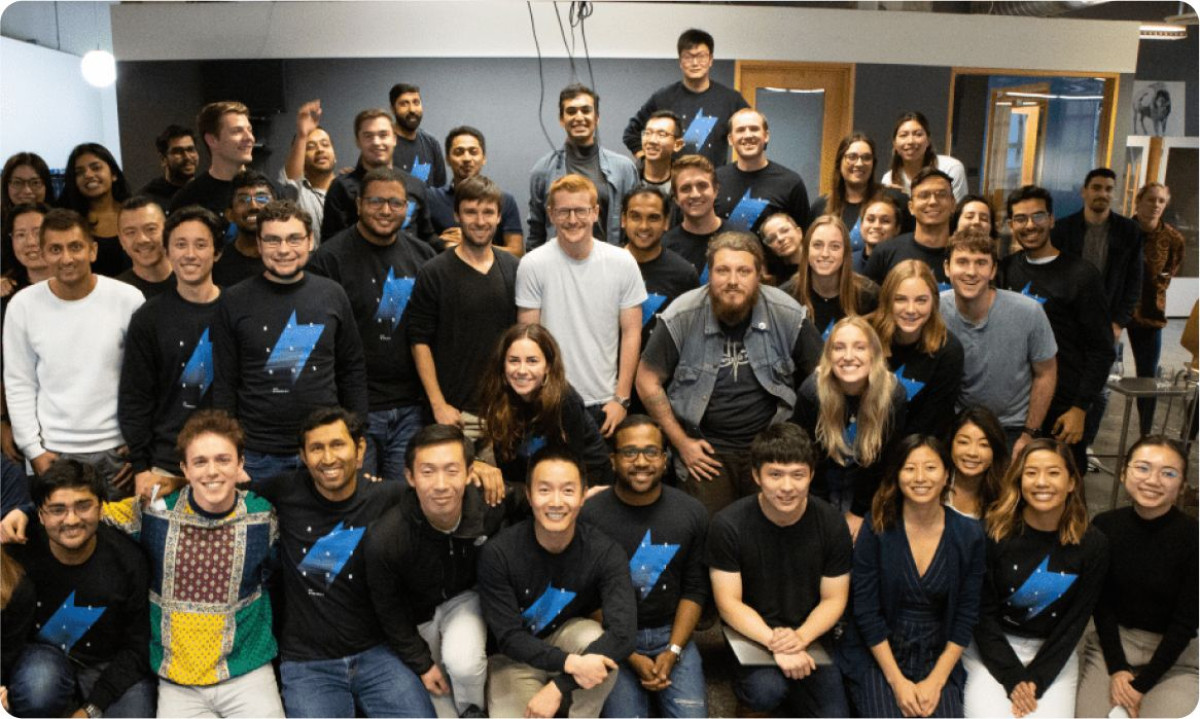
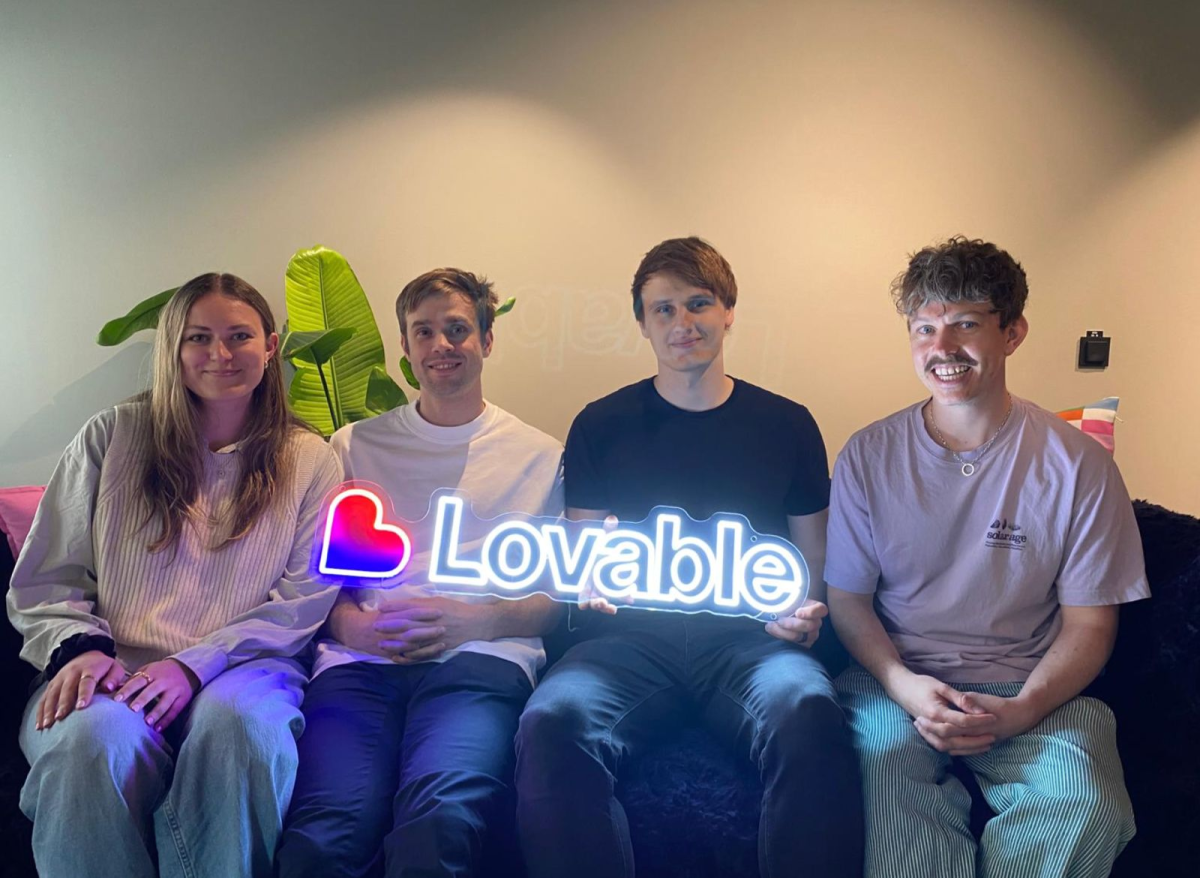
The software development world just witnessed something unprecedented. A European startup called Lovable reached $20 million in annual recurring revenue in just two months, making it potentially the fastest-growing startup in European history. But here's the twist that's making traditional software agencies nervous: they did it by giving non-technical founders the power to build full-stack applications without writing a single line of code. For years, the promise of no-code tools has been the same: anyone can build an app. But the reality has always been different. You'd create a beautiful frontend, get excited about your progress, and then hit the technical cliff. Suddenly you needed to configure databases, set up authentication, manage API keys, and deploy to servers. The "no-code" dream became a "hire-a-developer-anyway" nightmare.
The AI video generation race just got a clear winner. Runway Gen-4.5 topped the Video Arena leaderboard with a 1,247 Elo score, surpassing both Google Veo 3 and OpenAI Sora 2. For those unfamiliar with Elo ratings, this is the same system used to rank chess players and competitive games. A higher score means more wins in head-to-head comparisons. When real users compare videos side by side without knowing which AI generated them, they consistently choose Runway's output. Runway didn't start as an enterprise video tool. It began as a playground for artists and filmmakers who wanted to experiment with AI-generated visuals. The early versions produced fascinating but inconsistent results. Sometimes you'd get stunning cinematic footage. Other times you'd get distorted motion and unrealistic physics. Gen-4.5 changed that equation by achieving breakthrough consistency in motion quality and physical accuracy.

CUDA is a moat but even Jensen Huang has publicly said he worries about competition. When the CEO of the dominant company in a market says he is worried, you should probably listen.
As someone who got liquidated on a short position today, yes, the pain is real. The funding rate setup was telling me to hold but I held anyway. Lesson learned for the fourth time.
One underappreciated angle: the fact that Codex CLI is open source with 67,000 GitHub stars gives it a community momentum that the subscription tier numbers do not capture. Developers contribute to it, customize it, and build on top of it. That matters.
That $375 million verdict in New Mexico was staggering to read about. And yet it is still a tiny fraction of what Meta earns. The article is right that the legal pressure is real but the financial sting might not be enough to force deep change.