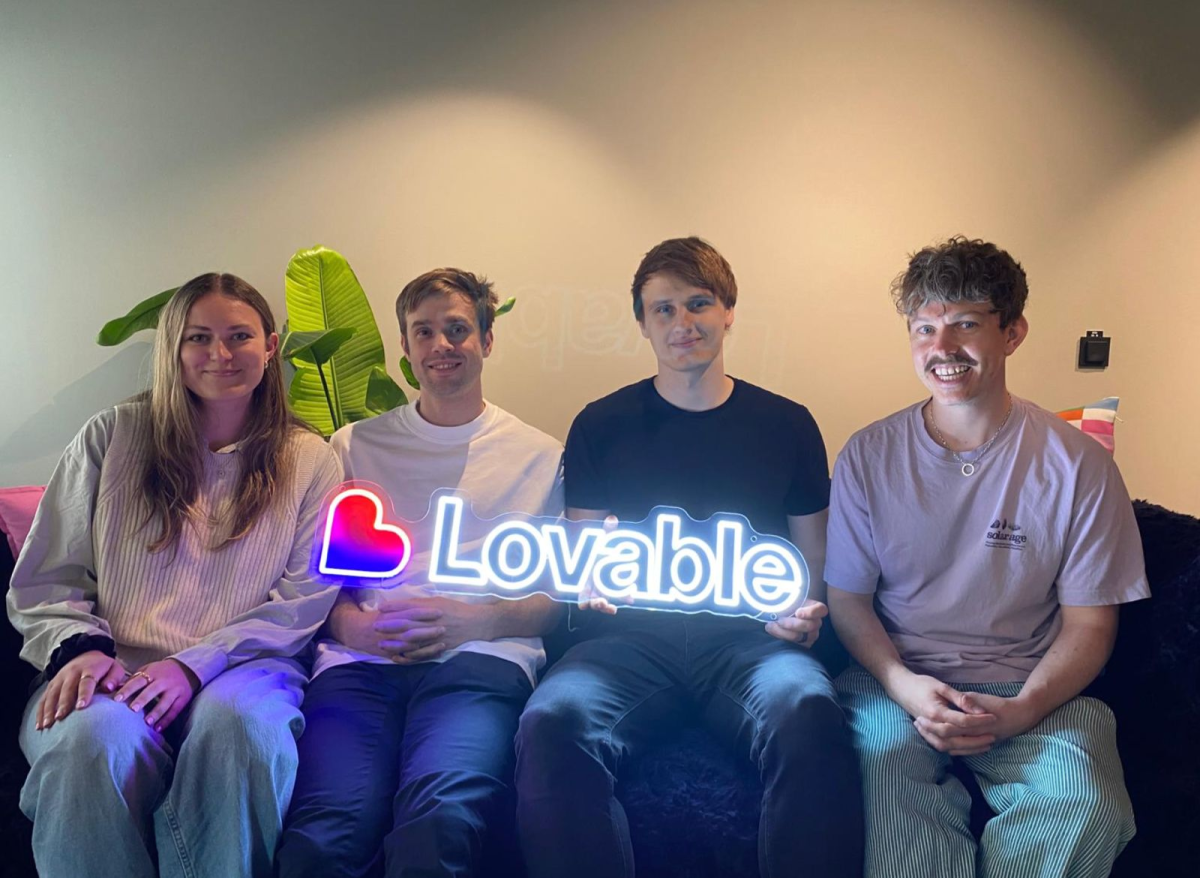
The software development world just witnessed something unprecedented. A European startup called Lovable reached $20 million in annual recurring revenue in just two months, making it potentially the fastest-growing startup in European history. But here's the twist that's making traditional software agencies nervous: they did it by giving non-technical founders the power to build full-stack applications without writing a single line of code.
For years, the promise of no-code tools has been the same: anyone can build an app. But the reality has always been different. You'd create a beautiful frontend, get excited about your progress, and then hit the technical cliff. Suddenly you needed to configure databases, set up authentication, manage API keys, and deploy to servers. The "no-code" dream became a "hire-a-developer-anyway" nightmare.
Lovable solved this problem by attacking it from a completely different angle. Instead of building another drag-and-drop interface, they built an AI that understands what you're trying to create and generates the actual code for you. But unlike other AI coding tools, Lovable doesn't just generate code and leave you stranded. It handles the entire stack: frontend, backend, database schema, authentication, and deployment.
The magic happens through natural language. You describe your app idea in plain English, and Lovable's AI generates a working application. Need a SaaS dashboard with user authentication and payment processing? Just say it. Want a marketplace that connects buyers and sellers? Describe it. The AI doesn't just create mockups or prototypes. It builds real, functional applications with proper databases and security.
What sets Lovable apart is its seamless Supabase integration. When you mention user accounts or data storage, the AI automatically configures a proper database with authentication. This isn't some toy database that breaks under real usage. It's production-grade infrastructure that can scale as your business grows. The system sets up row-level security, manages user sessions, and handles all the backend complexity that normally requires experienced developers.
But Lovable's founders understood something crucial about developers and code ownership. Many no-code tools lock you into their platform forever. If you want to customize something or move to custom development, you're stuck. Lovable takes the opposite approach with GitHub synchronization. Every app you build automatically syncs to a GitHub repository. You own the code completely. If you want to hand it off to developers for advanced features, they can pull it from GitHub and continue building.
The visual editing feature makes iteration incredibly fast. Unlike traditional coding where you need to write CSS and HTML to adjust layouts, Lovable lets you tweak UI elements through simple instructions. Move this button, change that color, add a new section. The AI updates the code instantly while maintaining clean, readable patterns that developers appreciate.
Real founders are using Lovable to build actual businesses. One consultant built a client portal with scheduling and payment processing in four hours. A small business owner created an inventory management system over a weekend. Marketing teams are launching lead capture tools without waiting months for development resources. These aren't side projects or experiments. They're real applications serving real customers.
The speed advantage is almost unfair. Traditional development agencies quote three months and $50,000 for a basic SaaS MVP. Lovable users are building comparable applications in days for the cost of a monthly subscription. The time savings alone justify the investment, but the ability to iterate quickly based on user feedback creates a competitive advantage that traditional development simply cannot match.
Industry observers are calling this the democratization of software development, but it's more than that. It's a fundamental shift in who can build technology businesses. You no longer need a technical co-founder or a large development budget to test your idea. You need clarity about what you want to build and the willingness to describe it clearly.
The growth numbers speak for themselves. When a company reaches $20 million in revenue in 60 days, it's not just a product success. It's evidence of massive pent-up demand from founders who had ideas but lacked the technical resources to execute them.
For anyone who's ever had an app idea but dismissed it because they couldn't code, Lovable represents a genuine inflection point. The technical barriers that protected the software industry for decades are falling. The question now isn't whether you can build your idea. It's whether you're willing to try.
Visit Lovable to start building your app idea today.
The pricing model where unused credits expire monthly is a fairly aggressive way to extract value from people who are actively experimenting. That friction is real.
25 million projects created on the platform. Even if 99 percent never amount to anything, that remaining one percent represents a massive wave of new software entering the world.
Showed my business partner a working prototype of the idea we had been debating for two years. We are now building the real version. Sometimes the fastest way to get buy-in is to just show someone the thing.
This is the same conversation we had about Squarespace killing web designers and Shopify killing ecommerce developers. Those designers and developers are still very much employed, mostly doing more interesting work.
The comparison between paying $50,000 for a three-month agency project versus a monthly subscription is a bit misleading. Agency work includes requirements gathering, testing, QA, ongoing support, and accountability. You are not comparing apples to apples.
The comparison to traditional no-code tools is fair. I spent months on Bubble learning its weird visual workflow paradigm before I could ship anything. Lovable had me building in minutes. The learning curve difference is massive.
Three years ago I paid a developer $12,000 for an MVP that took four months and still was not quite right. Last week I built something comparable in two days. The anger I feel about that $12,000 is profound.
The article mentions you own the code through GitHub sync. What it does not mention is that most non-technical founders have no idea what to do with that code if something goes wrong. Ownership without comprehension has real limits.
Got stuck in a loop where the AI kept telling me it fixed a bug that it had not actually fixed. Burned through half my monthly credits chasing the same issue. Speed is real but so is the frustration.
The democratization framing is real but it also means we are about to see an enormous wave of mediocre software entering the world. Not all ideas deserve to be built just because building them became cheap.
Speaking from experience building two products on the platform, the first 70 percent of any app is genuinely magical. The remaining 30 percent where you need precise control over edge cases is where you start to feel the limitations.
Every generation has its moment where a technical skill gets democratized and the sky-is-falling crowd appears. Desktop publishing. WordPress. Shopify. Software development is just next in line.
What I find most interesting is that Uber apparently used it to cut design concept testing from six weeks to five days. Enterprise adoption for internal tooling is probably the bigger long-term market than founder MVPs.
As someone with a non-technical background who has been wanting to build a specific tool for years, this is genuinely emotional to read. The barrier was never the idea. It was always the execution.
Speaking as someone who has worked in software agencies for over a decade, yes we are nervous. But honestly we should have seen this coming. The writing has been on the wall since GPT-4.
Started a SaaS product six weeks ago. Have paying customers. Hiring my first employee next month. Did not write any code. The economic opportunity here is real and it is available right now.
The $6.6 billion valuation after raising $330 million from CapitalG and Menlo Ventures is not a startup story anymore. That is a category-defining company being born in real time.
The real unlock here is iteration speed after launch. Traditional development means every change request goes through a sprint cycle. Describing a change to an AI and seeing it live in minutes fundamentally changes how you can respond to user feedback.
Product-market fit this strong does not come from marketing. It comes from solving a problem so real and so painful that people tell their friends before they have even finished their first project.
Building software is hard because thinking clearly about what you want is hard. The AI did not solve that problem. It just made the execution part cheaper. The hard part was always the thinking.
The fact that a healthcare platform built by a non-technical founder hit a million euros in recurring revenue in five months is either the most inspiring thing I have read this month or a sign that we should all be slightly worried about healthcare software quality.
Genuinely one of the fastest product experiences I have ever had. Described a client project in a paragraph, had a demo-ready prototype in an afternoon. Client was impressed. Signed the contract. That is the whole story.
The credit system where you get charged for the AI making a mistake is genuinely a bad user experience design choice. It creates anxiety and discourages experimentation, which is exactly the opposite of what they should want.
The pent-up demand angle is actually the most underappreciated part of the story. There are millions of people who had ideas and the only thing stopping them was the technical execution barrier. That was a massive amount of latent economic value.
As someone who has been in the no-code space for years, what Lovable got right that others got wrong is the code ownership model. Locking people in was always the fatal flaw of every tool that came before it.
I work in healthcare IT and a colleague of mine used this to build a patient scheduling tool. The speed was impressive but we still needed a proper security audit before anything could go near real patient data. The article glosses over that part pretty hard.
To the mobile question: currently it is web only. For native iOS and Android you would still need to go elsewhere. It is a real gap in the offering but the web apps are responsive so they work reasonably well on mobile browsers.
To the stress test question above: the Supabase backend is solid. I have had apps handle several thousand concurrent users without issues. The generated frontend code is where things can get messy under load.
Just here to say that as a non-technical founder who has tried to hire developers three separate times in the past four years and gotten burned each time, this feels like a personal vindication.
The article says the AI builds real applications with proper databases and security. The word proper is doing a lot of work in that sentence. For an MVP, sure. For anything handling sensitive personal or financial data, you need much more scrutiny.
Hot take: the agency model is not dead but agencies that do not adapt to become AI orchestrators and quality assurance layers will absolutely be gone within five years.
The credit system is a real problem that the article completely ignores. You burn credits when the AI makes a mistake, which means you are literally paying for its errors. That is a sketchy business model.
The article frames this as a threat to software agencies but it is probably more of a threat to offshore development shops that compete purely on price. Quality-focused agencies should be fine.
The GitHub sync going both ways is underrated. You can build in Lovable, pull the code, have a developer add a complex feature locally, push it back, and keep iterating in Lovable. That is actually a sophisticated workflow.
My team used it to prototype an internal tool that our dev team had been deprioritizing for eight months. We showed leadership a working version in two days. Now the dev team is actually building it. Lovable essentially forced the conversation.
My biggest concern is what happens to all these AI-generated apps when the underlying model changes or the platform pivots. The GitHub sync helps but most of the non-technical founders using this will not know how to maintain the exported code.
The enterprise adoption story is the one that should worry traditional SIs and consulting firms most. When Klarna and Deutsche Telekom are using this, it is no longer a founder tool.
100,000 new projects being created on the platform every single day. That number is almost incomprehensible. Most of them are probably abandoned experiments but even a small percentage becoming real products is a seismic shift.
Does anyone know how it handles more complex business logic? Like conditional workflows with multiple user roles and approval chains? That is where every no-code tool I have ever tried completely falls apart.
This is less about no-code and more about the collapse of the idea-to-execution gap. The value of technical skill has not disappeared, it has just moved up the stack.
Started using it as a developer to handle boilerplate and setup. Saves me hours on every project. The audience here is not just non-technical founders, experienced developers are also quietly adopting this.
To the agency question above: custom integrations, compliance work, security architecture, accessibility standards, load testing, proper CI/CD pipelines. The list is actually quite long. But you are right that the entry point has shifted dramatically.
The fact that this company grew from zero to $10 million ARR on roughly two million dollars in spending is the most remarkable capital efficiency story in recent startup history. The unit economics are genuinely alien compared to traditional software companies.
Used ChatGPT to write out detailed app requirements first, then pasted everything into Lovable as the first prompt. Got dramatically better results than starting with a vague description. Preparation matters even with AI tools.
The idea that you need clarity about what you want to build as the main requirement is more challenging than it sounds. Most founders I know struggle far more with the what than the how.
The Supabase integration is doing a lot of heavy lifting in this story. Supabase itself is an incredible piece of infrastructure and pairing it with AI generation is a genuinely powerful combination.
Unpopular opinion: a lot of the apps being built with this are going to be terrible products. The bottleneck was never the code, it was always product thinking, user research, and actual distribution. Those remain hard.
Hot take: this is not the death of developers. It is the death of the junior developer role as a stepping stone. Senior engineers who understand architecture will still be very much employed.
Tried it last weekend out of pure curiosity. Had a working inventory tracker with user login in about three hours. Zero code written. My developer friend is not happy with me right now.
Does anyone know how Lovable handles multi-tenancy for a proper SaaS? Like where each customer has completely isolated data with no possible leakage? That is the architecture question I cannot find a clear answer to.
My dev team is using Lovable to prototype internal tools that used to take us two-week sprints to scope and estimate. We prototype it, validate it with stakeholders, then decide whether to build it properly. The ROI on that workflow is enormous.
The timing of this launch was brilliant. They rebranded from GPT Engineer to Lovable right as the wave of AI tool interest was cresting. The name change alone probably accounted for a meaningful portion of early growth.
To answer the question above about complex workflows: Bubble is actually stronger for deep conditional logic and multi-step approvals. Lovable wins on speed to first prototype and code ownership. They are solving slightly different problems.
This feels like the moment when the calculator arrived and mathematicians panicked. Some mathematics jobs did disappear. Most mathematicians just moved on to harder problems. Software will follow the same arc.
What happens when the platform has downtime and your production app is relying on their infrastructure? That dependency is a real business risk that nobody building on these platforms is talking about honestly.
Vibe coding is the term people are using now and honestly it kind of perfectly describes the experience. You just describe the vibe and something appears.
The bit about a nurse suggesting a patient journey visualization tool that ended up in every invoice is the most interesting detail in any of the coverage about this company. Enterprise adoption from the bottom up is the real story here.
The fact that Alphabet, Nvidia, and Salesforce all invested in the Series B tells you everything about how seriously the established players are taking this. This is not a toy.
The $20M in 60 days stat is already outdated. They hit $200M ARR within about a year of launching. The growth curve has been almost surreal to watch from the outside.
The article says a consultant built a client portal with payments in four hours. That checks out. I built something similar on a Saturday afternoon. Did it need polish? Yes. Did it work? Absolutely.
There is something a little uncomfortable about tools that promise anyone can build anything. Software built without understanding often produces software that fails in ways the builder cannot diagnose or fix.
The GitHub sync is the feature that actually sold me. No platform lock-in means I can start fast and hand it off to a real dev team when the time comes. That is genuinely smart product design.
Can someone explain how the security actually works at scale though? Row-level security through Supabase sounds fine for an MVP but what about a production app with 50,000 users and sensitive data?
Watching traditional software companies scramble to respond to this is honestly fascinating. The incumbents have the resources but they do not have the hunger.
As someone who teaches product management, this changes what I teach. My students no longer need to describe their product ideas in documents. They can just build a working version as part of the course now.
Genuinely asking: what does a development agency offer now that justifies three months and $50,000 when someone can prototype the same idea in a weekend? I am not being rhetorical, I actually want to know.
Someone above asked about security at scale. Worth noting that the platform still has relatively immature governance features compared to enterprise-grade tools. SSO and group-based access control exist but proper RBAC, audit logging, and data residency controls are still limited.
What no one is discussing is the environmental cost of running these AI generation models at scale for millions of projects. Every prompt runs through massive compute infrastructure. That is not free in any meaningful sense.
The vibe coding wave is real. Cursor went from zero to a $29 billion valuation. Lovable is at $6.6 billion. Replit is at $3 billion. Vercel is at $9 billion. An entire ecosystem is being valued at what was previously reserved for only the largest tech companies.
My concern is that we are creating a generation of founders who ship things they do not understand. Security vulnerabilities, privacy issues, data handling problems. Technical ignorance at scale is its own kind of risk.
Respectfully disagree with the comment about agency comparisons being misleading. For validation purposes specifically, the ROI math is very clear. You test with Lovable first, then spend on proper development only if the idea proves out.
A friend of mine is a software engineer who laughed at this a year ago. He is now using Lovable to prototype client projects before writing any real code. Tools win when even the skeptics start using them.
People keep framing this as no-code vs developers as if those are the only two options. The real story is that the feedback loop between idea and working product just compressed from months to hours.
Revenue per employee of over two million dollars is genuinely absurd for a software company. The traditional playbook where you hire a large development team to match growth is completely broken as a model.
Fastest growing startup in European history and it is based in Stockholm. Europe does not get nearly enough credit for producing serious tech companies.
For anyone worried about the AI hallucination problem where it claims bugs are fixed when they are not, a tip that helped me: always test in incognito after any fix and describe very specific reproduction steps in your prompts. Reduces the loop significantly.