
Speaking as someone who has read a lot of progression fantasy manhwa, Ragnarok's pacing in the early chapters is noticeably slower than what made Solo Leveling addictive. It does pick up but new readers need patience.
21
Sign up to see more
SignupAlready a member?
LoginBy continuing, you agree to Sociomix's Terms of Service, Privacy Policy

Speaking as someone who has read a lot of progression fantasy manhwa, Ragnarok's pacing in the early chapters is noticeably slower than what made Solo Leveling addictive. It does pick up but new readers need patience.
Counter argument to the article's position. Not every reader will find Yu's emptiness compelling. For some people, having a protagonist who genuinely does not care is a barrier that never dissolves no matter how good the surrounding story is.
Veteran demon war commander in a young body trying to function in normal murim society before anyone knows what's coming is an incredible source of dramatic tension.
Respectfully pushing back on the hype a little. The worldbuilding and character work are incredible but the pacing in the middle sections of the manhwa is rough. An adaptation would actually benefit from tightening those arcs.
The BL (Boys' Love) genre has exploded in popularity over recent years, and isekai stories have dominated manhwa and manga for nearly a decade. Combining these elements seems like an obvious move, yet surprisingly few series have attempted it seriously. Shall I Write You A Love Letter, created by Nickup and Yutae and released on Lehzin in December 2025, takes the familiar otome isekai formula and transforms it into a compelling BL narrative that subverts expectations at every turn. Otome isekai typically features female protagonists transported into romance game worlds where they must navigate relationships with attractive male love interests. The formula has been refined through countless iterations to the point where readers can predict story beats from the first chapter. What makes Shall I Write You A Love Letter noteworthy is how it takes that established framework and examines it through a completely different lens, creating something that feels both familiar and refreshingly new.

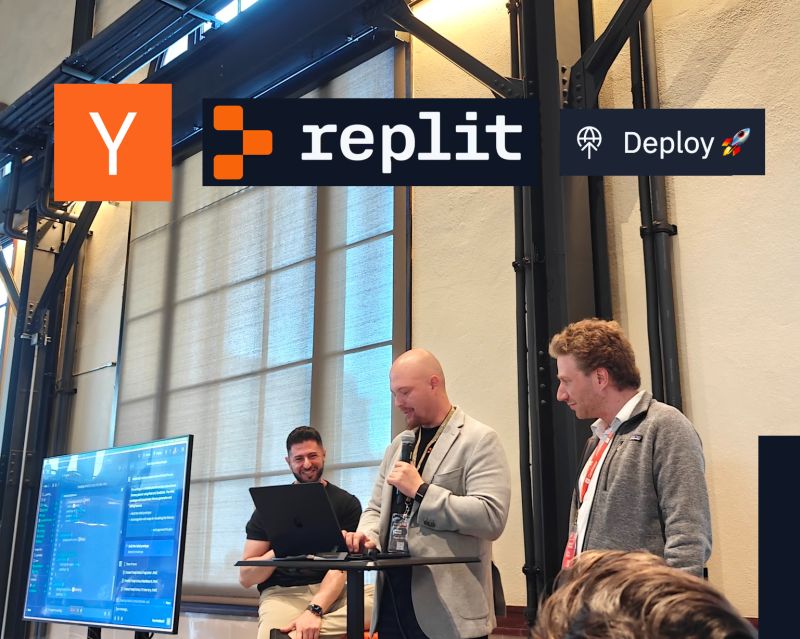
When a company's revenue jumps from $10 million to $100 million in nine months, you pay attention. When that growth comes from an AI agent that builds entire applications autonomously, you realize something fundamental just changed in software development. Replit Agent represents that change, and the numbers prove developers are ready for it. Replit started as a browser-based coding environment for education. Students could write Python or JavaScript without installing anything locally. Teachers loved it because setup time vanished. But the company saw something bigger. If you could run code in the browser, why not let AI write that code? That question led to Agent 3, an AI that doesn't just suggest code completions. It builds entire applications from scratch.
The article says we're watching two of the most capable and well-funded technology companies in history fight over the infrastructure of the future. I'd add, we're also watching them both lose money at historic speed to do it.
OpenAI's enterprise revenue is now 40% of total and growing toward parity with consumer by end of 2026, while Anthropic is already at 80% enterprise. OpenAI is essentially trying to become more like Anthropic in revenue mix while Anthropic tries to become more like OpenAI in scale. They're converging.
While Synthesia leads in revenue, HeyGen leads in customer acquisition momentum with 152% year-over-year growth in mid-market adoption. That explosive growth rate allowed HeyGen to close much of the customer count gap by late 2025. The company is winning by making avatar video accessible to smaller teams and individual creators who cannot afford enterprise contracts but need professional video capabilities. HeyGen positioned itself for small and medium businesses, marketing teams, content creators, and solo entrepreneurs rather than enterprise learning and development departments. This market segment values affordability, ease of use, and creative flexibility over governance features and advanced integrations. Average contract values are roughly one-third of Synthesia's, reflecting this different customer profile.

The absence of visible edit history is going to cause drama eventually. Someone is going to edit a comment in a high-profile beef and people will accuse them of changing what they said. Screenshot culture will handle this but it will still be messy.
It stays in its original position. The edit just updates the text in place. No reordering happens which is the right behavior honestly.
Anyone else think a black belt would work better than the brown accessories? Just wondering if it might make it feel more cohesive?
I can see this working for so many different occasions just by switching up the accessories