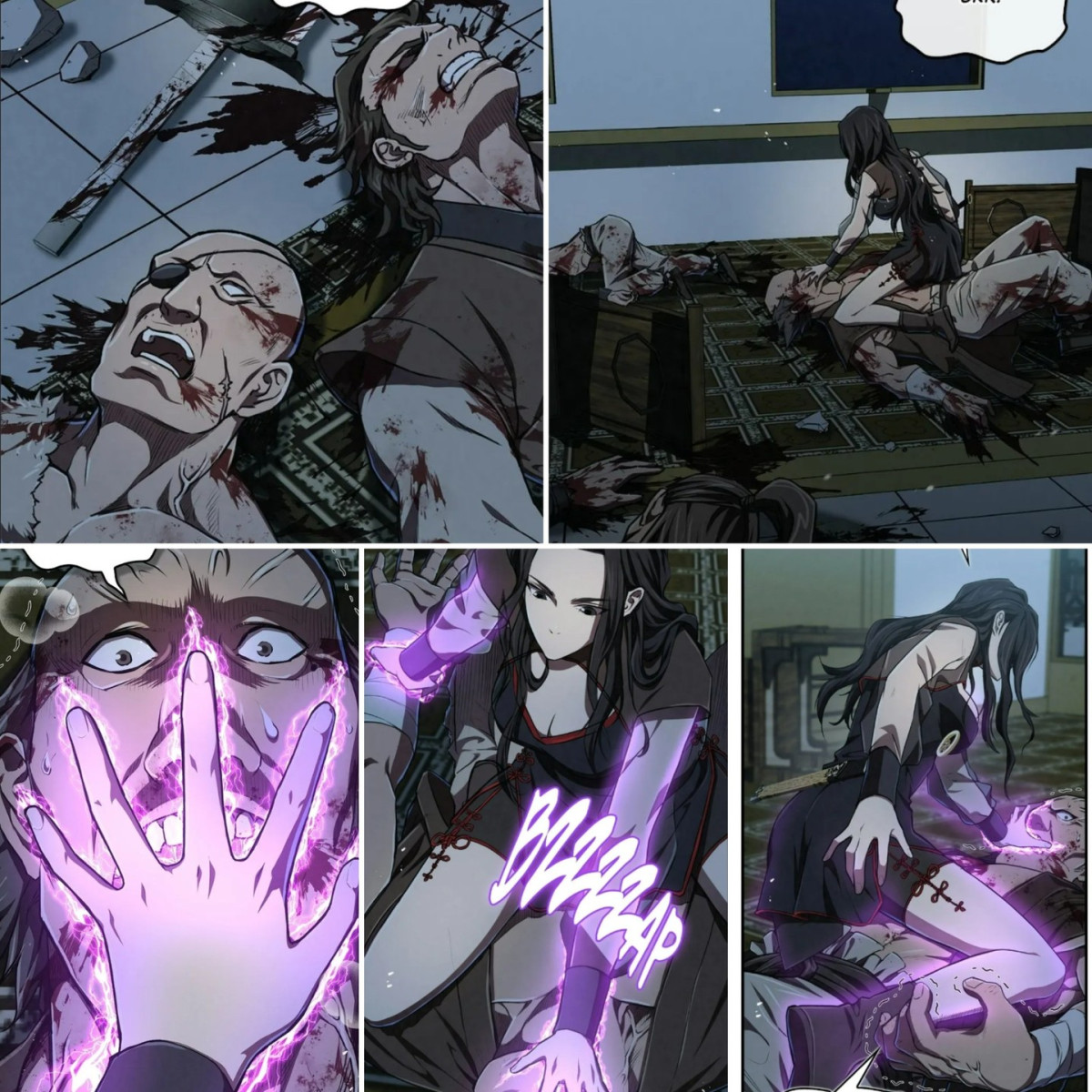
When you think of murim manhwa, your mind probably conjures images of ancient martial arts sects, internal energy cultivation, and warriors battling with swords and bare fists in historical settings. Science fiction elements like outer space invasions, advanced technology, and apocalyptic scenarios belong to completely different stories. Return of the Demonic Instructor takes these seemingly incompatible genres and weaves them into something genuinely innovative.
Released on Webtoon in January 2026, this series arrived at the perfect moment when readers were hungry for fresh takes on established formulas. The premise alone sounds wild. A murim world gets invaded by demons from outer space, forcing martial artists to adapt centuries-old techniques to fight extraterrestrial threats. Then throw in regression, magic systems, and apocalyptic survival elements for good measure.
What could have been a messy collision of conflicting genres instead becomes a thoughtful exploration of how tradition adapts to unprecedented change, how knowledge from different sources combines to solve impossible problems, and what happens when the skills that once made you worthless become humanity's only hope.
Understanding the Core Premise and World Setup
Bigang Sa lives in a world where martial arts and internal energy cultivation define power and status. Unfortunately for him, he lacks the ability to use inner power, the fundamental requirement for practicing murim martial arts. In a society where your worth is measured by your cultivation level, being unable to cultivate makes Bigang less than worthless.
Then the demons invade from outer space. These aren't metaphorical demons or spiritual entities from ancient legends. They're literal extraterrestrial beings with advanced technology and abilities that conventional murim techniques struggle to counter. The invasion catches the martial arts world completely unprepared.
During the chaos, Bigang gets captured by the demon forces. His inability to use inner power, which made him useless in the murim world, makes him perfect for the demons' experiments. They can test things on him that would be complicated by internal energy interference. Through torture and experimentation, Bigang becomes intimately familiar with demon biology, tactics, and weaknesses.
Eventually, Bigang rises to become a commander in the demon army. Not through betraying humanity willingly, but through brainwashing, survival instinct, and adaptation. He spends centuries fighting for the demons, learning their methods, understanding their strategies, and becoming an expert in warfare that combines murim techniques with demon technology.
Unable to kill the demon king despite his position and knowledge, Bigang experiences regression. He returns to ten years before the demon invasion with all his memories, combat experience, and understanding of both worlds intact. Now he has one chance to change humanity's fate using knowledge nobody else possesses.
How the Series Makes Murim and Sci-Fi Elements Work Together
The brilliance of Return of the Demonic Instructor lies in how it treats both murim and sci-fi elements with equal respect rather than subordinating one to the other. The martial arts aren't just window dressing for sci-fi action. The science fiction elements aren't merely an excuse for flashy battles. Both are essential.
Traditional murim power systems continue functioning exactly as they always have. Cultivators gather internal energy, strengthen their bodies, and perform superhuman feats through disciplined training. The series doesn't abandon or diminish these elements. It questions how they adapt when facing threats they weren't designed to counter.
The demons bring advanced technology, biological weapons, and abilities that operate on different principles than internal energy. They have spacecraft, energy weapons, and genetic engineering. They represent a completely different paradigm of power that doesn't care about cultivation levels or martial arts mastery.
Where the fusion happens is in Bigang's unique position. Having lived in both worlds, he understands how to combine approaches. He can analyze demon technology through a martial artist's perspective. He can enhance murim techniques using principles learned from demon warfare. He becomes a bridge between incompatible systems.
The magic system mentioned in the premise adds another layer. It's neither pure murim internal energy nor demon technology but something separate that interacts with both. This three-way interaction between martial arts, technology, and magic creates complexity without becoming confusing because the story introduces elements gradually.
Bigang Sa as a Protagonist Shaped by Two Worlds
What makes Bigang compelling is how his experiences in both the murim world and demon army fundamentally shaped him in ways that create internal conflict and unique capabilities. He's not simply a murim warrior who learned some demon tricks. He's someone who lived completely separate lives and must integrate those experiences.
Before the invasion, Bigang suffered humiliation and dismissal because of his inability to cultivate internal energy. This created deep resentment and feelings of worthlessness that don't simply disappear after regression. Even with his vast knowledge and combat experience, those old wounds remain.
His time as a demon commander gave him strategic thinking, ruthlessness, and understanding of warfare at scales the murim world never contemplated. He learned to think in terms of planetary invasion, resource management, and long-term strategic campaigns rather than individual duels or sect conflicts.
The brainwashing and experimentation left psychological scars. Bigang experienced things no human should endure. He did things while under demon control that haunt him. Regression doesn't erase trauma. He carries memories of centuries of experiences that didn't happen yet in the current timeline but are completely real to him.
His combat style reflects his hybrid background. He can't rely on overwhelming internal energy like traditional masters, so he fights smart. He uses demon knowledge to exploit weaknesses. He combines martial techniques in unconventional ways. He applies military tactics to personal combat. This creates a unique fighting approach unlike typical murim protagonists.
The Regression Element and How It Adds Narrative Tension
Regression stories are popular in manhwa, but Return of the Demonic Instructor uses the regression premise differently than most. Bigang doesn't return to change his personal circumstances or gain power. He returns to prevent an apocalypse that most people don't even know is coming.
The ten-year window before the invasion creates urgency. Bigang can't simply get strong and wait. He needs to prepare others, strengthen humanity's defenses, and establish foundations for resistance against an enemy nobody believes exists. Time pressure drives constant forward momentum.
His knowledge creates interesting dramatic irony. Readers and Bigang know what's coming, but other characters don't. Watching him try to convince skeptical martial artists that demons from space will invade creates tension and occasional dark comedy as people dismiss his warnings.
The regression also raises questions about determinism. Can Bigang actually change the outcome, or are certain events locked? Every change he makes creates ripple effects he can't fully predict. Some alterations might help, others might make things worse. The uncertainty keeps outcomes unpredictable.
Unlike some regression protagonists who use future knowledge for easy victories, Bigang faces limitations. He knows what happened in his timeline, but his very presence alters events. People make different choices. Small changes cascade into larger divergences. His knowledge is valuable but not omniscient.
The Demon Invasion as More Than Just an Antagonist Force
The demons aren't mindless monsters or generic evil forces. The series treats them as an actual civilization with technology, culture, hierarchy, and motivations. Understanding them as more than simple villains adds depth to the conflict.
Their technology represents a completely different evolutionary path than human development. Where humans focused on internal cultivation and personal power enhancement, demons advanced through external tools and biological engineering. Neither approach is inherently superior, just different.
The invasion has strategic logic. The demons don't attack randomly or for pure destruction. They have resource goals, colonization objectives, and systematic approaches to conquering worlds. This makes them more threatening than chaotic monsters because they adapt, learn, and adjust tactics.
Individual demons have personalities and variations. Some are cruel experimenters, others tactical geniuses, and some even show traces of honor or complexity. The demon army isn't a monolith, which creates opportunities for strategy beyond simple strength-based solutions.
Bigang's time as a demon commander means he knows key figures personally. He understands their capabilities, personalities, and weak points. This creates interesting dynamics when he encounters demons who don't know him yet but whom he knows intimately from the future that hasn't happened.
How the Series Handles Magic Systems Alongside Martial Arts
Introducing magic on top of murim cultivation and demon technology could easily become cluttered. Return of the Demonic Instructor manages this by making magic a discovered rather than traditional element. It's not something the murim world always had but something that emerges in response to the invasion.
Magic operates on different principles than internal energy cultivation. Where qi cultivation is about refining energy within the body through disciplined practice, magic involves external manipulation of forces through specific formulas or understanding. This fundamental difference prevents them from simply being reskins of each other.
The interaction between magic and martial arts creates interesting possibilities. Some techniques combine elements from both. Warriors who master internal energy might discover they have aptitude for certain magics. The two systems can enhance each other rather than existing separately.
Bigang's knowledge of magic from his previous timeline gives him another advantage. He knows which magical principles prove most effective against demons. He can guide others toward productive magical research rather than wasting time on dead ends.
The magic system also provides solutions for characters like Bigang who can't use traditional internal energy. Magic offers an alternative path to power that doesn't require qi cultivation. This creates hope for others previously considered worthless in the murim hierarchy.
Character Development Through Crisis and Adaptation
The impending demon invasion forces characters to question everything they believed about power, worth, and martial arts. This crisis of certainty drives character development as people must adapt or become obsolete.
Traditional murim masters struggle with the idea that their centuries of cultivation might not be enough. Some adapt by learning new techniques or incorporating knowledge Bigang provides. Others cling to tradition and dismiss warnings about threats they don't understand. These different responses create realistic conflict.
Younger characters who haven't invested decades in traditional cultivation sometimes adapt more easily. They're willing to try unconventional approaches, learn from someone without proper murim credentials, or embrace hybrid techniques that combine different systems.
Bigang himself must adapt to being in a younger body with different capabilities than what he's used to. His mind contains centuries of combat experience, but his body needs development. This disconnect creates interesting challenges as he knows what he should be able to do but hasn't rebuilt the capacity yet.
The series also explores how sharing knowledge from the future affects relationships. People react differently to someone who claims to know the future. Some believe and support him. Others think he's delusional or dangerous. Building trust when you can't fully explain your knowledge source creates ongoing interpersonal challenges.
Visual Presentation and Art Style Choices
The art in Return of the Demonic Instructor needs to handle both traditional murim aesthetics and futuristic sci-fi elements convincingly. The artist succeeds by establishing clear visual languages for different elements while ensuring they can coexist in the same panels.
Martial arts sequences use flowing, dynamic compositions that showcase technique beauty and power. Internal energy appears as traditional colored auras and swirling patterns familiar to murim readers. These scenes feel grounded in genre conventions while maintaining individual style.
Demon technology and beings use harder, more angular designs with mechanical precision. The visual difference between organic murim energy flow and geometric demon tech creates instant distinction. You can tell at a glance which side of the conflict any given element belongs to.
Combat between martial artists and demons generates visual interest through contrasting styles. Fluid martial techniques clash against mechanical precision. Curved energy blasts meet angular beam weapons. The interaction between different visual languages makes battles dynamic and engaging.
Character designs balance traditional murim robes with practical combat gear that acknowledges the coming war. As Bigang prepares people for invasion, their appearance gradually shifts from purely traditional to more tactical, visually representing adaptation and preparation.
Themes of Worth and Value in Changing Circumstances
At its core, Return of the Demonic Instructor explores how circumstances determine what skills and qualities are valued. Bigang's journey from worthless reject to crucial savior illustrates how changing contexts can completely reverse someone's status.
In the traditional murim world, internal energy cultivation defines worth. Those who can't cultivate are dismissed as trash regardless of other capabilities. This rigid hierarchy serves the existing power structure but becomes dangerously limiting when facing unprecedented threats.
The demon invasion forces recognition that different threats require different solutions. Suddenly, Bigang's experiences and knowledge become invaluable. The inability to use internal energy that made him worthless actually proves advantageous in understanding demons who operate on different principles.
The story questions whether any skill or person is inherently worthless or if value depends entirely on context. Someone useless in one situation might be essential in another. Dismissing people based on narrow criteria means losing potentially crucial resources when circumstances change.
This theme resonates beyond the story's fantastical elements. In reality, people often face dismissal because their skills don't match current market demands or social values. The story suggests that maintaining diverse capabilities and respecting different types of expertise creates resilience against unexpected challenges.
How the Series Avoids Common Genre Pitfalls
Combining multiple genres risks creating a confused mess where nothing works properly because everything competes for attention. Return of the Demonic Instructor avoids this through clear structure and purposeful integration.
The murim elements establish the baseline world and power system. This gives readers familiar grounding before introducing more unusual elements. The series doesn't dump everything on readers immediately but layers complexity gradually as the story progresses.
The sci-fi invasion provides external pressure that forces innovation and adaptation without completely replacing murim elements. Both systems remain relevant because they interact and combine rather than one making the other obsolete.
The regression element serves as a framing device that justifies Bigang's knowledge without requiring constant flashbacks. Readers accept his expertise because the story established his background clearly. The regression gives him advantages without making everything too easy.
The magic system enters after readers are comfortable with murim and aware of the demon threat. It arrives as a logical development rather than random addition. Each layer builds on what came before instead of just piling on more elements for the sake of complexity.
Comparing Return of the Demonic Instructor to Similar Murim Stories
Most murim manhwa stay firmly within historical or fantasy settings. The Greatest Estate Developer adds construction and management elements but remains fundamentally fantasy. Return of the Demonic Instructor goes further by introducing genuine sci-fi that transforms the genre framework entirely.
Nano Machine combines murim with technology through the internal nano machine augmentation. Both series explore tradition meeting advancement, but Nano Machine's tech enhances individual capability while Return of the Demonic Instructor's tech represents an existential threat requiring collective adaptation.
Regression stories like The Tutorial is Too Hard or Second Life Ranker focus on individual advantage from future knowledge. Return of the Demonic Instructor emphasizes using that knowledge to prepare civilization rather than just personal power gains. The scope is larger and more apocalyptic.
Military strategy manhwa like Kingdom focuses on warfare tactics and leadership. Return of the Demonic Instructor incorporates similar elements but adds superhuman combat and multiple power systems that create different strategic considerations beyond pure tactics.
The Appeal for Both Murim and Sci-Fi Fans
Return of the Demonic Instructor succeeds because it offers genuine appeal to fans of both genres rather than awkwardly blending elements that satisfy neither audience fully. The execution respects both traditions while creating something new.
For murim enthusiasts, the series delivers everything they love. Traditional martial arts, internal energy cultivation, sect politics, and warrior philosophy all remain central. The murim elements aren't diluted or mocked but treated seriously and shown adapting to new challenges.
Science fiction readers get legitimate sci-fi concepts. The demon invasion has strategic logic, the technology follows consistent rules, and the story explores first contact scenarios where communication and understanding alien perspectives matter. It's not just window dressing but actual science fiction storytelling.
The intersection creates unique scenarios neither genre typically offers. Martial artists developing techniques to counter energy weapons. Demons analyzing and adapting to internal energy attacks. Strategic planning that must account for both conventional military logistics and superhuman individual combatants.
Readers who enjoy both genres get the best of both worlds plus the novelty of seeing them interact. The series proves that thoughtful genre fusion can create something fresh rather than just mixing elements randomly and hoping they work together.
What the Series Says About Tradition and Innovation
Beyond its entertaining premise and action sequences, Return of the Demonic Instructor explores philosophical questions about preserving tradition while embracing necessary change. This theme runs throughout character interactions and plot developments.
Traditional murim masters represent the conservative position. Their methods worked for centuries, producing powerful warriors and stable social structures. From their perspective, abandoning tradition for unproven innovations risks losing accumulated wisdom and cultural identity.
Bigang represents forced innovation through survival necessity. He doesn't dismiss tradition but recognizes it's insufficient alone. The demons don't care about honor duels or cultivation hierarchies. Victory requires combining the best of tradition with new approaches adapted to unprecedented circumstances.
The story suggests that rigid adherence to tradition creates vulnerability. Systems optimized for specific conditions fail when those conditions change dramatically. Flexibility and willingness to incorporate new knowledge while retaining valuable traditional elements offers the best survival strategy.
However, the series also shows dangers in abandoning tradition completely. The wisdom accumulated over centuries has value. Techniques refined across generations work for reasons that might not be immediately obvious. The goal isn't replacing old with new but synthesizing both into something stronger.
Future Potential and Where the Story Might Go
As a relatively new series launched in January 2026, Return of the Demonic Instructor has significant room for development. The premise offers multiple directions for story expansion while maintaining coherent focus.
The ten-year preparation period before invasion allows for extensive character development and world-building. Readers can watch Bigang establish foundations, train allies, and prepare countermeasures while dealing with skepticism and political obstacles.
When the invasion actually occurs, everything changes. The story can shift from preparation to actual warfare, showing how Bigang's efforts pay off or fall short. The contrast between what he remembers from his timeline and what actually happens creates ongoing tension.
The magic system offers unexplored potential. As characters discover and develop magical capabilities, new techniques and combinations become possible. The interaction between magic, martial arts, and demon technology provides endless creative opportunities.
Bigang's psychological journey deserves deeper exploration. Dealing with trauma from his previous timeline, navigating relationships with people he knows intimately who don't know him, and maintaining hope despite knowing the horrors coming could provide compelling character drama.
Final Thoughts on Why This Series Deserves Your Attention
Return of the Demonic Instructor arrived at the perfect moment when readers were hungry for innovation within established genres. It takes familiar elements and recombines them in ways that feel fresh and exciting while respecting what makes each component appealing.
The series proves that genre boundaries are more flexible than they appear. Murim and science fiction aren't natural enemies but can enhance each other when combined thoughtfully. The key is treating both seriously and finding logical points of intersection.
For readers tired of standard murim progression or typical apocalypse scenarios, this series offers genuine novelty. The combination creates situations and challenges you won't find in pure examples of either genre.
The protagonist's unique background and capabilities make for compelling storytelling. Bigang isn't simply overpowered but smart, experienced, and resourceful in ways that feel earned rather than arbitrary. His advantages come with real costs and limitations.
As the series continues developing, it has potential to become a landmark example of successful genre fusion. Whether it achieves that status depends on execution moving forward, but the foundation is solid and the early chapters deliver on the premise's promise.
If you're looking for something different in your manhwa reading, something that challenges expectations while delivering satisfying action and character development, Return of the Demonic Instructor deserves a spot on your reading list. It's murim, it's sci-fi, it's regression, it's apocalyptic survival, and somehow it all works together beautifully.
The comment above makes a fair structural point but I think that hierarchy is intentional. The series is about murim traditions adapting to a sci-fi threat. The framing puts murim at the center even if the sci-fi is the catalyst.
Okay but can we talk about how Bigang being unable to use inner power is actually the key to everything? The thing that made him worthless is the exact reason he survived the demons' experiments. That kind of narrative symmetry is rare in manhwa.
Every season Webtoon puts out something that catches the community off guard and this was January 2026's surprise hit. Glad the algorithm finally pushed it my way.
Everything the article says about the demons being a civilization with strategic logic is accurate and it makes the series more unsettling than most action manhwa. A thinking enemy that adapts is infinitely scarier than monsters.
Fair point about the underdog trope being common, but the twist here is that his inability to cultivate isn't eventually fixed by a secret technique or hidden talent. It stays a limitation he works around creatively. That's actually more interesting than the typical hidden genius reveal.
Honestly the most compelling part of the setup is knowing Bigang has intimate personal knowledge of the demon commanders. Imagine encountering someone as a stranger who you know is going to become your greatest enemy in a future that hasn't happened yet.
Genuinely curious whether the series addresses how other characters react when Bigang's knowledge of demons turns out to be accurate. Does anyone start believing him earlier because of small things he predicts correctly?
The comparison to Nano Machine keeps coming up in these discussions and it makes sense because Nano Machine basically proved that murim plus technology can work as a concept. This series is building on that foundation with much higher narrative ambition.
The weekly update schedule is a genuine problem for this kind of dense story. You lose narrative momentum between chapters in a way that hurts the experience compared to reading it batched.
The underdog who can't cultivate inner energy angle is honestly a bit tired at this point. Nearly every murim series has some version of the protagonist being looked down on before their rise.
Murim Login did the modern technology meets murim world fusion in a comedic register. This series does it in a much grimmer register. Both work but for very different moods.
What sold me completely is that Bigang's combat approach is described as fighting smart because he has to, not because he's being clever for the sake of a cool moment. His unconventional style is born from genuine necessity.
Murim Login did VR meets murim as comedy. This series does alien invasion meets murim as tragedy with strategic thriller elements. They're related in concept but totally different in execution and ambition.
The art style during demon tech sequences has a completely different visual language than the murim scenes and that's intentional contrast, not inconsistency.
The tonal consistency concern is legit but from what I've read the series earns each genre layer by introducing them at moments where the story needs them rather than dumping everything in the opening chapters.
The ten year timeline creates a ticking clock that functions better than most manhwa countdowns because it's implied rather than explicitly stated in every chapter.
Bigang using demon knowledge to find exploits in martial arts technique is such a compelling idea. Like understanding biology and anatomy in a way cultivators never had reason to think about.
The ripple effect problem for regression protagonists is criminally underexplored in most series. Every action creates unpredictable consequences. This series actually seems to engage with that seriously.
The magic system offering an alternative path for those who can't cultivate qi is such a smart narrative move. It means Bigang's limitation doesn't permanently cap his ceiling, it just redirects him toward a different kind of power.
The determinism question raised in the article is the thing keeping me most invested. Can he actually change the outcome or is the demon invasion a fixed point regardless of what he does?
Every regression manhwa eventually runs into the knowledge problem. Your protagonist knows too much and outcomes become predictable. The alien invasion context helps because the demon world is complex enough that Bigang's knowledge has genuine limits.
Tried to get my friend into murim manhwa using this as a starting point and he was completely lost by the sect politics in chapter two. Probably not the best entry point for newcomers.
Can someone explain the magic system a bit more? The article says it's separate from qi cultivation and demon tech but I'm still fuzzy on how it actually works in practice.
As someone who works in narrative design, the three-system magic and power structure described here is genuinely sophisticated. Most stories can't balance two power systems cleanly and this one is attempting three without collapsing into confusion.
The fact that this series is rated Young Adult on Webtoon while dealing with brainwashing, psychological trauma, and apocalyptic horror is doing a lot of work.
The approach of making magic a discovered element that emerged in response to the invasion rather than a pre-existing part of the world is clever. It means the reader discovers it at roughly the same time as the characters.
Younger characters adapting faster to hybrid techniques while old masters cling to tradition is such an accurate social dynamic. You see this pattern in real life whenever any established field encounters disruptive change.
The three-way interaction between martial arts, technology, and magic described in this article is what sets it apart. Most series that try genre fusion only blend two elements. Adding a third creates a much more complex flavor.
That's a valid point but accessibility matters enormously. Something being done in a niche light novel versus reaching Webtoon's global audience are completely different conversations.
Yes it is adapted from a Korean web novel. The source material has been running longer and has significantly more chapters so the Webtoon adaptation has a lot of story to pull from.
Genuinely can't think of another series that combines regression, space invasion, murim cultivation, and original magic system this cohesively. The closest comparisons all fail in at least one dimension.
For newcomers to murim, honestly Return of the Blossoming Blade or Nano Machine are better starting points. This series rewards you more if you already understand the genre conventions it's subverting.
Midnight Studio's production quality on this is noticeably higher than average for a new Webtoon series. The panel composition during action scenes especially.
As someone who reads a lot of wuxia and xianxia alongside manhwa, the genre fusion thing is actually a bigger trend than people realize. The murim genre has been quietly absorbing sci-fi elements for years and this series feels like a natural peak of that evolution.
Comparing this to Nano Machine is fair but also a little reductive. Nano Machine fuses modern tech with murim in a fairly lighthearted way. This series is much darker and more thematically dense.
The article says this arrived at the perfect moment when readers were hungry for fresh takes. That's true for the January 2026 releases broadly. The whole first wave of Webtoon series this year felt like creators trying to break genre formulas.
Asked my reading group to pick this up and we spent an entire session just discussing the implications of Bigang knowing individual demons personally. The interpersonal dread of that is immense.
Bigang as an instructor training others is going to be the emotional core of this series and the article correctly identifies it. Watching someone who endured centuries of suffering choose to invest in others is deeply compelling.
Bigang having to rebuild his body while his mind is centuries ahead is such a relatable frustration expressed in an extreme fictional form. You know what you're capable of but your current physical reality can't match it yet.
The brainwashing backstory is doing a lot of heavy lifting for Bigang's character. The fact that he served the demons not through willing betrayal but through psychological violation makes him sympathetic rather than morally compromised.
Respectfully disagree with the article's framing that neither the murim nor the sci-fi elements feel subordinated. The sci-fi invasion is clearly the driving external pressure and the murim elements are the foundation being tested by it. That's not equal footing, that's a hierarchy.
The regression genre is oversaturated at this point. Genuinely how many times can we read about someone going back in time with future knowledge before it stops being interesting?
The magic system feels like it's still being established in the earlier chapters. From what I can tell it operates through external formulas rather than internal energy refinement, which is a meaningful distinction that becomes important later.
The comparison to traditional murim masters struggling with inadequacy when facing threats they don't understand is fascinating because it mirrors a much larger question about what happens when expertise becomes obsolete overnight.
The article glosses over the art quality which deserves more attention. The visual contrast between traditional murim aesthetics and the demon technology designs is striking.
The psychological scars from brainwashing angle needs more pages dedicated to it. The article touches on it, the manhwa touches on it, but it deserves much deeper exploration as the series continues.
Speaking from experience reading hundreds of manhwa, the genre fusion success rate is maybe twenty percent. Most attempts sacrifice depth in one genre to service the other. This genuinely seems to avoid that trap.
The devil's advocate take here is that a lot of what this article praises as innovative is pretty common in light novel and web novel spaces if you read widely. The novelty is more about bringing it to manhwa format accessibly.
The psychological dimension of this series is what the article nails perfectly. Regression doesn't erase trauma. Bigang has centuries of memories of things that technically haven't happened yet but are completely real to him. That's a heavy psychological burden most manhwa just ignores.
The article's point about Bigang's combat style being uniquely hybrid is spot on. He fights like someone who has studied an enemy's biology for centuries while also knowing every martial arts exploit. It's a completely different approach from typical cultivation powerhouses.
The series hits differently if you think of it as a story about inherited trauma. Bigang carries memories of centuries of horror that nobody else can share or even understand.
Bigang spending centuries as a demon commander before regression is such an underutilized concept. He's not just a regressor, he's basically an alien war veteran walking around in a normal murim setting.
Veteran demon war commander in a young body trying to function in normal murim society before anyone knows what's coming is an incredible source of dramatic tension.
The part about the demons having actual strategic logic rather than just being chaos monsters is what makes the threat feel real. Intelligent, resource-focused invaders are so much scarier than mindless destruction.
Hard disagree. Sometimes you just want to watch an absurdly powerful protagonist obliterate everything in their path. Not every manhwa needs to be a strategic underdog story.
Something the article didn't fully address is how the secondary characters are developing. Some of them who Bigang is training feel like they could carry their own arcs.
To the person saying regression is overdone, I get it, but the specific angle here is different. Most regression protagonists go back to improve their personal standing. Bigang goes back to prevent a planetary apocalypse nobody else believes is coming. That changes the whole dynamic.
The demons being an actual civilization with hierarchy and culture rather than a mindless horde is what separates competent genre fiction from lazy genre fiction.
Characters who can't use the primary power system but compensate through intelligence and adaptation are always more interesting to me than overpowered cultivation prodigies.