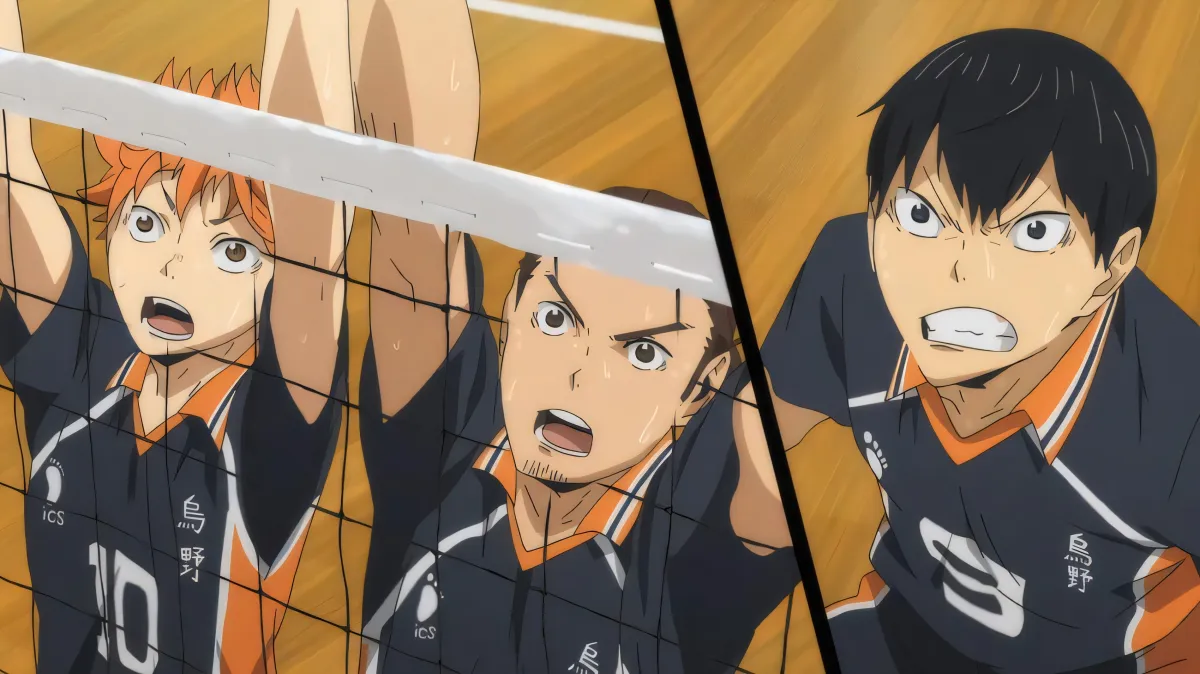
Sports anime and manga have delivered countless memorable series over the decades, from Slam Dunk's basketball brilliance to Haikyuu's volleyball excellence. These stories typically follow familiar patterns: talented but inexperienced protagonist joins a team, forms bonds with teammates, faces rivals, grows through competition, and ultimately pursues championship glory. The formula works because it taps into universal themes about effort, teamwork, and self-improvement.
The Boxer, created by JH, takes everything you expect from sports stories and systematically deconstructs it. The protagonist doesn't love boxing. He doesn't form deep bonds with teammates. He doesn't overcome challenges through friendship and determination. Instead, the manhwa presents one of the darkest, most psychologically complex examinations of combat sports ever created, wrapped in stunningly minimalist artwork that elevates the narrative to something approaching high art.
With the anime adaptation announced for 2026, a whole new audience will experience this masterpiece. For viewers expecting typical sports anime energy and inspiration, The Boxer will hit like an unexpected counterpunch to the soul. This isn't entertainment that makes you want to go outside and practice. It makes you question the nature of talent, the cost of excellence, and what it means to truly live.
Understanding What Makes The Boxer Fundamentally Different
Yu is the protagonist of The Boxer, and from the very first chapter, it's clear he's unlike any sports protagonist you've encountered. He doesn't have a burning passion for boxing. He doesn't dream of becoming champion. He doesn't even particularly want to fight. He boxes because he's monstrously talented at it, and that talent attracts people who want to use him.
His boxing ability borders on superhuman, but not through training montages or special techniques learned from wise mentors. Yu simply sees the world differently. Time moves slower for him during fights. He processes information faster than humanly possible. He can predict movements with perfect accuracy. It's not skill developed through effort but innate ability that makes him functionally untouchable in the ring.
This inverts the typical sports story completely. Usually, protagonists succeed through hard work overcoming natural talent. Yu has effortless natural talent that makes hard work irrelevant. Where typical protagonists love their sport passionately, Yu feels nothing. Where others find meaning and identity through competition, Yu remains empty inside regardless of victories.
The series follows not Yu's journey to becoming the best boxer, but rather his journey to finding a reason to care about anything at all. His overwhelming talent becomes curse rather than blessing because it sets him apart from normal human experience. He can't relate to others' struggles because everything comes easily to him. He can't find satisfaction in achievement because he never had to work for it.
This premise allows The Boxer to explore themes most sports stories never touch. What happens when talent is so great that competition becomes meaningless? Can you find purpose when you're too good at something for it to challenge you? Is it possible to connect with others when your experience of the world is fundamentally different from theirs?
The Unique Visual Style and Why It Matters
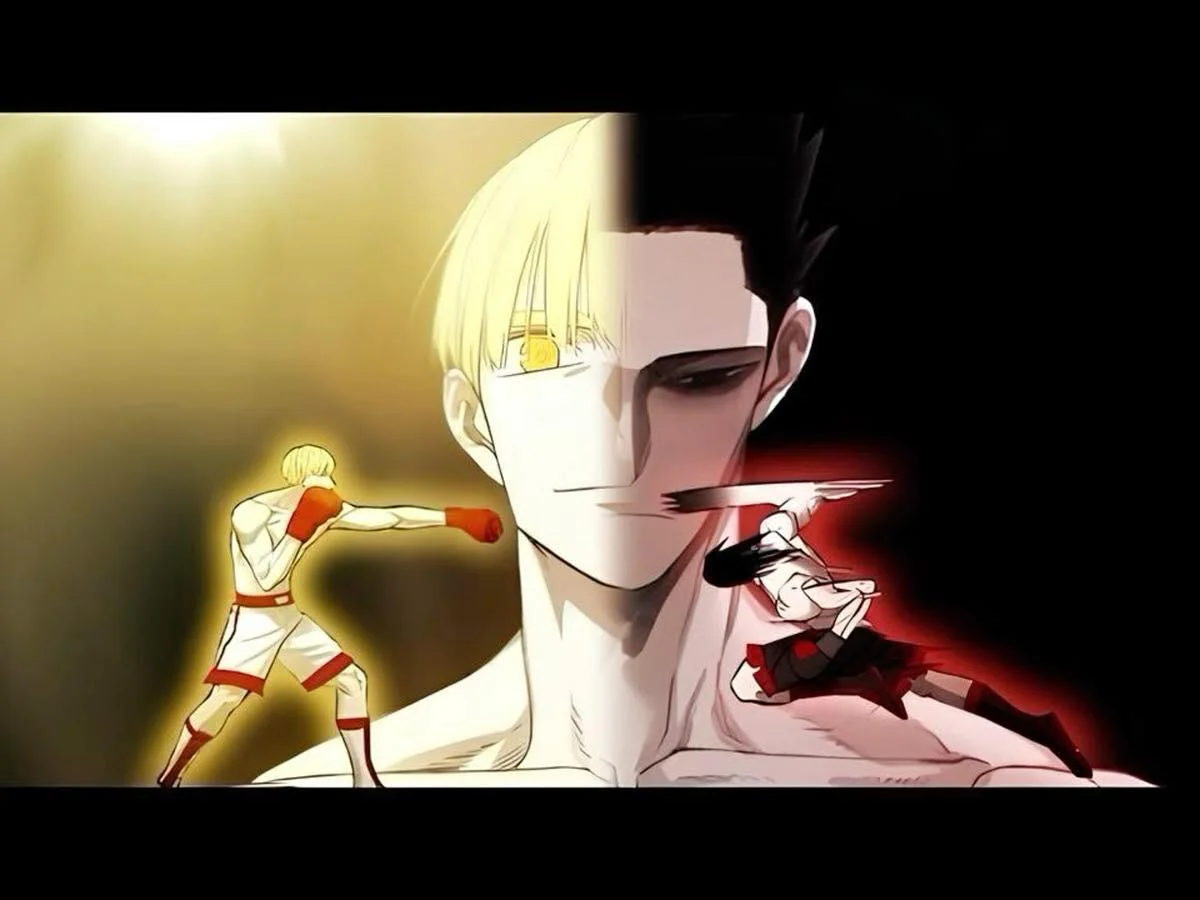
The artwork in The Boxer is instantly recognizable and unlike anything else in manhwa. JH employs extreme minimalism, often leaving backgrounds completely white or using minimal environmental detail. Characters are rendered with clean lines and realistic proportions. There's no exaggerated expressions, no speed lines, no typical manga visual shorthand.
This stark aesthetic serves multiple purposes. The empty backgrounds create sense of isolation that mirrors Yu's emotional state. He exists in a void, separated from normal human experience. The minimalism focuses attention entirely on character expressions and body language with nothing to distract.
Fight scenes use the minimal style brilliantly. Instead of cluttered action panels with motion lines and impact effects, fights are depicted with clinical precision. You see exact body positioning, subtle weight shifts, the moment before impact. The clarity makes violence feel more real and impactful than exaggerated action manga aesthetics.
The artist occasionally uses color in an otherwise black and white series. These moments of color carry enormous emotional weight because of their rarity. When color appears, it signals something significant is happening emotionally or thematically. It's visual storytelling through restraint and selective emphasis.
Facial expressions receive extraordinary detail and subtlety. Characters' eyes especially convey complex emotions without dialogue. You can read fear, desperation, emptiness, or rare moments of genuine feeling through eyes alone. This becomes crucial when dealing with characters like Yu who rarely speak about their emotions.
How the Anime Adaptation Could Change Everything
Adapting The Boxer to anime presents unique challenges and opportunities. The minimalist visual style that works perfectly in manhwa might feel jarring in motion. But if executed properly, the anime could achieve something genuinely special that elevates the source material.
The still, contemplative moments that define the manhwa could translate beautifully to anime through extended shots and minimal animation. Imagine scenes holding on a character's face while subtle animation captures micro-expressions. The restraint could create hypnotic, meditative viewing experience unlike typical high-energy sports anime.
Fight choreography could be stunning if the animators maintain the clinical precision of the source material. No flashy effects or impossible camera movements. Just brutal, realistic boxing depicted with perfect technical accuracy. Every punch would carry weight and consequence. The violence would feel real in ways most anime fights don't.
The soundtrack will be crucial. The manhwa's silence translates to panel composition and pacing. Anime must use music and sound design to create equivalent atmosphere. Minimal score, realistic sound effects, strategic use of silence could capture the manhwa's tone. Alternatively, a haunting score could add emotional dimension.
Voice acting choices will define character interpretation. Yu especially needs a voice that conveys emptiness without becoming monotone or boring. The actor must communicate the character's internal void while making him engaging to watch. Supporting characters need voices that bring their desperation and humanity to life.
The Supporting Characters Who Provide Emotional Core
While Yu serves as the protagonist and lens through which we view the boxing world, the supporting characters provide much of the series' emotional impact and thematic exploration. They represent different relationships with boxing and talent.
K, Yu's coach, is perhaps the most important supporting character. He recognizes Yu's talent and initially sees him as tool to achieve his own ambitions. Their relationship evolves into something more complex as K begins caring about Yu as a person rather than just a fighter. K's journey from exploitation to genuine concern provides emotional through-line.
The various opponents Yu faces each represent different philosophies about boxing and life. Some box for glory, others for money, some for redemption or escape. Their backstories and motivations create emotional investment even though we know Yu will likely defeat them. The tragedy isn't whether they lose but why losing matters so much to them.
These fighters often have poured everything into boxing. It's their identity, their purpose, their reason for living. Facing Yu forces them to confront the meaninglessness of effort in the face of overwhelming natural talent. Some handle this with grace, others break completely. These reactions explore different ways people cope with insurmountable barriers.
Female characters in The Boxer, while less numerous than in some series, are written with equal complexity and agency. They're not romantic interests or cheerleaders but people with their own relationships to boxing and the world it creates. Their perspectives add dimension to the story's exploration of competition and purpose.
Exploring the Dark Side of Natural Talent
Most sports stories celebrate talent, especially when combined with hard work. The Boxer presents talent as isolation, burden, and potential curse. This perspective rarely appears in media that typically equates ability with blessing.
Yu's talent separates him from normal human experience. He can't understand why others struggle with things that come effortlessly to him. He can't share their joy in improvement because he never had to improve. His ability creates unbridgeable gap between him and everyone else.
The series also examines how extraordinary talent affects those around the talented person. Opponents who trained their entire lives are destroyed in seconds. Coaches and promoters see profit rather than person. Other fighters feel their own achievements diminished by comparison. Yu's existence makes everyone around him feel inadequate or opportunistic.
There's also exploration of how talent without passion leads to emptiness. Yu doesn't love boxing. He's just good at it. So his victories mean nothing to him. He experiences no satisfaction, no sense of accomplishment, no joy. He goes through motions of competition without experiencing the emotional rewards that make it meaningful.
This raises philosophical questions about the value of achievement. If success comes too easily, does it mean anything? Is struggle necessary for satisfaction? Can you find purpose in something you're too good at? The Boxer suggests that talent without meaning creates suffering rather than happiness.
The Psychological Depth Behind Each Fight
While The Boxer features spectacular boxing matches, fights function primarily as character studies and thematic exploration rather than simple action setpieces. Each major fight reveals something about the human condition.
Opponents often enter fights with clear motivations and psychological states. They're fighting for redemption, for family, for pride, for identity. The pre-fight chapters establish who they are, what they're fighting for, and what victory or defeat would mean to them. This investment makes the outcomes emotionally significant.
During fights, the series often shifts perspective to show how different people experience the same moment. Yu sees everything in slow motion with perfect clarity. Opponents experience chaos, desperation, and disbelief as their techniques fail. Spectators see something entirely different from their external perspective. This multi-faceted presentation adds complexity to seemingly simple action.
The aftermath of fights matters as much as the fights themselves. Some defeated opponents find peace or new direction. Others break psychologically from having their dreams destroyed. A few rare individuals find something valuable in the experience of facing Yu. The series takes time to examine consequences rather than rushing to the next fight.
The psychological realism extends to technical boxing details. Fighters experience genuine fear, exhaustion, and pain. Bodies break down realistically. Injuries have consequences. There's no anime-style recovery or fighting through impossible damage. The brutality feels grounded in actual combat sports reality.
Themes of Meaning and Purpose in Empty Achievement
The central philosophical question The Boxer poses is how to find meaning when achievement comes without effort. Yu wins every fight easily, but each victory leaves him more empty. Success without struggle creates void rather than fulfillment.
This connects to broader existential questions about purpose. If you're naturally gifted at something, are you obligated to pursue it? Should you dedicate your life to something you're good at but don't love? What do you owe to the talent you were born with versus your own desires and needs?
The series also explores meaning found through connection versus meaning found through individual achievement. Yu's victories isolate him further. The moments where he seems closest to genuine feeling come through human connection, not boxing success. This suggests purpose comes from relationships rather than accomplishments.
Different characters represent different answers to questions about meaning. Some find purpose through struggle even if they never reach the top. Others discover that reaching the top doesn't provide the fulfillment they expected. A few realize they were pursuing the wrong things entirely. The series doesn't offer simple answers but explores multiple perspectives.
Why This Story Resonates Beyond Sports Fans
While The Boxer uses boxing as its framework, the themes and character studies transcend sports entirely. You don't need to care about boxing to be devastated by this story. The emotional core is universal human experience.
Anyone who's experienced being good at something they don't love will relate to Yu's situation. The pressure to pursue talents that don't align with your passions, the guilt of not appreciating abilities others would kill for, the emptiness of success in something that doesn't fulfill you—these are common human experiences.
The series also speaks to anyone who's felt isolated by being different. Yu's difference is his talent, but the emotional result—being unable to connect with others, feeling fundamentally separate from normal human experience—applies to many forms of difference. The isolation and longing for genuine connection resonate universally.
The exploration of purpose and meaning affects everyone regardless of interest in sports. We all grapple with questions about what makes life meaningful, whether achievement brings happiness, and how to find purpose. The Boxer examines these through boxing but speaks to fundamental human concerns.
The psychological depth and character complexity would work in any genre. The fact that it's ostensibly about sports is almost incidental. It's really about people, their struggles, their relationships, and their search for meaning in existence that often feels empty or predetermined.
Comparing The Boxer to Other Deconstructive Sports Stories
Ping Pong the Animation similarly deconstructs sports narratives through characters with complex relationships to their sport and talent. Both series use minimalist aesthetics and prioritize psychological exploration over typical sports story beats. The Boxer leans even harder into darkness while Ping Pong maintains more warmth.
Megalobox shares boxing setting and features protagonist with mysterious background fighting for purpose beyond simple victory. However, Megalobox maintains more traditional underdog narrative and finds-redemption-through-sport themes. The Boxer rejects those comforting narratives entirely.
Real, Takehiko Inoue's wheelchair basketball manga, explores disability, identity, and finding meaning through sports with psychological complexity and minimalist artwork. Both Real and The Boxer use sports to examine deeper human experiences, though Real ultimately embraces sports as healing while The Boxer questions whether it can be.
Oyasumi Punpun isn't a sports story but shares The Boxer's minimalist art style, psychological depth, and unflinching examination of human suffering and search for meaning. Both series refuse to provide easy answers or comforting narratives, demanding readers/viewers sit with uncomfortable truths.
What the Anime Needs to Get Right
The anime adaptation faces significant pressure to do justice to beloved source material while making necessary changes for the medium. Several elements are absolutely crucial to get right for the adaptation to succeed.
The pacing must allow for contemplative moments. Rushing through quiet scenes to get to fights would destroy what makes The Boxer special. The anime needs confidence to hold on silent moments, to let emotions breathe, to trust viewers to engage with stillness. This goes against typical anime production values but is essential.
Fight choreography needs to prioritize realism and clarity over flashiness. Every punch should be technically accurate and devastatingly clear. The camera work should serve the action rather than obscuring it with impossible angles. The weight and consequence of each blow must translate to animation.
Character animation, especially facial expressions and subtle body language, carries enormous narrative weight. The animators must capture the source material's ability to convey complex emotions through minimal expression changes. Yu's eyes especially need to communicate his internal void and rare moments of feeling.
The sound design and music must enhance rather than overwhelm. Realistic sound effects for punches, footwork, and breathing. Strategic use of silence. A score that understands when to be present and when to step back. The audio landscape should feel as considered and minimalist as the visual style.
The Potential Cultural Impact of the Adaptation
If executed properly, The Boxer anime could have significant impact on both sports anime as a genre and anime storytelling more broadly. It has potential to shift expectations and open space for different approaches.
The series could demonstrate that sports anime doesn't require high energy, friendship speeches, and training montages to succeed. Contemplative, psychologically complex sports stories can resonate with audiences seeking different emotional experiences. This might encourage more experimental approaches to sports narratives.
The minimalist aesthetic, if well-received, could influence other productions to embrace restraint over excess. Not every anime needs constant motion, detailed backgrounds, and flashy effects. Sometimes less creates more impact. The Boxer could validate artistic choices that prioritize atmosphere and emotion over spectacle.
For broader anime viewership, this could serve as gateway to more mature, psychologically complex storytelling. Viewers drawn in by boxing or sports interest might discover they enjoy character-driven narratives exploring existential themes. This crossover potential could expand what types of stories find mainstream success.
The adaptation could also spark conversations about talent, purpose, and meaning that extend beyond anime fandom. The themes resonate with anyone grappling with questions about what makes life meaningful. Media coverage and discussion could reach audiences who don't typically engage with anime.
Final Thoughts on Why This Adaptation Matters
The Boxer represents something genuinely special in manhwa, and the anime adaptation has opportunity to introduce this masterpiece to massive new audience. But more than that, it has potential to change perceptions about what sports anime can be and accomplish.
This isn't feel-good entertainment about overcoming challenges through effort and friendship. It's a dark, beautiful meditation on talent, isolation, purpose, and the human search for meaning. It's uncomfortable, devastating, and unlike anything most anime viewers have experienced in sports genre.
The adaptation will succeed or fail based on whether it embraces what makes the source material unique rather than trying to sand off rough edges to appeal to broader audiences. The darkness, the minimalism, the contemplative pacing—these aren't flaws to fix but essential elements to preserve.
For manhwa readers who love the original, the anime offers chance to experience the story in new medium and share it with friends who don't read webtoons. For anime-only viewers, this will be unlike any sports anime they've encountered. Both groups should prepare for something special.
The Boxer anime adaptation won't be for everyone. Some will find it too slow, too dark, too different from what they expect from sports stories. But for viewers ready to engage with challenging material that treats animation as art capable of exploring complex themes, this could be transformative.
When the adaptation releases in 2026, it will test whether anime audiences are ready for sports stories that deconstruct rather than celebrate, that question rather than inspire, that examine the darkness lurking beneath competitive glory. If it succeeds, it won't just be another good sports anime. It will change how we see what the genre can be.
Minimal score would be the right call. If they put dramatic swelling music over every exchange it will undercut exactly what makes the fights hit so differently from other sports anime.
The God of High School comparison is brutal but fair. Great action, hollowed out story, forgotten within a season. The Boxer cannot survive that same treatment because the story is the entire product.
That is a fair point about backgrounds in the webtoon format but JH leans into that limitation so deliberately that it transforms into a feature rather than a bug.
Finished the entire manhwa in one sitting and then sat in silence for about twenty minutes. That ending does something to you that most stories never even attempt.
Every wave of manhwa adaptations raises the same hope and the same anxiety. Solo Leveling season one delivered. Now the pressure is on everything else in the pipeline including this one to not be a letdown.
The bullseye impact effect for punches is one of those visual inventions so simple and effective that you wonder why no one did it before. Every adaptation needs to preserve that or something equivalent.
Hot take but Yu is not the real protagonist of The Boxer. He is the immovable object that every actual protagonist crashes into. The series is a collection of human stories about what happens when people collide with something they cannot overcome.
The article frames K's arc as moving from exploitation to genuine care and that is accurate, but it undersells how messy and uncomfortable that transition is. K is not a good person who learns. He is a complicated one who grows.
The Boxer alongside Omniscient Reader and Solo Leveling represents a wave of Korean storytelling that is doing things structurally that manga hasn't attempted in decades. It is a good time to pay attention.
JH also wrote The Horizon which is a completely different style but equally devastating. If you like The Boxer and haven't read it yet, please stop what you are doing.
Curious what people think the right voice direction for Yu should be. Flat and monotone could be accurate but could also make him boring to watch for twelve episodes.
Sports anime tends to peak during tournament arcs with emotional crowd reactions and teammate moments. The Boxer has none of that infrastructure and is somehow more emotionally intense than most of the genre. That achievement deserves more credit.
Every time someone discovers The Boxer for the first time and posts about it online there is this shared recognition from readers who went through the same thing. It is a weirdly communal experience.
Every opponent in this series is technically the hero of their own story and Yu is the disaster that ends it. The series running nearly 123 episodes of that structure without it becoming repetitive is an extraordinary achievement.
Okay but are we going to acknowledge that the announcement came in 2023 and we have been living on hope and scraps ever since. The adaptation exists in a quantum state of maybe.
The series also quietly does something fascinating with Coach K by showing how a person can simultaneously care about someone and still be using them. Those two things coexisting without resolution is more honest than most fiction allows.
Voice acting question is a great one. The best comparison I can think of is something like a voice that projects stillness rather than emptiness. There is a difference. You feel presence without emotion.
The opponents Yu faces throughout the series function almost like different philosophical arguments walking into the ring to be tested and destroyed. The series is basically doing battle of ideas through athletic combat.
JH deserves to be mentioned in the same conversation as the giants of the medium. The Boxer and The Horizon together represent a creative output that very few artists achieve even over an entire career.
Maybe twelve episodes is enough for a first season covering the early arcs and proving the concept. If the animation is strong and the tone is right, it earns the rest of the story.
The Saitama comparison is interesting but Yu is darker because One Punch Man eventually finds humor in the premise. The Boxer finds tragedy. There is no relief valve.
Twelve episodes is not enough. This is not a complaint, it is a mathematical fact. The story needs more room than that if the adaptation is going to honor what the source material built.
Cautiously optimistic about this adaptation because the source material is so strong that even a decent execution should result in something worthwhile. My floor for this is still higher than most sports anime.
The structure shift in later volumes is divisive but I think it is actually the point. JH is showing you that there is no single hero story. Every person who steps into that ring has a complete life behind them.
Very true about the soundtrack. The wrong music choice could tip the whole tone from contemplative into melodramatic, and once you lose that restraint the whole thing falls apart.
160 million views and most of the people in my anime circles have never even heard of it. The manhwa to anime pipeline is genuinely changing the visibility of these titles.
Not sure I agree with the article's framing that the minimalism is purely intentional genius. Some of the lack of backgrounds is just a known limitation of the webtoon vertical scroll format.
Unpopular opinion but the series loses some momentum in the later volumes when the structure shifts away from Yu and toward the secondary fighters. The first few arcs are nearly perfect though.
What the article doesn't say explicitly is that The Boxer has almost no filler. 123 episodes and every single one is doing something. That density is exhausting in the best possible way.
The philosophical question the article raises about talent without struggle creating emptiness is something athletes in real life talk about too. A lot of prodigies describe the same hollow feeling Yu has.
Completely agree about the emotional intensity. The series never uses a single crowd cheer or team huddle and yet some of those fights hit harder than anything in Haikyuu or Kuroko. Different tools, better results in this specific context.
What streaming platform is this even supposed to land on? Nobody has confirmed anything and that silence is getting frustrating for fans who have been waiting since the 2023 announcement.
Tried explaining it to my partner as a sports story and they asked if the protagonist wins his matches. When I said yes always and easily they asked why anyone should care. That question is basically the thesis of the entire series.
The article ends before finishing its thought on talent and purpose, which feels accidentally appropriate for a story that resists easy conclusions. Some questions are better left open.
Studio Xtorm is relatively new and unproven on something of this scale, which is my only real worry. The source material is exceptional. Execution is the variable.
JH's ability to make you care deeply about a character in the span of a single chapter and then put them in an impossible situation is almost cruel. It borders on emotionally manipulative in the best possible way.
Hot take, the anime will probably be fine but nothing will replace the experience of reading the manhwa where you control the pacing and can sit with each panel.
Someone asked about streaming and honestly the smart money is on Crunchyroll handling global distribution like they do with most manhwa adaptations right now. But nothing is confirmed.
Do you think the anime needs a heavy orchestral score or something more minimal? Because I keep imagining something almost silent with just ambient sound during the fights.
That is the single best summary of The Boxer's entire premise I have ever seen stated that concisely. Someone should put that on the back of the physical volumes.
The article says this series will make you question the nature of talent. That is understating it. It made me question whether anything I work hard at is meaningful if the outcome is already determined by things outside my control.
The adaptation was originally supposed to drop in the second half of 2025 and we still have no confirmed release date. My hype has officially entered survival mode.
Counter argument to the article's position. Not every reader will find Yu's emptiness compelling. For some people, having a protagonist who genuinely does not care is a barrier that never dissolves no matter how good the surrounding story is.
Been reading manhwa for a while now and The Boxer is the one title where I consistently struggle to explain what it is to someone who hasn't read it. Boxing is almost the least accurate description.
I started reading because a friend described Yu as what might happen if Saitama from One Punch Man actually felt the existential weight of his situation rather than just being unbothered. That comparison worked as a pitch.
The Boxer made me cry twice. Once for a character I had known for maybe eight chapters. JH builds human beings fast and then dismantles them in ways that feel earned.
Genuinely curious, has Studio Xtorm done anything notable before this? The original announcement was exciting but then it just went quiet for so long that people started losing hope.
The webtoon format getting this kind of serious adaptation treatment is genuinely meaningful for the medium. Ten years ago this story would never have found an international audience at this scale.
As someone who studies narrative structure, the decision to build up secondary protagonists only to have them fall before Yu is one of the most audacious structural choices in modern comics storytelling.
People keep comparing this to Megalobox and I think that comparison undersells The Boxer by a lot. Megalobox is a sports anime. The Boxer happens to involve sports.
As a person who studied graphic design, JH's use of negative space in The Boxer is legitimately worth academic analysis. It functions the same way silence functions in music.
Yu having a cat is somehow one of the most important storytelling decisions in the series. It tells you everything you need to know about him without a single word of dialogue.
That is a legitimate concern but the series addresses it somewhat by not really asking you to love Yu. It asks you to understand him, which is a different and arguably more interesting request.
The post touches on the minimalist art but doesn't mention how JH uses those bullseye impact visuals during punches. It is such a simple trick but it makes every hit feel surgical and precise.
Honestly worried the anime will sanitize Yu's emptiness and give him a more conventional emotional arc just to make him relatable to a broader audience. That would completely ruin the point.
Speaking from experience training combat sports, the way The Boxer renders fear before a fight is more accurate than most fiction written about it. That specific dread is almost impossible to communicate and JH somehow does it visually.
What strikes me about the article is the focus on Yu's isolation but the series is equally about the people who see his talent and decide to orbit it for their own reasons. Coach K, the promoters, the other fighters. Everyone wants a piece of something they don't understand.
No filler, no training montages, no beach episodes, no friendship speeches. Just consequence and stillness and then violence. It is the most efficiently told sports story ever made.
The fact that the manhwa finished with 123 episodes in 2022 and we are still waiting for a single episode of anime in 2026 is a special kind of torment.
Finishing the series left me with this strange mix of devastation and peace that I usually only associate with very good literary fiction. It felt like reading a novel that happened to have incredible fight scenes.
Twelve episodes for 123 webtoon chapters is genuinely concerning. Even with great pacing that means barely touching some of the most emotionally dense arcs in the second half.
Please let this not be another webtoon adaptation that gets decent animation but completely misses the tone of the source material. The God of High School adaptation is a cautionary tale for all of us.
The article nails something important about the artwork. JH essentially uses empty white space the same way a filmmaker uses silence in a scene. It creates weight and dread without saying anything at all.
The Horizon by the same author deserves its own adaptation conversation. JH is creating a body of work that has no real equivalent in the medium right now.
The article describes how different opponents handle being destroyed by Yu, some with grace and some breaking completely. That variation is where the series' true emotional range lives. JH never lets that moment be the same twice.
This piece calls The Boxer a deconstruction of sports stories and that is exactly right. It functions like a very patient argument against every assumption the genre asks you to make.
Never been a boxing fan, picked this up because someone described it as existentialist fiction that happens to have punches in it. That description was completely accurate.
Been a martial arts practitioner for years and what The Boxer gets right about the psychology of facing a superior opponent is genuinely uncomfortable to read. That panic and disbelief feels accurate.
hoping beyond hope that they nail yu's eyes in the anime because so much of the character lives entirely in that expression. get that wrong and you lose the whole thing.
The comparison to Hajime no Ippo is interesting but they are almost opposite stories. Ippo is about climbing toward the top through effort and heart. The Boxer is about what happens at the very top when effort is irrelevant.
Genuinely hope whoever handles the soundtrack has actually read the whole manhwa and understands what they are scoring. This is not a project you can hand to someone doing background work.
The most important thing the adaptation needs to get right is the silence. The pauses between moments. The decisions made in stillness. That is where The Boxer actually lives.
The article's title says this will change how you see sports manhwa and honestly it is more accurate to say it changes how you see sports stories in any medium. The questions it asks apply everywhere.
The article mentions that fights function as character studies. This is the key thing. You do not watch The Boxer to find out if Yu wins. You watch to understand what losing means to the person across from him.