How is Jaafar Jackson related to Michael Jackson exactly, because I keep seeing people online who think he is Michael's son rather than his nephew.
12
Sign up to see more
SignupAlready a member?
LoginBy continuing, you agree to Sociomix's Terms of Service, Privacy Policy

How is Jaafar Jackson related to Michael Jackson exactly, because I keep seeing people online who think he is Michael's son rather than his nephew.
What is the best entry chapter for someone who wants to evaluate the combat art specifically? Like what chapter actually shows what this series can do at its peak?
That reading just made chapter seven hit completely differently in retrospect.
HeyGen growing at 152% year over year is not a footnote. That is a threat. Revenue advantage can evaporate if the challenger keeps acquiring customers at that rate and then monetizes them.
Anyone comparing Windsurf vs Cursor right now has basically the same price point to work with since Windsurf moved to $20 in March. The deciding factor is really Cascade vs Cursor's Agent mode.
Curious what the experience is like for a designer with zero coding background using v0. Is the prompt interface accessible enough that a non-technical person can actually get usable output without a developer sitting next to them?
Wait, what about the quota system they rolled out in March? The article says no limits but that is not actually true anymore. There are daily and weekly hard caps now, and heavy users have been vocal about hitting them.
The designer-developer relationship has been tense for decades. Designers create pixel-perfect mockups in Figma. Developers translate them to code and somehow everything looks slightly wrong. Fonts don't match. Spacing is inconsistent. Buttons have different corner radiuses. Both sides get frustrated, blame each other, and the product suffers. V0 by Vercel is fixing this problem by generating production-quality React components that look exactly like the designs. The rebrand from v0.dev to v0.app in January 2026 signaled expanded ambitions beyond just UI component generation. Vercel positioned the tool for full-stack web development, though its core strength remains frontend excellence. That strategic clarity matters because trying to be everything often means excelling at nothing. V0 chose to dominate the handoff between design and code before expanding into other areas.
Started a SaaS product six weeks ago. Have paying customers. Hiring my first employee next month. Did not write any code. The economic opportunity here is real and it is available right now.
While Synthesia leads in revenue, HeyGen leads in customer acquisition momentum with 152% year-over-year growth in mid-market adoption. That explosive growth rate allowed HeyGen to close much of the customer count gap by late 2025. The company is winning by making avatar video accessible to smaller teams and individual creators who cannot afford enterprise contracts but need professional video capabilities. HeyGen positioned itself for small and medium businesses, marketing teams, content creators, and solo entrepreneurs rather than enterprise learning and development departments. This market segment values affordability, ease of use, and creative flexibility over governance features and advanced integrations. Average contract values are roughly one-third of Synthesia's, reflecting this different customer profile.
The AI video generation race just got a clear winner. Runway Gen-4.5 topped the Video Arena leaderboard with a 1,247 Elo score, surpassing both Google Veo 3 and OpenAI Sora 2. For those unfamiliar with Elo ratings, this is the same system used to rank chess players and competitive games. A higher score means more wins in head-to-head comparisons. When real users compare videos side by side without knowing which AI generated them, they consistently choose Runway's output. Runway didn't start as an enterprise video tool. It began as a playground for artists and filmmakers who wanted to experiment with AI-generated visuals. The early versions produced fascinating but inconsistent results. Sometimes you'd get stunning cinematic footage. Other times you'd get distorted motion and unrealistic physics. Gen-4.5 changed that equation by achieving breakthrough consistency in motion quality and physical accuracy.
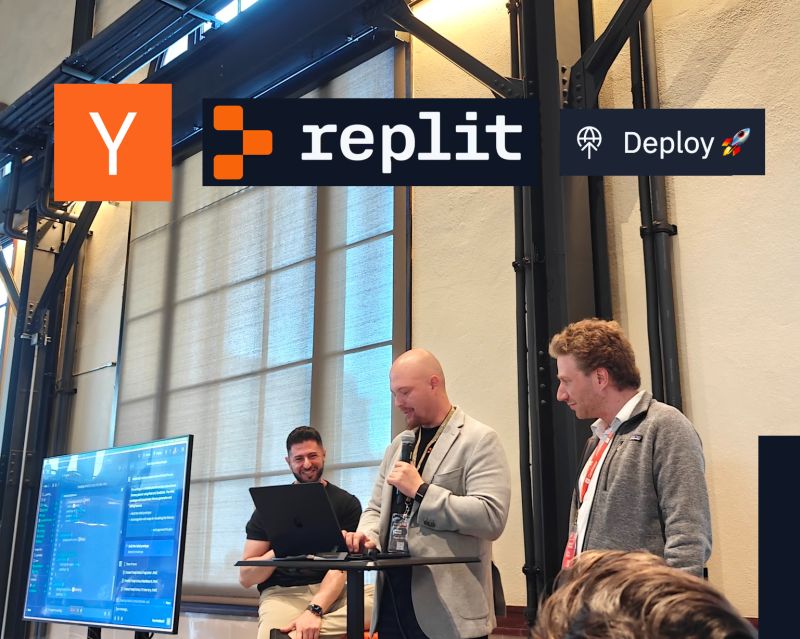
When a company's revenue jumps from $10 million to $100 million in nine months, you pay attention. When that growth comes from an AI agent that builds entire applications autonomously, you realize something fundamental just changed in software development. Replit Agent represents that change, and the numbers prove developers are ready for it. Replit started as a browser-based coding environment for education. Students could write Python or JavaScript without installing anything locally. Teachers loved it because setup time vanished. But the company saw something bigger. If you could run code in the browser, why not let AI write that code? That question led to Agent 3, an AI that doesn't just suggest code completions. It builds entire applications from scratch.
Speaking from experience doing UX work, the emotional cost of watching your designs get interpreted badly is not trivial. You put weeks into getting the details right and then the implementation feels like a rough draft. A tool that closes that gap has real psychological value.
There's a photograph from February 2026 that pretty much sums up the state of AI right now. At the India AI Impact Summit in New Delhi, Indian Prime Minister Narendra Modi invited the world's tech leaders onstage for a group photo. Everyone held hands. Well, almost everyone. Sam Altman of OpenAI and Dario Amodei of Anthropic, standing right next to each other, refused to clasp hands and instead raised their fists separately. The internet, predictably, lost its mind. An awkward moment between OpenAI CEO Sam Altman and Anthropic CEO Dario Amodei at an AI Summit captured the increasingly icy relations between two rival tech leaders who started off as colleagues. That's not just petty drama. It's a window into what may be the most consequential corporate rivalry in the technology world right now, one that's playing out in boardrooms, courtrooms, Super Bowl ads, and billion-dollar compute deals all at once.

The shopping mode integration is clever and slightly terrifying. Meta already knows what you like based on what you scroll past on Instagram. Now the AI can cross-reference that to recommend products. That is either extremely useful or extremely invasive depending on where you stand.
the fact that this model found thousands of zero-day vulnerabilities in every major OS and browser in just a few weeks is either the most impressive or most terrifying thing I have heard all year. Maybe both.
The coding gap is a real limitation that the article glossed over. Muse Spark trailing the leaders on coding workflows is significant because developers are both the most influential early adopters and the people most likely to build on your platform. Losing that audience to OpenAI or Anthropic has downstream consequences.
Anthropic on Tuesday unveiled an advanced artificial intelligence model designed specifically to identify software vulnerabilities, marking a significant development in the intersection of AI and cybersecurity. The model, named Claude Mythos Preview, will be available exclusively to a carefully selected group of companies as part of Project Glasswing, a new security initiative that aims to strengthen digital defenses while preventing malicious exploitation. The San Francisco based AI company has chosen to severely restrict access to Claude Mythos Preview due to its powerful capability to detect security weaknesses and software flaws. This decision reflects growing concerns about dual use AI technologies that could be weaponized by adversaries if they fell into the wrong hands.

Meta has just had one of its most important AI moments yet and the early signals are hard to ignore. Following the launch of its newest AI model Muse Spark, the company’s standalone Meta AI app surged dramatically in popularity, hinting at a much larger shift that is beginning to take shape. The release is particularly significant because it marks the first major AI model rollout under Alexandr Wang, who joined Meta to reboot its AI strategy. This is not just another incremental update. It represents a more aggressive and focused push into the AI race. According to data from Appfigures, Meta AI jumped from number 57 to number 5 on the U.S. App Store within a day of the launch. That kind of movement rarely happens without a strong underlying pull from users. It signals not curiosity but intent.
There is something to be said about how long it took. Instagram launched in 2010. It is 2026. A comment edit button took 16 years. Either the engineering was impossibly complex, which it was not, or it simply was not a priority for a very long time.