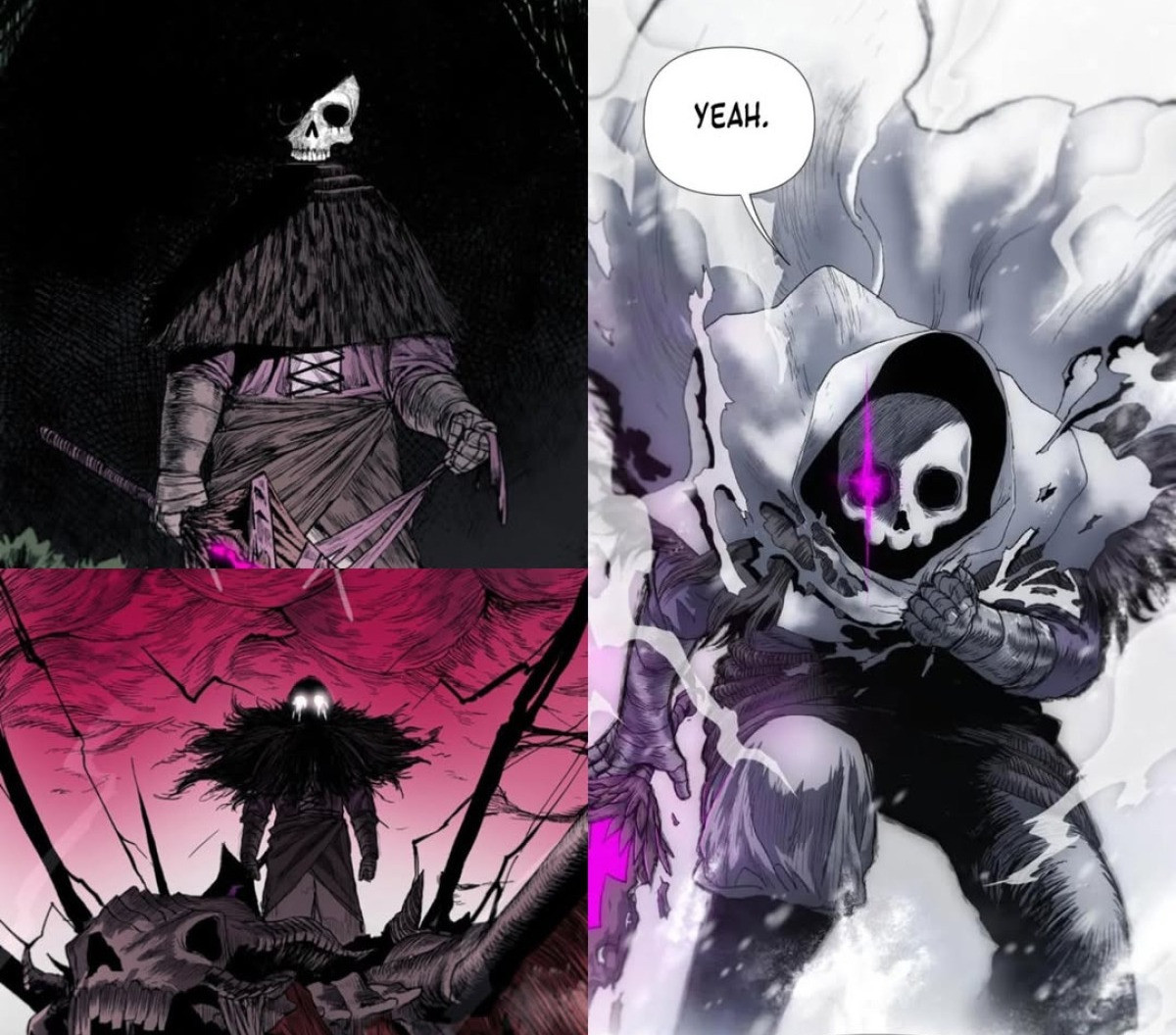
When a manhwa gets compared to Frieren: Beyond Journey's End but with a dark, bleak twist, expectations immediately rise. The Tale of the Skeleton Messenger, released on Webtoon in January 2026 by creators kain_y and SORAGAE, arrives with that exact premise and a tone that sets it apart from the increasingly crowded fantasy manhwa landscape.
Most fantasy stories lean toward hopeful narratives where heroes overcome darkness through determination and friendship. Even dark fantasy typically offers glimmers of light and the possibility of triumph. The Tale of the Skeleton Messenger takes a different approach, embracing bleakness and melancholy in ways that feel refreshing rather than oppressive, thoughtful rather than nihilistic.
This isn't darkness for shock value or edginess. It's a meditation on mortality, duty, memory, and what remains after the heroes have saved the world and moved on. If you're ready for a fantasy story that prioritizes atmosphere and emotional complexity over constant action and easy victories, this might be exactly what you've been searching for.
Understanding the Core Premise and Setting
The Tale of the Skeleton Messenger centers on a skeletal undead who serves as a messenger carrying communications across a fantasy world. This isn't a protagonist who used to be human and became undead tragically. The story begins with them already in this state, their past shrouded in mystery that unfolds gradually.
The world itself feels lived-in and ancient. This isn't a setting at the height of a grand adventure but rather the aftermath. Great events have already occurred. Heroes have risen and fallen. Kingdoms have crumbled and new ones emerged from the ruins. The messenger moves through a world shaped by history rather than actively making it.
As a skeletal undead, the protagonist exists outside normal society. They're not exactly feared or hated but viewed with unease and distance. People accept their service as a messenger because it's useful, but nobody wants to get close to an animated skeleton. This isolation defines much of the character's experience.
The messenger's role involves traveling dangerous routes, carrying important communications, and witnessing the lives of others while remaining fundamentally separate from those lives. They observe celebrations, tragedies, wars, and peace without truly participating. It's a lonely existence that the story explores thoroughly.
Unlike typical fantasy protagonists driven by grand quests to save the world or gain ultimate power, the messenger simply continues their duty. Day after day, year after year, carrying messages across a world that barely acknowledges their existence beyond the service they provide.
The Frieren Comparison and What Makes It Valid
Comparing any new fantasy work to Frieren: Beyond Journey's End sets a high bar. Frieren achieved widespread acclaim for its contemplative approach to fantasy, its examination of time and mortality, and its emotional depth. The Tale of the Skeleton Messenger earns the comparison through similar thematic focus but divergent execution.
Both series explore what happens after the traditional hero's journey ends. Frieren deals with an elf processing grief and connection after her hero party disbands. The Tale of the Skeleton Messenger examines existence in a world where those grand narratives are distant history or happening elsewhere beyond the protagonist's reach.
The handling of immortality and time creates strong parallels. Frieren experiences time differently than humans, creating disconnect and eventual loss. The skeleton messenger exists potentially forever, watching mortal lives flicker by like candles while remaining fundamentally unchanged and unchanging.
Where Frieren maintains gentle melancholy with underlying warmth and hope for connection, The Tale of the Skeleton Messenger leans harder into bleakness. The tone is colder, the emotional palette darker. Hope exists but feels more fragile and temporary against the weight of existence.
Both series prioritize character moments and emotional beats over constant action. Combat happens when necessary but serves the story rather than being the story's primary draw. The quiet moments between events matter as much or more than spectacular battles.
Exploring Themes of Mortality Through an Immortal Perspective
The central irony of The Tale of the Skeleton Messenger is how a protagonist who cannot die becomes the perfect lens for examining mortality. The skeleton messenger witnesses death constantly, carries news of deaths, and exists as a literal embodiment of death in skeletal form.
Through the messenger's eyes, readers see how fragile mortal life is. People the messenger meets and delivers messages to age, sicken, and die while the messenger continues unchanged. Relationships form and dissolve. Promises are made and broken or forgotten. Nothing mortal lasts.
This perspective forces contemplation of what mortality means beyond simple physical death. The story examines the death of relationships, dreams, civilizations, and memories. Everything ends eventually except the messenger, who carries on bearing witness to endless endings.
Yet the series doesn't treat death as purely tragic or fearful. There's also acknowledgment of death as natural conclusion, as mercy for suffering, as necessary transition. The messenger's neutrality toward death comes from having witnessed it so many times that emotion gives way to acceptance.
The contrast between the messenger's immortal existence and the mortal lives surrounding them raises questions about which state is preferable. Is living forever without truly being alive better or worse than brief existence filled with genuine experience? The story doesn't offer easy answers.
The Unique Visual Identity and Atmospheric Art
The art in The Tale of the Skeleton Messenger establishes mood and atmosphere as effectively as the writing. The visual style makes deliberate choices that reinforce the melancholic, bleak tone while remaining beautiful in its own right.
The color palette leans toward muted tones, grays, pale blues, and washed-out colors that create perpetual twilight feeling. Even scenes set in daylight have a dimmed quality, as if the world itself is tired. This creates visual consistency that keeps readers immersed in the story's emotional space.
The skeleton messenger's design strikes a balance between unsettling and sympathetic. Clearly inhuman and dead, but with enough personality in posture and subtle expression that readers connect emotionally. The artist manages to convey feeling through a skull face that shouldn't be capable of expression.
Environmental art emphasizes emptiness and scale. Wide panels showing the messenger traveling through vast landscapes reinforce isolation. Ruins and abandoned places appear frequently, visual reminders of impermanence and decay that mirror thematic content.
Character designs for mortals the messenger encounters feel grounded and realistic rather than fantasy-typical. People look weathered, tired, lived-in. They have scars, lines, imperfections that make them feel real. This grounds the story even amid fantastical elements.
How the Story Handles Loneliness and Isolation
Loneliness permeates The Tale of the Skeleton Messenger as a constant presence rather than something the protagonist overcomes through friendship and connection. This represents a bold narrative choice that won't appeal to everyone but creates powerful emotional impact for receptive readers.
The messenger's isolation is multifaceted. There's physical isolation from traveling alone through dangerous territories. Social isolation from being undead in a world of living beings. Temporal isolation from experiencing time differently than mortals. Existential isolation from being potentially the only being of their kind.
The story doesn't treat this loneliness as something to fix through finding companions or forming a found family. Instead, it examines how someone endures isolation that might be permanent, how they find meaning or purpose when connection seems impossible or temporary at best.
Brief moments of connection do occur. A conversation with someone who sees past the skeletal exterior. A shared moment of understanding with another outcast. These instances shine brightly against the prevailing loneliness, made more precious by their rarity and impermanence.
The series explores whether loneliness is truly the worst state or if it's simply different. The messenger has freedom that comes with having no attachments. No fear of loss when you have nothing to lose. No disappointment when you expect nothing. The story questions whether this constitutes wisdom or simply resignation.
The Role of Duty and Purpose in Giving Meaning to Existence
Without grand quests or personal ambitions driving the narrative, duty becomes the messenger's anchor. Delivering messages provides structure and purpose to potentially endless existence. This raises interesting questions about meaning and motivation.
The messenger continues their work not from external compulsion but internal commitment. Nobody forces them to carry messages. They could presumably stop anytime. Yet they persist, suggesting the duty itself provides meaning that would be lost without it.
The story examines whether purpose found through duty is genuine or simply comfortable distraction from existential questions. Does the messenger truly believe in the importance of their work or do they simply need something to do to avoid confronting the emptiness of immortal existence?
There's also exploration of how duty persists beyond its original context. The messenger might have started this work for reasons that no longer apply or can't be remembered. Yet the habit continues, the duty remains, even when original meaning has faded. This mirrors how people often continue paths long after forgetting why they started.
The reliability and consistency of the messenger's service contrasts sharply with the chaos and uncertainty of the world around them. In a setting where everything changes and nothing lasts, the messenger's unwavering commitment to duty represents a form of stability, perhaps the only constant in a world of flux.
Supporting Characters and Temporary Connections
Given the messenger's immortality and the story's focus on impermanence, supporting characters necessarily have limited presence. They appear, interact with the messenger, then fade from the story as time passes or circumstances change. This temporary nature makes interactions more poignant.
Some characters treat the messenger with fear or disgust upon first meeting, then warm slightly after interaction. These small moments of acceptance carry weight because they're rare. Watching someone move from revulsion to tentative acceptance to something approaching respect creates satisfying character arcs in compressed timeframes.
Other characters appear only briefly, receiving or sending a message, but leave lasting impressions through what their messages reveal about their lives. The messenger learns pieces of countless stories without ever seeing most of them to completion. This fragmented narrative mirrors real life where we encounter people briefly and never know how their stories end.
Occasionally, the messenger encounters someone else who exists outside normal society. Another immortal, a long-lived non-human, or someone cursed to wander. These meetings create different dynamics where the usual mortal-immortal divide doesn't apply. The rarity makes them memorable when they occur.
The most emotionally impactful supporting characters are those who try to befriend the messenger despite the obvious futility. They know they'll age and die while the messenger continues unchanged. They choose connection anyway, and their eventual deaths hit harder because both parties knew it was coming.
The Bleak Tone and Why It Works
Bleakness in fiction often gets criticized as edgy, nihilistic, or emotionally manipulative. The Tale of the Skeleton Messenger avoids these pitfalls by treating its dark tone as thoughtful exploration rather than aesthetic choice. The bleakness serves thematic purpose.
The story doesn't revel in suffering or use darkness to shock readers. Instead, it examines difficult truths about existence, mortality, and meaning in ways that require a certain emotional palette. Coating these themes in false optimism would undermine their impact.
There's a difference between bleakness that says nothing matters and bleakness that forces contemplation of what does matter when easy answers are stripped away. The Tale of the Skeleton Messenger falls into the latter category, using its dark tone to dig deeper into questions about purpose and meaning.
The tone also creates contrast that makes moments of genuine warmth or connection more powerful. When the prevailing atmosphere is cold and lonely, small kindnesses shine brighter. Brief friendships mean more. Tiny victories against the darkness feel earned rather than expected.
Additionally, the bleak setting provides honest acknowledgment of harsh realities. The world isn't fair. Good people suffer. Evil sometimes prospers. Death comes for everyone regardless of merit. Denying these truths would make the story feel shallow. Confronting them creates depth.
How the Series Differs From Typical Fantasy Manhwa
The current fantasy manhwa landscape is dominated by power progression, system mechanics, and protagonists growing stronger to overcome challenges. The Tale of the Skeleton Messenger completely sidesteps these conventions in favor of contemplative storytelling.
There's no leveling system, no stats, no clear power progression. The messenger has whatever capabilities they have and those don't meaningfully change. Growth happens emotionally and philosophically rather than through gaining new skills or increasing numbers.
Combat is rare and not the focus. When violence occurs, it's brief and often anticlimactic. The messenger might avoid fights entirely or end them quickly. There's no extended battle choreography or tournament arcs. Action serves the story rather than being the primary draw.
The pacing moves slowly and deliberately. Entire chapters might focus on a single conversation or a journey through a landscape. The story trusts readers to engage with quiet moments and internal reflection rather than requiring constant external conflict.
Romance, if it exists at all, is understated and melancholic. The messenger's nature makes traditional romance essentially impossible. Any romantic elements would necessarily be tinged with tragedy and impermanence. The story doesn't try to force romantic subplots where they don't fit.
Comparing to Other Melancholic Fantasy Stories
To Your Eternity shares DNA with The Tale of the Skeleton Messenger through its immortal protagonist witnessing mortal lives. Both explore similar themes but To Your Eternity leans more toward emotional devastation through specific tragic arcs while Skeleton Messenger maintains more consistent melancholic atmosphere.
Girls' Last Tour offers bleak post-apocalyptic atmosphere with moments of quiet beauty. The tone similarity is strong though the settings differ dramatically. Both series find meaning and beauty in endings and emptiness rather than in grand heroic narratives.
Mushishi presents episodic stories with contemplative tone and focus on observation rather than action. The Tale of the Skeleton Messenger shares that meditative quality and similar protagonist role as witness to others' stories rather than central actor in grand events.
The Ancient Magus' Bride explores themes of isolation, inhumanity, and connection between mortal and immortal beings. Both series examine what happens when beings of different natures try to understand each other across vast divides of experience and existence.
The Challenge of Marketing and Finding the Right Audience
The Tale of the Skeleton Messenger faces inherent marketing challenges because it deliberately avoids elements that typically drive manhwa popularity. This creates risk but also opportunity to reach underserved audiences.
Readers seeking action-heavy stories with constant progression will likely bounce off the slow pacing and contemplative focus. The series makes no attempt to appeal to that demographic, which limits potential audience but ensures the audience it does attract genuinely appreciates what it offers.
The bleak tone requires specific mood receptivity. Readers going through difficult times might find the melancholic atmosphere too heavy. Others might find it cathartic or validating. The emotional demands mean this isn't casual reading but something requiring engagement.
However, there's clearly appetite for thoughtful, atmospheric fantasy. Frieren's success proved a significant audience exists for contemplative stories that prioritize emotional depth over action spectacle. The Tale of the Skeleton Messenger targets that same demographic with darker execution.
The series also appeals to readers tired of generic isekai, repetitive progression fantasies, and formulaic storytelling. It offers genuine novelty and artistic vision in a market sometimes dominated by safely commercial choices.
Potential Story Directions and Long-Term Sustainability
As a new series, The Tale of the Skeleton Messenger's future remains uncertain. The contemplative, episodic structure offers flexibility but also raises questions about long-term narrative sustainability.
The episodic approach where the messenger encounters different people and situations could theoretically continue indefinitely. Each arc introduces new characters and scenarios while the messenger remains constant. This structure worked for Mushishi across many volumes and could work here.
Alternatively, the series might gradually build toward revelation about the messenger's origins and nature. Slowly uncovering backstory through fragmented memories or encounters with figures from the past could provide overarching narrative progression beneath episodic structure.
There's also potential for the messenger's emotional journey to constitute the primary arc. Even if their circumstances don't change dramatically, their perspective and emotional state could evolve. Growth through acceptance, understanding, or finding peace rather than through external achievement.
The biggest risk is whether the tone and pacing can maintain reader engagement long-term. What feels refreshing initially might become repetitive or exhausting over many chapters. Balancing consistency with enough variation to prevent monotony will be crucial.
The Artistic Merit Beyond Commercial Viability
Regardless of commercial success, The Tale of the Skeleton Messenger deserves recognition for artistic ambition and commitment to vision. Not every story needs to appeal to the widest possible audience or chase trending elements.
The series demonstrates that manhwa can handle complex themes and unconventional storytelling as effectively as any medium. The format doesn't limit creators to specific genres or approaches. Artistic vision matters more than following established formulas.
There's value in stories that prioritize atmosphere and emotional resonance over plot mechanics and action sequences. Different readers seek different experiences, and the medium benefits from diversity of approach rather than everything targeting the same demographic.
The Tale of the Skeleton Messenger also serves as reminder that darkness and bleakness aren't inherently shallow or edgy when handled thoughtfully. Difficult emotions and harsh truths deserve exploration in fiction. Not every story needs hopeful conclusions or reassuring messages.
Final Thoughts on Whether This Series Is Right for You
The Tale of the Skeleton Messenger won't appeal to everyone, and that's perfectly fine. It makes specific artistic choices that will resonate strongly with some readers while leaving others cold or bored. Understanding what it offers helps determine whether it matches your preferences.
If you want action-packed adventure, rapid progression, or hopeful narratives where friendship conquers all, this probably isn't for you. The series offers none of those things and makes no apology for their absence.
If you appreciate atmospheric storytelling, contemplative pacing, and examination of difficult emotional terrain, this series might become one of your favorites. It offers genuine artistic vision and thematic depth that's genuinely rare even in quality manhwa.
The comparison to Frieren is fair but shouldn't create expectation of identical experience. This is darker, bleaker, and less comforting. It's Frieren if Frieren fully embraced its melancholic potential without tempering it with warmth and hope for connection.
For readers willing to engage with challenging material, The Tale of the Skeleton Messenger offers something special. It's a meditation on existence, mortality, duty, and meaning wrapped in fantasy trappings. It's beautiful in its bleakness, powerful in its quietness, and memorable in ways that flashier series often aren't.
As 2026's darkest new release, it sets itself apart through commitment to vision and willingness to explore emotional spaces most fantasy stories avoid. Whether it becomes widely popular or remains a cult favorite for specific audiences, it deserves attention as an example of what manhwa can achieve when creators prioritize artistic expression over commercial safety.
One thing I keep thinking about is how the messenger's job literally involves carrying other people's words. She has her own voice but she is professionally devoted to delivering the speech of others. That parallel to her own suppressed history feels deliberate.
The found family trope is so dominant in fantasy manhwa right now that actively refusing it feels like a statement. Whether that statement is profound or just a stylistic choice is what I am still working out.
The duty theme resonates so much more than I expected. There is something very true about how people continue routines long after the original reason for starting them has dissolved or been forgotten.
Speaking as someone who studies medieval history, the world building in this series gets something right that most fantasy completely botches. Empires actually do crumble. The aftermath is always stranger and sadder than the fall itself.
The Frieren comparison fatigue is real but in this specific case it actually does help set expectations in a useful way for readers unfamiliar with the genre. Not every comparison is lazy.
Okay but can we talk about how good the skull facial expressions are? The artist should not be able to make a literal skull look tired and gentle and occasionally amused. And yet.
Benlira is a former hero party member who became a skeletal messenger after 120 years of slumber. The backstory here is richer than the article implies, and honestly the reveal of her past connection to the hero party is what sets this apart from generic undead protagonists.
The fact that supporting characters know the messenger will outlive them and choose connection anyway is the emotional core of this series and everything else radiates out from that.
The article was focused on themes and atmosphere which is appropriate for an introductory piece. But you are right that the political texture adds another layer worth exploring.
The most emotionally devastating thing about this series is not anything dramatic that happens. It is the quiet accumulation of ordinary moments the messenger witnesses and cannot participate in.
The isolation theme being treated as permanent rather than a problem to solve is genuinely bold storytelling. Most narratives would be writing in a found family by chapter ten.
The article describes the world as post-adventure but the actual chapters show that adventures are still happening elsewhere, the messenger just is not part of them. That distinction matters thematically and I wish the piece had engaged with it more.
This is the first manhwa in years that made me put my phone down mid-chapter just to sit with what I had read. That muted color palette hits different when you're reading at 2am.
The writing around duty and purpose feels like it was written by someone who has thought seriously about why people continue doing things after the meaning has faded. That is not a common insight in genre fiction.
What genre would you even call this? It is fantasy but it reads more like literary fiction. Action adventure does not feel right. Philosophical tragedy? Is that a genre?
Counterpoint to all the praise. Twenty plus chapters in and we still do not know enough about Benlira before she became the messenger. The mystery is wearing thin for me.
Muted color palette mention in the article is underselling it. The way the colors shift subtly depending on the emotional content of a scene is the kind of detail you only notice on a reread.
The webtoon medium is actually perfect for this type of story because the vertical scroll pacing lets you control exactly when reveals land in a way print pagination cannot replicate as precisely.
Hot take. The skeleton design being female while the name and speech patterns read masculine is one of the most quietly interesting gender presentation choices in fantasy manhwa right now.
As someone who has moved cities six times in ten years, the theme of witnessing lives without being able to stay in them hit me in a very personal way I was not expecting from a manhwa.
I am gonna be contrarian here. The bleakness is beautifully executed but I think the story is still in the process of earning all the weight it is asking you to carry. Check back with me at chapter 40.
Does anyone know how frequently new chapters drop? The update schedule seems inconsistent and it drives me crazy when I get invested in something and then wait forever.
My partner picked this up thinking it was a lighthearted undead adventure based on the title and was absolutely blindsided by chapter three. Consider this your warning to set expectations properly before recommending it to people.
The mystery wearing thin is a valid criticism but I think the fragmented reveals are intentional. We are getting her past the same way she experiences the present, in pieces, without full context.
For people on the fence, chapters one and two are a slow burn but chapter three completely changed my read on everything that came before. Give it at least that far.
Genuinely curious whether kain_y and SORAGAE had planned this as a long serialization from the start or if it began as shorter standalone stories. The episodic structure in early chapters suggests the latter.
Webtoon has had such a rough few years navigating platform changes and creator disputes, nice to see a genuinely distinctive series finding an audience there.
The Frieren comparison is fair but also slightly misleading. Frieren still has warmth under all that melancholy. Skeleton Messenger feels like what Frieren would be if someone turned the warmth dial all the way down and the quiet dread dial all the way up.
The emperor's final message plotline is what is keeping me most invested. What does a dead emperor have to say to a crumbling empire 120 years later and why does it still matter?
I have been following Korean webtoon fandom spaces and the original Korean readership is intensely devoted to this series. That kind of grassroots enthusiasm usually means something.
Not for everyone. If you need a protagonist with clear goals and forward momentum, this will frustrate you. This is a story where the point is the weight of standing still while everything else moves.
The manhwa market in 2026 is so oversaturated with regression and leveling system stories that something this quiet and atmospheric feels almost radical.
Sold purely on the panel layout description in this article. Good panel composition is the thing I miss most when manhwa gets adapted to other formats.
YA rating threw me off too. The emotional content is definitely heavier than most YA I have read. Maybe the absence of graphic violence or explicit content keeps it in that category technically.
This kind of story lives or dies by whether readers trust the author with the emotional investment being asked of them. The early chapters have done enough to earn that trust from me.
The article focuses a lot on isolation and mortality but barely touches on the political dimension. The crumbling empire is not just backdrop, it is context for why the Emperor's message still carries stakes.
Thinking about how manhwa adaptations into anime are becoming increasingly common and wondering how a story like this would even translate. The pacing is so specific to the reading experience.
To answer the chapter schedule question, it looks like chapters have been releasing roughly every two weeks on the Webtoon platform, but it has been irregular. The Korean Naver release is slightly ahead so some readers follow that instead.
It is still too early in the run to call this the darkest release of 2026 with any confidence. Check back when it is finished. But as an early contender, absolutely.
Hot take and unpopular probably but I think this is actually a better treatment of post-adventure ennui than Frieren. Frieren has more warmth but Skeleton Messenger has more honesty.
It actually did originate from shorter webcomics, from what I understand, before developing into a serialized format. That explains why the early chapters feel slightly more self-contained.
I showed three chapters to my friend who said she does not read manhwa and she asked me to send all available chapters immediately. Consider that a data point.
People comparing this to Frieren should also look at Dungeon Meshi and how it uses a fantasy setting to explore grief and loss through an almost mundane lens. There is a small but growing canon of fantasy that uses genre to access genuinely difficult emotional material.
She mentions fragments of the past occasionally, especially in relation to the hero party and the Emperor. But it is carefully rationed. You get impressions more than information.
The comparison to Frieren is earned but I would also throw Vinland Saga season two into the comparison pool. That same energy of a warrior who has seen too much and now just carries things forward out of habit.
As someone who works in animation, the panel composition in this series is exceptional. The use of negative space to communicate isolation is something most even experienced artists struggle to pull off consistently.
Every fantasy manhwa getting compared to Frieren lately is getting a little exhausting as a criticism framework. Sometimes things can just be slow and contemplative without invoking Frieren as the reference point.
The bleakness does not feel exploitative is the thing. It feels like someone who actually understands melancholy trying to render it honestly rather than dramatically.
The article keeps calling the protagonist's existence bleak but I actually find it kind of peaceful? Like watching someone who has made peace with a reality most people would find horrifying. There is something meditative about that.
Reading this after a long stretch of nothing but action-heavy fantasy manhwa felt like sitting down after a long run. Different kind of experience, needed in a different way.
The way temporary supporting characters are written is what really gets me. You meet someone, learn just enough about their life to care, and then the messenger moves on. You never find out what happens to them. That is so much more honest about how most human encounters actually work.
Hard disagree that this is the darkest release of 2026. Dark in tone yes, but there is a stability to the protagonist that keeps it from feeling hopeless. Darkness implies despair and Skeleton Messenger feels more like resignation, which is completely different.
This story would have broken me if I had read it during a period of grief in my life. Reading it now I can appreciate it with a slightly safer distance.
To the genre question, I have been calling it contemplative dark fantasy but even that feels incomplete. It belongs more with Dungeon Meshi or Frieren in that emerging category of fantasy that is really about something else underneath.
The article says hope feels fragile in this series and that is exactly right. There are small moments of warmth that feel genuinely warm precisely because they happen inside something so cold.
As someone who has read a lot of Korean fantasy webtoons, the post-hero-era setting is not entirely new but the commitment to staying in that setting without reverting to conventional adventure structure is what distinguishes this one.
Stumbled onto this series completely by accident and read all available chapters in one sitting at 1am on a Tuesday. My sleep schedule has been broken since.
Comparison to Berserk is going to come up eventually in these discussions and I want to preempt it. The tone is completely different. Berserk is visceral and furious. This is cold and still. Both are dark but in utterly distinct ways.