
The meta-commentary about readers and protagonists becomes so much more layered once you understand the full context of who tls123 is. Cannot wait to see new fans experience that reveal.
Sign up to see more
SignupAlready a member?
LoginBy continuing, you agree to Sociomix's Terms of Service, Privacy Policy

The meta-commentary about readers and protagonists becomes so much more layered once you understand the full context of who tls123 is. Cannot wait to see new fans experience that reveal.
Reading the guide made me realize I've been sleeping on Esil as a character. She gets introduced early and her dynamic with Suho adds a lot to the team element the article mentions.
The article mentions backend limitations honestly. What it does not mention is that pairing v0 with something like Supabase for the backend actually gets you surprisingly close to a full-stack setup without writing much code at all.
This was always going to appeal to the Solo Leveling crowd but I think the globe-trotting exploration element has the potential to pull in a completely different audience who would not normally watch dungeon fantasy.
In a manhwa landscape dominated by dungeon crawling, regression narratives, and power fantasies, The Greatest Estate Developer stands out by asking a simple question: what if the protagonist's greatest weapon wasn't a sword or magic system, but civil engineering knowledge? This bizarre premise transforms into one of the most entertaining, genuinely funny, and surprisingly heartfelt series currently running, proving that innovation in storytelling comes from unexpected places. The series takes the familiar isekai setup where a modern person finds themselves in a fantasy world and completely subverts expectations. Instead of becoming an adventurer or hero, protagonist Kim Suho uses his engineering knowledge to revolutionize construction, infrastructure, and economic development. What sounds like it should be boring becomes absolutely captivating through sharp writing, excellent comedic timing, and genuine passion for showing how infrastructure improves lives.
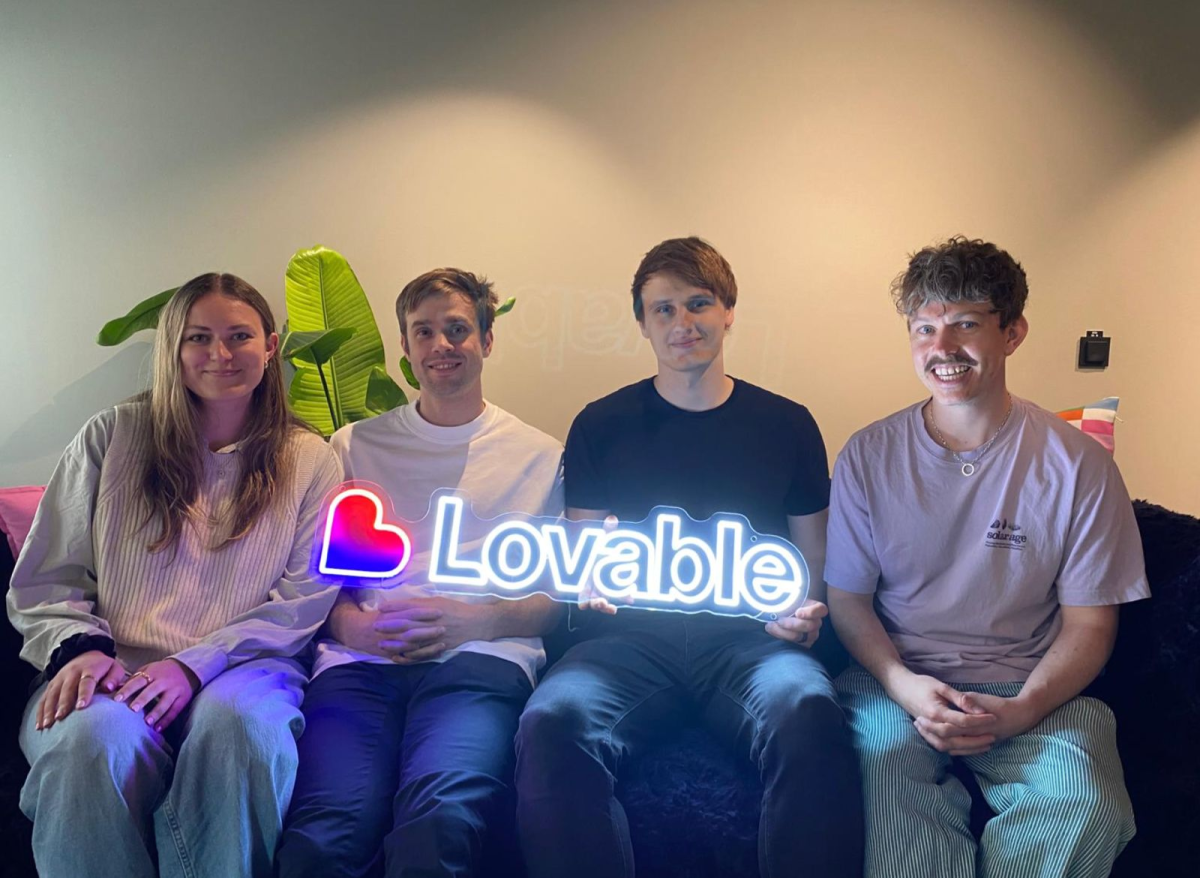
The software development world just witnessed something unprecedented. A European startup called Lovable reached $20 million in annual recurring revenue in just two months, making it potentially the fastest-growing startup in European history. But here's the twist that's making traditional software agencies nervous: they did it by giving non-technical founders the power to build full-stack applications without writing a single line of code. For years, the promise of no-code tools has been the same: anyone can build an app. But the reality has always been different. You'd create a beautiful frontend, get excited about your progress, and then hit the technical cliff. Suddenly you needed to configure databases, set up authentication, manage API keys, and deploy to servers. The "no-code" dream became a "hire-a-developer-anyway" nightmare.
Sure, except Apple had decades of hardware experience, massive margins to fund the R and D, and a controlled software platform to optimize for. Anthropic has none of those. The comparison is flattering but not really apt.
Reasonable people can disagree about the encryption tradeoff. What is not reasonable is taking that position while simultaneously being investigated by multiple data protection authorities for unauthorized data transfers to a foreign government.
That is a grim but accurate assessment. Platform security decisions only affect user behavior at the margin. Most people will keep using TikTok regardless because their friends are on it.
The problem is that who gets to define what counts as harmful content is always a political question. Giving any platform that level of message access hands them the power to make those definitions however they like.
Meta has just had one of its most important AI moments yet and the early signals are hard to ignore. Following the launch of its newest AI model Muse Spark, the company’s standalone Meta AI app surged dramatically in popularity, hinting at a much larger shift that is beginning to take shape. The release is particularly significant because it marks the first major AI model rollout under Alexandr Wang, who joined Meta to reboot its AI strategy. This is not just another incremental update. It represents a more aggressive and focused push into the AI race. According to data from Appfigures, Meta AI jumped from number 57 to number 5 on the U.S. App Store within a day of the launch. That kind of movement rarely happens without a strong underlying pull from users. It signals not curiosity but intent.
The artificial intelligence industry is entering a new phase of competition, one that extends far beyond the development of advanced language models and neural networks. Companies are now engaged in an intense struggle to secure the computational infrastructure necessary to train and deploy their AI systems. In this context, Anthropic has reportedly begun exploring the possibility of designing and manufacturing its own specialized processors to power Claude, its flagship conversational AI platform, along with its broader suite of artificial intelligence technologies. This strategic consideration emerges at a critical moment in the global AI sector. The exponential growth in model complexity and capability has created unprecedented demand for high-performance computing resources. Sources familiar with the matter indicate that Anthropic is conducting feasibility studies to determine whether developing proprietary semiconductor technology could reduce its dependence on external hardware vendors while ensuring reliable access to the computing power required for its operations.
A deep purple lip instead of red would create an interesting monochromatic moment
I've been trying to figure out how to style my graphic tees for work casual days, and this is exactly the inspo I needed