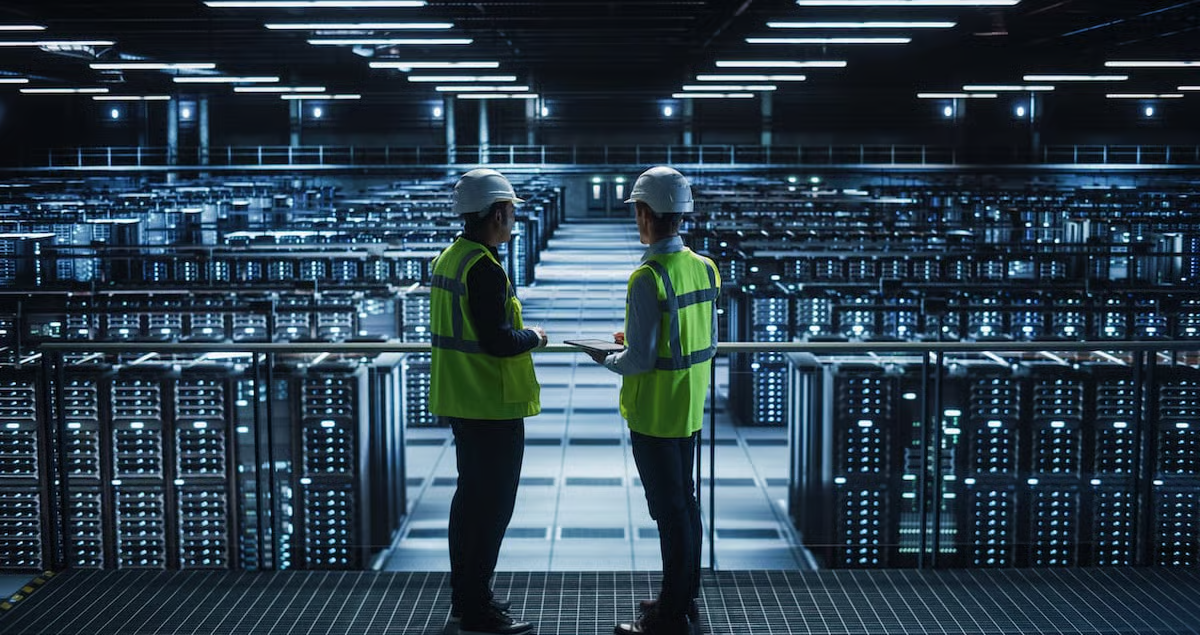
The technology sector is experiencing a paradox. While headlines scream about mass layoffs at major tech companies, a critical shortage is quietly building in one of the most essential areas of digital infrastructure. Datacenters, the physical backbone of our digital world, are facing an unprecedented demand surge, and there simply are not enough skilled professionals to build and maintain them.
The Global Race to Build Datacenters Is Creating Thousands of New Jobs
Countries across the globe are rushing to establish their own datacenter infrastructure. From India's ambitious plans to become a datacenter hub to the European Union's push for data sovereignty, and emerging markets in Southeast Asia and Latin America building their first large scale facilities, the construction boom is just beginning.
This is not just about technology companies anymore. Governments recognize that datacenter capacity equals digital independence. Every nation wants to control where its data lives, especially with growing concerns about data privacy, national security, and reducing latency for local users. This geopolitical shift means datacenters are being built in locations that previously had minimal infrastructure, creating demand for skilled workers in markets that were never considered tech hubs.
The numbers tell the story. Industry analysts project that the global datacenter market will need to double its capacity by 2027 to meet demand from artificial intelligence workloads, cloud computing expansion, and edge computing requirements. Each new facility requires hundreds of specialized professionals, from design through construction and ongoing operations.
Why Building New Datacenters Costs More Than Companies Want to Admit
The financial reality of datacenter construction reveals why this sector offers such strong job security. A single hyperscale datacenter can cost between 500 million to over 1 billion dollars to build. These facilities require specialized power infrastructure, advanced cooling systems, redundant networking equipment, and physical security measures that rival military installations.
The complexity extends beyond construction. Modern datacenters consume massive amounts of electricity, often requiring their own substations or even dedicated power plants. Cooling systems must run continuously, with some facilities using innovative approaches like liquid cooling, immersion cooling, or locating in naturally cold climates to reduce energy costs. The ongoing operational expenses are staggering, with electricity alone often representing 50 to 70 percent of total operating costs.
This is where the job security factor becomes crystal clear. Once a company invests a billion dollars in physical infrastructure, they cannot simply shut it down during economic downturns like they can with software projects. The facility must operate continuously, requiring round the clock staffing with highly trained technicians, engineers, and specialists. These are jobs that cannot be eliminated without abandoning massive capital investments.
The Artificial Intelligence Hype Overlooks a Fundamental Truth About Costs
While much attention focuses on artificial intelligence replacing human workers, the financial mathematics often tells a different story. Running AI systems at scale is extraordinarily expensive, and in many cases, significantly more costly than employing human workers to perform the same tasks.
Consider the computational requirements. Training a large language model can cost tens of millions of dollars in compute resources alone. Running these models for inference at scale requires thousands of high performance GPUs, each consuming substantial power and requiring sophisticated datacenter infrastructure. For many business applications, the total cost of ownership for AI solutions exceeds the cost of human employees, especially when factoring in the infrastructure, energy, maintenance, and specialized talent required to operate these systems.
The real economic case for AI often comes down to scalability rather than pure cost savings. AI can handle volume that would require hiring thousands of people, but for moderate scale operations, human workers frequently prove more cost effective. This reality creates a natural ceiling on AI deployment and ensures continued demand for human expertise, particularly in roles that require judgment, creativity, or handling of exceptional cases that fall outside AI training parameters.
Understanding the Critical Shortage of Datacenter Professionals Right Now
The skills gap in datacenter operations is widening rapidly. Traditional IT professionals often lack the specialized knowledge required for modern datacenter environments. The field demands expertise across multiple domains that are rarely combined in standard technology education.
Electrical engineering knowledge is essential for understanding power distribution, backup systems, and the complexities of managing megawatt scale electricity consumption. Mechanical engineering skills become critical when dealing with cooling systems, airflow management, and the physical infrastructure that keeps equipment operating within temperature specifications. Networking expertise must extend beyond typical enterprise IT to include fiber optic systems, high speed interconnects, and the routing infrastructure that connects datacenters to the global internet backbone.
On top of technical skills, datacenter professionals need operational discipline that mirrors mission critical environments like hospitals or power plants. Uptime requirements of 99.999 percent mean that errors can cost companies millions of dollars per hour. Change management processes, risk assessment capabilities, and crisis response training become essential competencies.
The shortage is particularly acute in emerging markets where datacenter construction is accelerating fastest. Countries building their first hyperscale facilities often find themselves competing globally for talent, driving up salaries and creating opportunities for professionals willing to relocate or work in developing markets.
How Tech Workers Should Pivot Their Careers Toward Datacenter Opportunities
For technology professionals facing uncertainty in software development or other traditional tech roles, datacenter careers offer a clear path forward with strong fundamentals. The transition requires strategic skill development but builds on existing technical knowledge.
Start by understanding the physical layer of technology infrastructure. Many software engineers have spent entire careers abstracting away from hardware, focusing on code that runs "in the cloud" without considering the physical reality underneath. Reversing this perspective and diving deep into power systems, cooling technology, and hardware architecture creates immediate differentiation in the job market.
Certifications provide structured learning paths and industry recognition. The Certified Data Centre Professional (CDCP) offers foundational knowledge, while more advanced credentials like Certified Data Centre Specialist (CDCS) or vendor specific certifications from Cisco, Schneider Electric, or Vertiv demonstrate deeper expertise. For those with electrical or mechanical engineering backgrounds, additional certifications in areas like HVAC systems, power distribution, or building management systems can be valuable.
Hands on experience matters enormously in this field. Seek opportunities to visit datacenters, volunteer for infrastructure projects at current employers, or pursue internships at colocation providers or cloud service companies. Understanding the sensory reality of datacenter operations, from the overwhelming noise of cooling fans to the careful choreography of accessing server racks in cold aisles, provides insights that no amount of book learning can replicate.
The Growing Demand for Edge Computing Specialists Is Opening New Geographic Opportunities
Edge computing is fundamentally reshaping where datacenters get built and who can access these career opportunities. Rather than concentrating all computing power in a few massive facilities, edge computing distributes processing closer to where data gets generated and consumed. This means thousands of smaller datacenters and micro datacenters appearing in cities and regions that never had this infrastructure before.
For technology workers living outside major tech hubs, edge computing creates local opportunities. A city of 500,000 people might need multiple edge facilities to support low latency applications like autonomous vehicles, smart city infrastructure, augmented reality, or real time video processing. These facilities still require skilled operators, network engineers, and maintenance technicians, but they bring these jobs to secondary markets rather than requiring relocation to traditional datacenter concentrations.
The skills required for edge computing overlap significantly with traditional datacenter expertise but add unique challenges. Edge facilities often operate with minimal on site staff, requiring remote management capabilities and automated systems that can self heal common problems. Understanding software defined infrastructure, containerized applications, and orchestration platforms like Kubernetes becomes more important in edge environments.
Why Datacenter Security Roles Are Becoming Critical Career Paths
As datacenters proliferate globally and handle increasingly sensitive workloads, security expertise has become a premium skill set. This extends far beyond traditional cybersecurity to encompass physical security, supply chain security, and operational security practices.
Physical security at datacenters now rivals financial institutions or government facilities. Biometric access controls, mantrap entry systems, continuous video surveillance, and armed security personnel are standard at major facilities. Understanding how to design and implement these systems, integrate them with logical access controls, and manage the human factors of security operations creates career opportunities at the intersection of physical and digital security.
Supply chain security has emerged as a critical concern following revelations about hardware tampering and component level vulnerabilities. Datacenters must verify the integrity of every piece of equipment from manufacture through installation, requiring professionals who understand both hardware architecture and forensic verification techniques. This field combines traditional supply chain management with deep technical knowledge of computing hardware.
Compliance and regulatory knowledge is becoming indispensable as governments worldwide implement data localization requirements, privacy regulations, and critical infrastructure protections. Understanding frameworks like SOC 2, ISO 27001, GDPR requirements for data processing, and sector specific regulations creates career opportunities for professionals who can bridge technical operations and legal compliance.
The Sustainability Challenge Is Creating Entirely New Datacenter Job Categories
Environmental concerns are forcing fundamental changes in how datacenters operate, creating demand for professionals with sustainability expertise. The sector consumes approximately 1 to 2 percent of global electricity, a figure that continues rising with AI workload growth. This has made energy efficiency and renewable power integration top priorities.
Renewable energy procurement specialists are becoming essential team members at large datacenter operators. These professionals negotiate power purchase agreements, evaluate renewable energy projects, and design strategies to match datacenter consumption with renewable generation. The role combines energy market knowledge, financial modeling, and understanding of datacenter power requirements.
Waste heat recovery is opening fascinating engineering challenges. Datacenters generate enormous amounts of heat that traditionally gets dumped into the atmosphere. Innovative facilities now capture this heat for district heating systems, greenhouse operations, or industrial processes. Engineers who can design these integrated systems and optimize the economic value of waste heat recovery are in high demand.
Water consumption for cooling has become a controversial issue, particularly in drought prone regions. Datacenters in some locations use millions of gallons of water daily for evaporative cooling. Professionals who can implement water recycling systems, design alternative cooling approaches, or optimize cooling efficiency to reduce water consumption are addressing a critical industry challenge.
How Artificial Intelligence Workloads Are Actually Increasing Datacenter Job Opportunities
The irony of the AI employment debate is that artificial intelligence itself is one of the primary drivers of datacenter expansion and job creation. AI workloads have fundamentally different infrastructure requirements than traditional computing, creating demand for specialized expertise.
GPU infrastructure management is a distinct skill set from traditional server operations. Graphics processing units consume far more power, generate more heat, and require different networking approaches than standard servers. Datacenters optimized for AI workloads need professionals who understand GPU architecture, high speed interconnects like InfiniBand or NVLink, and the specific cooling challenges of high density computing.
AI training clusters represent some of the most complex systems ever built. Thousands of GPUs must work in perfect coordination, with any hardware failure or network issue potentially wasting days of computation and millions of dollars. Managing these systems requires understanding distributed computing at a scale that exceeds traditional high performance computing, combined with expertise in AI frameworks and workload optimization.
The massive power requirements of AI datacenters are forcing infrastructure innovation. Some new AI focused facilities require over 100 megawatts of power, equivalent to a small city. Designing electrical systems at this scale, managing relationships with utility providers, and implementing backup power systems that can handle these loads requires specialized engineering talent that is extremely scarce.
The Datacenter Construction Boom Needs Project Managers Who Understand Technology
While much attention focuses on operational roles, the construction phase of datacenter expansion is creating enormous demand for project managers and construction professionals with technology knowledge. Building a datacenter is fundamentally different from constructing a typical commercial building, requiring expertise that spans construction management and technology infrastructure.
Datacenter construction timelines are measured in years and budgets in hundreds of millions, but the projects face intense pressure to complete quickly. Cloud providers and enterprises expanding capacity cannot afford delays when customer demand is immediate. Project managers who can accelerate timelines while maintaining quality standards and managing the complexity of coordinating dozens of specialized contractors are extremely valuable.
The technical complexity of datacenter construction exceeds typical commercial projects by orders of magnitude. A single facility might include 50 megawatts of electrical infrastructure, redundant cooling systems with multiple backup layers, raised floor systems with careful airflow management, extensive fire suppression systems using clean agents or water mist, and networking infrastructure connecting thousands of fiber optic cables. Coordinating these systems and ensuring they integrate correctly requires project managers who understand the technology they are building.
Why Colocation Datacenter Operators Offer Some of the Best Career Stability
Colocation providers, companies that rent datacenter space to other organizations, represent a particularly stable career path in the industry. Their business model creates natural job security because their revenue depends on maintaining facilities at the highest reliability standards for customers with diverse requirements.
Colocation facilities typically serve hundreds of different customers, from startups to Fortune 500 companies, creating operational complexity that requires substantial staffing. Each customer may have unique requirements for power density, network connectivity, security clearances, or access protocols. Managing this diversity while maintaining the strict uptime guarantees that colocation contracts specify requires large, skilled operations teams.
The geographic distribution of colocation facilities creates opportunities in many markets. Unlike hyperscale cloud providers that concentrate operations in a few massive facilities, colocation companies operate in dozens or hundreds of locations to serve customers who need presence in specific markets. This means career opportunities exist in far more cities than traditional cloud datacenter roles.
Customer facing aspects of colocation operations also create roles for professionals who combine technical expertise with business development or account management skills. Helping customers design their infrastructure deployments, planning capacity expansion, or troubleshooting complex technical issues that span multiple customer environments are valuable competencies in this sector.
The Remote Work Revolution Is Increasing Datacenter Demand in Unexpected Ways
The shift to remote and hybrid work models has paradoxically increased datacenter requirements rather than reducing them. Organizations that previously relied on employees working in offices with local servers now need robust cloud infrastructure to support distributed teams, creating sustained demand for datacenter capacity.
Video conferencing infrastructure requires substantial computing and networking resources. The massive adoption of platforms like Zoom, Microsoft Teams, and Google Meet during recent years created unprecedented demand for real time video processing, storage, and content delivery networks. All of this infrastructure lives in datacenters and requires ongoing management.
Virtual desktop infrastructure (VDI) allows employees to access their work computers remotely, but implementing VDI at scale requires significant datacenter resources. Each virtual desktop consumes computing power, storage, and network bandwidth. Organizations deploying VDI for thousands of employees need substantial datacenter capacity and professionals who can optimize these systems for performance and cost efficiency.
The security implications of remote work have driven companies to implement more sophisticated monitoring, endpoint protection, and security operations center capabilities, most of which require datacenter infrastructure and specialized security professionals to operate them effectively.
Taking Action Now to Position Yourself for Datacenter Career Success
The datacenter industry is not waiting for the rest of the technology sector to stabilize. Facilities are being designed and built right now, operations teams are hiring immediately, and the skills shortage is acute. Technology professionals who recognize this opportunity and take concrete steps to transition can position themselves in a sector with strong fundamentals and long term growth.
Start learning today through online resources, many of which are free or low cost. Organizations like the Uptime Institute, Data Center Dynamics, and the Green Grid provide educational content about industry best practices. Cloud providers like AWS, Microsoft Azure, and Google Cloud offer datacenter tours and educational programs that provide insights into how hyperscale facilities operate.
Network with datacenter professionals through industry associations, LinkedIn groups, or local meetups focused on infrastructure and operations. The datacenter community tends to be welcoming to newcomers who show genuine interest and willingness to learn. Attending industry conferences like Data Center World or regional datacenter summits provides opportunities to meet hiring managers and learn about emerging trends.
Consider starting with adjacent roles that provide exposure to datacenter operations even if you are not ready for a specialized position. Many companies hire IT professionals for roles that include some datacenter responsibilities, creating opportunities to gain experience while continuing to build skills. Managed service providers, colocation companies, and enterprises with on premise datacenters often have entry level positions that can serve as stepping stones to more advanced roles.
The datacenter industry represents a rare combination of strong current demand, excellent long term fundamentals, and significant skill shortages. For technology professionals navigating uncertain times in software development or other oversaturated fields, this sector offers a clear alternative path with tangible career security backed by billions in infrastructure investment.
The jobs being created today in datacenter design, construction, operations, security, and sustainability are not temporary positions vulnerable to the next economic downturn. They are essential roles supporting the physical infrastructure that makes our digital world possible, and that infrastructure is only becoming more critical as society becomes more dependent on cloud computing, artificial intelligence, and connected devices.
The question is not whether datacenter jobs will remain in demand, but whether technology professionals will recognize the opportunity and develop the skills to capture it before the industry shortage becomes even more severe and competition for qualified candidates intensifies further.
The section on edge computing is where this gets really interesting for people outside the major metros. Secondary markets are finally getting infrastructure investment and the jobs are coming with it.
Does anyone know how realistic it is to transition from software development to datacenter ops without an electrical or mechanical engineering background? Genuinely curious what the entry points are.
Three years ago I was a network engineer at a mid-size company. Pivoted to datacenter infrastructure, took some certifications, and am now managing network build-outs for a new hyperscale campus. Best career decision I ever made.
The durability argument comes down to whether AI demand itself is durable. Given how deeply embedded it is becoming in enterprise software, healthcare, logistics, and finance, the underlying demand is not going away. The facilities built today will need to operate for 20 plus years.
The certification path the article describes is solid but incomplete. Do not sleep on vendor-specific training from companies like Vertiv and Schneider Electric. Those credentials carry serious weight with hiring managers at major facilities.
The physical reality of datacenter work is something no amount of research can fully prepare you for. The scale, the noise, the heat, the stakes. You either find that environment motivating or you do not. Worth figuring that out before making a full career pivot.
Entry-level datacenter technician roles in most US markets are landing between 55k and 75k right now, with senior ops roles clearing 110k to 130k fairly routinely. And those numbers are trending upward because of the shortage.
The point about AI cost being higher than human cost for moderate scale operations is the most interesting and underappreciated argument in this whole article. The economics of AI replacement are way messier than the headlines suggest.
Datacenter construction delays due to labor shortages are already causing real business problems. Every day a facility runs late costs serious money. That pressure alone is pushing wages up across the board.
Physical security at modern datacenters is fascinating from a career standpoint. It genuinely sits at the intersection of traditional security work and advanced systems integration. Not what most people picture when they think about tech careers.
Skeptical of the job security argument, honestly. They said the same thing about semiconductor fabs and financial trading floors. Every industry eventually automates the parts it can and shrinks the parts it cannot.
The edge computing section is the sleeper part of this piece. I live in a mid-size city that just had two edge micro facilities break ground nearby. Those jobs are not going to Seattle or Austin.
Hot take: the datacenter industry is the new oil industry. Whoever controls the physical compute infrastructure controls the global economy, and right now there are not enough workers to build it fast enough.
The skills profile evolving faster than job descriptions can track is probably the most accurate sentence in any of the recent commentary on this industry. I have seen job postings that are basically asking for someone who invented the role.
The timing of this article could not be better. Got laid off from a SaaS company in February and pivoted to studying for my CDCP cert. Already have two interviews lined up at colo facilities.
The geopolitics angle is the most underreported part of this whole story. Every country wants sovereign compute now. That means datacenters being built in places that have never had them, which means importing expertise from wherever it can be found.
The irony of the AI hype cycle is that building the infrastructure to run AI is creating a massive demand for very human, very physical, very analog skills. Electricians and pipefitters are direct beneficiaries of the AI boom.
Just want to push back gently on the job security framing. Automation IS coming to datacenter operations. Remote hands, AI-driven monitoring, predictive maintenance. The jobs will not disappear but the number of humans per megawatt will drop over time.
As someone who hires for a colocation provider, the frustration is real. We post roles and get applications from people with great IT backgrounds who have never set foot in a facility. The pipeline just does not exist yet at the scale we need.
Speaking from experience in project management for critical infrastructure, the people who can manage complex MEP integration for high-density compute environments are among the most sought after people in any market right now.
Hot take: datacenter technician will be a more stable and better-compensated career than software engineer within ten years. Software is getting commoditized. Physical infrastructure expertise is not.
My concern with all this optimism is geographic. Yes there are thousands of new jobs. But if you are not willing to relocate to where the facilities are being built, your options are a lot narrower than the article implies.
This is not a tech trend. This is an infrastructure mega-cycle, like the railroad boom or the interstate highway system. The difference is it is happening in a decade instead of a century.
The edge computing counter to that is real though. Micro facilities are popping up in smaller cities specifically because latency requirements mean you cannot centralize everything anymore. The jobs are spreading out.
The four big hyperscalers committed nearly 700 billion dollars combined in capex this year alone. That money has to go somewhere, and a huge chunk of it is wages for people who can actually build and run these things.
Do not overlook the fact that existing datacenters also need constant upgrades. Legacy facilities are being retrofitted for high-density AI workloads at enormous cost and that requires specialists who understand both old infrastructure and new cooling approaches.
1.9 million manufacturing worker shortfall projected by 2033. Combine that with the datacenter build-out and you start to understand why every hiring manager in this space sounds like they are in a permanent panic.
Honestly the thing that sold me on this pivot was the concept of capital lock-in. When a company spends a billion dollars on a facility, they are committed to staffing it no matter what the economy does. That is a very different risk profile than a software team.
What certifications would people recommend for someone coming from a purely software background who wants to transition toward infrastructure? Is the CDCP actually worth the cost?
Nearly 246,000 tech jobs were cut globally in 2025 alone. And meanwhile datacenters cannot find enough people to staff the facilities they are already building. The irony is just stunning.
As someone who spent eight years in enterprise IT before moving to datacenter ops, the pay jump was real. Around 28 percent more in my first year, and that was before the current crunch got this bad.
The article mentions the skills gap but honestly undersells how wide it is. Over half of datacenter operators globally say they cannot find qualified candidates for open roles. That is not a niche problem.
Serious question: is the datacenter boom actually as durable as this article suggests, or is there a risk that AI investment peaks and construction slows? What happens to all these workers then?
Growing up in Southeast Asia and watching the buildout happening here, this article resonates deeply. Countries that had virtually no hyperscale presence three years ago are now in bidding wars for datacenter talent.
What does the salary range actually look like for someone coming in at the junior level? The article talks a lot about job security but not about what you actually earn starting out.
Career advice I wish I had gotten earlier: the intersection of IT networking and physical facilities management is where you want to be. Neither pure IT nor pure facilities people have the full picture, and the people who bridge both get premium compensation.
To answer the question above, it is very doable. Most facilities will take someone with strong IT networking skills and train the physical side. Start with the CDCP cert, get familiar with DCIM software, and apply to junior ops roles. The on-ramp is real.
Oracle cutting 30,000 jobs while simultaneously investing massively in datacenter infrastructure is the perfect case study for what this article is describing. The industry is not shrinking. It is redistributing.
The sustainability angle is underrated here. Once you add renewable energy procurement and waste heat recovery as actual job titles, you are not just talking about technicians anymore. You are talking about a whole new professional category.
Speaking from experience in facilities management, the people who burn out fastest are the ones who came from software and expected the same flexibility. Datacenter ops is much closer to working at a hospital than working at a startup.
The 99.999 percent uptime requirement the article mentions is not abstract. Missing that by a fraction costs companies millions per hour. That pressure is why ops salaries are what they are.
As someone from a mechanical engineering background who felt locked out of tech careers, this article is genuinely motivating. HVAC and cooling system expertise is suddenly extremely valuable and I have spent years building it.
The military veteran pipeline is real and it is smart. A lot of ex-military folks already understand mission-critical operations, redundant systems thinking, and the discipline that keeps 99.999 percent uptime achievable.
This whole conversation makes me think about how college career counselors are still pointing students toward software engineering as the safe bet. Meanwhile datacenters are screaming for people and most undergrads have no idea.
58 percent of datacenter managers say multiskilled operators are their top growth area. That stat alone should make every generalist IT person reconsider their career path.
Took a 12 week datacenter technician program at a community college last year after getting laid off from a software QA role. Had a job offer before the program even ended. The demand is not theoretical.
The Stargate project alone promises over 100,000 new jobs in the US over four years. That is not counting Google, Amazon, Meta, or any of the smaller operators. The scale of this hiring need is genuinely hard to comprehend.
The article is a little too cheerful about how easy the transition is. The physical and operational realities are genuinely demanding. But the opportunity is absolutely real if you go in with clear eyes.
Moved from a software ops role to a datacenter facilities coordinator position last year because my company was restructuring. The learning curve was steep but the job security feels completely different. Much less anxiety.
Datacenter power demand is projected to nearly quadruple by 2035. The infrastructure workforce cannot quadruple in that time. That math is either a crisis or an opportunity depending on which side of the hiring table you sit on.
AI might eventually replace a software developer. It cannot replace the person physically replacing a failed power distribution unit at 3am when a critical workload is down.
Demand for electrical technicians at datacenters climbed over 180 percent between 2023 and 2025. That is not a typo. That is the highest growth rate across all occupations in recent hiring analyses.
Facilities that cannot find staff are already seeing real consequences. Delayed go-lives, overtime burnout for existing staff, compliance risks during understaffed periods. The shortage is not hypothetical.
The apprenticeship programs are the most exciting development in this space. Community colleges partnering directly with hyperscalers to build pipelines means you do not need a four-year degree to get into this field.
Data center job postings surged 64 percent between 2023 and 2025 according to a recent analysis. For comparison, the broader economy saw 4 percent growth in the same roles. That gap is not closing anytime soon.
The article frames this as a pivot for laid-off tech workers but honestly the opportunity is just as big for people coming from trades. An electrician with datacenter experience right now is earning what some software engineers make.
Liquid cooling expertise is probably the most undervalued skill in the entire industry right now. Traditional HVAC engineers do not know it, and traditional IT engineers definitely do not. There is a real vacuum there.
The article is mostly right but undersells how brutal the actual working conditions can be. Twelve-hour rotating shifts, noise levels that require hearing protection, and on-call responsibility for systems that cannot go down. It is a real tradeoff.
My brother switched from network admin to datacenter facilities two years ago and now manages power infrastructure for a major colo. He keeps telling me to follow him. After reading this, I think he is right.
Retirements are a massive factor that the article mentions but does not emphasize enough. There are roughly twice as many datacenter workers over 60 as there are under 30. That knowledge transfer problem is coming fast.
The global shortage is sitting at hundreds of thousands of unfilled positions and the pipeline to fill them is still being built. That is either a crisis or a once-in-a-generation career opportunity. Probably both at the same time.
The waste heat recovery section at the end of the article got cut off, which is frustrating because that is genuinely one of the more fascinating emerging areas. Some facilities are selling excess heat to district heating networks. Whole new business model.
The nuclear and aerospace crossover is interesting. Datacenters are actively recruiting from those industries because the operational discipline and power systems expertise transfer directly. That is not a connection most people make.
Interesting that Oracle just announced massive layoffs while simultaneously pouring money into datacenter infrastructure. The company is literally shedding software workers to fund the physical layer. That says everything about where value is shifting.
I appreciate articles like this one because the mainstream narrative around tech is so dominated by layoff anxiety that people miss the structural opportunities hiding right underneath it.
Nobody talks about the supply chain security roles the article mentions. Verifying hardware integrity from manufacture through installation is a genuinely specialized skill set and there are almost no people trained for it.
That is a real tension. Datacenters consume a significant share of global electricity and that percentage is climbing with AI workloads. The renewable energy procurement roles exist precisely because this is becoming a crisis that needs managing.
The Uptime Institute keeps saying companies are making the skills crisis worse by demanding over-ambitious qualifications. Asking for ten years of liquid cooling experience when liquid cooling has not even been mainstream for ten years is a real problem.
My only real disagreement with this article is the framing around AI costs. Running inference at scale is getting cheaper very quickly. The economics the article describes are accurate for today but may not hold for long.
The article focuses heavily on the US and Europe but the emerging market angle is just as important. Countries building their first hyperscale facilities are paying significant premiums to attract anyone with relevant experience.
Compliance and regulatory work in datacenters is criminally underrated as a career path. SOC 2, ISO 27001, data localization requirements. If you have legal or compliance experience and want to move into tech infrastructure, this is your door.
CDCP is a solid starting point but think of it as a vocabulary course more than a technical credential. Pair it with hands-on exposure and something vendor-specific and you have a much stronger profile. It is worth it to establish baseline knowledge.
Fair pushback above, but the counterpoint is that even with aggressive automation, demand is growing so fast that total headcount is still projected to increase. A shrinking ratio applied to a doubling base still means more jobs.
Jobs that require you to physically be present will always have a floor that remote and automated alternatives cannot undercut. That is the deepest version of the job security argument and it applies perfectly here.
Anyone else notice that the same companies doing mass layoffs of software workers are also the ones committing hundreds of billions to datacenter construction? They are not hiring fewer people. They are hiring different people.
What about the environmental impact side of things? The article briefly mentions sustainability roles but the energy consumption story is also one reason some communities are pushing back against new datacenter construction.
The article is very bullish and I mostly agree, but let us be honest that a lot of these new facilities are being built in politically uncertain regions. Geopolitical risk is real and it cuts both ways.
Worth pointing out that the article says nothing about the union angle. Electricians and HVAC techs at datacenter construction sites are increasingly organized, and the wages reflect it. This is a genuinely blue collar opportunity hiding inside a tech story.