Thinking about how manhwa adaptations into anime are becoming increasingly common and wondering how a story like this would even translate. The pacing is so specific to the reading experience.
20
Sign up to see more
SignupAlready a member?
LoginBy continuing, you agree to Sociomix's Terms of Service, Privacy Policy

Thinking about how manhwa adaptations into anime are becoming increasingly common and wondering how a story like this would even translate. The pacing is so specific to the reading experience.
Everyone in these comments is sleeping on how important the art quality difference is for beginners. Solo Leveling is the right starting point partly because the art alone communicates the power fantasy better than most series explain it in text.
There is real tension in fights against opponents who move too fast for the nano machine to analyze in real time though. Those sequences look completely different and the art shifts to reflect actual desperation rather than calm tactical processing.
That distinction between social position and narrative position is the kind of thing this series seems built to explore. Elliot can move differently than a female protagonist but the story is still organized around his death. Freedom of movement within a predetermined ending.
The fact that the web novel is done means at least we're not getting an unfinished story. That alone puts Ragnarok ahead of a lot of ongoing manhwa right now.
The regression subgenre has exploded in popularity over the past few years, becoming one of the most beloved narrative frameworks in Korean manhwa. The core premise is deceptively simple: a protagonist dies or fails catastrophically, then returns to an earlier point in time with their memories intact. Armed with future knowledge, they get a second chance to change their fate, save loved ones, gain power, or pursue revenge against those who wronged them. What makes regression stories so compelling is the combination of dramatic irony, strategic satisfaction, and emotional depth they provide. Readers know what the protagonist knows, creating tension when other characters make mistakes we can see coming. We feel smart alongside protagonists who use foreknowledge to outmaneuver enemies. And we experience the emotional weight of carrying memories of futures that haven't happened yet, of people who died who are currently alive, of betrayals that haven't occurred.

The private sharing feature for paid plans solves a real problem I didn't know I had. Being able to share a working prototype with clients via a private link without exposing the project files is exactly the right level of control.
Okay but can we talk about how the art during the death memory sequences is genuinely some of the most expressive work in the entire tower climbing genre? The way emotion is communicated without a single word is stunning.
The 300 minute free tier is pretty limiting for any real meeting schedule. If you have more than a couple hours of meetings weekly you will hit the ceiling fast. Pro plan is almost necessary for regular use.
As someone who worked in software for fifteen years, the extended thinking feature is doing more heavy lifting than it gets credit for. Planning before coding was always where senior engineers earned their salary. If the AI genuinely does that well, you are replacing expensive judgment, not just labor.
The data governance question is the one I keep coming back to. Your meeting transcripts are now on a third-party server, subject to that company's data practices, potentially used to train their models, and potentially discoverable in any future litigation. That is a non-trivial thing you are signing up for.
The convergence of all these capabilities into one platform is what the article is really describing. Video generation, camera control, voice, lip sync, and collaboration in one subscription is a fundamentally different value proposition than standalone clip generators.
The AI video generation race just got a clear winner. Runway Gen-4.5 topped the Video Arena leaderboard with a 1,247 Elo score, surpassing both Google Veo 3 and OpenAI Sora 2. For those unfamiliar with Elo ratings, this is the same system used to rank chess players and competitive games. A higher score means more wins in head-to-head comparisons. When real users compare videos side by side without knowing which AI generated them, they consistently choose Runway's output. Runway didn't start as an enterprise video tool. It began as a playground for artists and filmmakers who wanted to experiment with AI-generated visuals. The early versions produced fascinating but inconsistent results. Sometimes you'd get stunning cinematic footage. Other times you'd get distorted motion and unrealistic physics. Gen-4.5 changed that equation by achieving breakthrough consistency in motion quality and physical accuracy.
Love seeing ETH finally get some attention. Been saying for months that the ETH to BTC ratio was deeply compressed and overdue for a catch-up move.
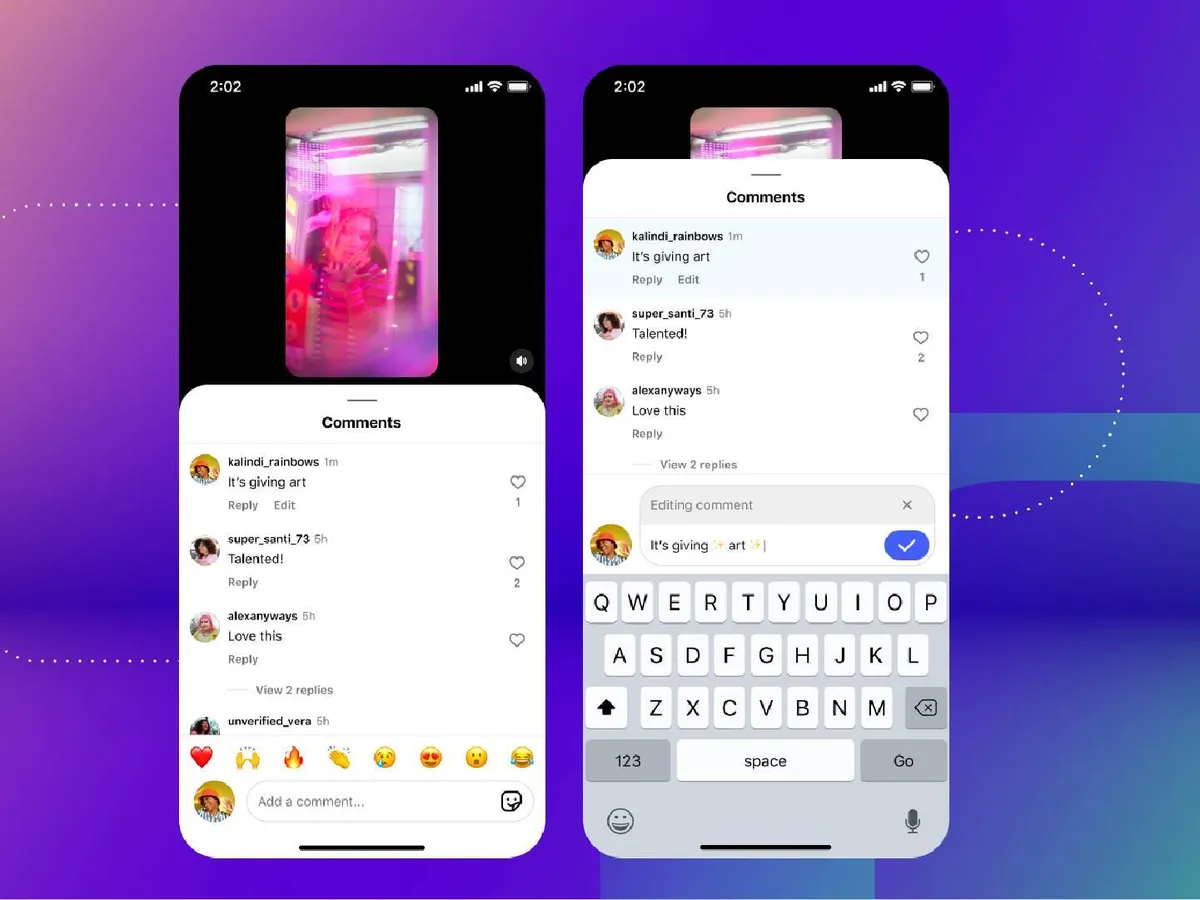
Instagram has rolled out a small but long overdue feature that users have been asking for years. You can now edit your comments after posting them. This simple change solves a very real frustration. Until now, fixing even the smallest typo meant deleting your comment and writing it all over again. That friction is finally gone. But there is a boundary. You get a 15 minute window after posting to make edits. Within that time, you can update your comment as many times as you want. There is also a layer of transparency built in. Once a comment is edited, others will be able to see that it has been modified. However, unlike platforms such as iMessage, Instagram does not show the edit history. What was originally written stays hidden.
Just bought this and can confirm it runs large get your regular size if you want the flowy look