
This is a legitimate gap in the literature. The short trial length is a consistent criticism of chrononutrition research right now.
21
Sign up to see more
SignupAlready a member?
LoginBy continuing, you agree to Sociomix's Terms of Service, Privacy Policy

This is a legitimate gap in the literature. The short trial length is a consistent criticism of chrononutrition research right now.
So they built a whole third act around a character they were legally barred from depicting. That is some spectacular due diligence right there.
Just noticed the article mentions the film covers through the 1988 Bad World Tour. Does that mean the Victory Tour and the Pepsi era are included or does it jump over parts of the early 80s?
Unpopular opinion but the story itself is pretty formulaic and the art is doing heavy lifting that the writing sometimes does not deserve.
The opponents Yu faces throughout the series function almost like different philosophical arguments walking into the ring to be tested and destroyed. The series is basically doing battle of ideas through athletic combat.
What does everyone think about the Regressor character's role, because the article only touches on it but the dynamic between two people with different kinds of foreknowledge seems like it deserves its own analysis piece.
Season 2 ended on such a strong note that going into the final season feels genuinely earned. This series has built toward something the whole time.
I showed three chapters to my friend who said she does not read manhwa and she asked me to send all available chapters immediately. Consider that a data point.
Thinking about how manhwa adaptations into anime are becoming increasingly common and wondering how a story like this would even translate. The pacing is so specific to the reading experience.
When a company's revenue jumps from $10 million to $100 million in nine months, you pay attention. When that growth comes from an AI agent that builds entire applications autonomously, you realize something fundamental just changed in software development. Replit Agent represents that change, and the numbers prove developers are ready for it. Replit started as a browser-based coding environment for education. Students could write Python or JavaScript without installing anything locally. Teachers loved it because setup time vanished. But the company saw something bigger. If you could run code in the browser, why not let AI write that code? That question led to Agent 3, an AI that doesn't just suggest code completions. It builds entire applications from scratch.
The designer-developer relationship has been tense for decades. Designers create pixel-perfect mockups in Figma. Developers translate them to code and somehow everything looks slightly wrong. Fonts don't match. Spacing is inconsistent. Buttons have different corner radiuses. Both sides get frustrated, blame each other, and the product suffers. V0 by Vercel is fixing this problem by generating production-quality React components that look exactly like the designs. The rebrand from v0.dev to v0.app in January 2026 signaled expanded ambitions beyond just UI component generation. Vercel positioned the tool for full-stack web development, though its core strength remains frontend excellence. That strategic clarity matters because trying to be everything often means excelling at nothing. V0 chose to dominate the handoff between design and code before expanding into other areas.

Forty million dollars in annual recurring revenue. Six months. One browser-based platform. Those numbers would be impressive for any software company, but for Bolt.new, they represent something more significant: the moment when development environments moved permanently into the cloud and never looked back. Traditional software development has always required setup. Install Node.js, configure your environment, manage dependencies, set up local servers, troubleshoot version conflicts. Before writing a single line of code, developers spend hours or even days preparing their machines. Junior developers often spend their first week just getting their environment working. Bolt.new eliminated all of that with WebContainers technology.
Teams with consistent participants get better speaker attribution over time according to the article. That is genuinely useful for recurring standups where you want to track who said what across weeks.
There's a photograph from February 2026 that pretty much sums up the state of AI right now. At the India AI Impact Summit in New Delhi, Indian Prime Minister Narendra Modi invited the world's tech leaders onstage for a group photo. Everyone held hands. Well, almost everyone. Sam Altman of OpenAI and Dario Amodei of Anthropic, standing right next to each other, refused to clasp hands and instead raised their fists separately. The internet, predictably, lost its mind. An awkward moment between OpenAI CEO Sam Altman and Anthropic CEO Dario Amodei at an AI Summit captured the increasingly icy relations between two rival tech leaders who started off as colleagues. That's not just petty drama. It's a window into what may be the most consequential corporate rivalry in the technology world right now, one that's playing out in boardrooms, courtrooms, Super Bowl ads, and billion-dollar compute deals all at once.

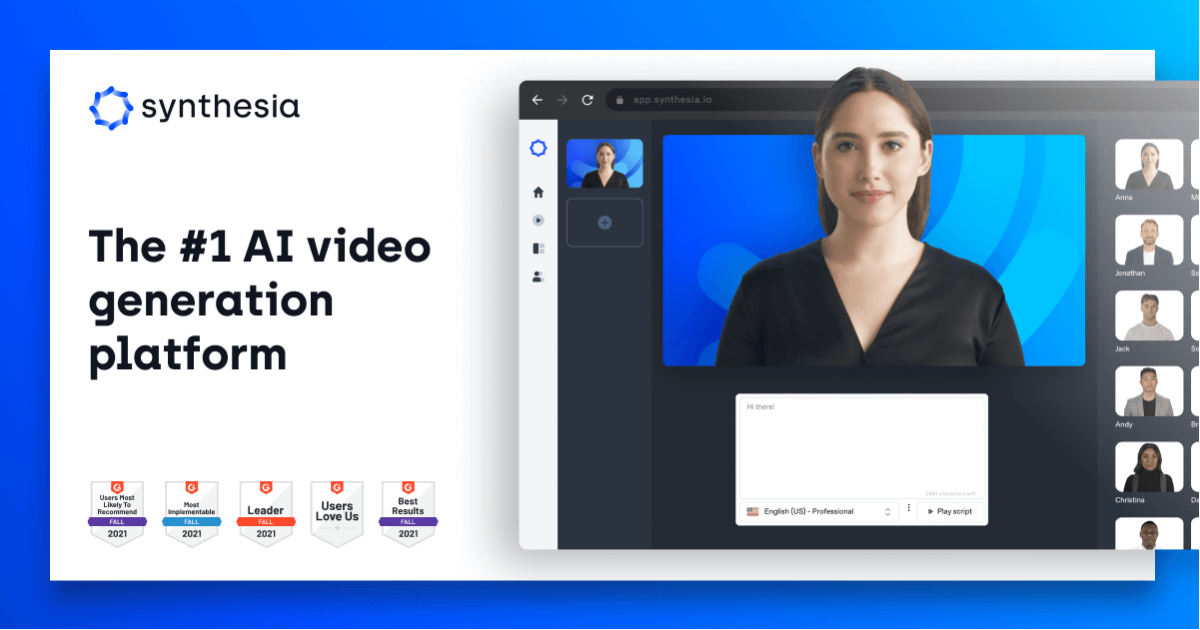
When a company raises $200 million in Series E funding during January 2026, investors are betting on more than potential. They're backing proven market demand and sustainable growth. Synthesia's funding round came alongside a 44% year-over-year increase in headcount to 706 employees, signaling aggressive expansion in a category the company essentially created: AI avatar-based video generation for enterprise training and communications. Corporate training videos have been expensive and slow to produce for decades. Recording a single 10-minute training module traditionally required booking a studio, hiring a presenter, scheduling a videographer, managing multiple takes, and editing everything together. If you needed to update information or translate content, you essentially started over. Synthesia eliminated this entire production workflow by replacing human presenters with AI avatars.
The global cryptocurrency market capitalization has climbed back above the $2.5 trillion threshold, fueled by a massive liquidation of short positions and renewed institutional interest. Geopolitical developments and shifting investor sentiment combined to create a powerful rally that caught bearish traders off guard, resulting in substantial losses for those betting against the market. According to data from CoinGecko, the total market capitalization of all cryptocurrencies combined increased 1.4% to reach $2.52 trillion on Friday, April 10. Bitcoin experienced a notable surge of over 3%, briefly touching the $73,000 mark before consolidating around $72,000 at the time of writing. Ethereum demonstrated equally impressive strength, pushing past the $2,200 level, while the majority of top 10 cryptocurrencies by market capitalization also posted significant gains.

Hot take: subscriptions are the wrong model for this entirely. Usage-based API pricing is how serious teams should be accessing these tools. Flat monthly caps are a consumer product design choice that does not translate well to professional workflows.
Honestly, the cybersecurity arms race has always been offense outpacing defense by a step. If this tool actually gives defenders a head start for once, that is worth the uncomfortable questions about access restrictions.
My only suggestion would be adding some gold layered necklaces to break up the solid yellow