The moonwalk alone would eliminate most candidates. People forget how technically specific that move is and how badly most imitations fall apart up close.
14
Sign up to see more
SignupAlready a member?
LoginBy continuing, you agree to Sociomix's Terms of Service, Privacy Policy

The moonwalk alone would eliminate most candidates. People forget how technically specific that move is and how badly most imitations fall apart up close.
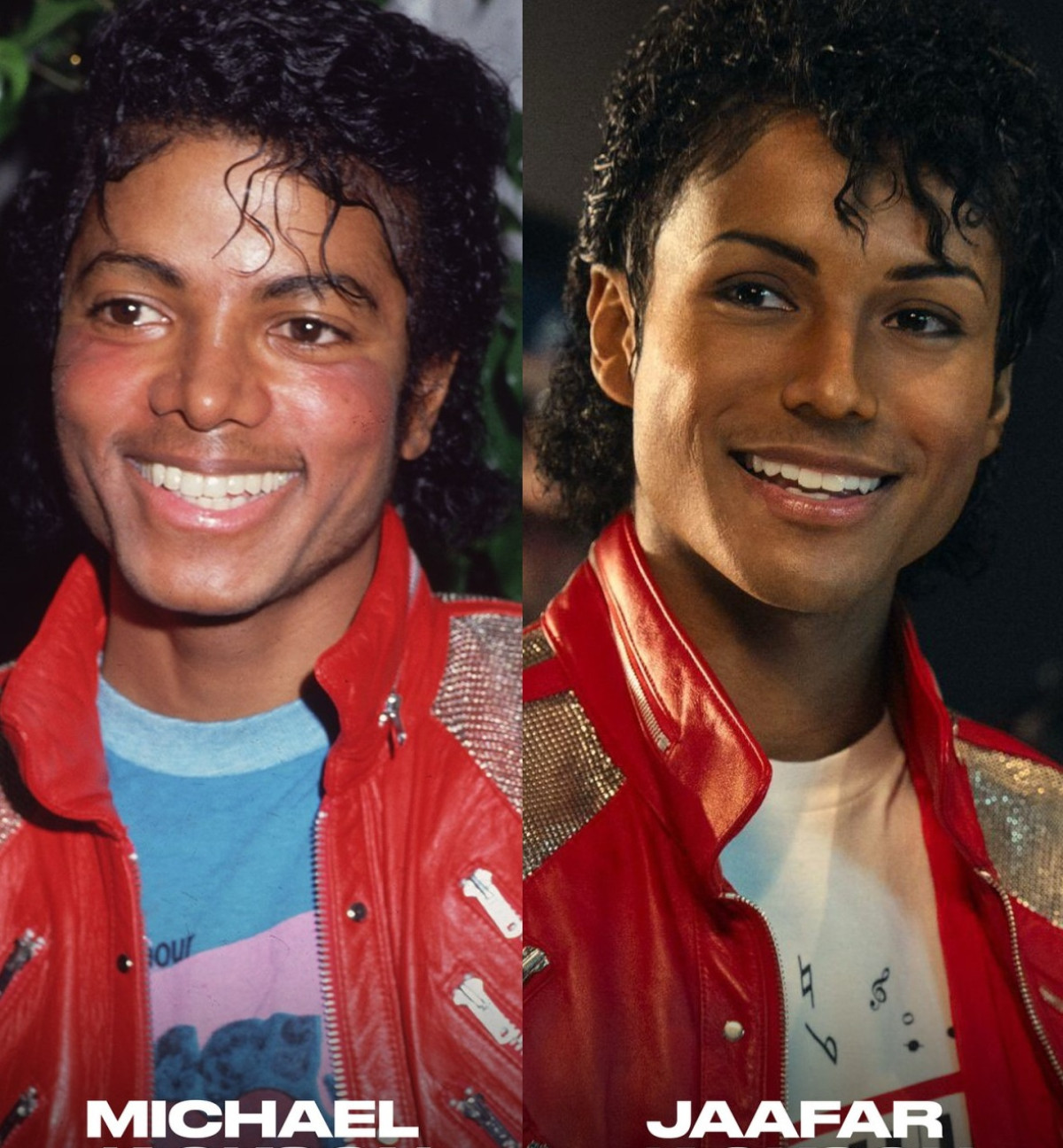
Jaafar Jackson plays Michael Jackson in the 2026 biopic Michael, and the story of how the 29-year-old newcomer landed the role is more interesting than the film itself. It started with a voice note. It involved a two-year global casting search with no formal auditions. It required Jaafar to keep the role secret from his own family for a full year. And it ended with his grandmother Katherine Jackson, the woman who knew Michael longest and loved him most, telling producers that her grandson didn't just resemble her son, he embodied him. After tracking every interview, behind-the-scenes video, and production report released since the film was announced, I can tell you that the choice of Jaafar was not nepotism, not a publicity play, and not the obvious pick everyone assumes it was. It was a hard-earned outcome of the most unusual casting process in recent biopic history, and here is how it actually happened.
Word of mouth has been the whole engine for this series from the start. No massive marketing push, just people reading it and immediately wanting to tell someone.
That reading just made chapter seven hit completely differently in retrospect.
As a longtime murim reader the outer space invasion angle sounded ridiculous to me initially. Three chapters in I completely surrendered to it.
One thing I wish the article covered more is the international creator dynamic. HeyGen supporting over 140 languages is a massive story in markets like Southeast Asia, Latin America, and sub-Saharan Africa where local creator ecosystems are booming but production costs were historically prohibitive.
Someone please tell me there is a season 4 or continuation because finishing season 3 felt like hitting a wall.
Real talk: the token consumption during complex builds is brutal. Had a project burn through a month's worth of tokens in three days because the AI kept regenerating components instead of making targeted edits.
Coming in with a mild counterpoint. The tomb exploration sequences in the manhwa are great but they can also bog down the pacing significantly in the middle of the series. Animation might actually fix this by tightening the visual storytelling.
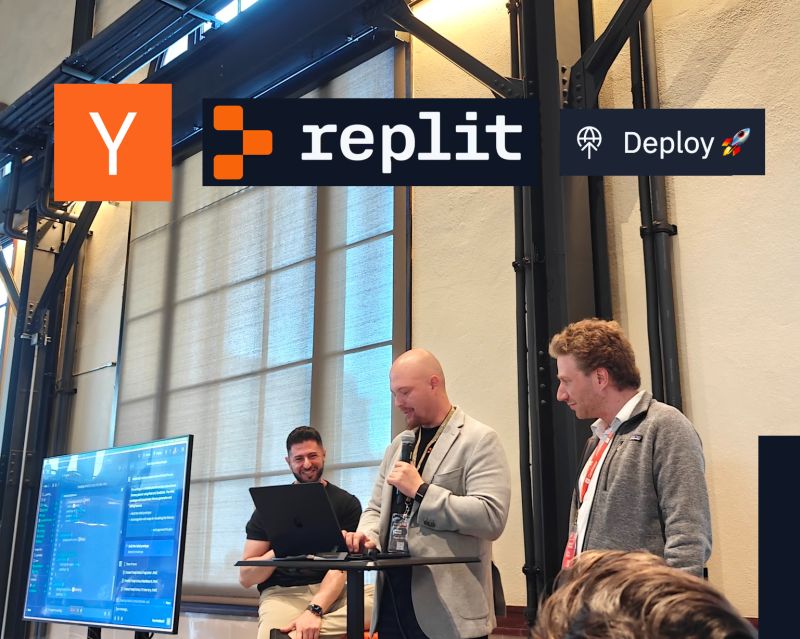
When a company's revenue jumps from $10 million to $100 million in nine months, you pay attention. When that growth comes from an AI agent that builds entire applications autonomously, you realize something fundamental just changed in software development. Replit Agent represents that change, and the numbers prove developers are ready for it. Replit started as a browser-based coding environment for education. Students could write Python or JavaScript without installing anything locally. Teachers loved it because setup time vanished. But the company saw something bigger. If you could run code in the browser, why not let AI write that code? That question led to Agent 3, an AI that doesn't just suggest code completions. It builds entire applications from scratch.
The designer-developer relationship has been tense for decades. Designers create pixel-perfect mockups in Figma. Developers translate them to code and somehow everything looks slightly wrong. Fonts don't match. Spacing is inconsistent. Buttons have different corner radiuses. Both sides get frustrated, blame each other, and the product suffers. V0 by Vercel is fixing this problem by generating production-quality React components that look exactly like the designs. The rebrand from v0.dev to v0.app in January 2026 signaled expanded ambitions beyond just UI component generation. Vercel positioned the tool for full-stack web development, though its core strength remains frontend excellence. That strategic clarity matters because trying to be everything often means excelling at nothing. V0 chose to dominate the handoff between design and code before expanding into other areas.

As someone who works in trust and safety at a tech company, the internal pressure to be able to scan DMs is enormous. Executives get called before parliament and asked why they let predators communicate freely. Encryption does not play well in those rooms.
Fourteen words in one sentence, no encryption plus China ties plus data breach risk plus government access risk equals use Signal.
OpenAI's latest subscription offering represents its most aggressive move yet to reclaim market share in the rapidly expanding AI-powered coding assistant sector
The artificial intelligence industry is entering a new phase of competition, one that extends far beyond the development of advanced language models and neural networks. Companies are now engaged in an intense struggle to secure the computational infrastructure necessary to train and deploy their AI systems. In this context, Anthropic has reportedly begun exploring the possibility of designing and manufacturing its own specialized processors to power Claude, its flagship conversational AI platform, along with its broader suite of artificial intelligence technologies. This strategic consideration emerges at a critical moment in the global AI sector. The exponential growth in model complexity and capability has created unprecedented demand for high-performance computing resources. Sources familiar with the matter indicate that Anthropic is conducting feasibility studies to determine whether developing proprietary semiconductor technology could reduce its dependence on external hardware vendors while ensuring reliable access to the computing power required for its operations.
Every time I think I understand what drives crypto prices, something like Iran considering Bitcoin for oil payments happens and I realize I have no idea about anything.
She and Piccioli apparently collaborated on design for major moments on the world stage according to her spokesperson. That is a significant detail that deserves more attention in this conversation.