
The summer 2026 anime season is stacked. Tomb Raider King is going to have real competition for viewer attention and that is actually exciting because strong competition usually elevates production quality across the board.
16
Sign up to see more
SignupAlready a member?
LoginBy continuing, you agree to Sociomix's Terms of Service, Privacy Policy

The summer 2026 anime season is stacked. Tomb Raider King is going to have real competition for viewer attention and that is actually exciting because strong competition usually elevates production quality across the board.
Jung Heewon does not get nearly enough attention in most discussions of this series. Her arc from terrified office worker to someone who actively challenges Dokja when she thinks he is wrong is one of the most satisfying in the whole story.
The fact that manhwa anime are now showing up on traditional Japanese broadcast channels like Fuji TV alongside streaming is a bigger deal than anyone is talking about. That is genuine mainstream legitimacy.
In a manhwa landscape dominated by dungeon crawling, regression narratives, and power fantasies, The Greatest Estate Developer stands out by asking a simple question: what if the protagonist's greatest weapon wasn't a sword or magic system, but civil engineering knowledge? This bizarre premise transforms into one of the most entertaining, genuinely funny, and surprisingly heartfelt series currently running, proving that innovation in storytelling comes from unexpected places. The series takes the familiar isekai setup where a modern person finds themselves in a fantasy world and completely subverts expectations. Instead of becoming an adventurer or hero, protagonist Kim Suho uses his engineering knowledge to revolutionize construction, infrastructure, and economic development. What sounds like it should be boring becomes absolutely captivating through sharp writing, excellent comedic timing, and genuine passion for showing how infrastructure improves lives.

This gets recommended in every single isekai discussion thread right now and rightfully so.
Respectfully pushing back on the enterprise adoption framing. Seventy companies in a tracking panel is early adopter territory not mainstream penetration. The real test comes when mid-market companies with traditional video production pipelines start switching, and that has not happened at scale yet.
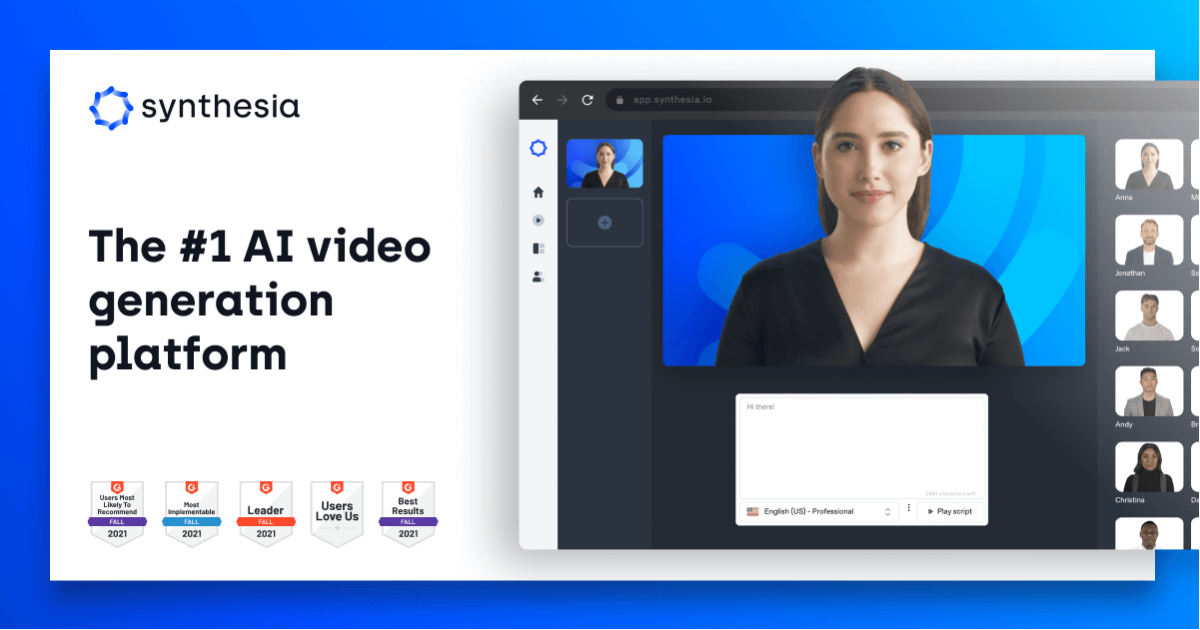
When a company raises $200 million in Series E funding during January 2026, investors are betting on more than potential. They're backing proven market demand and sustainable growth. Synthesia's funding round came alongside a 44% year-over-year increase in headcount to 706 employees, signaling aggressive expansion in a category the company essentially created: AI avatar-based video generation for enterprise training and communications. Corporate training videos have been expensive and slow to produce for decades. Recording a single 10-minute training module traditionally required booking a studio, hiring a presenter, scheduling a videographer, managing multiple takes, and editing everything together. If you needed to update information or translate content, you essentially started over. Synthesia eliminated this entire production workflow by replacing human presenters with AI avatars.
Three months in on the free tier and only hit the 25 credit limit twice. Using it mostly for autocomplete and small refactors. For light usage the free plan is genuinely viable.
Forty million dollars in annual recurring revenue. Six months. One browser-based platform. Those numbers would be impressive for any software company, but for Bolt.new, they represent something more significant: the moment when development environments moved permanently into the cloud and never looked back. Traditional software development has always required setup. Install Node.js, configure your environment, manage dependencies, set up local servers, troubleshoot version conflicts. Before writing a single line of code, developers spend hours or even days preparing their machines. Junior developers often spend their first week just getting their environment working. Bolt.new eliminated all of that with WebContainers technology.
The comparison to collaborative tools like Google Docs with visible revision logs is where I want social media to eventually end up. Not for every comment obviously but for anything that reaches significant visibility. Accountability at scale requires some form of history.
The Anthropic news lands in the same week they are fighting the US government in court over something separate. That company is dealing with a lot of strategic fronts simultaneously. Can they really afford the attention bandwidth for a chip program on top of everything else?
The WhatsApp comparison is interesting since WhatsApp also does not show version history on edited messages. It seems like Meta has a consistent internal policy across its apps to show the edited label but hide original content.
The parallel between her look and the collection itself is what gets me. She wore something that felt like Piccioli's thesis statement for the house. Clean, architectural, softened by drape. That is not accidental styling.
Has anyone tried this jacket style in plus size? Looking for recommendations!
The monochromatic blue accessories are really clever. Ties everything together without trying too hard