
Jaafar having grown up at Neverland and watching movies with his uncle is the kind of biographical detail that changes how you think about the performance. He is not playing a stranger.
22
Sign up to see more
SignupAlready a member?
LoginBy continuing, you agree to Sociomix's Terms of Service, Privacy Policy

Jaafar having grown up at Neverland and watching movies with his uncle is the kind of biographical detail that changes how you think about the performance. He is not playing a stranger.
Bio-harmony eating is the nutrition trend reshaping how people think about food in 2026, and if you have been feeling like calorie counting is making you miserable without actually delivering results, the science behind it will likely resonate immediately. The concept is straightforward - instead of obsessively tracking numbers on a label, you align what you eat, when you eat it, and how much with your body's internal biological clock, your metabolic rhythms, and your gut's own needs. After spending several months testing this approach, shifting my own meals earlier in the day and rebuilding my eating window around natural light cycles, the difference in energy levels and digestion alone was enough to keep me from ever going back to a calorie app. This guide covers what bio-harmony eating actually is, the real science behind it, what a typical day looks like in practice, and who is most likely to benefit.

The article comparing the CGI problem in Blonde to the approach taken here is really insightful. The uncanny valley effect broke every scene in that film and it would have been catastrophic for a performer whose image is as culturally embedded as Michael Jackson's.
Jaafar is genuinely unreal in this. I went in expecting a reasonable impression and walked out believing I had actually watched Michael Jackson perform. That alone makes it worth the price of admission for me.
Reminded me of when I tried explaining to a non-artist friend why AI training on scraped artwork without consent feels like theft. She did not fully get it until I described it as someone profiting enormously from your discarded concepts without credit. Copycat captures that feeling exactly.
The article mentions the skills gap but honestly undersells how wide it is. Over half of datacenter operators globally say they cannot find qualified candidates for open roles. That is not a niche problem.
Career advice I wish I had gotten earlier: the intersection of IT networking and physical facilities management is where you want to be. Neither pure IT nor pure facilities people have the full picture, and the people who bridge both get premium compensation.
Something this article gets exactly right is that regression stories work because of wish fulfillment at a personal level, not just a power fantasy level. Everyone has a moment they would redo and that universality is the actual source of the genre's appeal.
The marketing agency use case is the one I keep seeing underreported. Agencies are the hidden power users here. They are running HeyGen accounts behind dozens of client brands and clients have no idea.
Four billion dollar company, UK based, founded in 2017. This is the kind of story that should be getting more attention as proof that European AI startups can compete at global scale.
If you're new to manhwa or looking to understand what all the hype is about regarding system and leveling stories, you've arrived at exactly the right place. The system genre has become one of the most popular and accessible entry points into Korean comics, offering clear progression mechanics, satisfying power growth, and narratives that feel like playing your favorite RPG or video game brought to life on the page. System manhwa feature protagonists who gain access to game-like interfaces that display stats, skills, quests, and levels. These systems provide clear frameworks for character growth and power progression. You can literally see the protagonist getting stronger through numbers increasing, new abilities unlocking, and challenges being overcome. This visual and concrete progression creates deeply satisfying reading experiences that hook readers from the first chapter.

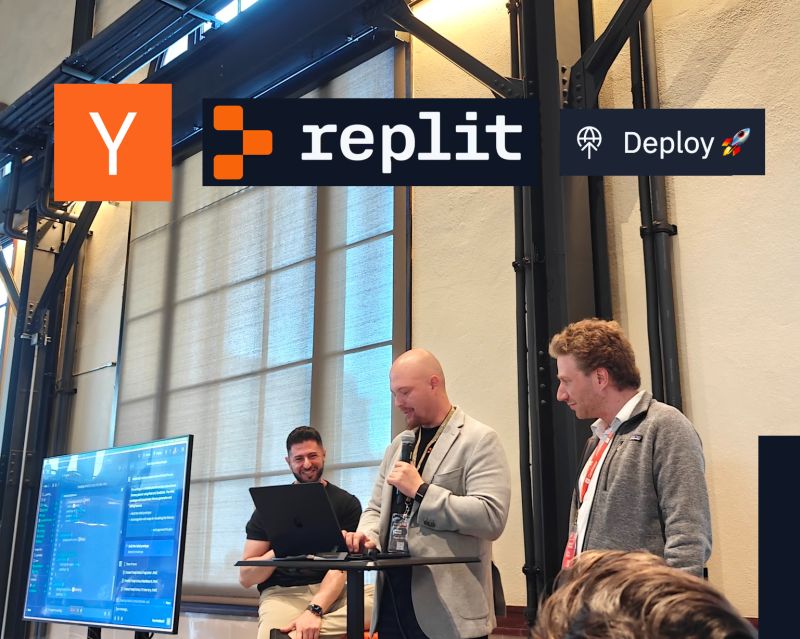
When a company's revenue jumps from $10 million to $100 million in nine months, you pay attention. When that growth comes from an AI agent that builds entire applications autonomously, you realize something fundamental just changed in software development. Replit Agent represents that change, and the numbers prove developers are ready for it. Replit started as a browser-based coding environment for education. Students could write Python or JavaScript without installing anything locally. Teachers loved it because setup time vanished. But the company saw something bigger. If you could run code in the browser, why not let AI write that code? That question led to Agent 3, an AI that doesn't just suggest code completions. It builds entire applications from scratch.
The designer-developer relationship has been tense for decades. Designers create pixel-perfect mockups in Figma. Developers translate them to code and somehow everything looks slightly wrong. Fonts don't match. Spacing is inconsistent. Buttons have different corner radiuses. Both sides get frustrated, blame each other, and the product suffers. V0 by Vercel is fixing this problem by generating production-quality React components that look exactly like the designs. The rebrand from v0.dev to v0.app in January 2026 signaled expanded ambitions beyond just UI component generation. Vercel positioned the tool for full-stack web development, though its core strength remains frontend excellence. That strategic clarity matters because trying to be everything often means excelling at nothing. V0 chose to dominate the handoff between design and code before expanding into other areas.

Restricting access to tech giants is not inherently responsible. It is responsible only if those partners actually fix what they find and disclose results publicly. Glad to see they are required to share findings, that part matters enormously.
When you hear “Paris Fashion Week,” your mind races to haute couture, bold statements, and the world’s most glamorous attendees. But on October 4, 2025, the scene got a surprise guest—Meghan Markle, making what might be her most talked-about entrance yet. To call it a “debut” feels almost too neat, as if she’s stepping into a world she’s never touched. Yet, Meghan’s gradual evolution as a style influencer has been anything but accidental. Her Paris moment isn’t just celebrity spectacle; it’s a statement, a pivot, and a nuanced step into a new chapter. Here’s my take on why this matters.

Three years since she was in Europe and she comes back for Paris Fashion Week. The symbolism is hard to ignore.
Respectfully pushing back on the brand alignment framing. Not everything has to be a strategy. Sometimes a person just goes to support their friend's big moment.
Not sure about those sandals with the outfit I think sleek ankle boots would work better