
Fair pushback above, but the counterpoint is that even with aggressive automation, demand is growing so fast that total headcount is still projected to increase. A shrinking ratio applied to a doubling base still means more jobs.
22
Sign up to see more
SignupAlready a member?
LoginBy continuing, you agree to Sociomix's Terms of Service, Privacy Policy

Fair pushback above, but the counterpoint is that even with aggressive automation, demand is growing so fast that total headcount is still projected to increase. A shrinking ratio applied to a doubling base still means more jobs.
The article was focused on themes and atmosphere which is appropriate for an introductory piece. But you are right that the political texture adds another layer worth exploring.
The thing the article gets most right is that the educational content would reach broader audiences through animation. Seeing a building actually constructed in a montage hits differently than reading panels.
The most emotionally devastating thing about this series is not anything dramatic that happens. It is the quiet accumulation of ordinary moments the messenger witnesses and cannot participate in.
That question is the thematic heart of so many great romance stories and this series has set itself up to explore it from an angle that is actually unusual. I hope it commits to the uncomfortable answer rather than giving everyone a clean resolution.
The manhwa has over 1.6 billion cumulative views worldwide according to some reports. This is not a niche property hoping for an audience. The audience already exists and it is enormous.
In a manhwa landscape dominated by dungeon crawling, regression narratives, and power fantasies, The Greatest Estate Developer stands out by asking a simple question: what if the protagonist's greatest weapon wasn't a sword or magic system, but civil engineering knowledge? This bizarre premise transforms into one of the most entertaining, genuinely funny, and surprisingly heartfelt series currently running, proving that innovation in storytelling comes from unexpected places. The series takes the familiar isekai setup where a modern person finds themselves in a fantasy world and completely subverts expectations. Instead of becoming an adventurer or hero, protagonist Kim Suho uses his engineering knowledge to revolutionize construction, infrastructure, and economic development. What sounds like it should be boring becomes absolutely captivating through sharp writing, excellent comedic timing, and genuine passion for showing how infrastructure improves lives.

The regression subgenre has exploded in popularity over the past few years, becoming one of the most beloved narrative frameworks in Korean manhwa. The core premise is deceptively simple: a protagonist dies or fails catastrophically, then returns to an earlier point in time with their memories intact. Armed with future knowledge, they get a second chance to change their fate, save loved ones, gain power, or pursue revenge against those who wronged them. What makes regression stories so compelling is the combination of dramatic irony, strategic satisfaction, and emotional depth they provide. Readers know what the protagonist knows, creating tension when other characters make mistakes we can see coming. We feel smart alongside protagonists who use foreknowledge to outmaneuver enemies. And we experience the emotional weight of carrying memories of futures that haven't happened yet, of people who died who are currently alive, of betrayals that haven't occurred.

The automatic multicam editing feature that switches to the active speaker is something that used to require either expensive hardware or hours of manual editing. Having it work automatically from the transcript context is genuinely clever.
The part about course creators translating content into languages they do not speak is the use case that stops me cold every time I think about it. That would have been science fiction five years ago.
The difference this time is the AI layer. Previous no-code tools required you to think like a developer but without writing code. Bolt lets you describe outcomes and handles the implementation thinking. That is a qualitatively different kind of tool.
Hot take: Seedance 2.0 from ByteDance was quietly the most technically impressive release of early 2026 and barely anyone in Western tech circles is talking about it.
From zero to 30 billion ARR in roughly two years. I've worked in enterprise software for over a decade and this genuinely does not have a historical comparison. Nothing in traditional SaaS scaled this way.
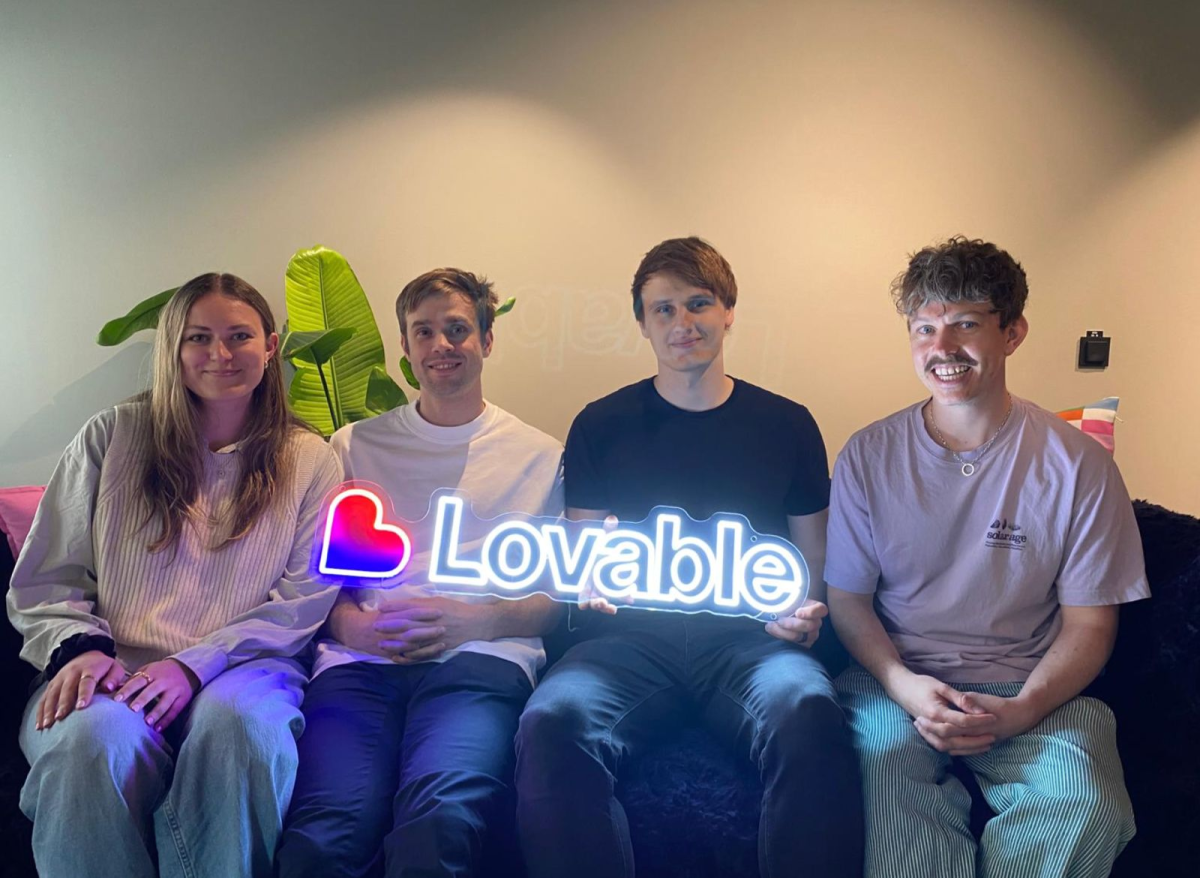
The software development world just witnessed something unprecedented. A European startup called Lovable reached $20 million in annual recurring revenue in just two months, making it potentially the fastest-growing startup in European history. But here's the twist that's making traditional software agencies nervous: they did it by giving non-technical founders the power to build full-stack applications without writing a single line of code. For years, the promise of no-code tools has been the same: anyone can build an app. But the reality has always been different. You'd create a beautiful frontend, get excited about your progress, and then hit the technical cliff. Suddenly you needed to configure databases, set up authentication, manage API keys, and deploy to servers. The "no-code" dream became a "hire-a-developer-anyway" nightmare.
The teenager content rating update is genuinely important context. Teens under 18 now defaulting into 13 plus settings with parental override required to change it is a meaningful policy shift, not just optics.
That $375 million verdict in New Mexico was staggering to read about. And yet it is still a tiny fraction of what Meta earns. The article is right that the legal pressure is real but the financial sting might not be enough to force deep change.
The artificial intelligence industry is entering a new phase of competition, one that extends far beyond the development of advanced language models and neural networks. Companies are now engaged in an intense struggle to secure the computational infrastructure necessary to train and deploy their AI systems. In this context, Anthropic has reportedly begun exploring the possibility of designing and manufacturing its own specialized processors to power Claude, its flagship conversational AI platform, along with its broader suite of artificial intelligence technologies. This strategic consideration emerges at a critical moment in the global AI sector. The exponential growth in model complexity and capability has created unprecedented demand for high-performance computing resources. Sources familiar with the matter indicate that Anthropic is conducting feasibility studies to determine whether developing proprietary semiconductor technology could reduce its dependence on external hardware vendors while ensuring reliable access to the computing power required for its operations.

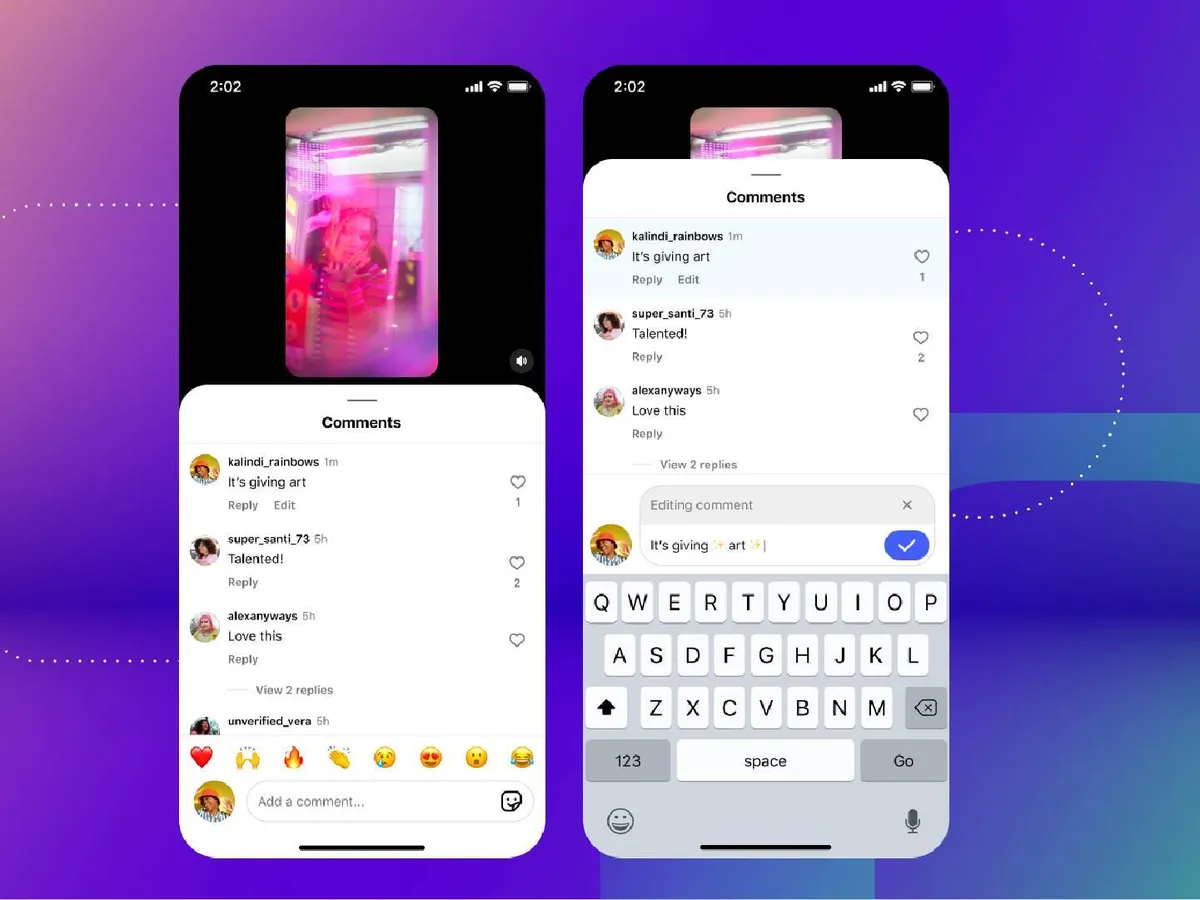
Instagram has rolled out a small but long overdue feature that users have been asking for years. You can now edit your comments after posting them. This simple change solves a very real frustration. Until now, fixing even the smallest typo meant deleting your comment and writing it all over again. That friction is finally gone. But there is a boundary. You get a 15 minute window after posting to make edits. Within that time, you can update your comment as many times as you want. There is also a layer of transparency built in. Once a comment is edited, others will be able to see that it has been modified. However, unlike platforms such as iMessage, Instagram does not show the edit history. What was originally written stays hidden.
Fair point but given that it was her first time in Europe in three years and her first Paris show ever, one appearance carries more weight than it would for someone who goes every season.