
The historical relic angle is genuinely underrated. Getting a Napoleon relic or a Cleopatra relic and seeing how the show interprets those powers is the kind of variety that keeps things fresh chapter after chapter.
11
Sign up to see more
SignupAlready a member?
LoginBy continuing, you agree to Sociomix's Terms of Service, Privacy Policy

The historical relic angle is genuinely underrated. Getting a Napoleon relic or a Cleopatra relic and seeing how the show interprets those powers is the kind of variety that keeps things fresh chapter after chapter.
I will play devil's advocate and say the article overclaims when calling this the most emotionally complex tower climbing manhwa. Omniscient Reader has a legitimate argument for that title and comparing the two is not straightforward.
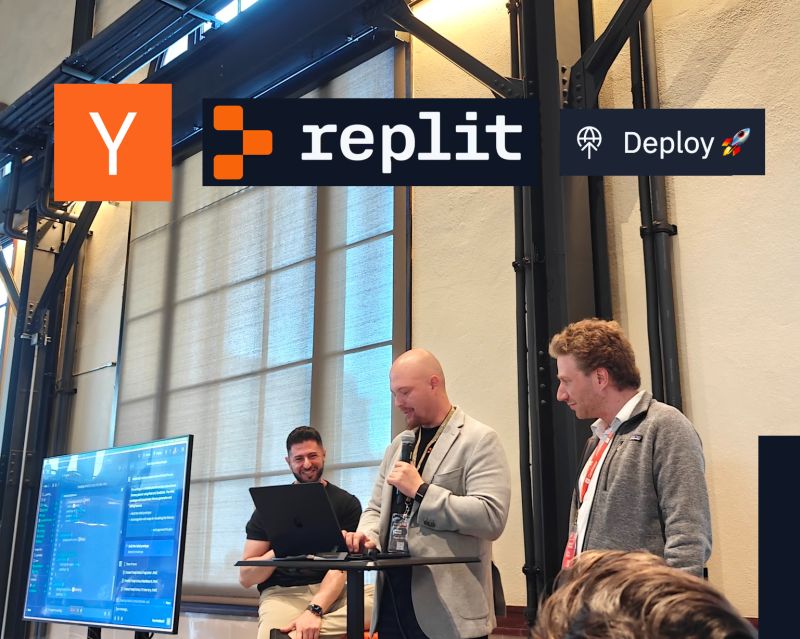
When a company's revenue jumps from $10 million to $100 million in nine months, you pay attention. When that growth comes from an AI agent that builds entire applications autonomously, you realize something fundamental just changed in software development. Replit Agent represents that change, and the numbers prove developers are ready for it. Replit started as a browser-based coding environment for education. Students could write Python or JavaScript without installing anything locally. Teachers loved it because setup time vanished. But the company saw something bigger. If you could run code in the browser, why not let AI write that code? That question led to Agent 3, an AI that doesn't just suggest code completions. It builds entire applications from scratch.
A proper anime adaptation needs to nail the background art showing the estate improving over time. That slow visual progression of the land transforming is a huge part of what makes completing each project feel satisfying.
Panels flow into each other like water. I once read thirty chapters without realizing how much time had passed.
As someone who manages L&D for a company with offices across 11 countries, the multilingual piece is not a nice to have. It is the entire reason we signed an enterprise contract. Recreating compliance training in Mandarin, Portuguese, and Hindi used to take months per cycle. We did our last refresh in under two weeks.
Genuinely cannot tell if this is the most important corporate rivalry of our lifetimes or the most expensive public argument in history. Possibly both at the same time.
The Stack Overflow survey data showing that 76% of developers now use or plan to use AI tools daily is the context you need to understand why Replit's growth makes sense. The entire profession is moving this direction.
While Synthesia leads in revenue, HeyGen leads in customer acquisition momentum with 152% year-over-year growth in mid-market adoption. That explosive growth rate allowed HeyGen to close much of the customer count gap by late 2025. The company is winning by making avatar video accessible to smaller teams and individual creators who cannot afford enterprise contracts but need professional video capabilities. HeyGen positioned itself for small and medium businesses, marketing teams, content creators, and solo entrepreneurs rather than enterprise learning and development departments. This market segment values affordability, ease of use, and creative flexibility over governance features and advanced integrations. Average contract values are roughly one-third of Synthesia's, reflecting this different customer profile.

There's a photograph from February 2026 that pretty much sums up the state of AI right now. At the India AI Impact Summit in New Delhi, Indian Prime Minister Narendra Modi invited the world's tech leaders onstage for a group photo. Everyone held hands. Well, almost everyone. Sam Altman of OpenAI and Dario Amodei of Anthropic, standing right next to each other, refused to clasp hands and instead raised their fists separately. The internet, predictably, lost its mind. An awkward moment between OpenAI CEO Sam Altman and Anthropic CEO Dario Amodei at an AI Summit captured the increasingly icy relations between two rival tech leaders who started off as colleagues. That's not just petty drama. It's a window into what may be the most consequential corporate rivalry in the technology world right now, one that's playing out in boardrooms, courtrooms, Super Bowl ads, and billion-dollar compute deals all at once.

Meta's entire monetization thesis here seems to be get billions of people using the AI for free and then route them toward products via shopping mode. That is a brilliant business model if it works and a privacy nightmare regardless.
The article frames this as a bigger shift toward accountable communication. Bold claim. It is a text box with a pencil icon. Let us not overread a convenience feature as a philosophical transformation.
Real talk, nobody in my friend group knew Muse Spark launched until they got a notification inside Instagram or Facebook. The distribution machine is the product at this scale.
Hot take: this is less about chips and more about negotiating leverage. The moment you credibly threaten to build your own silicon, your existing suppliers suddenly find more capacity and better pricing.
Brilliant how the red accessories warm up what could have been a stark black and white outfit
Has anyone tried styling these kinds of boots with shorts? I'm worried they might make my legs look shorter