
Does the film cover Michael's vitiligo and the whole skin change narrative, or does it gloss over that too?
10
Sign up to see more
SignupAlready a member?
LoginBy continuing, you agree to Sociomix's Terms of Service, Privacy Policy

Does the film cover Michael's vitiligo and the whole skin change narrative, or does it gloss over that too?
The whole debate about whether you can separate the art from the artist gets weirdly sidestepped by a film that just pretends the difficult part of the question never arose. That is not a resolution, it is an avoidance.
The regression subgenre has exploded in popularity over the past few years, becoming one of the most beloved narrative frameworks in Korean manhwa. The core premise is deceptively simple: a protagonist dies or fails catastrophically, then returns to an earlier point in time with their memories intact. Armed with future knowledge, they get a second chance to change their fate, save loved ones, gain power, or pursue revenge against those who wronged them. What makes regression stories so compelling is the combination of dramatic irony, strategic satisfaction, and emotional depth they provide. Readers know what the protagonist knows, creating tension when other characters make mistakes we can see coming. We feel smart alongside protagonists who use foreknowledge to outmaneuver enemies. And we experience the emotional weight of carrying memories of futures that haven't happened yet, of people who died who are currently alive, of betrayals that haven't occurred.

Not to be contrarian but the article basically makes the case that the series is interesting because of what it sets up and then stops short of evaluating how well those setups actually pay off. Setup praise is not the same as story praise and I would like more honesty about execution.
The opponents Yu faces throughout the series function almost like different philosophical arguments walking into the ring to be tested and destroyed. The series is basically doing battle of ideas through athletic combat.
The article says romance is minimal and that's mostly true but there are definitely some relationship dynamics building that feel more intentional than anything in the original.
That criticism has merit for the later chapters for sure. But the article is specifically about the art, and the art remains consistently strong even when the story conveniences pile up.
That is a real risk but the detail that Seongshik's memory of the novel is imperfect and his knowledge might be incomplete is doing some structural work to counter exactly that problem. He is not omniscient. He just thinks he is.
What I appreciate is the try before you buy model. Every AI tool should offer enough free usage to actually complete a meaningful task, not just a toy demo. The 25 prompt credit floor is reasonable.
The temporal consistency improvement is what finally made me switch from just using stock footage for background plates. An AI generated exterior shot that holds together across 8 seconds saves me an entire location day.
Okay but is nobody going to mention that the same AI company whose models power Replit Agent has its own competing product that is growing even faster? The dependency on upstream model providers is a real strategic vulnerability.
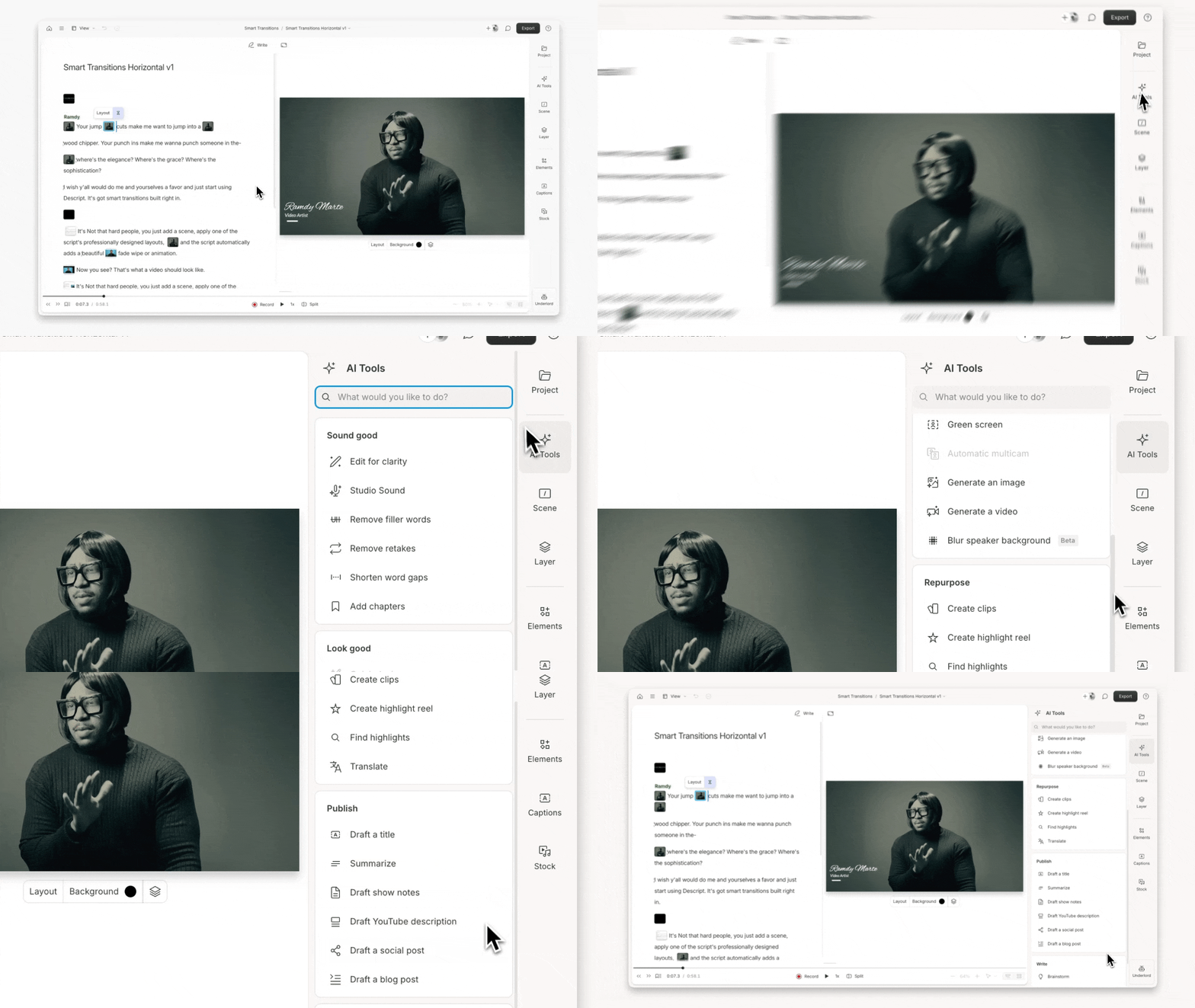
Most people can edit a Google Doc. Delete some words, rearrange sentences, fix typos, add paragraphs. It's intuitive and requires no special training. Now imagine editing video the same way. That's Descript's core innovation, and it transformed video editing from a specialized skill requiring expensive software into something anyone who can edit text can do effectively. Descript started as a transcription tool for podcasters. Record your podcast, upload it to Descript, and get an accurate transcript for show notes. But the founders realized something bigger. If you have a perfect transcript synchronized to audio, you can edit the audio by editing the text. Delete a word from the transcript and that word disappears from the audio. That insight became the foundation for a complete editing platform.
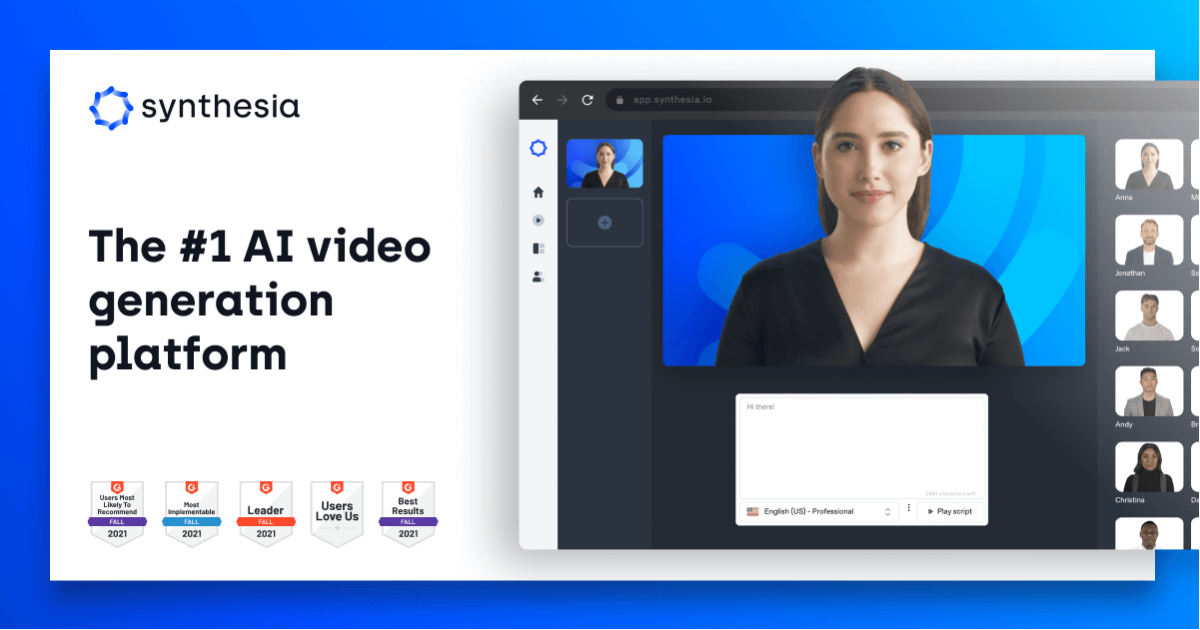
When a company raises $200 million in Series E funding during January 2026, investors are betting on more than potential. They're backing proven market demand and sustainable growth. Synthesia's funding round came alongside a 44% year-over-year increase in headcount to 706 employees, signaling aggressive expansion in a category the company essentially created: AI avatar-based video generation for enterprise training and communications. Corporate training videos have been expensive and slow to produce for decades. Recording a single 10-minute training module traditionally required booking a studio, hiring a presenter, scheduling a videographer, managing multiple takes, and editing everything together. If you needed to update information or translate content, you essentially started over. Synthesia eliminated this entire production workflow by replacing human presenters with AI avatars.
Counter perspective: every junior developer who learned by setting up environments, fighting dependency conflicts, and debugging version mismatches came out the other side with hard-won intuition that makes them better at their jobs long-term. Skipping all of that has costs we are not measuring yet.
The shift from open-source to proprietary is ultimately a statement about where Meta believes value will accrue in the AI era. They used open-source to commoditize the model layer while they owned the distribution. Now they are trying to own both. Whether regulators let them do that is a separate conversation.
Facebook has shown edit history for years and it works fine. There is no reason Instagram cannot do the same. Hiding original text while slapping an edited label on it is the worst of both worlds.
Genuinely asking, how do we actually verify any of this? One researcher already pointed out that Anthropic's blog post left out key details needed to confirm the vulnerability claims. Who is doing independent verification here?
The artificial intelligence industry is entering a new phase of competition, one that extends far beyond the development of advanced language models and neural networks. Companies are now engaged in an intense struggle to secure the computational infrastructure necessary to train and deploy their AI systems. In this context, Anthropic has reportedly begun exploring the possibility of designing and manufacturing its own specialized processors to power Claude, its flagship conversational AI platform, along with its broader suite of artificial intelligence technologies. This strategic consideration emerges at a critical moment in the global AI sector. The exponential growth in model complexity and capability has created unprecedented demand for high-performance computing resources. Sources familiar with the matter indicate that Anthropic is conducting feasibility studies to determine whether developing proprietary semiconductor technology could reduce its dependence on external hardware vendors while ensuring reliable access to the computing power required for its operations.

The IP and code ownership question mentioned at the end of the article is the sleeping giant nobody wants to deal with. Enterprise legal teams are going to force this conversation into the open soon.
Meghan has spent years being dressed by protocol or by strategy. Watching her show up somewhere for no reason other than a genuine friendship and a shared love of craft is honestly refreshing.