The point about carbohydrate-heavy meals feeling energizing at lunch but causing bloating at 9 pm resonates completely. I thought I had a carb intolerance for years. Turns out I had a timing issue.
7
Sign up to see more
SignupAlready a member?
LoginBy continuing, you agree to Sociomix's Terms of Service, Privacy Policy

The point about carbohydrate-heavy meals feeling energizing at lunch but causing bloating at 9 pm resonates completely. I thought I had a carb intolerance for years. Turns out I had a timing issue.
Hot take: the 32 percent Rotten Tomatoes score actually tells you more about what this film chose not to include than about what Jaafar delivers on screen. Two completely different conversations.
Gosu winning the Presidential Award in Korea is the detail people sleep on. This is not just a popular webtoon. It has institutional recognition as a work of cultural significance.
Fair point but honestly with the Summer 2026 anime season shaping up to be incredibly competitive, Tomb Raider King needs that Solo Leveling comparison to even get casual viewers to give it a first episode.
Twelve episodes for 123 webtoon chapters is genuinely concerning. Even with great pacing that means barely touching some of the most emotionally dense arcs in the second half.
The regression subgenre has exploded in popularity over the past few years, becoming one of the most beloved narrative frameworks in Korean manhwa. The core premise is deceptively simple: a protagonist dies or fails catastrophically, then returns to an earlier point in time with their memories intact. Armed with future knowledge, they get a second chance to change their fate, save loved ones, gain power, or pursue revenge against those who wronged them. What makes regression stories so compelling is the combination of dramatic irony, strategic satisfaction, and emotional depth they provide. Readers know what the protagonist knows, creating tension when other characters make mistakes we can see coming. We feel smart alongside protagonists who use foreknowledge to outmaneuver enemies. And we experience the emotional weight of carrying memories of futures that haven't happened yet, of people who died who are currently alive, of betrayals that haven't occurred.

As a murim fan specifically, I would argue the regression formula works even better in a martial arts cultivation setting than in the modern dungeon-system setting. The power hierarchies are more rigid so subverting them with foreknowledge feels more satisfying.
Unpopular opinion but Lee Gilyoung and Shin Yoosung are the emotional core of the entire series for me. Every choice Dokja makes feels more meaningful because protecting them is always somewhere in the calculation.
The token-based pricing replacing fixed credits makes costs even harder to predict. At least with a fixed credit count you knew when you were close to the limit. Now a single complex full-stack generation can drain your monthly allocation in a few prompts.
Does anyone know if participants get notified when OtterPilot joins a meeting? Like, does it announce itself or just silently appear in the participant list?
The maintenance problem is real but it is also solvable the same way. If AI can generate the initial app, it can also generate updates, fixes, and new features. The question is whether the debt accumulates faster than the AI can pay it back.
Project Glasswing is either a genuine attempt to secure critical infrastructure or the most sophisticated enterprise sales move in tech history. Probably both.
Knowledge workers spend an average of 18 hours per week in meetings. Much of that time involves routine status updates, recurring check-ins, and informational sessions where your physical presence adds minimal value. Otter.ai introduced a provocative concept called OtterPilot: an AI assistant that joins meetings autonomously when you can't attend, records everything, generates summaries, and answers questions about what happened. Connect Otter.ai to your calendar. The system monitors your scheduled meetings and automatically joins Zoom, Google Meet, or Microsoft Teams calls when they start. OtterPilot records audio, generates real-time transcripts, identifies speakers, and creates AI summaries with action items. You receive a meeting briefing without attending the meeting yourself.

As someone who got liquidated on a short position today, yes, the pain is real. The funding rate setup was telling me to hold but I held anyway. Lesson learned for the fourth time.
Wait, the article kind of glossed over something huge. Anthropic just locked in 3.5 gigawatts of Google TPU capacity through a deal with Broadcom. That is an enormous amount of compute. So why are they also talking about building their own chips at the same time? These two strategies feel contradictory.
Love that angle. It is a good reminder that every comment section on every platform is a constructed artifact, not a live documentary of what people actually said in the moment.
The artificial intelligence industry is entering a new phase of competition, one that extends far beyond the development of advanced language models and neural networks. Companies are now engaged in an intense struggle to secure the computational infrastructure necessary to train and deploy their AI systems. In this context, Anthropic has reportedly begun exploring the possibility of designing and manufacturing its own specialized processors to power Claude, its flagship conversational AI platform, along with its broader suite of artificial intelligence technologies. This strategic consideration emerges at a critical moment in the global AI sector. The exponential growth in model complexity and capability has created unprecedented demand for high-performance computing resources. Sources familiar with the matter indicate that Anthropic is conducting feasibility studies to determine whether developing proprietary semiconductor technology could reduce its dependence on external hardware vendors while ensuring reliable access to the computing power required for its operations.
Meta has just had one of its most important AI moments yet and the early signals are hard to ignore. Following the launch of its newest AI model Muse Spark, the company’s standalone Meta AI app surged dramatically in popularity, hinting at a much larger shift that is beginning to take shape. The release is particularly significant because it marks the first major AI model rollout under Alexandr Wang, who joined Meta to reboot its AI strategy. This is not just another incremental update. It represents a more aggressive and focused push into the AI race. According to data from Appfigures, Meta AI jumped from number 57 to number 5 on the U.S. App Store within a day of the launch. That kind of movement rarely happens without a strong underlying pull from users. It signals not curiosity but intent.
Geopolitical events have been crypto's best friends and worst enemies in equal measure. The ceasefire gives a boost but any escalation reversal is going to hurt proportionally.
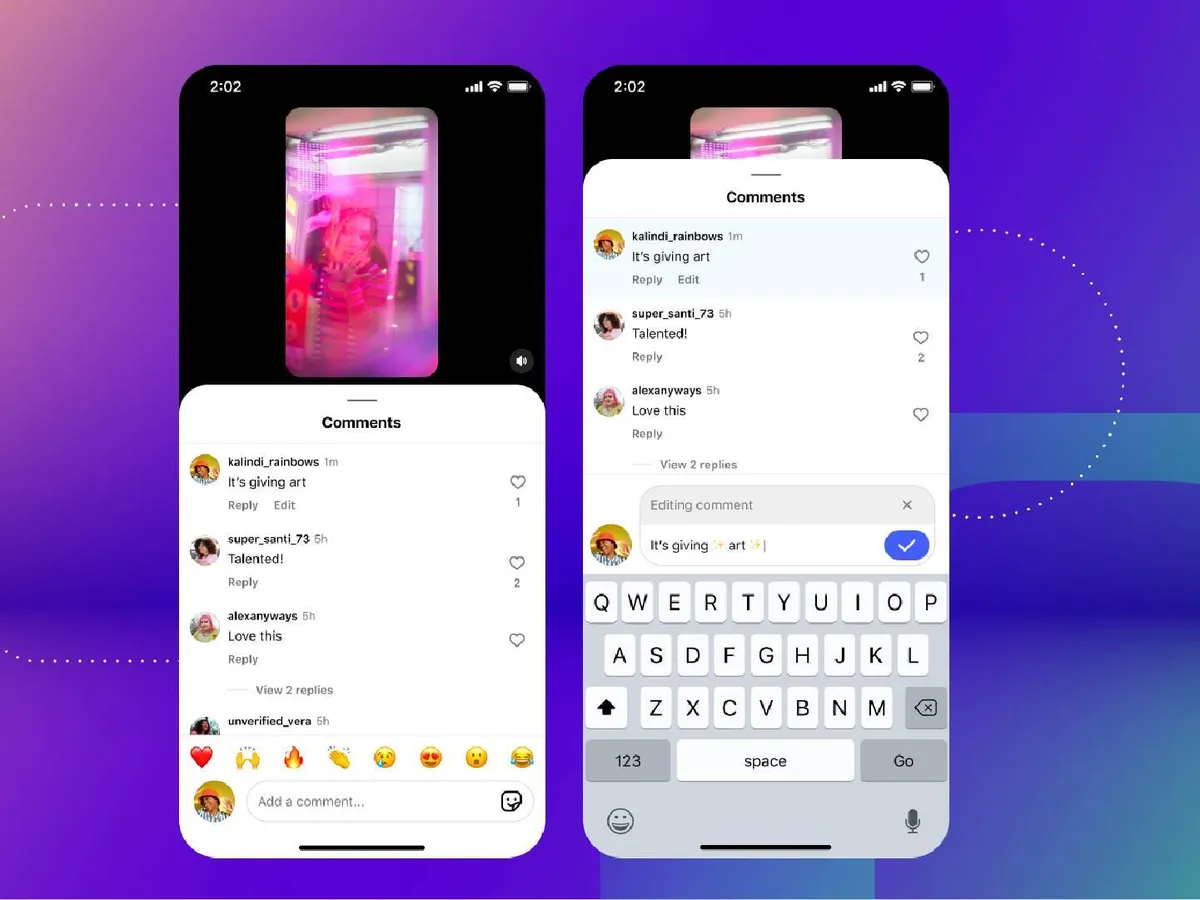
Instagram has rolled out a small but long overdue feature that users have been asking for years. You can now edit your comments after posting them. This simple change solves a very real frustration. Until now, fixing even the smallest typo meant deleting your comment and writing it all over again. That friction is finally gone. But there is a boundary. You get a 15 minute window after posting to make edits. Within that time, you can update your comment as many times as you want. There is also a layer of transparency built in. Once a comment is edited, others will be able to see that it has been modified. However, unlike platforms such as iMessage, Instagram does not show the edit history. What was originally written stays hidden.