
The article mentions the skills gap but honestly undersells how wide it is. Over half of datacenter operators globally say they cannot find qualified candidates for open roles. That is not a niche problem.
21
Sign up to see more
SignupAlready a member?
LoginBy continuing, you agree to Sociomix's Terms of Service, Privacy Policy

The article mentions the skills gap but honestly undersells how wide it is. Over half of datacenter operators globally say they cannot find qualified candidates for open roles. That is not a niche problem.
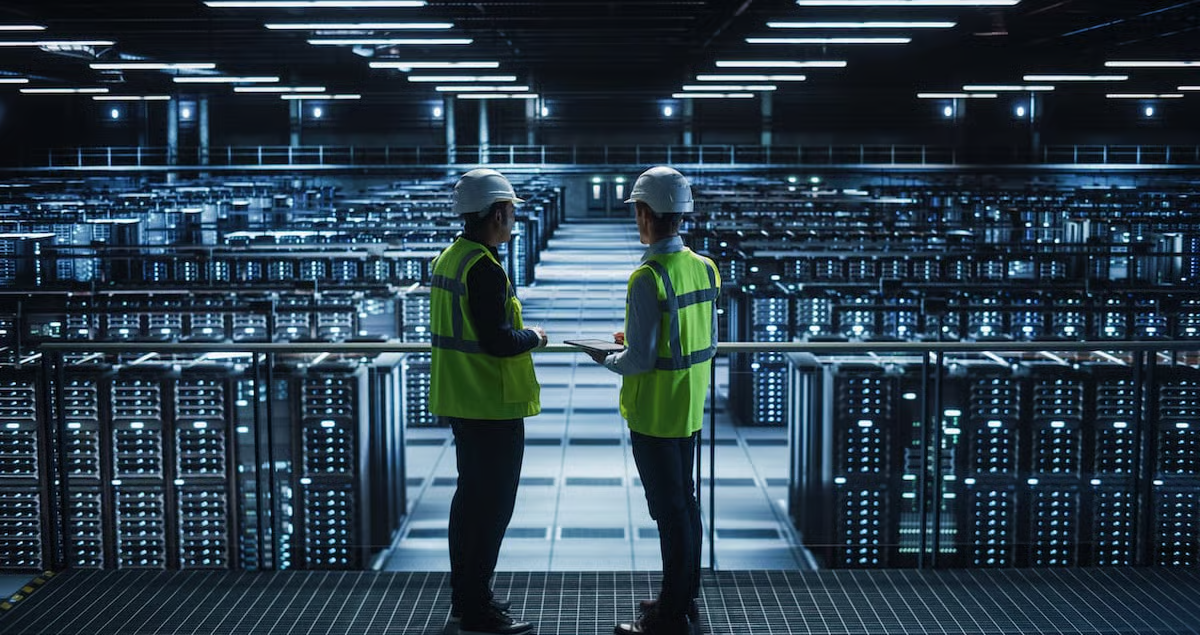
The technology sector is experiencing a paradox. While headlines scream about mass layoffs at major tech companies, a critical shortage is quietly building in one of the most essential areas of digital infrastructure. Datacenters, the physical backbone of our digital world, are facing an unprecedented demand surge, and there simply are not enough skilled professionals to build and maintain them. Countries across the globe are rushing to establish their own datacenter infrastructure. From India's ambitious plans to become a datacenter hub to the European Union's push for data sovereignty, and emerging markets in Southeast Asia and Latin America building their first large scale facilities, the construction boom is just beginning.
The emperor's final message plotline is what is keeping me most invested. What does a dead emperor have to say to a crumbling empire 120 years later and why does it still matter?
What worries me about The Greatest Estate Developer adaptation is exactly what the article says. Making construction visually exciting requires creative direction and if the studio plays it safe it becomes a slideshow of blueprint scenes.
Is it worth reading the manhwa now or should I just wait for the anime? Genuinely torn because I do not want to spoil myself but also two years of waiting feels rough.
The social mobility point the article makes about male characters in historical fantasy settings is accurate but I want to add that Elliot specifically being a minor villain rather than a protagonist or love interest complicates that mobility significantly. He has male privilege in the setting but no narrative privilege.
As someone who works in civil engineering, the fact that this series makes drainage systems and soil compaction genuinely exciting is something I never thought I'd say about a manhwa. My coworkers think I've lost it because I keep recommending it.
As a reader who usually bounces off emotional manhwa because they manipulate rather than earn their moments, this series genuinely earned every single one of mine. The difference between manufactured sadness and real consequence is something this writer understands.
In a manhwa landscape dominated by dungeon crawling, regression narratives, and power fantasies, The Greatest Estate Developer stands out by asking a simple question: what if the protagonist's greatest weapon wasn't a sword or magic system, but civil engineering knowledge? This bizarre premise transforms into one of the most entertaining, genuinely funny, and surprisingly heartfelt series currently running, proving that innovation in storytelling comes from unexpected places. The series takes the familiar isekai setup where a modern person finds themselves in a fantasy world and completely subverts expectations. Instead of becoming an adventurer or hero, protagonist Kim Suho uses his engineering knowledge to revolutionize construction, infrastructure, and economic development. What sounds like it should be boring becomes absolutely captivating through sharp writing, excellent comedic timing, and genuine passion for showing how infrastructure improves lives.

Dario left OpenAI over safety concerns and then built a company that just convinced Apple, Microsoft, Google, Nvidia, Amazon, Cisco, and JPMorgan to all join a cybersecurity partnership together. Whatever you think of the rivalry drama, that is a remarkable outcome for someone who walked away from a VP of Research job.
Project Glasswing is either a genuine attempt to secure critical infrastructure or the most sophisticated enterprise sales move in tech history. Probably both.
Project Glasswing is genuinely interesting because the same model that can find and chain vulnerabilities in the Linux kernel is now being used to patch them. Defense and offense running on the same engine.
Love that angle. It is a good reminder that every comment section on every platform is a constructed artifact, not a live documentary of what people actually said in the moment.
Meta has just had one of its most important AI moments yet and the early signals are hard to ignore. Following the launch of its newest AI model Muse Spark, the company’s standalone Meta AI app surged dramatically in popularity, hinting at a much larger shift that is beginning to take shape. The release is particularly significant because it marks the first major AI model rollout under Alexandr Wang, who joined Meta to reboot its AI strategy. This is not just another incremental update. It represents a more aggressive and focused push into the AI race. According to data from Appfigures, Meta AI jumped from number 57 to number 5 on the U.S. App Store within a day of the launch. That kind of movement rarely happens without a strong underlying pull from users. It signals not curiosity but intent.
Baz Luhrmann was also at the show and nobody is writing five hundred words about what that means for his brand narrative. Just saying.
For summer you could swap the hoodie for a galaxy print tank and still keep the same vibe
Such a fun interpretation of western style without going overboard on the cowgirl theme