
Serious question with no opinion attached: what happens to entry-level developer jobs in three to five years if tools like this keep improving at the current rate? Has anyone seen credible research on this?
Sign up to see more
SignupAlready a member?
LoginBy continuing, you agree to Sociomix's Terms of Service, Privacy Policy

Serious question with no opinion attached: what happens to entry-level developer jobs in three to five years if tools like this keep improving at the current rate? Has anyone seen credible research on this?
The democratization framing is real but it also means we are about to see an enormous wave of mediocre software entering the world. Not all ideas deserve to be built just because building them became cheap.
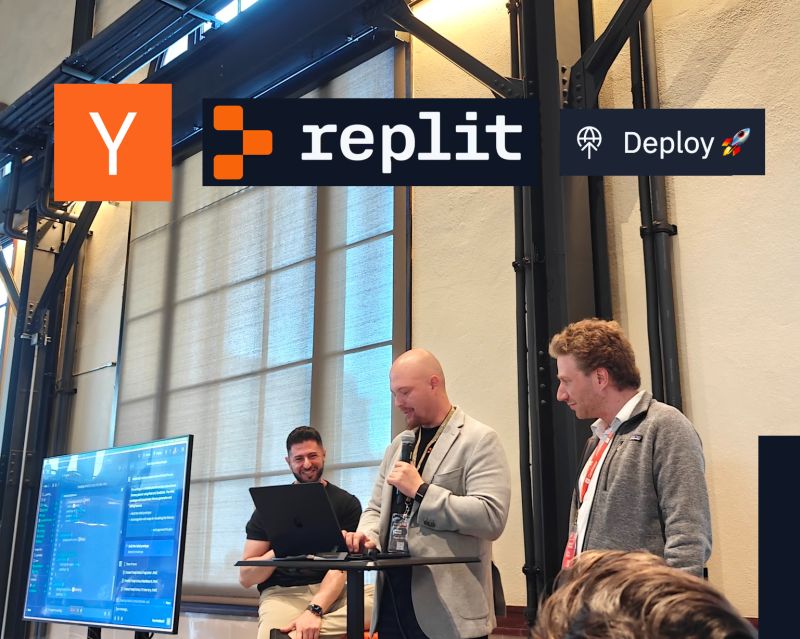
When a company's revenue jumps from $10 million to $100 million in nine months, you pay attention. When that growth comes from an AI agent that builds entire applications autonomously, you realize something fundamental just changed in software development. Replit Agent represents that change, and the numbers prove developers are ready for it. Replit started as a browser-based coding environment for education. Students could write Python or JavaScript without installing anything locally. Teachers loved it because setup time vanished. But the company saw something bigger. If you could run code in the browser, why not let AI write that code? That question led to Agent 3, an AI that doesn't just suggest code completions. It builds entire applications from scratch.
Text-based editing workflows now eliminate somewhere between 50 and 70 percent of manual timeline scrubbing according to most production estimates. That is not a marginal efficiency gain, that is a different job.
The part about pixel-perfect UI affecting user trust and conversion rates is something product managers need to hear louder. The visual quality gap between a polished app and a slightly-off app is invisible to engineers but immediately obvious to users.
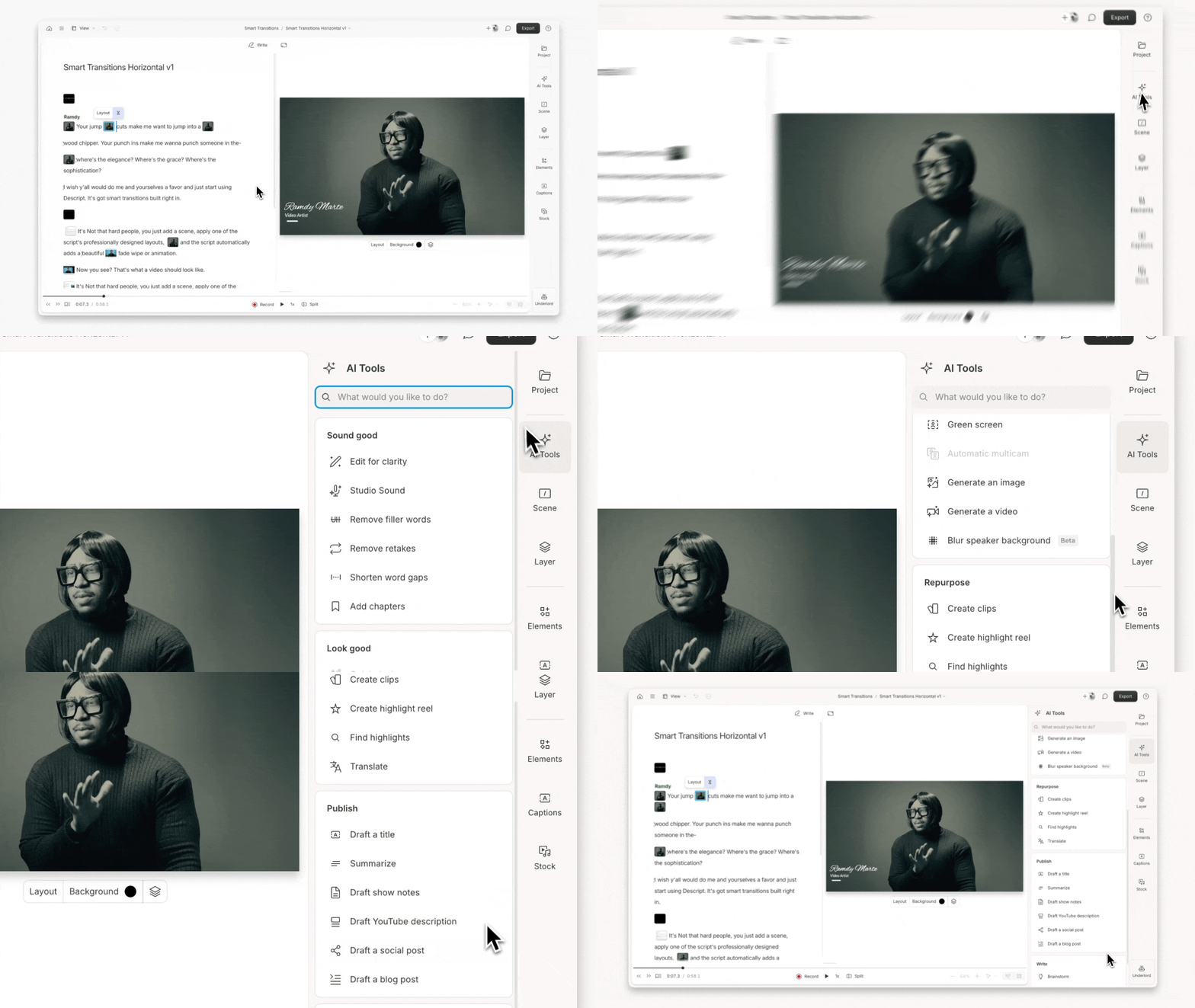
Most people can edit a Google Doc. Delete some words, rearrange sentences, fix typos, add paragraphs. It's intuitive and requires no special training. Now imagine editing video the same way. That's Descript's core innovation, and it transformed video editing from a specialized skill requiring expensive software into something anyone who can edit text can do effectively. Descript started as a transcription tool for podcasters. Record your podcast, upload it to Descript, and get an accurate transcript for show notes. But the founders realized something bigger. If you have a perfect transcript synchronized to audio, you can edit the audio by editing the text. Delete a word from the transcript and that word disappears from the audio. That insight became the foundation for a complete editing platform.
As someone who has been a developer for a while, I deeply appreciate that this article did not pretend the designer-developer tension is just a communication problem. It is a tooling problem. Better tools produce better collaboration, full stop.
The bottom line is that control over compute infrastructure is becoming as strategically important as control over the models themselves. Anyone who does not take the hardware layer seriously is going to find themselves at a structural disadvantage.
Speaking from experience working in cybersecurity policy, the problem with the safety argument is that you cannot build a backdoor only for the good guys. The same access that lets TikTok's safety team scan messages is the same access that gets exploited in a data breach.
Good point, though to be fair most end users do not interact with the chips at all. The interoperability question is more relevant at the developer and enterprise level, where running on different hardware backends can create real compatibility headaches.
Anthropic on Tuesday unveiled an advanced artificial intelligence model designed specifically to identify software vulnerabilities, marking a significant development in the intersection of AI and cybersecurity. The model, named Claude Mythos Preview, will be available exclusively to a carefully selected group of companies as part of Project Glasswing, a new security initiative that aims to strengthen digital defenses while preventing malicious exploitation. The San Francisco based AI company has chosen to severely restrict access to Claude Mythos Preview due to its powerful capability to detect security weaknesses and software flaws. This decision reflects growing concerns about dual use AI technologies that could be weaponized by adversaries if they fell into the wrong hands.
I am more interested in whether this kind of vertical integration is actually good for users. If every major AI company ends up running on proprietary silicon, does that make the technology less interoperable and more siloed?
Yeah she used to go to NYFW pretty regularly when she was acting. This was her first Paris show specifically, not her first fashion week ever.
Piccioli won designer of the year twice at the Fashion Awards while at Valentino. His move to Balenciaga was always going to be the most watched transition in fashion this year. Meghan being there for the debut is a real vote of confidence.
Anyone else think white sneakers would make this more casual for everyday wear? I love making dressy pieces more wearable
The white tee tucking technique is crucial here. I always struggle to get that perfect casual tuck.
Would this work with navy trousers instead of black? I'm trying to branch out from my usual black pants.
The monochrome makes it look so expensive. Its all about the color coordination