The part about AI resistant competencies resonated with me professionally. Adaptability, complex judgment, and ethical reasoning are showing up in job descriptions in ways they never did five years ago. The market is already pricing these in.
Sign up to see more
SignupAlready a member?
LoginBy continuing, you agree to Sociomix's Terms of Service, Privacy Policy
Sign up to see more
SignupAlready a member?
LoginBy continuing, you agree to Sociomix's Terms of Service, Privacy Policy

The part about AI resistant competencies resonated with me professionally. Adaptability, complex judgment, and ethical reasoning are showing up in job descriptions in ways they never did five years ago. The market is already pricing these in.
The framing of murder victims as collectible art sold to the ultra-wealthy is the kind of premise that would feel exploitative in lesser hands. Kim earns it by grounding the critique in class commentary that never feels preachy.
Does anyone know how many chapters Copycat manhwa will have in total? Trying to figure out if it will be as long as Sweet Home or closer to Bastard's length.
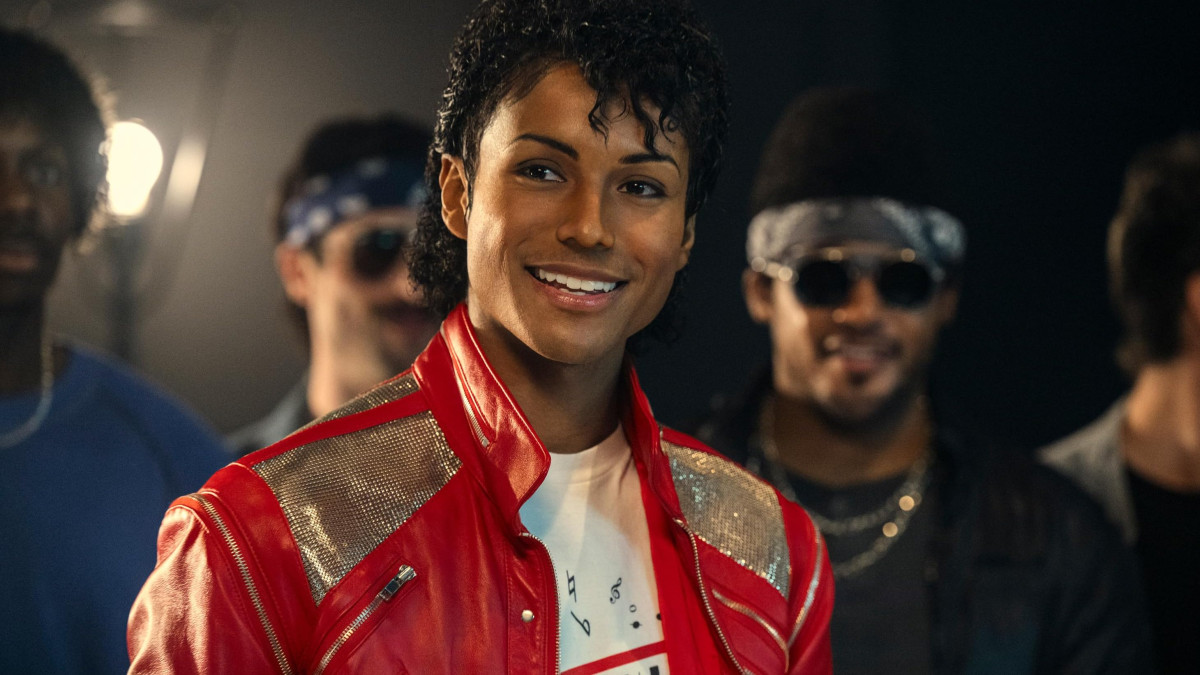
The Michael movie review verdict is in, and it is more complicated than the 26% Rotten Tomatoes score suggests. Antoine Fuqua's long-delayed Michael Jackson biopic, simply titled Michael, hit theaters this weekend with Jaafar Jackson playing his late uncle, and the critical response has been brutal. The BBC gave it one star. Roger Ebert's site called it a filmed playlist in search of a story. Yet early audience reactions on social media have been warmer, ticket pre-sales suggest an $80 million opening, and Variety thought it worked as an engrossing middle-of-the-road biopic. After tracking coverage across more than a dozen outlets over the past 48 hours, I think the honest answer to "should you watch this?" depends almost entirely on what you want from a music biopic, and this guide breaks down exactly what the film delivers, what it skips, and who will actually enjoy sitting through its two-hour-and-nine-minute runtime.
The fact that they are already hinting at a sequel with that His Story Continues card while simultaneously having no confirmed plans for a second film is a very strange creative choice. Either you have a sequel or you do not.
What really makes this different from other comedy isekai is that the comedy never undercuts the actual narrative stakes. When things get serious the jokes stop and the series earns it.
Minimal score would be the right call. If they put dramatic swelling music over every exchange it will undercut exactly what makes the fights hit so differently from other sports anime.
In a medium filled with talented artists producing stunning work, making a claim about any series having the "best" art feels bold. Yet Nano Machine consistently delivers combat sequences so fluid, detailed, and visually innovative that even readers who don't typically care about martial arts stories find themselves captivated by the sheer spectacle on display. The series combines traditional murim aesthetics with futuristic sci-fi elements, creating a unique visual identity that stands apart from typical cultivation manhwa. The nano machine implanted in protagonist Cheon Yeo-Woon's body doesn't just give him power. It becomes a storytelling device that allows the artist to visualize techniques, energy flows, and combat analysis in ways other series can't replicate.
What chapter does it actually start getting good? Asking genuinely because a few people told me to push through the early episodes.
LINE Webtoon's CEO pledged something like twenty anime series from webtoons back in 2025. The fact that we are actually approaching that number is wild to see in real time.
Dungeon Reset as a beginner recommendation is a bold choice and honestly the right one for a certain type of reader. If you're more Minecraft than Dark Souls, Dawoon's story is absolutely for you.
If you're new to manhwa or looking to understand what all the hype is about regarding system and leveling stories, you've arrived at exactly the right place. The system genre has become one of the most popular and accessible entry points into Korean comics, offering clear progression mechanics, satisfying power growth, and narratives that feel like playing your favorite RPG or video game brought to life on the page. System manhwa feature protagonists who gain access to game-like interfaces that display stats, skills, quests, and levels. These systems provide clear frameworks for character growth and power progression. You can literally see the protagonist getting stronger through numbers increasing, new abilities unlocking, and challenges being overcome. This visual and concrete progression creates deeply satisfying reading experiences that hook readers from the first chapter.
The BL (Boys' Love) genre has exploded in popularity over recent years, and isekai stories have dominated manhwa and manga for nearly a decade. Combining these elements seems like an obvious move, yet surprisingly few series have attempted it seriously. Shall I Write You A Love Letter, created by Nickup and Yutae and released on Lehzin in December 2025, takes the familiar otome isekai formula and transforms it into a compelling BL narrative that subverts expectations at every turn. Otome isekai typically features female protagonists transported into romance game worlds where they must navigate relationships with attractive male love interests. The formula has been refined through countless iterations to the point where readers can predict story beats from the first chapter. What makes Shall I Write You A Love Letter noteworthy is how it takes that established framework and examines it through a completely different lens, creating something that feels both familiar and refreshingly new.
To the mobile question: currently it is web only. For native iOS and Android you would still need to go elsewhere. It is a real gap in the offering but the web apps are responsive so they work reasonably well on mobile browsers.
Speaking from experience building products at a startup, the back-and-forth between design and engineering is not just annoying. It eats two to three weeks on every major feature. If v0 compresses that even by half, the ROI case writes itself.
The speaker identification learning over time feature is clever in theory but in my experience it still muddles voices when two people have similar vocal registers. Corrections help but it takes a while.
While Synthesia leads in revenue, HeyGen leads in customer acquisition momentum with 152% year-over-year growth in mid-market adoption. That explosive growth rate allowed HeyGen to close much of the customer count gap by late 2025. The company is winning by making avatar video accessible to smaller teams and individual creators who cannot afford enterprise contracts but need professional video capabilities. HeyGen positioned itself for small and medium businesses, marketing teams, content creators, and solo entrepreneurs rather than enterprise learning and development departments. This market segment values affordability, ease of use, and creative flexibility over governance features and advanced integrations. Average contract values are roughly one-third of Synthesia's, reflecting this different customer profile.
To answer the question above, from what I've seen in procurement conversations, the safety branding matters more to regulated industries, finance, healthcare, legal, but for pure engineering teams it really does come down to Claude Code just being better. Both things are true depending on who's buying.
The AI video generation race just got a clear winner. Runway Gen-4.5 topped the Video Arena leaderboard with a 1,247 Elo score, surpassing both Google Veo 3 and OpenAI Sora 2. For those unfamiliar with Elo ratings, this is the same system used to rank chess players and competitive games. A higher score means more wins in head-to-head comparisons. When real users compare videos side by side without knowing which AI generated them, they consistently choose Runway's output. Runway didn't start as an enterprise video tool. It began as a playground for artists and filmmakers who wanted to experiment with AI-generated visuals. The early versions produced fascinating but inconsistent results. Sometimes you'd get stunning cinematic footage. Other times you'd get distorted motion and unrealistic physics. Gen-4.5 changed that equation by achieving breakthrough consistency in motion quality and physical accuracy.
Join independent creators, thought leaders, and storytellers to share your unique perspectives, and spark meaningful conversations.