What is the film's actual runtime after all the editing, because I read reports about it being cut from four hours down and I want to know what we are actually getting?
14
Sign up to see more
SignupAlready a member?
LoginBy continuing, you agree to Sociomix's Terms of Service, Privacy Policy

What is the film's actual runtime after all the editing, because I read reports about it being cut from four hours down and I want to know what we are actually getting?
The original recordings are such a massive advantage for this production. Hearing Billie Jean or Beat It as they were actually recorded, coming out of a proper theater system, is something no unauthorized biopic could replicate.
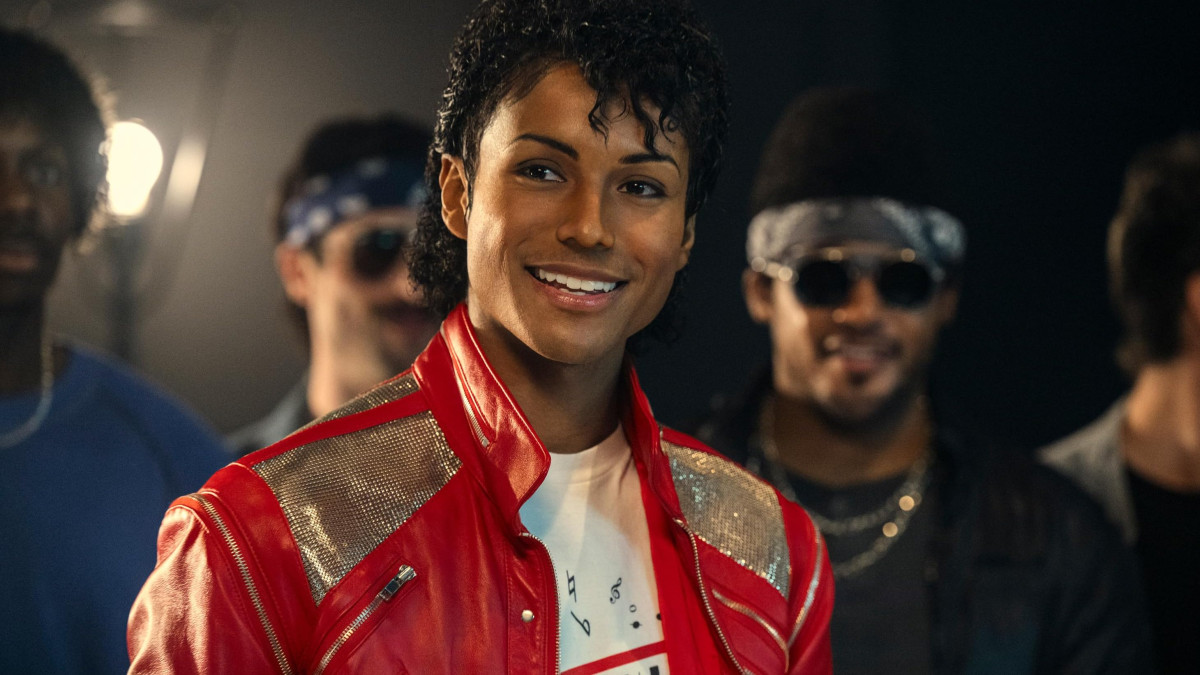
The Michael movie review verdict is in, and it is more complicated than the 26% Rotten Tomatoes score suggests. Antoine Fuqua's long-delayed Michael Jackson biopic, simply titled Michael, hit theaters this weekend with Jaafar Jackson playing his late uncle, and the critical response has been brutal. The BBC gave it one star. Roger Ebert's site called it a filmed playlist in search of a story. Yet early audience reactions on social media have been warmer, ticket pre-sales suggest an $80 million opening, and Variety thought it worked as an engrossing middle-of-the-road biopic. After tracking coverage across more than a dozen outlets over the past 48 hours, I think the honest answer to "should you watch this?" depends almost entirely on what you want from a music biopic, and this guide breaks down exactly what the film delivers, what it skips, and who will actually enjoy sitting through its two-hour-and-nine-minute runtime.
The series also quietly does something fascinating with Coach K by showing how a person can simultaneously care about someone and still be using them. Those two things coexisting without resolution is more honest than most fiction allows.
As someone who has moved cities six times in ten years, the theme of witnessing lives without being able to stay in them hit me in a very personal way I was not expecting from a manhwa.
When Tomb Raider King first exploded onto the manhwa scene, it brought a fresh take on dungeon crawling stories by combining archaeological adventure with ruthless protagonist energy and a treasure-hunting premise that felt genuinely different from typical gate and dungeon narratives. The series built a dedicated fanbase through its satisfying blend of historical artifact powers, strategic relic acquisition, and a protagonist who wasn't afraid to be morally gray in pursuit of his goals. Now, with the anime adaptation confirmed for 2026 as one of the most anticipated manhwa-to-anime projects, Tomb Raider King is experiencing a resurgence. New readers are discovering the series while longtime fans eagerly await seeing Jooheon Suh's relic-hunting adventures brought to life with animation. The timing couldn't be better, as the series has built enough content to support a substantial adaptation while maintaining momentum in its ongoing storyline.

This whole thread and the article both underestimate how big the non-English creator market is about to get. HeyGen supporting 175 languages means creators in markets where professional video production was never affordable suddenly have access to the same tools as Silicon Valley startups.
The article says transcription accuracy exceeds 95% with clear audio. That qualifier, with clear audio, is doing a lot of heavy lifting. Home offices, open floor plans, overlapping speakers, accents. Real conditions are messier than the demo.
What is the etiquette when you send OtterPilot to a meeting with external clients who never agreed to be recorded? That feels like a relationship risk beyond just the legal one.
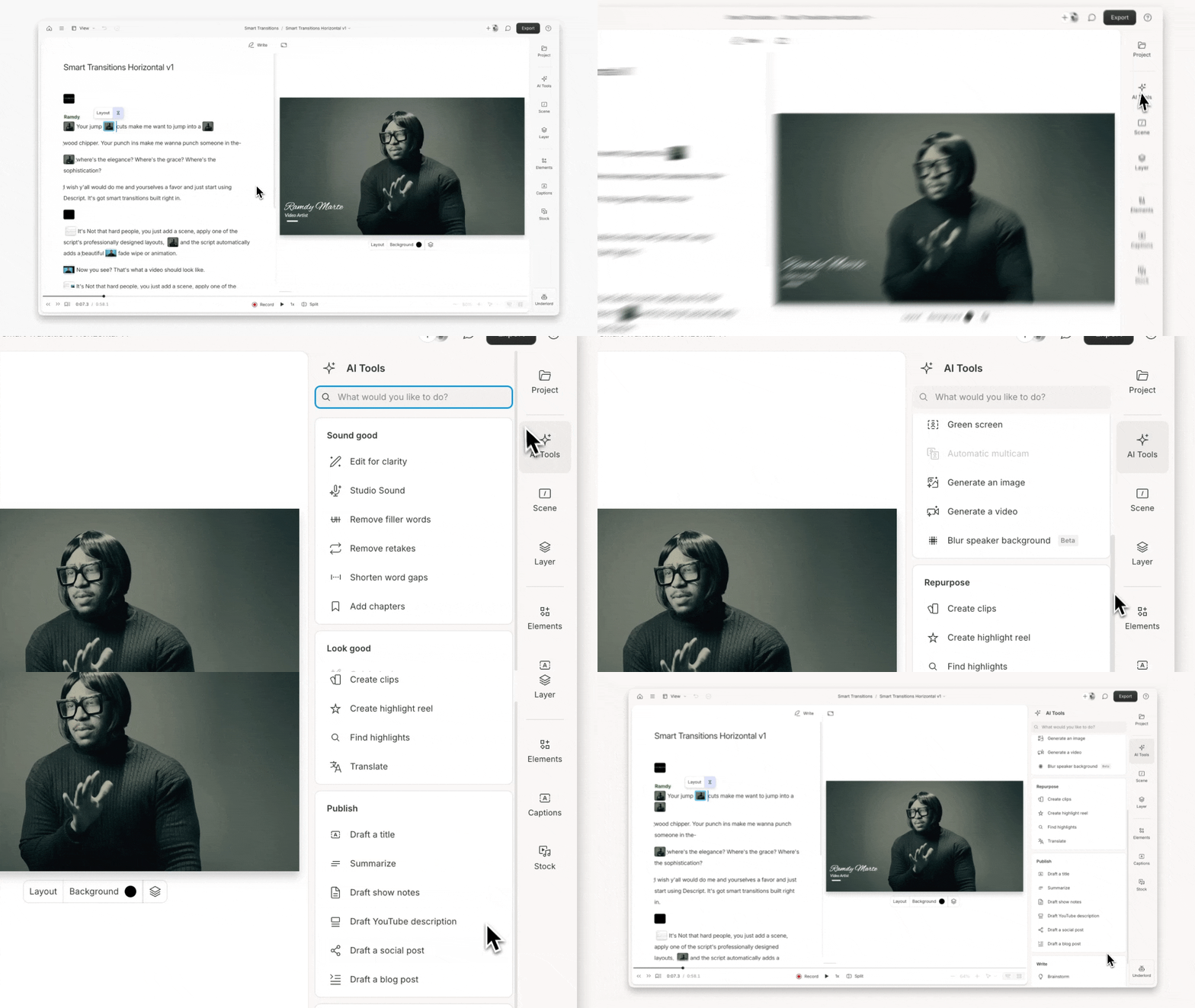
Most people can edit a Google Doc. Delete some words, rearrange sentences, fix typos, add paragraphs. It's intuitive and requires no special training. Now imagine editing video the same way. That's Descript's core innovation, and it transformed video editing from a specialized skill requiring expensive software into something anyone who can edit text can do effectively. Descript started as a transcription tool for podcasters. Record your podcast, upload it to Descript, and get an accurate transcript for show notes. But the founders realized something bigger. If you have a perfect transcript synchronized to audio, you can edit the audio by editing the text. Delete a word from the transcript and that word disappears from the audio. That insight became the foundation for a complete editing platform.
Genuine question: how does the generated code quality compare to what you would write yourself? Is it clean enough to hand off to a dev team for continued development or does it become a mess at scale?
The designer-developer relationship has been tense for decades. Designers create pixel-perfect mockups in Figma. Developers translate them to code and somehow everything looks slightly wrong. Fonts don't match. Spacing is inconsistent. Buttons have different corner radiuses. Both sides get frustrated, blame each other, and the product suffers. V0 by Vercel is fixing this problem by generating production-quality React components that look exactly like the designs. The rebrand from v0.dev to v0.app in January 2026 signaled expanded ambitions beyond just UI component generation. Vercel positioned the tool for full-stack web development, though its core strength remains frontend excellence. That strategic clarity matters because trying to be everything often means excelling at nothing. V0 chose to dominate the handoff between design and code before expanding into other areas.

OpenAI and Anthropic both teaming up with Google to block Chinese model distillation is one of the most significant geopolitical tech stories of the year and it's being treated as a footnote. The era of AI as neutral technology is definitively over.
At this point Meta rolling out safety features feels like a company that finally realized the cost of not doing it exceeded the cost of doing it. The New Mexico and California verdicts changed the math.
Meta has just had one of its most important AI moments yet and the early signals are hard to ignore. Following the launch of its newest AI model Muse Spark, the company’s standalone Meta AI app surged dramatically in popularity, hinting at a much larger shift that is beginning to take shape. The release is particularly significant because it marks the first major AI model rollout under Alexandr Wang, who joined Meta to reboot its AI strategy. This is not just another incremental update. It represents a more aggressive and focused push into the AI race. According to data from Appfigures, Meta AI jumped from number 57 to number 5 on the U.S. App Store within a day of the launch. That kind of movement rarely happens without a strong underlying pull from users. It signals not curiosity but intent.
Codex producing more production-ready code versus Codex being faster and cheaper on straightforward tasks is a genuinely useful distinction that most of these comparison articles miss completely.
In a rare divergence from industry norms, TikTok has confirmed it will not adopt end-to-end encryption (E2EE) for direct messages, breaking with nearly every major social media platform and reigniting one of the tech industry's most contentious debates. The Chinese-owned video platform told the BBC exclusively that it believes the privacy technology championed by Meta, Apple, and others as essential for user protection actually makes users less safe by creating "dark spaces" where harmful content can flourish beyond the reach of safety teams and law enforcement. The decision puts TikTok in direct opposition to its competitors while potentially exposing the company to fresh criticism over data protection, particularly given ongoing concerns about its ties to Beijing.
The global cryptocurrency market capitalization has climbed back above the $2.5 trillion threshold, fueled by a massive liquidation of short positions and renewed institutional interest. Geopolitical developments and shifting investor sentiment combined to create a powerful rally that caught bearish traders off guard, resulting in substantial losses for those betting against the market. According to data from CoinGecko, the total market capitalization of all cryptocurrencies combined increased 1.4% to reach $2.52 trillion on Friday, April 10. Bitcoin experienced a notable surge of over 3%, briefly touching the $73,000 mark before consolidating around $72,000 at the time of writing. Ethereum demonstrated equally impressive strength, pushing past the $2,200 level, while the majority of top 10 cryptocurrencies by market capitalization also posted significant gains.