
Same. And the worst part is when you log perfectly for a month and still feel terrible. At some point you realize the model itself might be wrong, not just your execution of it.
6
Sign up to see more
SignupAlready a member?
LoginBy continuing, you agree to Sociomix's Terms of Service, Privacy Policy

Same. And the worst part is when you log perfectly for a month and still feel terrible. At some point you realize the model itself might be wrong, not just your execution of it.
What I keep wondering is whether a genuinely honest Michael Jackson biopic could ever be commercially viable or whether the combination of estate control, legal risk, and fan expectations makes a real reckoning structurally impossible to finance.
The creators behind some of Webtoon's most successful psychological thrillers have returned with a series that's already generating intense discussion across manhwa communities. For fans who've been following the horror and thriller genre on digital platforms, Carnby Kim and Youngchan Hwang need no introduction. Their latest collaboration tackles themes of artistic plagiarism, obsession, and murder in ways that feel disturbingly relevant to current conversations about creative theft and AI-generated content. This guide covers everything you need to know about Copycat, from its premise and release schedule to how it compares with their previous masterpieces like Sweet Home and Bastard.

The article is a solid beginner guide but it's interesting that it left out any manhwa where the system itself is hostile or antagonistic to the protagonist. That subgenre is worth exploring once you have the basics.
Hot take but the Venomous Snake arc is better than anything in Solo Leveling. There, said it.
Tower climbing stories have become a dominant force in manhwa, but most follow predictable patterns. A protagonist enters a mysterious tower, gains powers, forms a party, and ascends floors while growing stronger. The formula works because progression feels satisfying and each floor presents new challenges. However, Doom Breaker takes this familiar framework and transforms it into something far more emotionally devastating and psychologically complex than typical tower stories. Also known as SSS-Class Suicide Hunter, Doom Breaker initially appears to be another power fantasy where the protagonist gains an overpowered ability. The premise sounds almost comedic. Kim Gongja can copy any skill by dying, then returns to life to use that ability. But beneath this seemingly absurd power lies a story about pain, sacrifice, redemption, and what it truly means to be a hero when heroism demands everything from you.

The new agentic system that can search live sites for design patterns and inspect real implementations before generating code is a significant leap. It means v0 is not just pattern-matching on training data but actively researching your specific problem.
Developers have a new anxiety in 2026: token anxiety. You're in the middle of debugging a complex problem, the AI is helping you refactor three files simultaneously, and suddenly you wonder if this session is about to cost you $50. That mental tax slows you down and makes you second-guess using the tool you're paying for. Windsurf eliminated that anxiety with a simple decision: flat monthly pricing with no token limits. Fifteen dollars per month. Unlimited usage. No tracking credits or calculating costs per query. That pricing model sounds almost boring compared to the complex token systems other AI coding tools use, but boring is exactly what professional developers want when it comes to pricing. They want predictable costs and unlimited usage so they can focus on writing code instead of budgeting AI queries.

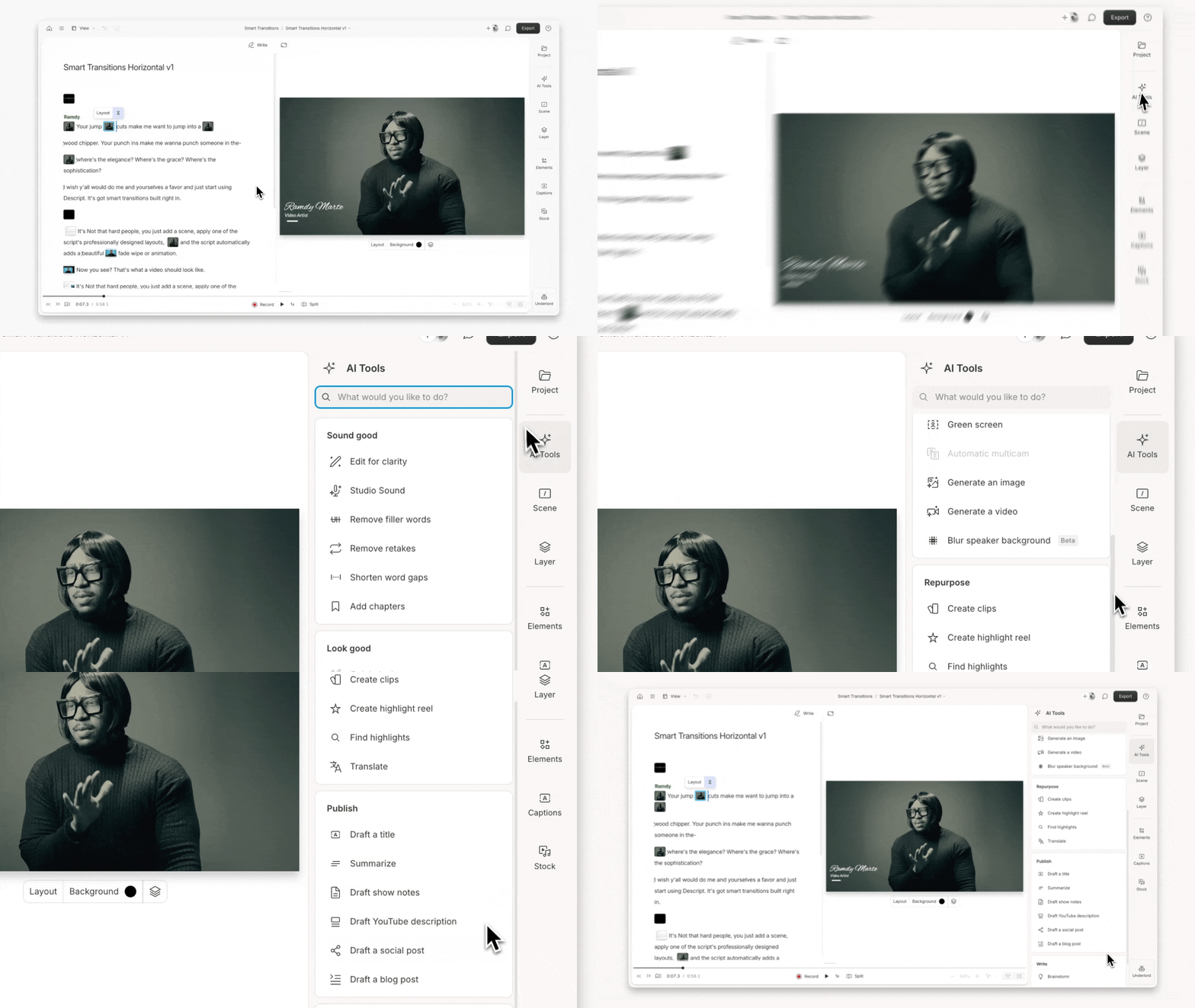
Most people can edit a Google Doc. Delete some words, rearrange sentences, fix typos, add paragraphs. It's intuitive and requires no special training. Now imagine editing video the same way. That's Descript's core innovation, and it transformed video editing from a specialized skill requiring expensive software into something anyone who can edit text can do effectively. Descript started as a transcription tool for podcasters. Record your podcast, upload it to Descript, and get an accurate transcript for show notes. But the founders realized something bigger. If you have a perfect transcript synchronized to audio, you can edit the audio by editing the text. Delete a word from the transcript and that word disappears from the audio. That insight became the foundation for a complete editing platform.
While Synthesia leads in revenue, HeyGen leads in customer acquisition momentum with 152% year-over-year growth in mid-market adoption. That explosive growth rate allowed HeyGen to close much of the customer count gap by late 2025. The company is winning by making avatar video accessible to smaller teams and individual creators who cannot afford enterprise contracts but need professional video capabilities. HeyGen positioned itself for small and medium businesses, marketing teams, content creators, and solo entrepreneurs rather than enterprise learning and development departments. This market segment values affordability, ease of use, and creative flexibility over governance features and advanced integrations. Average contract values are roughly one-third of Synthesia's, reflecting this different customer profile.

As someone learning to code, I have mixed feelings. Using the agent to build things is exciting but I worry about skipping the understanding phase. The best developers I know have deep mental models of how systems work. You do not build that by watching AI write code.
84 percent of developers are using AI tools now. The debate is no longer whether to adopt but which tool fits which workflow. Pricing clarity is increasingly the tiebreaker.
My designer literally sent me a Figma frame last month with a sticky note that said please do not destroy this. That relationship needs all the help it can get.
Has anyone tried the hybrid approach for a sustained period? Using Claude Code to write and Codex to review before committing? Curious if the overhead of context switching between tools is worth it.
The article says Bitcoin briefly touched $73K before consolidating around $72K. That's actually a fairly significant rejection at the $73K level and probably deserves more scrutiny than the bullish framing suggests.
I need those pants in my life right now! The pleating detail is absolutely gorgeous and so flattering
Wonder if anyone has tried this with gold accessories instead of silver? Think it could work beautifully
I have that exact Tommy bag! Pro tip: use a bag organizer inside to keep it structured and clean