
The critics are trashing the film but praising Jaafar. That gap between performance quality and overall movie quality is honestly fascinating to read about.
11
Sign up to see more
SignupAlready a member?
LoginBy continuing, you agree to Sociomix's Terms of Service, Privacy Policy

The critics are trashing the film but praising Jaafar. That gap between performance quality and overall movie quality is honestly fascinating to read about.
The BL genre expanding into isekai seriously rather than as parody or novelty is part of a broader maturation of the genre that has been happening across manhwa for a few years now. Readers are asking for more structural ambition and creators are delivering.
As someone who came into this through manga and eventually moved to manhwa, TGED is the series I recommend to people who are burned out on typical fantasy power fantasy stuff. It hits different.
Counterpoint to all the praise. Twenty plus chapters in and we still do not know enough about Benlira before she became the messenger. The mystery is wearing thin for me.
Nickup's linework is clean with expressive faces and the costume design is where the art really shines. The historical European setting gives a lot of visual opportunity and it is used well. Not groundbreaking but confidently executed and tonally appropriate.
Honestly the thing that keeps me coming back is that winning feels earned. The art builds up the threat of opponents so effectively that when Cheon Yeo-Woon figures it out the payoff lands. Cheap victories look cheap. These do not.
As someone who works in game design, the article's point about system manhwa borrowing RPG mechanics is accurate but undersells how cleverly these stories use those mechanics for emotional storytelling rather than just spectacle.
Journalists and researchers using this for interviews should really think hard about where that audio goes and whether it gets used to train models. Source confidentiality is not abstract, it is a professional obligation.
The article mentions 70 percent editing time reduction and I was skeptical until I tracked my own numbers for a month. The actual time savings on a 30-minute interview episode was closer to 65 percent. So yeah, those claims check out.
Got stuck in a loop where the AI kept telling me it fixed a bug that it had not actually fixed. Burned through half my monthly credits chasing the same issue. Speed is real but so is the frustration.
The designer-developer relationship has been tense for decades. Designers create pixel-perfect mockups in Figma. Developers translate them to code and somehow everything looks slightly wrong. Fonts don't match. Spacing is inconsistent. Buttons have different corner radiuses. Both sides get frustrated, blame each other, and the product suffers. V0 by Vercel is fixing this problem by generating production-quality React components that look exactly like the designs. The rebrand from v0.dev to v0.app in January 2026 signaled expanded ambitions beyond just UI component generation. Vercel positioned the tool for full-stack web development, though its core strength remains frontend excellence. That strategic clarity matters because trying to be everything often means excelling at nothing. V0 chose to dominate the handoff between design and code before expanding into other areas.

There's a photograph from February 2026 that pretty much sums up the state of AI right now. At the India AI Impact Summit in New Delhi, Indian Prime Minister Narendra Modi invited the world's tech leaders onstage for a group photo. Everyone held hands. Well, almost everyone. Sam Altman of OpenAI and Dario Amodei of Anthropic, standing right next to each other, refused to clasp hands and instead raised their fists separately. The internet, predictably, lost its mind. An awkward moment between OpenAI CEO Sam Altman and Anthropic CEO Dario Amodei at an AI Summit captured the increasingly icy relations between two rival tech leaders who started off as colleagues. That's not just petty drama. It's a window into what may be the most consequential corporate rivalry in the technology world right now, one that's playing out in boardrooms, courtrooms, Super Bowl ads, and billion-dollar compute deals all at once.

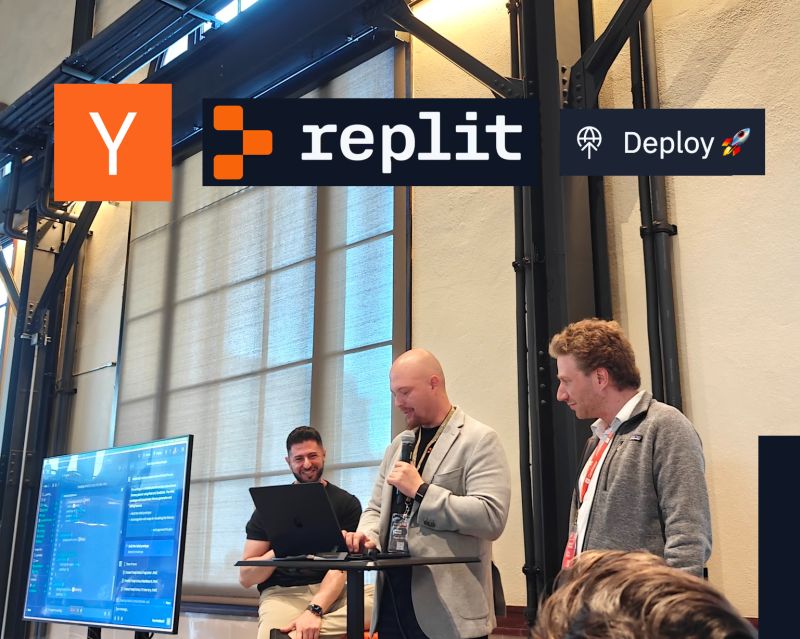
When a company's revenue jumps from $10 million to $100 million in nine months, you pay attention. When that growth comes from an AI agent that builds entire applications autonomously, you realize something fundamental just changed in software development. Replit Agent represents that change, and the numbers prove developers are ready for it. Replit started as a browser-based coding environment for education. Students could write Python or JavaScript without installing anything locally. Teachers loved it because setup time vanished. But the company saw something bigger. If you could run code in the browser, why not let AI write that code? That question led to Agent 3, an AI that doesn't just suggest code completions. It builds entire applications from scratch.
the compute math here is brutal for OpenAI. Spending 4x more on training and generating less revenue is not a gap you close by writing memos to investors.
Claude Code went from launch in May 2025 to $1 billion in run-rate revenue by November. No enterprise software product in history has done that. OpenAI needs more than a new tier to respond to that.
The high-low approach the article mentions is actually how most people with genuinely good style operate. The obsession with head to toe luxury is more about status signaling than actual taste.
The heart shaped bag adds such a fun touch! Where can I find something similar for myself?
Has anyone tried styling the CAVS tee with a leather skirt? I feel like that could look amazing too