That last part is the underrated benefit. The mental overhead of calorie tracking is enormous and most people do not realize how much cognitive space it occupies until it is gone.
17
Sign up to see more
SignupAlready a member?
LoginBy continuing, you agree to Sociomix's Terms of Service, Privacy Policy

That last part is the underrated benefit. The mental overhead of calorie tracking is enormous and most people do not realize how much cognitive space it occupies until it is gone.
Jaafar Jackson plays Michael Jackson in the 2026 biopic Michael, and the story of how the 29-year-old newcomer landed the role is more interesting than the film itself. It started with a voice note. It involved a two-year global casting search with no formal auditions. It required Jaafar to keep the role secret from his own family for a full year. And it ended with his grandmother Katherine Jackson, the woman who knew Michael longest and loved him most, telling producers that her grandson didn't just resemble her son, he embodied him. After tracking every interview, behind-the-scenes video, and production report released since the film was announced, I can tell you that the choice of Jaafar was not nepotism, not a publicity play, and not the obvious pick everyone assumes it was. It was a hard-earned outcome of the most unusual casting process in recent biopic history, and here is how it actually happened.

Carnby Kim writing a thriller where the central wound is a stolen artistic concept, right as AI image generators are actively cannibalizing artists' work, is either incredible timing or incredibly deliberate planning. Probably both.
In a manhwa landscape dominated by dungeon crawling, regression narratives, and power fantasies, The Greatest Estate Developer stands out by asking a simple question: what if the protagonist's greatest weapon wasn't a sword or magic system, but civil engineering knowledge? This bizarre premise transforms into one of the most entertaining, genuinely funny, and surprisingly heartfelt series currently running, proving that innovation in storytelling comes from unexpected places. The series takes the familiar isekai setup where a modern person finds themselves in a fantasy world and completely subverts expectations. Instead of becoming an adventurer or hero, protagonist Kim Suho uses his engineering knowledge to revolutionize construction, infrastructure, and economic development. What sounds like it should be boring becomes absolutely captivating through sharp writing, excellent comedic timing, and genuine passion for showing how infrastructure improves lives.

The constellation system in ORV basically predicted how social media audiences consume content. Watching powerful beings sponsor humans for entertainment value hits differently in 2025 than it probably did when the story was written.
If you're new to manhwa or looking to understand what all the hype is about regarding system and leveling stories, you've arrived at exactly the right place. The system genre has become one of the most popular and accessible entry points into Korean comics, offering clear progression mechanics, satisfying power growth, and narratives that feel like playing your favorite RPG or video game brought to life on the page. System manhwa feature protagonists who gain access to game-like interfaces that display stats, skills, quests, and levels. These systems provide clear frameworks for character growth and power progression. You can literally see the protagonist getting stronger through numbers increasing, new abilities unlocking, and challenges being overcome. This visual and concrete progression creates deeply satisfying reading experiences that hook readers from the first chapter.
The Primal Hunter's moral complexity angle is what separates it from generic system manhwa and I hope the anime does not sand that down into just another power fantasy.
Tower climbing stories have become a dominant force in manhwa, but most follow predictable patterns. A protagonist enters a mysterious tower, gains powers, forms a party, and ascends floors while growing stronger. The formula works because progression feels satisfying and each floor presents new challenges. However, Doom Breaker takes this familiar framework and transforms it into something far more emotionally devastating and psychologically complex than typical tower stories. Also known as SSS-Class Suicide Hunter, Doom Breaker initially appears to be another power fantasy where the protagonist gains an overpowered ability. The premise sounds almost comedic. Kim Gongja can copy any skill by dying, then returns to life to use that ability. But beneath this seemingly absurd power lies a story about pain, sacrifice, redemption, and what it truly means to be a hero when heroism demands everything from you.

The article describes the world as post-adventure but the actual chapters show that adventures are still happening elsewhere, the messenger just is not part of them. That distinction matters thematically and I wish the piece had engaged with it more.
Anyone using Runway for architectural visualization? Wondering how it handles interior rendering with consistent material properties across different lighting scenarios.
Vibe coding culture has made token anxiety worse by encouraging developers to just spin up agents and let them run. You stop watching costs until you get a bill that looks like a car payment.
What gets lost in the speed conversation is testability. AI-generated code often lacks unit tests, edge case handling, and error states that a thoughtful developer would include. Those gaps bite you later.
Altman calling Anthropic authoritarian while Anthropic is out here building the most commercially successful safety-first AI company in history is such a specific flavor of irony.
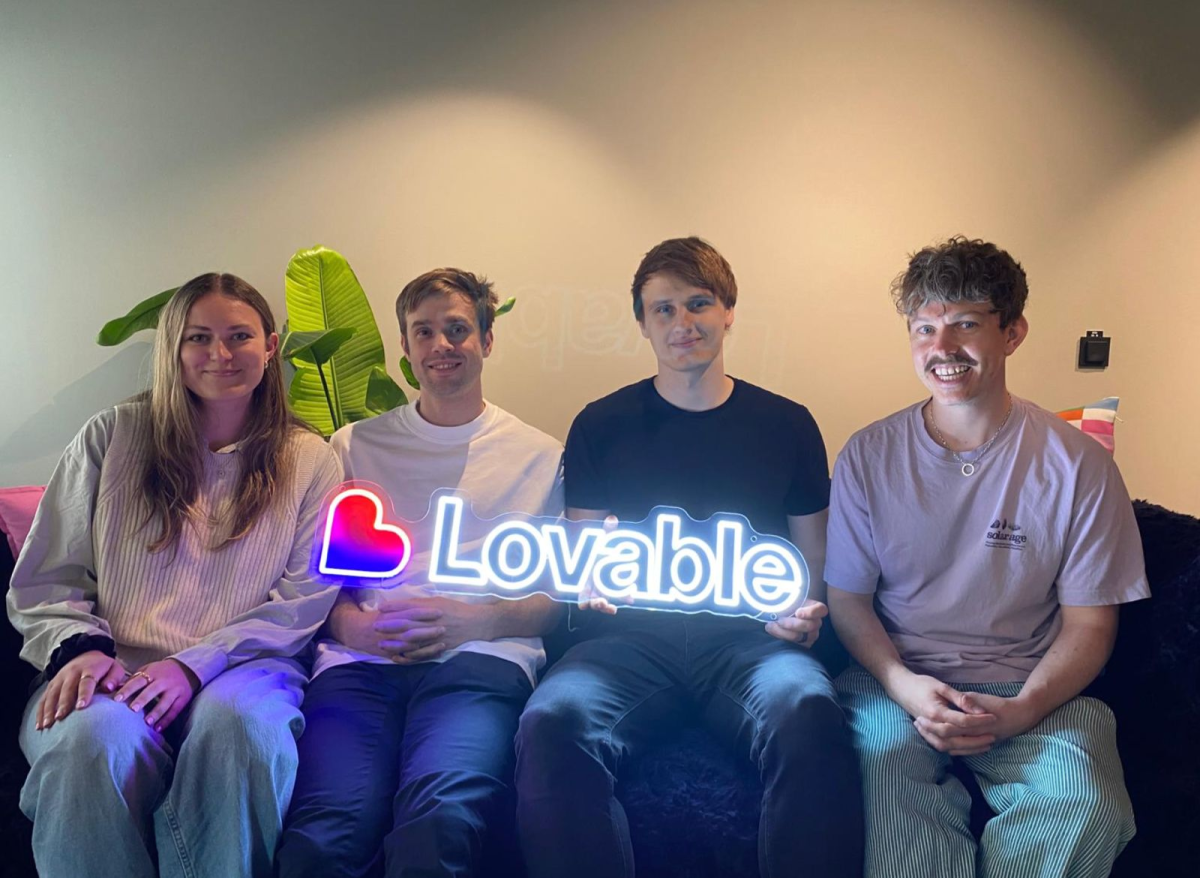
The software development world just witnessed something unprecedented. A European startup called Lovable reached $20 million in annual recurring revenue in just two months, making it potentially the fastest-growing startup in European history. But here's the twist that's making traditional software agencies nervous: they did it by giving non-technical founders the power to build full-stack applications without writing a single line of code. For years, the promise of no-code tools has been the same: anyone can build an app. But the reality has always been different. You'd create a beautiful frontend, get excited about your progress, and then hit the technical cliff. Suddenly you needed to configure databases, set up authentication, manage API keys, and deploy to servers. The "no-code" dream became a "hire-a-developer-anyway" nightmare.
Hot take: OpenAI is still the consumer AI brand but Anthropic is quietly becoming the enterprise developer brand. This pricing move is OpenAI acknowledging that reality.
Not gonna lie, the visual coding feature where you can build mini-games from a prompt inside the app and then share them with friends is the first Meta AI capability that felt like something my younger siblings would actually use unprompted. That matters more than any benchmark.
As someone who builds on AI APIs professionally, the move to proprietary is frustrating but understandable. Meta needed to monetize something. Giving away open weights for years built goodwill but not revenue. The real question is whether their API pricing will be competitive with OpenAI and Anthropic.
The benchmarks are basically a wash at this point. Both tools are within a couple percentage points of each other on most real tasks. Pricing and workflow fit matter more than model scores now.
Facebook has shown edit history for years and it works fine. There is no reason Instagram cannot do the same. Hiding original text while slapping an edited label on it is the worst of both worlds.