
The Primal Hunter's alchemy angle is so underrated in discussions about the series. Most system apocalypse stories reduce everything to combat progression. The crafting and experimentation subplot gives it genuine texture.
Sign up to see more
SignupAlready a member?
LoginBy continuing, you agree to Sociomix's Terms of Service, Privacy Policy

The Primal Hunter's alchemy angle is so underrated in discussions about the series. Most system apocalypse stories reduce everything to combat progression. The crafting and experimentation subplot gives it genuine texture.
In a manhwa landscape dominated by dungeon crawling, regression narratives, and power fantasies, The Greatest Estate Developer stands out by asking a simple question: what if the protagonist's greatest weapon wasn't a sword or magic system, but civil engineering knowledge? This bizarre premise transforms into one of the most entertaining, genuinely funny, and surprisingly heartfelt series currently running, proving that innovation in storytelling comes from unexpected places. The series takes the familiar isekai setup where a modern person finds themselves in a fantasy world and completely subverts expectations. Instead of becoming an adventurer or hero, protagonist Kim Suho uses his engineering knowledge to revolutionize construction, infrastructure, and economic development. What sounds like it should be boring becomes absolutely captivating through sharp writing, excellent comedic timing, and genuine passion for showing how infrastructure improves lives.
Genuinely asking, which of these fifteen does everyone think has the highest chance of flopping? Not because the source is bad but because the production might not serve it well.
Counterpoint: for anyone who already knows Premiere Pro or Final Cut, the learning curve is actually reversed. You have to unlearn instincts and stop reaching for timeline tools that are not the point anymore. Took me a few weeks to fully switch over.
Sports anime and manga have delivered countless memorable series over the decades, from Slam Dunk's basketball brilliance to Haikyuu's volleyball excellence. These stories typically follow familiar patterns: talented but inexperienced protagonist joins a team, forms bonds with teammates, faces rivals, grows through competition, and ultimately pursues championship glory. The formula works because it taps into universal themes about effort, teamwork, and self-improvement. The Boxer, created by JH, takes everything you expect from sports stories and systematically deconstructs it. The protagonist doesn't love boxing. He doesn't form deep bonds with teammates. He doesn't overcome challenges through friendship and determination. Instead, the manhwa presents one of the darkest, most psychologically complex examinations of combat sports ever created, wrapped in stunningly minimalist artwork that elevates the narrative to something approaching high art.
Accessibility gaps are the thing nobody talks about in these v0 reviews. Generated outputs can miss contrast ratios and ARIA labeling. Always run an accessibility audit before shipping anything, AI generated or not.
No one here has mentioned the implications for sales outreach. Personalized video prospecting at scale was a niche tactic before because it was expensive. With HeyGen it becomes a default playbook for any sales team. That changes cold outreach economics significantly.
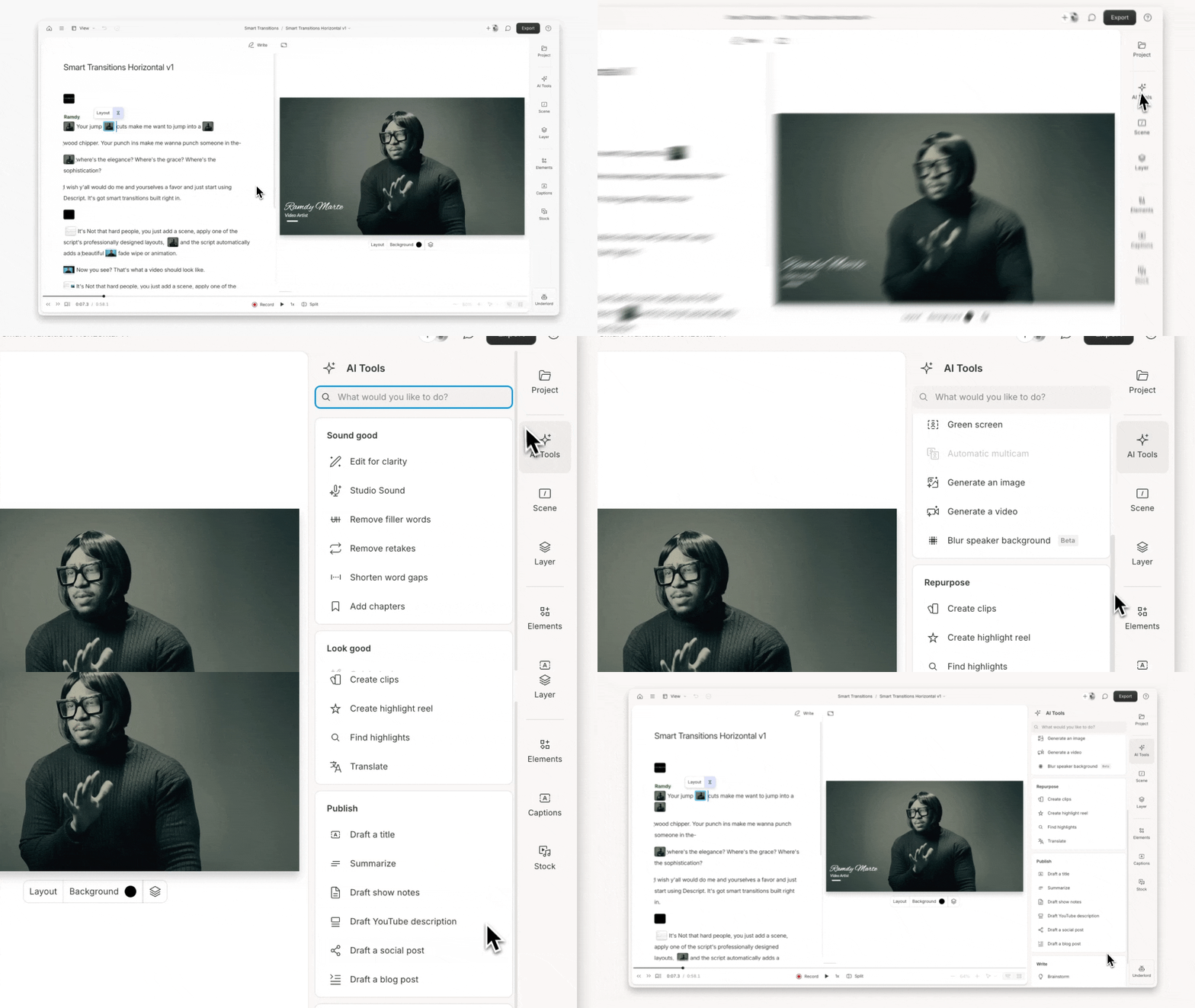
Most people can edit a Google Doc. Delete some words, rearrange sentences, fix typos, add paragraphs. It's intuitive and requires no special training. Now imagine editing video the same way. That's Descript's core innovation, and it transformed video editing from a specialized skill requiring expensive software into something anyone who can edit text can do effectively. Descript started as a transcription tool for podcasters. Record your podcast, upload it to Descript, and get an accurate transcript for show notes. But the founders realized something bigger. If you have a perfect transcript synchronized to audio, you can edit the audio by editing the text. Delete a word from the transcript and that word disappears from the audio. That insight became the foundation for a complete editing platform.
As someone who works in enterprise sales for a dev tools company, the speed at which Claude Code captured Fortune 100 customers is genuinely alarming to watch from the competition's side. The switching costs are real and growing.
The artificial intelligence industry is entering a new phase of competition, one that extends far beyond the development of advanced language models and neural networks. Companies are now engaged in an intense struggle to secure the computational infrastructure necessary to train and deploy their AI systems. In this context, Anthropic has reportedly begun exploring the possibility of designing and manufacturing its own specialized processors to power Claude, its flagship conversational AI platform, along with its broader suite of artificial intelligence technologies. This strategic consideration emerges at a critical moment in the global AI sector. The exponential growth in model complexity and capability has created unprecedented demand for high-performance computing resources. Sources familiar with the matter indicate that Anthropic is conducting feasibility studies to determine whether developing proprietary semiconductor technology could reduce its dependence on external hardware vendors while ensuring reliable access to the computing power required for its operations.
I'd actually love to see this with a black leather jacket instead. Might give it more of a rock edge
What a refreshing take on summer style! The mixture of casual and dressy elements makes it so versatile
My top tip is to steam rather than iron the peach blouse keeps it looking effortless
Just got this dress and can confirm it runs true to size. The fabric has nice stretch and the lace isn't itchy at all