
That last part is the underrated benefit. The mental overhead of calorie tracking is enormous and most people do not realize how much cognitive space it occupies until it is gone.
17
Sign up to see more
SignupAlready a member?
LoginBy continuing, you agree to Sociomix's Terms of Service, Privacy Policy

That last part is the underrated benefit. The mental overhead of calorie tracking is enormous and most people do not realize how much cognitive space it occupies until it is gone.
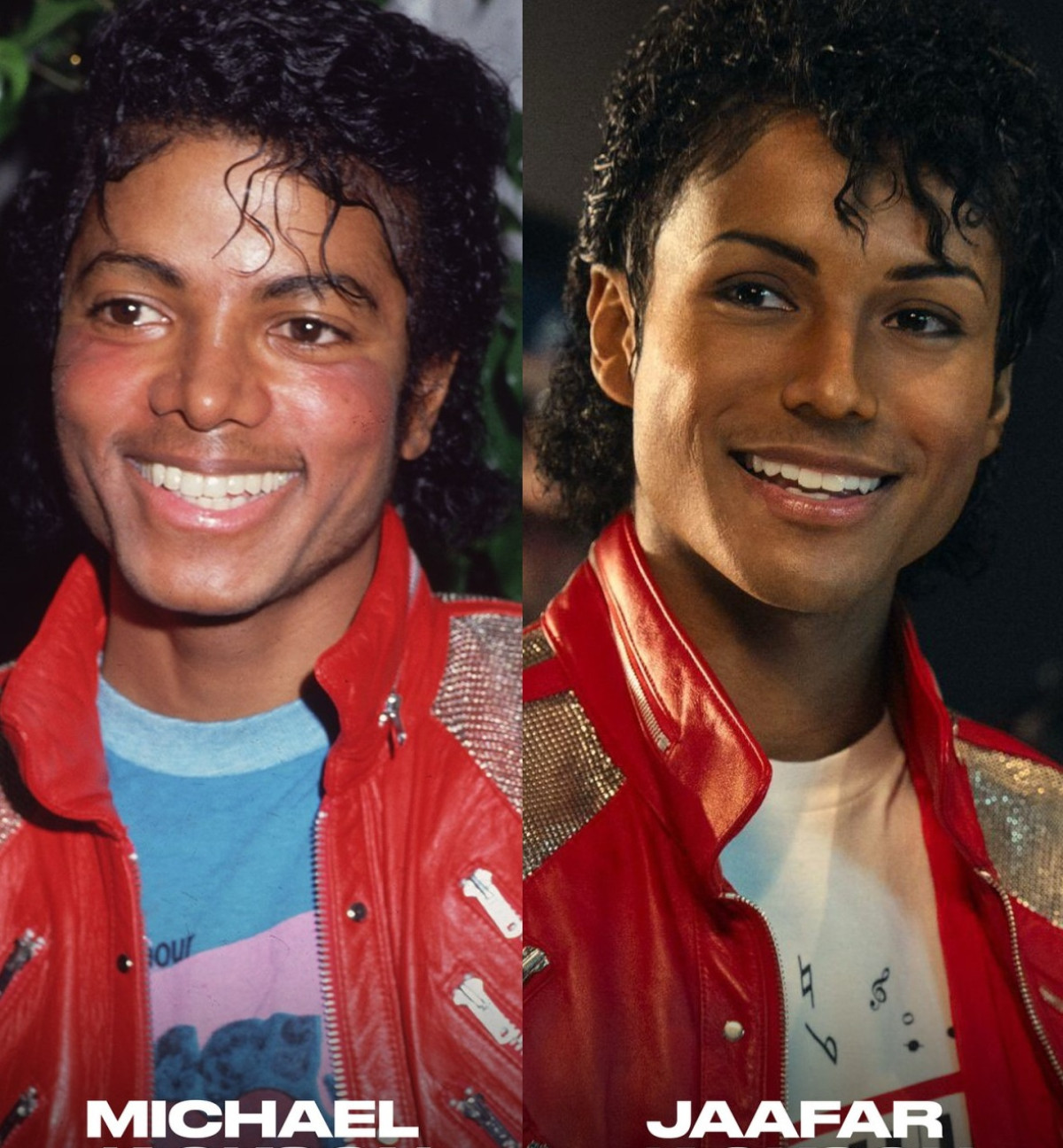
Jaafar Jackson plays Michael Jackson in the 2026 biopic Michael, and the story of how the 29-year-old newcomer landed the role is more interesting than the film itself. It started with a voice note. It involved a two-year global casting search with no formal auditions. It required Jaafar to keep the role secret from his own family for a full year. And it ended with his grandmother Katherine Jackson, the woman who knew Michael longest and loved him most, telling producers that her grandson didn't just resemble her son, he embodied him. After tracking every interview, behind-the-scenes video, and production report released since the film was announced, I can tell you that the choice of Jaafar was not nepotism, not a publicity play, and not the obvious pick everyone assumes it was. It was a hard-earned outcome of the most unusual casting process in recent biopic history, and here is how it actually happened.
Disagree slightly. Copycat as a standalone entry works perfectly and you can go back to Bastard afterward with fresh eyes. Starting with Bastard risks setting tonal expectations that Copycat deliberately subverts.
Honestly the most compelling part of the setup is knowing Bigang has intimate personal knowledge of the demon commanders. Imagine encountering someone as a stranger who you know is going to become your greatest enemy in a future that hasn't happened yet.
In a manhwa landscape dominated by dungeon crawling, regression narratives, and power fantasies, The Greatest Estate Developer stands out by asking a simple question: what if the protagonist's greatest weapon wasn't a sword or magic system, but civil engineering knowledge? This bizarre premise transforms into one of the most entertaining, genuinely funny, and surprisingly heartfelt series currently running, proving that innovation in storytelling comes from unexpected places. The series takes the familiar isekai setup where a modern person finds themselves in a fantasy world and completely subverts expectations. Instead of becoming an adventurer or hero, protagonist Kim Suho uses his engineering knowledge to revolutionize construction, infrastructure, and economic development. What sounds like it should be boring becomes absolutely captivating through sharp writing, excellent comedic timing, and genuine passion for showing how infrastructure improves lives.

In a medium filled with talented artists producing stunning work, making a claim about any series having the "best" art feels bold. Yet Nano Machine consistently delivers combat sequences so fluid, detailed, and visually innovative that even readers who don't typically care about martial arts stories find themselves captivated by the sheer spectacle on display. The series combines traditional murim aesthetics with futuristic sci-fi elements, creating a unique visual identity that stands apart from typical cultivation manhwa. The nano machine implanted in protagonist Cheon Yeo-Woon's body doesn't just give him power. It becomes a storytelling device that allows the artist to visualize techniques, energy flows, and combat analysis in ways other series can't replicate.

For teams already standardized on GitHub, Copilot at $10 is probably still the rational default. The ecosystem integration is seamless and the price advantage is real even with Windsurf's current positioning.
This whole debate is a bit ironic. The tool is supposed to reduce cognitive overhead but now we are spending mental energy tracking quotas, credit burn rates, and daily resets instead of tracking dollars. Same anxiety, different metric.
Most people can edit a Google Doc. Delete some words, rearrange sentences, fix typos, add paragraphs. It's intuitive and requires no special training. Now imagine editing video the same way. That's Descript's core innovation, and it transformed video editing from a specialized skill requiring expensive software into something anyone who can edit text can do effectively. Descript started as a transcription tool for podcasters. Record your podcast, upload it to Descript, and get an accurate transcript for show notes. But the founders realized something bigger. If you have a perfect transcript synchronized to audio, you can edit the audio by editing the text. Delete a word from the transcript and that word disappears from the audio. That insight became the foundation for a complete editing platform.

The part about discussing Otter in legal contexts is complicated right now given the active litigation challenging whether the tool records people without their consent. The trust story and the lawsuit story are running simultaneously.
They already do, sort of. Both platforms have policies requiring disclosure of AI-generated or AI-altered content in certain contexts. Enforcement is the gap, not policy. The infrastructure to detect it at scale does not really exist yet.
The regression subgenre has exploded in popularity over the past few years, becoming one of the most beloved narrative frameworks in Korean manhwa. The core premise is deceptively simple: a protagonist dies or fails catastrophically, then returns to an earlier point in time with their memories intact. Armed with future knowledge, they get a second chance to change their fate, save loved ones, gain power, or pursue revenge against those who wronged them. What makes regression stories so compelling is the combination of dramatic irony, strategic satisfaction, and emotional depth they provide. Readers know what the protagonist knows, creating tension when other characters make mistakes we can see coming. We feel smart alongside protagonists who use foreknowledge to outmaneuver enemies. And we experience the emotional weight of carrying memories of futures that haven't happened yet, of people who died who are currently alive, of betrayals that haven't occurred.

As someone who works in venture-backed startups, the product validation workflow described here is exactly what we do now. Founders are expected to show traction before raising, and Bolt compresses the time to traction dramatically.
The AI video generation race just got a clear winner. Runway Gen-4.5 topped the Video Arena leaderboard with a 1,247 Elo score, surpassing both Google Veo 3 and OpenAI Sora 2. For those unfamiliar with Elo ratings, this is the same system used to rank chess players and competitive games. A higher score means more wins in head-to-head comparisons. When real users compare videos side by side without knowing which AI generated them, they consistently choose Runway's output. Runway didn't start as an enterprise video tool. It began as a playground for artists and filmmakers who wanted to experiment with AI-generated visuals. The early versions produced fascinating but inconsistent results. Sometimes you'd get stunning cinematic footage. Other times you'd get distorted motion and unrealistic physics. Gen-4.5 changed that equation by achieving breakthrough consistency in motion quality and physical accuracy.

Genuinely do not understand the people calling this a smart business move. Europe is TikTok's most important market for growth and Europe has the strictest data protection laws. Not encrypting messages while also fighting a massive GDPR fine is not a winning strategy in that market.
Anthropic on Tuesday unveiled an advanced artificial intelligence model designed specifically to identify software vulnerabilities, marking a significant development in the intersection of AI and cybersecurity. The model, named Claude Mythos Preview, will be available exclusively to a carefully selected group of companies as part of Project Glasswing, a new security initiative that aims to strengthen digital defenses while preventing malicious exploitation. The San Francisco based AI company has chosen to severely restrict access to Claude Mythos Preview due to its powerful capability to detect security weaknesses and software flaws. This decision reflects growing concerns about dual use AI technologies that could be weaponized by adversaries if they fell into the wrong hands.

What would actually move the needle against Nvidia is not any single company building custom chips but an open alternative to CUDA that the whole industry gets behind. There are efforts in that direction but none have really gained critical mass yet.
You could totally dress this down with white sneakers and a denim jacket for a more casual weekend look