
Wait, is Omniscient Reader even on this list? Because that is the adaptation I thought was supposed to arrive this year and the article does not seem to mention it directly.
Sign up to see more
SignupAlready a member?
LoginBy continuing, you agree to Sociomix's Terms of Service, Privacy Policy

Wait, is Omniscient Reader even on this list? Because that is the adaptation I thought was supposed to arrive this year and the article does not seem to mention it directly.
That is a completely reasonable position and honestly the most honest test of whether a series lives up to ambitious framing is time. If people are still recommending this in two years the reinvention claim will have earned itself.
The BL manhwa market has genuinely exploded recently and search interest hit an all time high around January 2026, so this series dropped at a moment when reader appetite for new quality entries is at its peak. Good timing for a series with this much ambition.
As someone who started ORV skeptically because I thought it was just another system apocalypse story, I can confirm it earns every bit of its reputation by around episode 10 or so if the pacing holds.
Sports anime and manga have delivered countless memorable series over the decades, from Slam Dunk's basketball brilliance to Haikyuu's volleyball excellence. These stories typically follow familiar patterns: talented but inexperienced protagonist joins a team, forms bonds with teammates, faces rivals, grows through competition, and ultimately pursues championship glory. The formula works because it taps into universal themes about effort, teamwork, and self-improvement. The Boxer, created by JH, takes everything you expect from sports stories and systematically deconstructs it. The protagonist doesn't love boxing. He doesn't form deep bonds with teammates. He doesn't overcome challenges through friendship and determination. Instead, the manhwa presents one of the darkest, most psychologically complex examinations of combat sports ever created, wrapped in stunningly minimalist artwork that elevates the narrative to something approaching high art.
Hot take. Seoul Station's Necromancer handles the overpowered protagonist better than Solo Leveling because Woojin's ruthlessness has actual consequences rather than everyone just being awed by him constantly.
The predictive modeling panels are the ones I reread most. Seeing multiple ghost futures superimposed over the present and then watching which one actually happens is genuinely addictive as a reading experience.
The relics having wills tied to their origins means you cannot just mindlessly stack power. You have to actually manage your collection like a roster. That strategic layer makes Jooheon feel like a manager and a fighter at the same time.
Worth noting that the article says Runway is the only platform meaningfully monetizing at scale in the tracking panel. That is a very specific claim about a very specific panel. Generalizing it to the whole market takes some faith.
In a manhwa landscape dominated by dungeon crawling, regression narratives, and power fantasies, The Greatest Estate Developer stands out by asking a simple question: what if the protagonist's greatest weapon wasn't a sword or magic system, but civil engineering knowledge? This bizarre premise transforms into one of the most entertaining, genuinely funny, and surprisingly heartfelt series currently running, proving that innovation in storytelling comes from unexpected places. The series takes the familiar isekai setup where a modern person finds themselves in a fantasy world and completely subverts expectations. Instead of becoming an adventurer or hero, protagonist Kim Suho uses his engineering knowledge to revolutionize construction, infrastructure, and economic development. What sounds like it should be boring becomes absolutely captivating through sharp writing, excellent comedic timing, and genuine passion for showing how infrastructure improves lives.
While Synthesia leads in revenue, HeyGen leads in customer acquisition momentum with 152% year-over-year growth in mid-market adoption. That explosive growth rate allowed HeyGen to close much of the customer count gap by late 2025. The company is winning by making avatar video accessible to smaller teams and individual creators who cannot afford enterprise contracts but need professional video capabilities. HeyGen positioned itself for small and medium businesses, marketing teams, content creators, and solo entrepreneurs rather than enterprise learning and development departments. This market segment values affordability, ease of use, and creative flexibility over governance features and advanced integrations. Average contract values are roughly one-third of Synthesia's, reflecting this different customer profile.
Speaking from experience running a small video production house, the camera control improvements alone are worth the subscription. Being able to choreograph a slow push-in on a subject without getting random drift is genuinely game changing for our workflow.
The world's largest hackathon mentioned in their blog materials being hosted on this platform is a signal that this is moving into serious developer community territory, not just the no-code crowd.
Bolt v2 apparently made significant strides in agent quality. The earlier version felt more like a code generator that could break in unpredictable ways. The current version feels more like something that actually understands what you are trying to build.
Used ChatGPT to write out detailed app requirements first, then pasted everything into Lovable as the first prompt. Got dramatically better results than starting with a vague description. Preparation matters even with AI tools.
The glasswing butterfly metaphor works in one more uncomfortable way. Glasswing butterflies survive by being transparent, hiding in plain sight. Whether that describes Anthropic's safety strategy or exposes its limits is a fair question.
This is literally the argument Anthropic is making for why Glasswing exists. You get defenders trained and infrastructure hardened before the capability is everywhere. It is a race and they know it.
The artificial intelligence industry is entering a new phase of competition, one that extends far beyond the development of advanced language models and neural networks. Companies are now engaged in an intense struggle to secure the computational infrastructure necessary to train and deploy their AI systems. In this context, Anthropic has reportedly begun exploring the possibility of designing and manufacturing its own specialized processors to power Claude, its flagship conversational AI platform, along with its broader suite of artificial intelligence technologies. This strategic consideration emerges at a critical moment in the global AI sector. The exponential growth in model complexity and capability has created unprecedented demand for high-performance computing resources. Sources familiar with the matter indicate that Anthropic is conducting feasibility studies to determine whether developing proprietary semiconductor technology could reduce its dependence on external hardware vendors while ensuring reliable access to the computing power required for its operations.
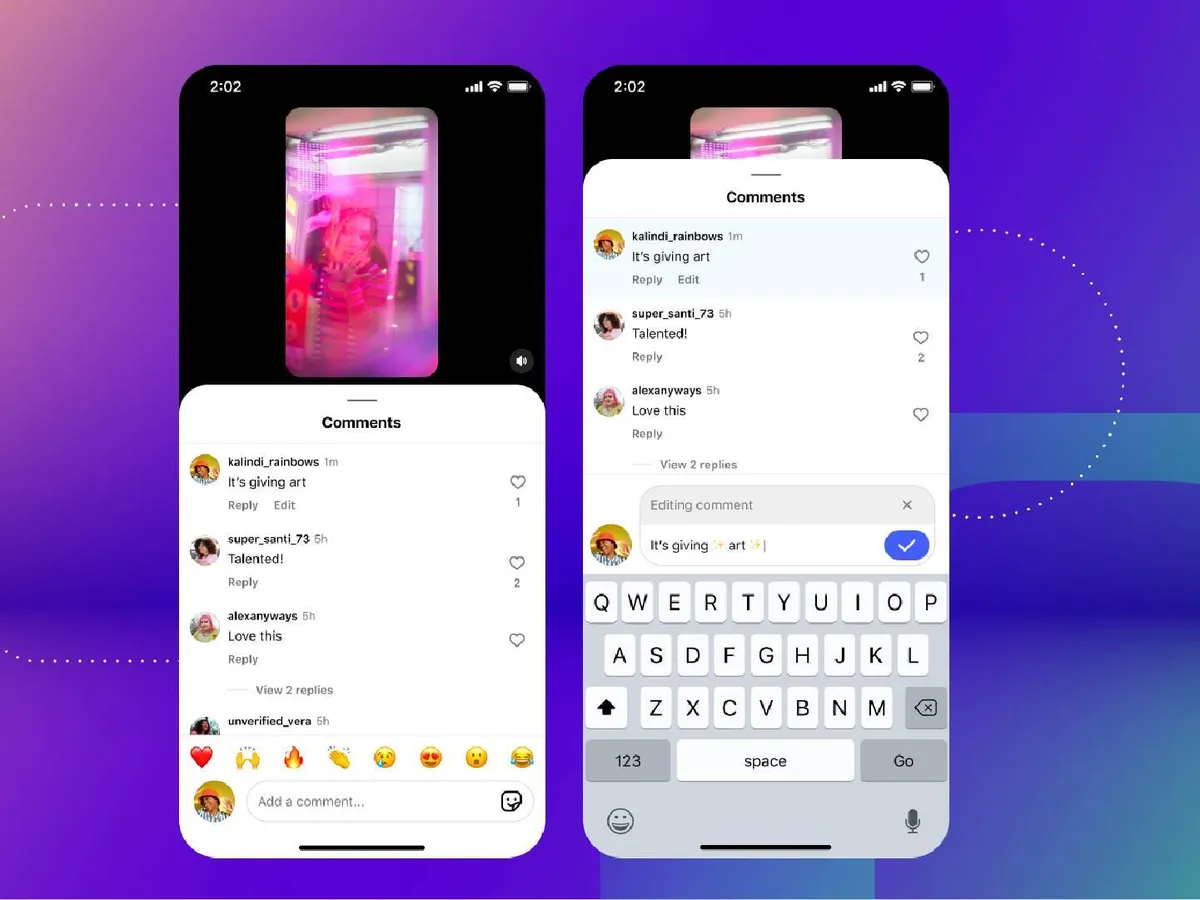
Instagram has rolled out a small but long overdue feature that users have been asking for years. You can now edit your comments after posting them. This simple change solves a very real frustration. Until now, fixing even the smallest typo meant deleting your comment and writing it all over again. That friction is finally gone. But there is a boundary. You get a 15 minute window after posting to make edits. Within that time, you can update your comment as many times as you want. There is also a layer of transparency built in. Once a comment is edited, others will be able to see that it has been modified. However, unlike platforms such as iMessage, Instagram does not show the edit history. What was originally written stays hidden.