
The point about Gongja's resurrections not erasing the grief of people who witnessed him die is something the article highlights well and something the story executes brilliantly. The trauma distributes outward, it does not just stay with him.
Sign up to see more
SignupAlready a member?
LoginBy continuing, you agree to Sociomix's Terms of Service, Privacy Policy
Sign up to see more
SignupAlready a member?
LoginBy continuing, you agree to Sociomix's Terms of Service, Privacy Policy

The point about Gongja's resurrections not erasing the grief of people who witnessed him die is something the article highlights well and something the story executes brilliantly. The trauma distributes outward, it does not just stay with him.
Muted color palette mention in the article is underselling it. The way the colors shift subtly depending on the emotional content of a scene is the kind of detail you only notice on a reread.
The year 2026 marks a pivotal moment in the evolution of manhwa as a medium. What started as a trickle of Korean comics receiving anime adaptations has become a flood, with at least fifteen confirmed projects bringing beloved manhwa to animated life. This explosive growth wasn't accidental but the inevitable result of Solo Leveling's massive success proving that manhwa adaptations can compete with traditional manga anime in quality, popularity, and profitability. Studios across Japan and Korea are investing heavily in manhwa properties, recognizing that Korean storytelling brings fresh perspectives, innovative premises, and built-in fanbases eager to see their favorite series animated. The diversity of genres receiving adaptations demonstrates that manhwa appeal extends far beyond action and fantasy into romance, psychological thriller, sports, and slice-of-life territories.
Is the Regressor Instruction Manual still ongoing or did it finish? Asking because I want to know whether to start now or wait for more chapters to build up.
This is fundamentally a story about what happens when you pick a boring unsexy enterprise use case and execute on it for eight years while everyone else chases the consumer market. Corporate training is not glamorous. The financials very much are.
The article glosses over the art quality which deserves more attention. The visual contrast between traditional murim aesthetics and the demon technology designs is striking.
The world's largest hackathon mentioned in their blog materials being hosted on this platform is a signal that this is moving into serious developer community territory, not just the no-code crowd.
Developers have a new anxiety in 2026: token anxiety. You're in the middle of debugging a complex problem, the AI is helping you refactor three files simultaneously, and suddenly you wonder if this session is about to cost you $50. That mental tax slows you down and makes you second-guess using the tool you're paying for. Windsurf eliminated that anxiety with a simple decision: flat monthly pricing with no token limits. Fifteen dollars per month. Unlimited usage. No tracking credits or calculating costs per query. That pricing model sounds almost boring compared to the complex token systems other AI coding tools use, but boring is exactly what professional developers want when it comes to pricing. They want predictable costs and unlimited usage so they can focus on writing code instead of budgeting AI queries.
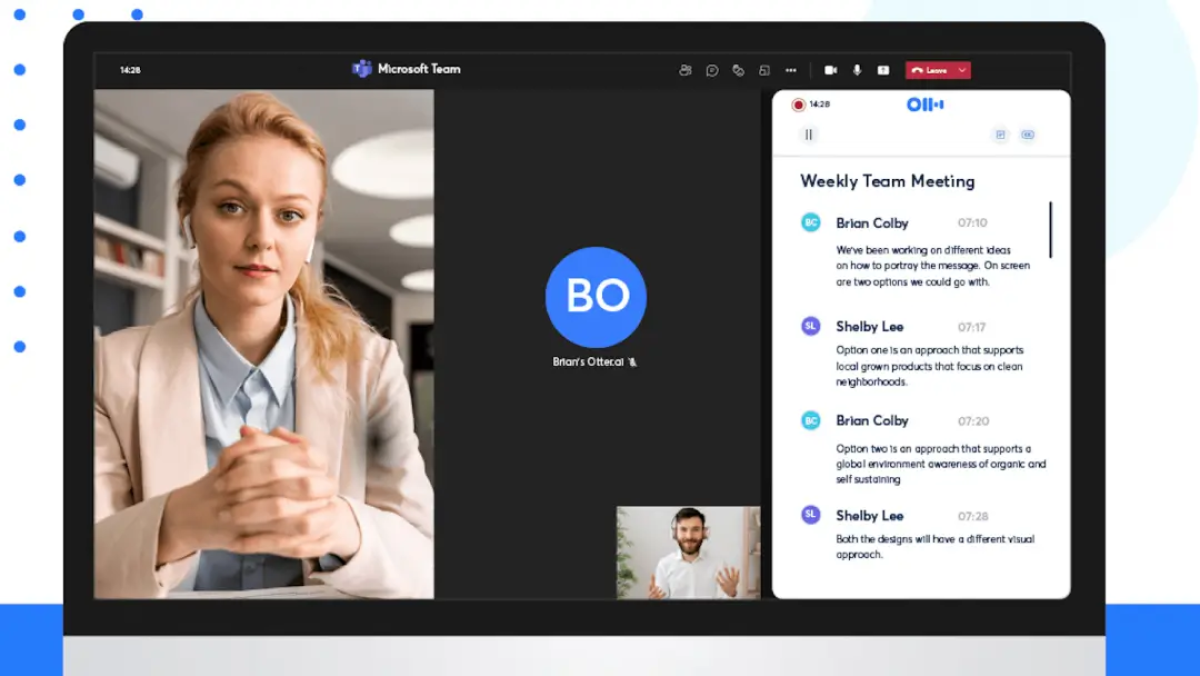
Knowledge workers spend an average of 18 hours per week in meetings. Much of that time involves routine status updates, recurring check-ins, and informational sessions where your physical presence adds minimal value. Otter.ai introduced a provocative concept called OtterPilot: an AI assistant that joins meetings autonomously when you can't attend, records everything, generates summaries, and answers questions about what happened. Connect Otter.ai to your calendar. The system monitors your scheduled meetings and automatically joins Zoom, Google Meet, or Microsoft Teams calls when they start. OtterPilot records audio, generates real-time transcripts, identifies speakers, and creates AI summaries with action items. You receive a meeting briefing without attending the meeting yourself.
Cascade is legitimately impressive for multi-file refactors. Gave it a large module migration last week and it handled import resolution and interface updates across eleven files without losing context.
The authentication and database features in Bolt Cloud are genuinely full-stack capable for most use cases. Stop treating this like a toy.
Being used by 70% of FTSE 100 companies and 90% of Fortune 100 is a moat in the form of institutional inertia as much as anything technical. Switching costs compound with every integrated workflow and every content library built on the platform.
AWS already applying Mythos to critical internal codebases and finding additional opportunities even in well-tested environments tells you something important. These are codebases with dedicated security teams doing continuous review. And there were still more vulnerabilities.
The transparency argument is actually TikTok's strongest point here. They are not claiming to offer encryption they do not have. Some platforms have been much less honest about what access they retain.
The visual code generation feature is the one that will get teens hooked. Building mini-games and custom websites from a simple prompt inside an app you already have on your phone is exactly the kind of low-friction magic that spreads virally in school networks.
Co-opetition is the new normal in AI. Everyone is simultaneously a partner and a competitor with everyone else. Anthropic uses Google infrastructure to compete against Google AI products. Amazon invests in Anthropic while Anthropic uses Amazon chips while also exploring replacements for those chips.
Genuinely asking, how do we actually verify any of this? One researcher already pointed out that Anthropic's blog post left out key details needed to confirm the vulnerability claims. Who is doing independent verification here?
The article notes that Anthropic tripled its revenue recently in the same week all of this happened. The business is accelerating at the same pace as the risk. Those two curves are going to intersect somewhere uncomfortable.
Meta committed hundreds of billions to build AI computing infrastructure and their first deliverable is a model that is competitive but not dominant. I respect the honesty in admitting that publicly. Most companies would have just called it the best.
Meta has just had one of its most important AI moments yet and the early signals are hard to ignore. Following the launch of its newest AI model Muse Spark, the company’s standalone Meta AI app surged dramatically in popularity, hinting at a much larger shift that is beginning to take shape. The release is particularly significant because it marks the first major AI model rollout under Alexandr Wang, who joined Meta to reboot its AI strategy. This is not just another incremental update. It represents a more aggressive and focused push into the AI race. According to data from Appfigures, Meta AI jumped from number 57 to number 5 on the U.S. App Store within a day of the launch. That kind of movement rarely happens without a strong underlying pull from users. It signals not curiosity but intent.
Join independent creators, thought leaders, and storytellers to share your unique perspectives, and spark meaningful conversations.