Paris Jackson not showing up to the premiere and saying she had zero involvement speaks volumes. When the subject's own daughter is publicly distancing herself from the film, that is not a good look for the estate narrative.
1
Sign up to see more
SignupAlready a member?
LoginBy continuing, you agree to Sociomix's Terms of Service, Privacy Policy

Paris Jackson not showing up to the premiere and saying she had zero involvement speaks volumes. When the subject's own daughter is publicly distancing herself from the film, that is not a good look for the estate narrative.
Agreed on the content warning point. Worth adding that the horror here is mostly cerebral and atmospheric rather than gore-focused. But the conceptual darkness is dense and does not let up.
Hot take but Yu is not the real protagonist of The Boxer. He is the immovable object that every actual protagonist crashes into. The series is a collection of human stories about what happens when people collide with something they cannot overcome.
The bones pun potential in the community for this series is completely untapped. That is a missed opportunity.
What I appreciate about the Regressor Instruction Manual is that it deconstructs what readers actually want from a regression protagonist by showing a character who treats the regressor as a tool. It makes you examine your own reading expectations.
That question is the thematic heart of so many great romance stories and this series has set itself up to explore it from an angle that is actually unusual. I hope it commits to the uncomfortable answer rather than giving everyone a clean resolution.
The regression subgenre has exploded in popularity over the past few years, becoming one of the most beloved narrative frameworks in Korean manhwa. The core premise is deceptively simple: a protagonist dies or fails catastrophically, then returns to an earlier point in time with their memories intact. Armed with future knowledge, they get a second chance to change their fate, save loved ones, gain power, or pursue revenge against those who wronged them. What makes regression stories so compelling is the combination of dramatic irony, strategic satisfaction, and emotional depth they provide. Readers know what the protagonist knows, creating tension when other characters make mistakes we can see coming. We feel smart alongside protagonists who use foreknowledge to outmaneuver enemies. And we experience the emotional weight of carrying memories of futures that haven't happened yet, of people who died who are currently alive, of betrayals that haven't occurred.

The art style being described as typical BL conventions is doing a lot of heavy lifting in this review. Can someone with access give a more specific read on whether Nickup's style feels distinctive or genuinely generic.
When Tomb Raider King first exploded onto the manhwa scene, it brought a fresh take on dungeon crawling stories by combining archaeological adventure with ruthless protagonist energy and a treasure-hunting premise that felt genuinely different from typical gate and dungeon narratives. The series built a dedicated fanbase through its satisfying blend of historical artifact powers, strategic relic acquisition, and a protagonist who wasn't afraid to be morally gray in pursuit of his goals. Now, with the anime adaptation confirmed for 2026 as one of the most anticipated manhwa-to-anime projects, Tomb Raider King is experiencing a resurgence. New readers are discovering the series while longtime fans eagerly await seeing Jooheon Suh's relic-hunting adventures brought to life with animation. The timing couldn't be better, as the series has built enough content to support a substantial adaptation while maintaining momentum in its ongoing storyline.

In a manhwa landscape dominated by dungeon crawling, regression narratives, and power fantasies, The Greatest Estate Developer stands out by asking a simple question: what if the protagonist's greatest weapon wasn't a sword or magic system, but civil engineering knowledge? This bizarre premise transforms into one of the most entertaining, genuinely funny, and surprisingly heartfelt series currently running, proving that innovation in storytelling comes from unexpected places. The series takes the familiar isekai setup where a modern person finds themselves in a fantasy world and completely subverts expectations. Instead of becoming an adventurer or hero, protagonist Kim Suho uses his engineering knowledge to revolutionize construction, infrastructure, and economic development. What sounds like it should be boring becomes absolutely captivating through sharp writing, excellent comedic timing, and genuine passion for showing how infrastructure improves lives.

In a medium filled with talented artists producing stunning work, making a claim about any series having the "best" art feels bold. Yet Nano Machine consistently delivers combat sequences so fluid, detailed, and visually innovative that even readers who don't typically care about martial arts stories find themselves captivated by the sheer spectacle on display. The series combines traditional murim aesthetics with futuristic sci-fi elements, creating a unique visual identity that stands apart from typical cultivation manhwa. The nano machine implanted in protagonist Cheon Yeo-Woon's body doesn't just give him power. It becomes a storytelling device that allows the artist to visualize techniques, energy flows, and combat analysis in ways other series can't replicate.

Hot take: the question is not whether AI will write most software in five years. It will. The question is what human developers will be optimized for afterward. My bet is systems thinking, requirements translation, and judgment about what should be built at all.
Bolt v2 apparently made significant strides in agent quality. The earlier version felt more like a code generator that could break in unpredictable ways. The current version feels more like something that actually understands what you are trying to build.
Hot take, Altman's 421-word X post accusing Anthropic of doublespeak after the Super Bowl ads was the least strategic thing any CEO has done this year. Responding at length to your competitor's ad proves the ad landed.
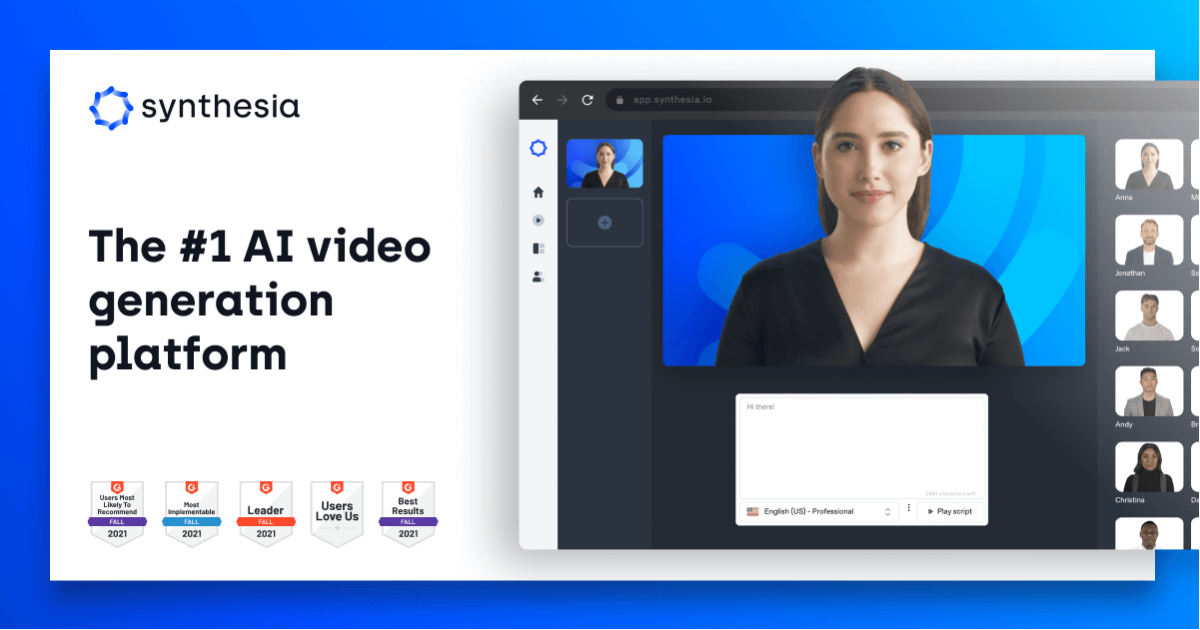
When a company raises $200 million in Series E funding during January 2026, investors are betting on more than potential. They're backing proven market demand and sustainable growth. Synthesia's funding round came alongside a 44% year-over-year increase in headcount to 706 employees, signaling aggressive expansion in a category the company essentially created: AI avatar-based video generation for enterprise training and communications. Corporate training videos have been expensive and slow to produce for decades. Recording a single 10-minute training module traditionally required booking a studio, hiring a presenter, scheduling a videographer, managing multiple takes, and editing everything together. If you needed to update information or translate content, you essentially started over. Synthesia eliminated this entire production workflow by replacing human presenters with AI avatars.
The teams plan with security scans and admin deploy controls is what makes this conversation relevant for companies above a certain size. Before that feature existed, the answer for enterprise adoption was a hard no.
The broader macro picture with oil down, Asian equities up, gold pulling back, and risk assets surging all on the same day is a coherent risk-on narrative. The question is whether it's durable.
Honestly being a developer in 2026 is wild. A year ago this whole category barely existed as a serious professional tool. Now my entire team has a strong opinion about which $100 per month coding agent they prefer.
Meta has just had one of its most important AI moments yet and the early signals are hard to ignore. Following the launch of its newest AI model Muse Spark, the company’s standalone Meta AI app surged dramatically in popularity, hinting at a much larger shift that is beginning to take shape. The release is particularly significant because it marks the first major AI model rollout under Alexandr Wang, who joined Meta to reboot its AI strategy. This is not just another incremental update. It represents a more aggressive and focused push into the AI race. According to data from Appfigures, Meta AI jumped from number 57 to number 5 on the U.S. App Store within a day of the launch. That kind of movement rarely happens without a strong underlying pull from users. It signals not curiosity but intent.
This is a woman who said that even wearing an earring is one of the most powerful things she can do. Attending Paris Fashion Week in a full custom look to support a friend is about ten levels above an earring.