The supplement industry reaching $1.48 billion in brain health products alone in 2025 explains why my social media feed looks the way it does. The marketing machine found the angle that resonates with younger consumers and is not letting go.
Sign up to see more
SignupAlready a member?
LoginBy continuing, you agree to Sociomix's Terms of Service, Privacy Policy
Sign up to see more
SignupAlready a member?
LoginBy continuing, you agree to Sociomix's Terms of Service, Privacy Policy

The supplement industry reaching $1.48 billion in brain health products alone in 2025 explains why my social media feed looks the way it does. The marketing machine found the angle that resonates with younger consumers and is not letting go.
Can we talk about Kendrick Sampson as Quincy Jones? That casting choice barely got discussed in the lead up to the film.
The technology sector is experiencing a paradox. While headlines scream about mass layoffs at major tech companies, a critical shortage is quietly building in one of the most essential areas of digital infrastructure. Datacenters, the physical backbone of our digital world, are facing an unprecedented demand surge, and there simply are not enough skilled professionals to build and maintain them. Countries across the globe are rushing to establish their own datacenter infrastructure. From India's ambitious plans to become a datacenter hub to the European Union's push for data sovereignty, and emerging markets in Southeast Asia and Latin America building their first large scale facilities, the construction boom is just beginning.
The S-Rank Raid Arc that's been running lately has people comparing it to the Jeju Island Raid from the original, and honestly that comparison feels earned. The scale is just massive.
The part about Video Agents triggering automatically from data sources is either the best product idea in enterprise training or a completely unreviewed content liability waiting to happen. Probably both.
Hot take: the question is not whether AI will write most software in five years. It will. The question is what human developers will be optimized for afterward. My bet is systems thinking, requirements translation, and judgment about what should be built at all.
I work in healthcare IT and a colleague of mine used this to build a patient scheduling tool. The speed was impressive but we still needed a proper security audit before anything could go near real patient data. The article glosses over that part pretty hard.
Team pricing at $30 per user per month adds up fast for larger teams. For a 10-person frontend team that is $3,600 a year on top of your existing tooling budget. The ROI math still works but it is not trivially cheap.
While Synthesia leads in revenue, HeyGen leads in customer acquisition momentum with 152% year-over-year growth in mid-market adoption. That explosive growth rate allowed HeyGen to close much of the customer count gap by late 2025. The company is winning by making avatar video accessible to smaller teams and individual creators who cannot afford enterprise contracts but need professional video capabilities. HeyGen positioned itself for small and medium businesses, marketing teams, content creators, and solo entrepreneurs rather than enterprise learning and development departments. This market segment values affordability, ease of use, and creative flexibility over governance features and advanced integrations. Average contract values are roughly one-third of Synthesia's, reflecting this different customer profile.
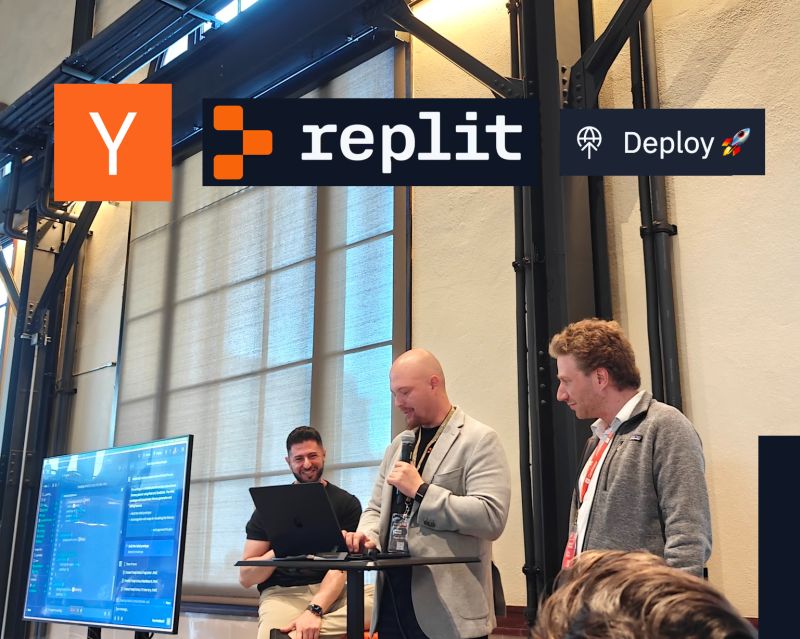
When a company's revenue jumps from $10 million to $100 million in nine months, you pay attention. When that growth comes from an AI agent that builds entire applications autonomously, you realize something fundamental just changed in software development. Replit Agent represents that change, and the numbers prove developers are ready for it. Replit started as a browser-based coding environment for education. Students could write Python or JavaScript without installing anything locally. Teachers loved it because setup time vanished. But the company saw something bigger. If you could run code in the browser, why not let AI write that code? That question led to Agent 3, an AI that doesn't just suggest code completions. It builds entire applications from scratch.
The comparison to collaborative tools like Google Docs with visible revision logs is where I want social media to eventually end up. Not for every comment obviously but for anything that reaches significant visibility. Accountability at scale requires some form of history.
Not gonna lie, the article is well-written but feels like it was constructed to be bullish with a small bow of risk warnings tied at the end. Real risk here deserves more than the last two paragraphs.
TikTok is betting that most users will never read this article and will just keep scrolling. And they are probably right about that.
Does anyone actually think the benchmark scores Meta published are reliable at this point? They were caught manipulating benchmarks for a previous model. There is no independent verification attached to the claims they are making about Muse Spark's performance.
As someone who works in enterprise software procurement, the fact that 70 percent of Fortune 100 companies now use Claude is the number that should be front and center of this article, not subscription tier comparisons.
The high-low approach the article mentions is actually how most people with genuinely good style operate. The obsession with head to toe luxury is more about status signaling than actual taste.
Wonder how this would look with wide leg pants instead of skinnies? Might give it a more current vibe
Wonder how the velvet boots hold up in summer? They're gorgeous but I'm worried about practicality.
Join independent creators, thought leaders, and storytellers to share your unique perspectives, and spark meaningful conversations.