
The point about carbohydrate-heavy meals feeling energizing at lunch but causing bloating at 9 pm resonates completely. I thought I had a carb intolerance for years. Turns out I had a timing issue.
7
Sign up to see more
SignupAlready a member?
LoginBy continuing, you agree to Sociomix's Terms of Service, Privacy Policy

The point about carbohydrate-heavy meals feeling energizing at lunch but causing bloating at 9 pm resonates completely. I thought I had a carb intolerance for years. Turns out I had a timing issue.
Career advice I wish I had gotten earlier: the intersection of IT networking and physical facilities management is where you want to be. Neither pure IT nor pure facilities people have the full picture, and the people who bridge both get premium compensation.
Speaking from experience in project management for critical infrastructure, the people who can manage complex MEP integration for high-density compute environments are among the most sought after people in any market right now.
Sports anime and manga have delivered countless memorable series over the decades, from Slam Dunk's basketball brilliance to Haikyuu's volleyball excellence. These stories typically follow familiar patterns: talented but inexperienced protagonist joins a team, forms bonds with teammates, faces rivals, grows through competition, and ultimately pursues championship glory. The formula works because it taps into universal themes about effort, teamwork, and self-improvement. The Boxer, created by JH, takes everything you expect from sports stories and systematically deconstructs it. The protagonist doesn't love boxing. He doesn't form deep bonds with teammates. He doesn't overcome challenges through friendship and determination. Instead, the manhwa presents one of the darkest, most psychologically complex examinations of combat sports ever created, wrapped in stunningly minimalist artwork that elevates the narrative to something approaching high art.

In a medium filled with talented artists producing stunning work, making a claim about any series having the "best" art feels bold. Yet Nano Machine consistently delivers combat sequences so fluid, detailed, and visually innovative that even readers who don't typically care about martial arts stories find themselves captivated by the sheer spectacle on display. The series combines traditional murim aesthetics with futuristic sci-fi elements, creating a unique visual identity that stands apart from typical cultivation manhwa. The nano machine implanted in protagonist Cheon Yeo-Woon's body doesn't just give him power. It becomes a storytelling device that allows the artist to visualize techniques, energy flows, and combat analysis in ways other series can't replicate.

Yu having a cat is somehow one of the most important storytelling decisions in the series. It tells you everything you need to know about him without a single word of dialogue.
The article mentions how characters remain expressive during fights, and this is the thing that gets ignored when people talk about combat art. You can have the most technically perfect choreography and it means nothing if the characters look like mannequins. The eyes close-up technique is used perfectly here.
The software development world just witnessed something unprecedented. A European startup called Lovable reached $20 million in annual recurring revenue in just two months, making it potentially the fastest-growing startup in European history. But here's the twist that's making traditional software agencies nervous: they did it by giving non-technical founders the power to build full-stack applications without writing a single line of code. For years, the promise of no-code tools has been the same: anyone can build an app. But the reality has always been different. You'd create a beautiful frontend, get excited about your progress, and then hit the technical cliff. Suddenly you needed to configure databases, set up authentication, manage API keys, and deploy to servers. The "no-code" dream became a "hire-a-developer-anyway" nightmare.
Finishing the series left me with this strange mix of devastation and peace that I usually only associate with very good literary fiction. It felt like reading a novel that happened to have incredible fight scenes.
The transcription accuracy across languages has gotten really strong. Over 95% accuracy across more than 25 languages now. For global content teams that is a legitimate game changer.
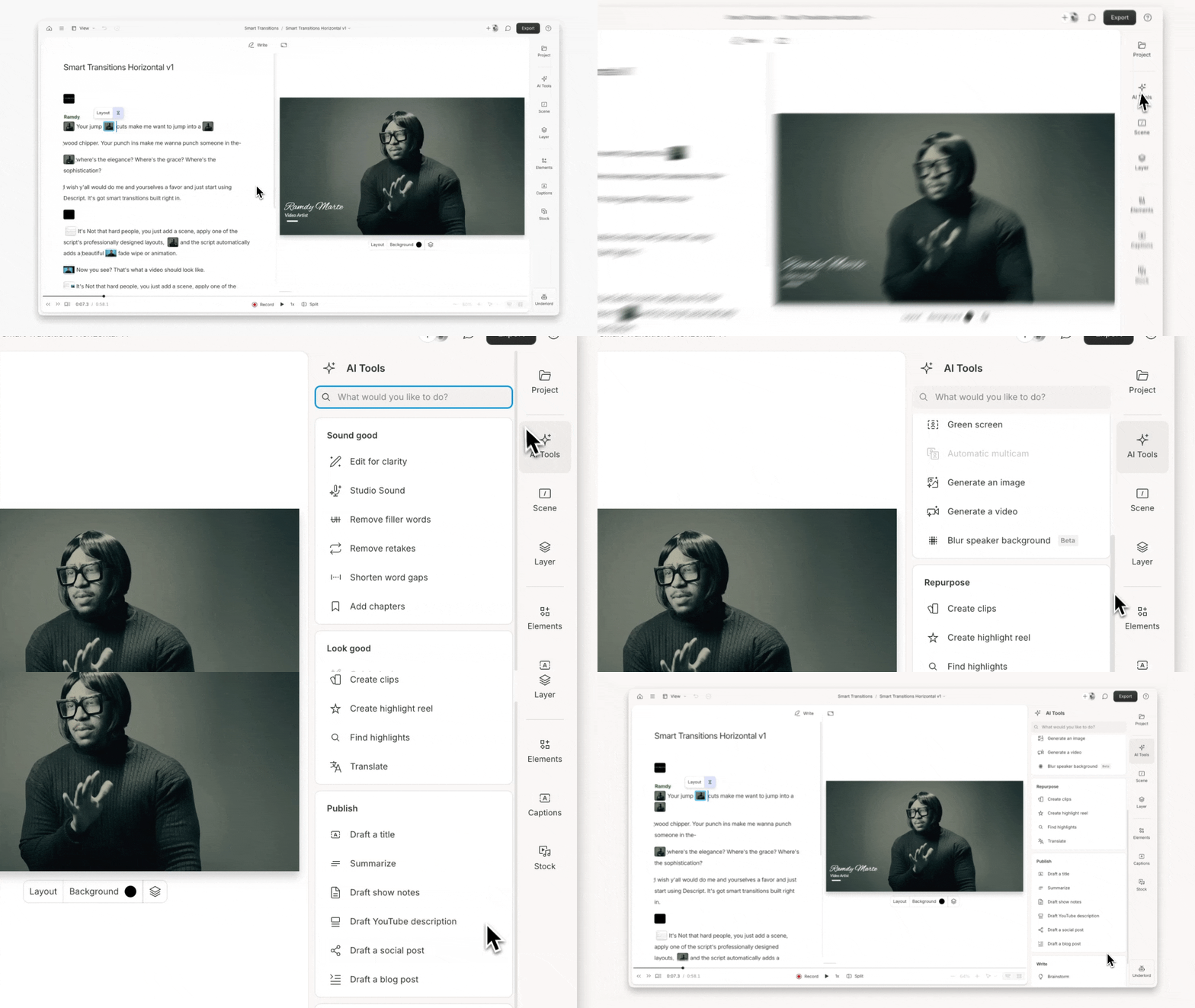
Most people can edit a Google Doc. Delete some words, rearrange sentences, fix typos, add paragraphs. It's intuitive and requires no special training. Now imagine editing video the same way. That's Descript's core innovation, and it transformed video editing from a specialized skill requiring expensive software into something anyone who can edit text can do effectively. Descript started as a transcription tool for podcasters. Record your podcast, upload it to Descript, and get an accurate transcript for show notes. But the founders realized something bigger. If you have a perfect transcript synchronized to audio, you can edit the audio by editing the text. Delete a word from the transcript and that word disappears from the audio. That insight became the foundation for a complete editing platform.
Anyone else notice the Replit pivot story buried in this post? They laid off half their staff, nearly collapsed, and then launched the agent that generated $150M in revenue within about a year. That is a founder story for the ages.
The pent-up demand angle is actually the most underappreciated part of the story. There are millions of people who had ideas and the only thing stopping them was the technical execution barrier. That was a massive amount of latent economic value.
The flat pricing pitch sounds great until you hit the daily quota cap mid-debugging session and stare at a locked screen until midnight when it resets. Been there.
The designer-developer relationship has been tense for decades. Designers create pixel-perfect mockups in Figma. Developers translate them to code and somehow everything looks slightly wrong. Fonts don't match. Spacing is inconsistent. Buttons have different corner radiuses. Both sides get frustrated, blame each other, and the product suffers. V0 by Vercel is fixing this problem by generating production-quality React components that look exactly like the designs. The rebrand from v0.dev to v0.app in January 2026 signaled expanded ambitions beyond just UI component generation. Vercel positioned the tool for full-stack web development, though its core strength remains frontend excellence. That strategic clarity matters because trying to be everything often means excelling at nothing. V0 chose to dominate the handoff between design and code before expanding into other areas.

As someone in financial compliance, the Treasury AI Risk Management Framework that came out earlier this year suddenly looks a lot less theoretical. They were building the governance scaffolding right before the model that requires it arrived.
Love that angle. It is a good reminder that every comment section on every platform is a constructed artifact, not a live documentary of what people actually said in the moment.
The slicked back bun is doing so much work in every photo. It removes distraction completely and forces the clothes and the architecture of the look to speak.
Would this work for a summer wedding? I'm thinking about getting something similar