
Saying Gosu needs to distinguish itself in a crowded martial arts anime landscape is true but also dismisses how much the murim setting distinguishes itself by default from Japanese martial arts frameworks.
Sign up to see more
SignupAlready a member?
LoginBy continuing, you agree to Sociomix's Terms of Service, Privacy Policy

Saying Gosu needs to distinguish itself in a crowded martial arts anime landscape is true but also dismisses how much the murim setting distinguishes itself by default from Japanese martial arts frameworks.
Still waiting for someone to officially license the physical volumes in more markets. Seven volumes collected and they're not easy to get in a lot of places.
The isolation theme being treated as permanent rather than a problem to solve is genuinely bold storytelling. Most narratives would be writing in a found family by chapter ten.
Sold purely on the panel layout description in this article. Good panel composition is the thing I miss most when manhwa gets adapted to other formats.
I read Season of Blossom expecting typical high school romance and the bullying arc genuinely surprised me with how unflinching it was. If the anime preserves that, it could be the emotional gut punch of the year.
Bigang using demon knowledge to find exploits in martial arts technique is such a compelling idea. Like understanding biology and anatomy in a way cultivators never had reason to think about.
Hot take: the real innovation here is not the technology, it is the interaction design. Dozens of tools had decent transcription before Descript. Nobody made editing the actual interface until Descript did.
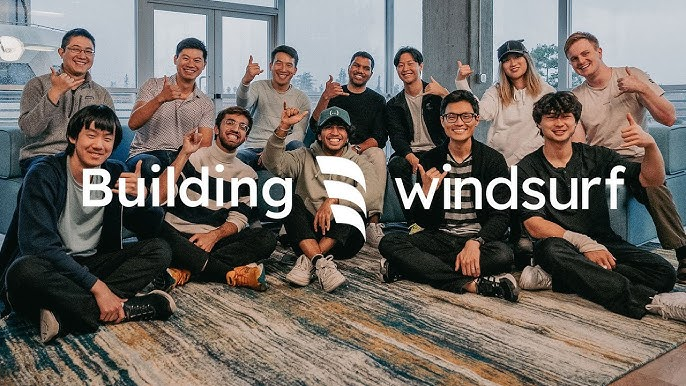
Developers have a new anxiety in 2026: token anxiety. You're in the middle of debugging a complex problem, the AI is helping you refactor three files simultaneously, and suddenly you wonder if this session is about to cost you $50. That mental tax slows you down and makes you second-guess using the tool you're paying for. Windsurf eliminated that anxiety with a simple decision: flat monthly pricing with no token limits. Fifteen dollars per month. Unlimited usage. No tracking credits or calculating costs per query. That pricing model sounds almost boring compared to the complex token systems other AI coding tools use, but boring is exactly what professional developers want when it comes to pricing. They want predictable costs and unlimited usage so they can focus on writing code instead of budgeting AI queries.
Been a professional developer for twelve years. Use Bolt weekly. These things are not in conflict.
The regression subgenre has exploded in popularity over the past few years, becoming one of the most beloved narrative frameworks in Korean manhwa. The core premise is deceptively simple: a protagonist dies or fails catastrophically, then returns to an earlier point in time with their memories intact. Armed with future knowledge, they get a second chance to change their fate, save loved ones, gain power, or pursue revenge against those who wronged them. What makes regression stories so compelling is the combination of dramatic irony, strategic satisfaction, and emotional depth they provide. Readers know what the protagonist knows, creating tension when other characters make mistakes we can see coming. We feel smart alongside protagonists who use foreknowledge to outmaneuver enemies. And we experience the emotional weight of carrying memories of futures that haven't happened yet, of people who died who are currently alive, of betrayals that haven't occurred.
The pricing risk post-IPO is real. When you're a private company burning cash you keep prices low to gain share. When you have public market shareholders demanding margins, the pressure to raise prices becomes very different. Enterprise customers locked into multi-year contracts now might face very different terms on renewal.
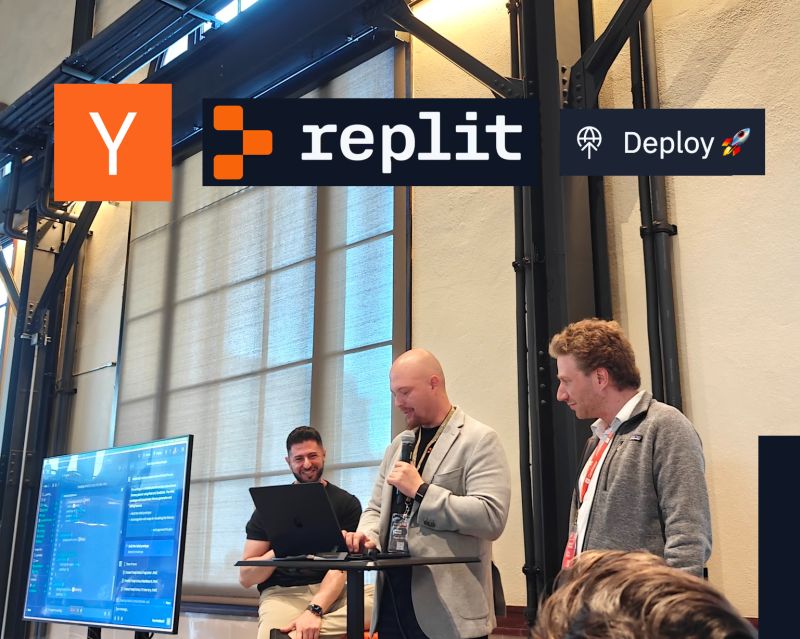
When a company's revenue jumps from $10 million to $100 million in nine months, you pay attention. When that growth comes from an AI agent that builds entire applications autonomously, you realize something fundamental just changed in software development. Replit Agent represents that change, and the numbers prove developers are ready for it. Replit started as a browser-based coding environment for education. Students could write Python or JavaScript without installing anything locally. Teachers loved it because setup time vanished. But the company saw something bigger. If you could run code in the browser, why not let AI write that code? That question led to Agent 3, an AI that doesn't just suggest code completions. It builds entire applications from scratch.
The timeline issue is the thing I keep coming back to. Three to five years to first production silicon. The AI field moves so fast that what makes sense to optimize for today might be completely irrelevant by 2029. How do you even design for that uncertainty?
This is genuinely a fascinating moment in tech history. We are watching AI software companies become vertically integrated hardware companies in real time. The industry structure five years from now is going to look completely different.
The whole AI chip conversation always focuses on the compute side and ignores memory. Modern AI accelerators are almost always memory bandwidth limited, not compute limited. Any custom chip that does not solve the memory problem is not going to be dramatically better.
Deleted the app when the new privacy policy dropped in January. The combination of new location tracking language and now confirmed no E2EE is just too much of a pattern for me to ignore.
Sure, except Apple had decades of hardware experience, massive margins to fund the R and D, and a controlled software platform to optimize for. Anthropic has none of those. The comparison is flattering but not really apt.
Meta has just had one of its most important AI moments yet and the early signals are hard to ignore. Following the launch of its newest AI model Muse Spark, the company’s standalone Meta AI app surged dramatically in popularity, hinting at a much larger shift that is beginning to take shape. The release is particularly significant because it marks the first major AI model rollout under Alexandr Wang, who joined Meta to reboot its AI strategy. This is not just another incremental update. It represents a more aggressive and focused push into the AI race. According to data from Appfigures, Meta AI jumped from number 57 to number 5 on the U.S. App Store within a day of the launch. That kind of movement rarely happens without a strong underlying pull from users. It signals not curiosity but intent.
Does anyone know where I can find similar jeans with patches? Been looking everywhere for something like this