
Can someone explain what chronotype means in this context? The article uses it but I was not sure what my chronotype actually is.
11
Sign up to see more
SignupAlready a member?
LoginBy continuing, you agree to Sociomix's Terms of Service, Privacy Policy

Can someone explain what chronotype means in this context? The article uses it but I was not sure what my chronotype actually is.
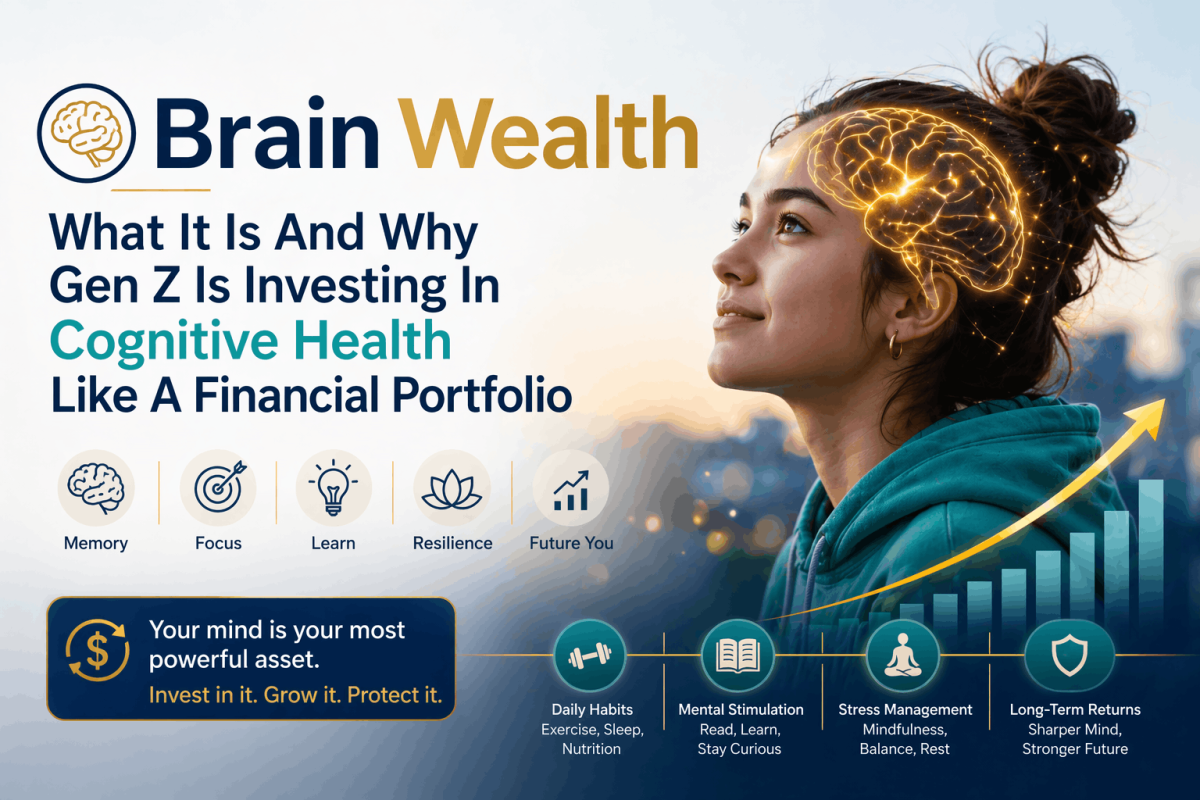
Brain wealth is the lifestyle concept redefining how an entire generation thinks about mental health in 2026, and if you have been treating your cognitive fitness as something to address only when something goes wrong, the shift happening right now will feel either overdue or quietly alarming depending on where you stand. The idea is straightforward but the implications are significant: your cognitive capacity, your ability to focus, adapt, learn, regulate your emotions, and think clearly under pressure, is not a fixed trait you are born with. It is a long-term asset you can actively invest in, protect, and grow.
I want to push back gently on the framing that this is replacing calorie counting. For some populations, like people managing obesity or insulin resistance with clinical targets, calories still matter and timing is an addition not a substitution.
This is a real concern worth raising with a provider before starting. Any framework that involves time restrictions can be a trigger for rule-based thinking that slides into restriction. The approach is designed to be flexible but that flexibility depends a lot on where your relationship with food currently is.
Same. I do not need this film to be Citizen Kane. I need it to make me feel twelve years old again for two hours and by all accounts it will do exactly that.
The technology sector is experiencing a paradox. While headlines scream about mass layoffs at major tech companies, a critical shortage is quietly building in one of the most essential areas of digital infrastructure. Datacenters, the physical backbone of our digital world, are facing an unprecedented demand surge, and there simply are not enough skilled professionals to build and maintain them. Countries across the globe are rushing to establish their own datacenter infrastructure. From India's ambitious plans to become a datacenter hub to the European Union's push for data sovereignty, and emerging markets in Southeast Asia and Latin America building their first large scale facilities, the construction boom is just beginning.

Jooheon's relationship with his sister is the emotional anchor the whole series needs. Without it he would be too cold to follow for hundreds of chapters. The writing understood that early and committed to it.
The software development world just witnessed something unprecedented. A European startup called Lovable reached $20 million in annual recurring revenue in just two months, making it potentially the fastest-growing startup in European history. But here's the twist that's making traditional software agencies nervous: they did it by giving non-technical founders the power to build full-stack applications without writing a single line of code. For years, the promise of no-code tools has been the same: anyone can build an app. But the reality has always been different. You'd create a beautiful frontend, get excited about your progress, and then hit the technical cliff. Suddenly you needed to configure databases, set up authentication, manage API keys, and deploy to servers. The "no-code" dream became a "hire-a-developer-anyway" nightmare.
The multilingual feature is being wildly undersold. Course creators charging the same price to Spanish and Portuguese speakers as English speakers, for content they generated in twenty minutes? That is a real arbitrage that changes creator economics.
Genuinely question whether non-technical users should be the audience for any of these tools right now. The article mentions Windsurf being for professionals and I think that is honestly the right call at this stage.
The article mentions Act-One for character performance capture and glosses over it way too quickly. That feature is basically DIY motion capture. For indie animators this is a huge deal.
As a parent, the 13 plus content rating change for teen accounts means more to me than editable comments ever will. My kid has been on this platform since they were barely old enough and the algorithm has shown some genuinely alarming stuff. So yes, the policy changes matter.
The talent competition point is genuinely serious. Senior chip architects with relevant AI accelerator experience are among the most sought-after engineers in the world right now. Anthropic would be competing with Apple, Google, AMD, Nvidia, and every hyperscaler for the same small pool of people.
The comparison to iMessage is kind of funny. Apple shows full edit history. Instagram shows a tiny grey tag. One of these is actually transparent.
Wait, what about the broader stablecoin picture? If institutions are rotating in through ETFs, stablecoin inflows to exchanges should be showing a big spike too. Has anyone checked on-chain data?
Genuinely, the Anthropic Cowork announcement was more significant than anything in this article. Expanding Claude Code beyond the 28 million professional developer addressable market into general computing is a completely different strategic move.
The edited tag appears as soon as you save any edit, even within the 15 minute window. So yes, if someone is reading your comment while you are mid-correction they will see the tag before you have even finished.
The bit about evolving into visible revision logs like collaborative tools is the future I actually want. Comment threads on big posts become almost like documents. Seeing the history of how a conversation changed would be fascinating and would hold people accountable.