
Jaafar vs any outside actor for this role is not even a close comparison when you think about what playing Michael Jackson actually requires. The physicality, the voice pattern, the family archive access. An outsider starts at zero on all of that.
Sign up to see more
SignupAlready a member?
LoginBy continuing, you agree to Sociomix's Terms of Service, Privacy Policy
Sign up to see more
SignupAlready a member?
LoginBy continuing, you agree to Sociomix's Terms of Service, Privacy Policy

Jaafar vs any outside actor for this role is not even a close comparison when you think about what playing Michael Jackson actually requires. The physicality, the voice pattern, the family archive access. An outsider starts at zero on all of that.
The comparison to Nano Machine keeps coming up in these discussions and it makes sense because Nano Machine basically proved that murim plus technology can work as a concept. This series is building on that foundation with much higher narrative ambition.
The article frames K's arc as moving from exploitation to genuine care and that is accurate, but it undersells how messy and uncomfortable that transition is. K is not a good person who learns. He is a complicated one who grows.
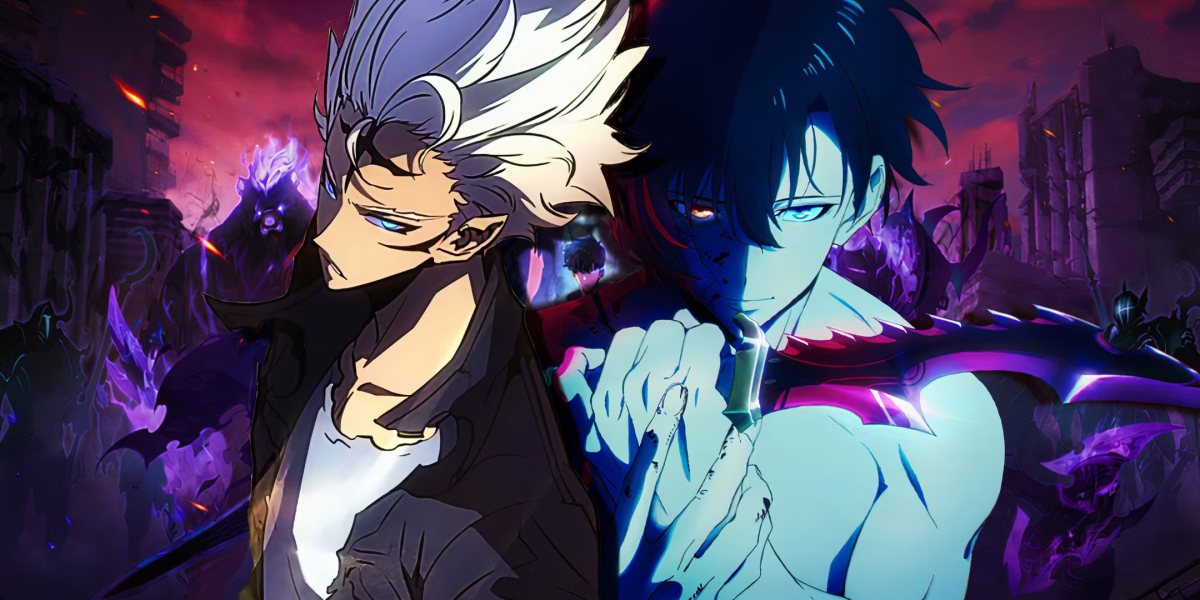
The year 2026 marks a pivotal moment in the evolution of manhwa as a medium. What started as a trickle of Korean comics receiving anime adaptations has become a flood, with at least fifteen confirmed projects bringing beloved manhwa to animated life. This explosive growth wasn't accidental but the inevitable result of Solo Leveling's massive success proving that manhwa adaptations can compete with traditional manga anime in quality, popularity, and profitability. Studios across Japan and Korea are investing heavily in manhwa properties, recognizing that Korean storytelling brings fresh perspectives, innovative premises, and built-in fanbases eager to see their favorite series animated. The diversity of genres receiving adaptations demonstrates that manhwa appeal extends far beyond action and fantasy into romance, psychological thriller, sports, and slice-of-life territories.
Sports anime and manga have delivered countless memorable series over the decades, from Slam Dunk's basketball brilliance to Haikyuu's volleyball excellence. These stories typically follow familiar patterns: talented but inexperienced protagonist joins a team, forms bonds with teammates, faces rivals, grows through competition, and ultimately pursues championship glory. The formula works because it taps into universal themes about effort, teamwork, and self-improvement. The Boxer, created by JH, takes everything you expect from sports stories and systematically deconstructs it. The protagonist doesn't love boxing. He doesn't form deep bonds with teammates. He doesn't overcome challenges through friendship and determination. Instead, the manhwa presents one of the darkest, most psychologically complex examinations of combat sports ever created, wrapped in stunningly minimalist artwork that elevates the narrative to something approaching high art.
Speaking from experience reading manhwa before adaptations, the series that adapts worst are always the ones with the strongest visual identity in the webtoon. Gosu's line work is so distinctive it will be hard to translate.
The manhwa world exploded when Solo Leveling first introduced us to Sung Jinwoo's journey from the weakest hunter to humanity's strongest defender. Now, Solo Leveling Ragnarok brings a fresh perspective to this beloved universe, and fans everywhere are asking the same questions. Can the sequel live up to the original? Do you need to read Solo Leveling first? What makes this continuation worth your time? This guide covers everything you need to know about Solo Leveling Ragnarok, whether you're a longtime fan or someone curious about jumping into the series Solo Leveling Ragnarok is not a reboot or alternate timeline. This is a direct sequel that continues the story years after the original series concluded. The protagonist shifts from Sung Jinwoo to his son, Sung Suho, who must forge his own path in a world still recovering from the catastrophic events his father prevented.
The analytics integration is a nice touch. Having visitor data, page views, and bandwidth usage right inside the platform means you can validate ideas without stitching together three different services.
As someone who works on a design systems team, the shadcn/ui integration is the real headline here. Getting AI-generated components that actually match professional standards instead of random styled-divs soup is a genuine breakthrough.
Genuinely curious whether anyone has compared Windsurf output quality specifically on TypeScript with strict mode versus Python. My experience has been meaningfully different across those two and I wonder if others see the same.
Started a SaaS product six weeks ago. Have paying customers. Hiring my first employee next month. Did not write any code. The economic opportunity here is real and it is available right now.
Most people can edit a Google Doc. Delete some words, rearrange sentences, fix typos, add paragraphs. It's intuitive and requires no special training. Now imagine editing video the same way. That's Descript's core innovation, and it transformed video editing from a specialized skill requiring expensive software into something anyone who can edit text can do effectively. Descript started as a transcription tool for podcasters. Record your podcast, upload it to Descript, and get an accurate transcript for show notes. But the founders realized something bigger. If you have a perfect transcript synchronized to audio, you can edit the audio by editing the text. Delete a word from the transcript and that word disappears from the audio. That insight became the foundation for a complete editing platform.
When a company raises $200 million in Series E funding during January 2026, investors are betting on more than potential. They're backing proven market demand and sustainable growth. Synthesia's funding round came alongside a 44% year-over-year increase in headcount to 706 employees, signaling aggressive expansion in a category the company essentially created: AI avatar-based video generation for enterprise training and communications. Corporate training videos have been expensive and slow to produce for decades. Recording a single 10-minute training module traditionally required booking a studio, hiring a presenter, scheduling a videographer, managing multiple takes, and editing everything together. If you needed to update information or translate content, you essentially started over. Synthesia eliminated this entire production workflow by replacing human presenters with AI avatars.
Outcome focus over presence theater is the culture shift that actually matters here. The tool is almost secondary, the real question is whether your organization is willing to judge people by what they produce rather than whether they sat in a room.
The point about smaller and mid-sized banks is getting lost in all the big bank CEO coverage. Those institutions are the most exposed because they lack the security budgets and often run the oldest legacy code.
Genuinely curious whether the contemplating mode that spins up parallel subagents has meaningful latency for average users. Reasoning modes in other frontier models are noticeably slower. If Meta cracked efficient multi-agent reasoning without a speed penalty that is actually a real technical achievement worth paying attention to.
The fact that every bank CEO who attended declined to say anything to the press tells you everything about the severity of what was presented in that room.
The CUDA lock-in point is so real. Speaking from experience in ML infrastructure, migrating workloads away from CUDA is genuinely painful even when the alternative hardware is technically superior. It is not a hardware problem, it is a software ecosystem problem.
The global cryptocurrency market capitalization has climbed back above the $2.5 trillion threshold, fueled by a massive liquidation of short positions and renewed institutional interest. Geopolitical developments and shifting investor sentiment combined to create a powerful rally that caught bearish traders off guard, resulting in substantial losses for those betting against the market. According to data from CoinGecko, the total market capitalization of all cryptocurrencies combined increased 1.4% to reach $2.52 trillion on Friday, April 10. Bitcoin experienced a notable surge of over 3%, briefly touching the $73,000 mark before consolidating around $72,000 at the time of writing. Ethereum demonstrated equally impressive strength, pushing past the $2,200 level, while the majority of top 10 cryptocurrencies by market capitalization also posted significant gains.
Join independent creators, thought leaders, and storytellers to share your unique perspectives, and spark meaningful conversations.