
Same. And the worst part is when you log perfectly for a month and still feel terrible. At some point you realize the model itself might be wrong, not just your execution of it.
6
Sign up to see more
SignupAlready a member?
LoginBy continuing, you agree to Sociomix's Terms of Service, Privacy Policy

Same. And the worst part is when you log perfectly for a month and still feel terrible. At some point you realize the model itself might be wrong, not just your execution of it.
My big question before starting was whether Copycat manhwa is better than Bastard, and honestly after 10 chapters I still cannot decide. They feel like completely different kinds of disturbing.
What I want to know is whether any of these fifteen have the original creator directly involved in the anime production. Solo Leveling's faithfulness was apparently tied to strict rules from Redice Studio.
The article mentions Lorin might be insecure rather than purely romantic and I think that is the more interesting reading. Someone who cannot express their own feelings seeking out a ghostwriter is not just convenient plot mechanics. That is a character with something to hide.
Season 4 feels like the writer is working with all the narrative debt the previous seasons accumulated and finally cashing it in. The emotional stakes feel grounded in everything that came before.
SSS-Class Revival Hunter should absolutely have been on this list. A protagonist who gains powers by dying repeatedly is one of the most creative mechanics the genre has ever produced.
Honestly the biggest story buried in this article is that a hundred-person company is beating organizations with AI research budgets in the tens of billions. The efficiency argument for focused teams versus sprawling labs is being proved in real time.
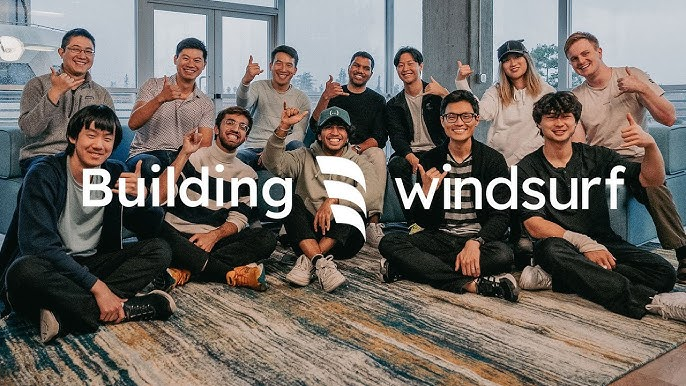
Developers have a new anxiety in 2026: token anxiety. You're in the middle of debugging a complex problem, the AI is helping you refactor three files simultaneously, and suddenly you wonder if this session is about to cost you $50. That mental tax slows you down and makes you second-guess using the tool you're paying for. Windsurf eliminated that anxiety with a simple decision: flat monthly pricing with no token limits. Fifteen dollars per month. Unlimited usage. No tracking credits or calculating costs per query. That pricing model sounds almost boring compared to the complex token systems other AI coding tools use, but boring is exactly what professional developers want when it comes to pricing. They want predictable costs and unlimited usage so they can focus on writing code instead of budgeting AI queries.
The designer-developer relationship has been tense for decades. Designers create pixel-perfect mockups in Figma. Developers translate them to code and somehow everything looks slightly wrong. Fonts don't match. Spacing is inconsistent. Buttons have different corner radiuses. Both sides get frustrated, blame each other, and the product suffers. V0 by Vercel is fixing this problem by generating production-quality React components that look exactly like the designs. The rebrand from v0.dev to v0.app in January 2026 signaled expanded ambitions beyond just UI component generation. Vercel positioned the tool for full-stack web development, though its core strength remains frontend excellence. That strategic clarity matters because trying to be everything often means excelling at nothing. V0 chose to dominate the handoff between design and code before expanding into other areas.
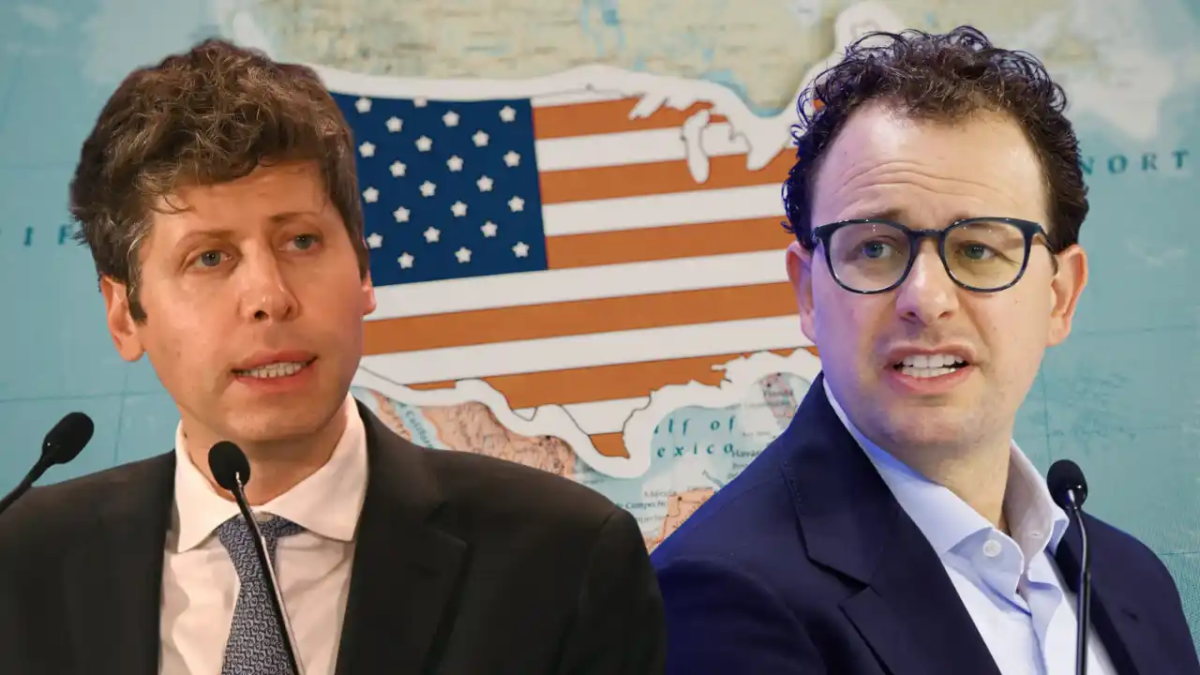
There's a photograph from February 2026 that pretty much sums up the state of AI right now. At the India AI Impact Summit in New Delhi, Indian Prime Minister Narendra Modi invited the world's tech leaders onstage for a group photo. Everyone held hands. Well, almost everyone. Sam Altman of OpenAI and Dario Amodei of Anthropic, standing right next to each other, refused to clasp hands and instead raised their fists separately. The internet, predictably, lost its mind. An awkward moment between OpenAI CEO Sam Altman and Anthropic CEO Dario Amodei at an AI Summit captured the increasingly icy relations between two rival tech leaders who started off as colleagues. That's not just petty drama. It's a window into what may be the most consequential corporate rivalry in the technology world right now, one that's playing out in boardrooms, courtrooms, Super Bowl ads, and billion-dollar compute deals all at once.
Claude has become the default for serious technical work in a way that ChatGPT never really was. ChatGPT won the curious consumer market. Claude won the people who actually build things. Those are different markets with very different economics.
Hybrid workflow is genuinely the answer here. Claude Code to generate and refine features, Codex to review before merging. Multiple developers on Reddit have settled on this pattern and it makes sense.
Hot take: subscriptions are the wrong model for this entirely. Usage-based API pricing is how serious teams should be accessing these tools. Flat monthly caps are a consumer product design choice that does not translate well to professional workflows.
The artificial intelligence industry is entering a new phase of competition, one that extends far beyond the development of advanced language models and neural networks. Companies are now engaged in an intense struggle to secure the computational infrastructure necessary to train and deploy their AI systems. In this context, Anthropic has reportedly begun exploring the possibility of designing and manufacturing its own specialized processors to power Claude, its flagship conversational AI platform, along with its broader suite of artificial intelligence technologies. This strategic consideration emerges at a critical moment in the global AI sector. The exponential growth in model complexity and capability has created unprecedented demand for high-performance computing resources. Sources familiar with the matter indicate that Anthropic is conducting feasibility studies to determine whether developing proprietary semiconductor technology could reduce its dependence on external hardware vendors while ensuring reliable access to the computing power required for its operations.

Meta has just had one of its most important AI moments yet and the early signals are hard to ignore. Following the launch of its newest AI model Muse Spark, the company’s standalone Meta AI app surged dramatically in popularity, hinting at a much larger shift that is beginning to take shape. The release is particularly significant because it marks the first major AI model rollout under Alexandr Wang, who joined Meta to reboot its AI strategy. This is not just another incremental update. It represents a more aggressive and focused push into the AI race. According to data from Appfigures, Meta AI jumped from number 57 to number 5 on the U.S. App Store within a day of the launch. That kind of movement rarely happens without a strong underlying pull from users. It signals not curiosity but intent.
Meta spending between 115 and 135 billion dollars on AI infrastructure in 2026 alone and then calling the output small and fast by design is one of the more peculiar brand positionings I have seen.
Could you swap the heels for black boots in winter? I love the look but need something warmer.