
I keep seeing people online ask whether Jaafar Jackson is a good actor or just a skilled impersonator. The article addresses this honestly and I think the answer is both, depending on which scenes you are watching.
22
Sign up to see more
SignupAlready a member?
LoginBy continuing, you agree to Sociomix's Terms of Service, Privacy Policy

I keep seeing people online ask whether Jaafar Jackson is a good actor or just a skilled impersonator. The article addresses this honestly and I think the answer is both, depending on which scenes you are watching.
The fact that we went from one or two manhwa adaptations per year to fifteen confirmed for 2026 is genuinely staggering. Solo Leveling really did break a dam open.
Speaking as someone who reads both Korean and Japanese action comics regularly, the panel layout philosophy in manhwa lends itself to kinetic action better than traditional manga. The vertical scroll format means sequences can breathe in ways print manga cannot, and Nano Machine uses that advantage better than almost anyone.
The infrastructure arc where Lloyd redesigns the entire estate layout for maximum economic efficiency is the chapter where I went from liking this to being fully obsessed.
In a medium filled with talented artists producing stunning work, making a claim about any series having the "best" art feels bold. Yet Nano Machine consistently delivers combat sequences so fluid, detailed, and visually innovative that even readers who don't typically care about martial arts stories find themselves captivated by the sheer spectacle on display. The series combines traditional murim aesthetics with futuristic sci-fi elements, creating a unique visual identity that stands apart from typical cultivation manhwa. The nano machine implanted in protagonist Cheon Yeo-Woon's body doesn't just give him power. It becomes a storytelling device that allows the artist to visualize techniques, energy flows, and combat analysis in ways other series can't replicate.

The article says the question is not whether companies will adopt this technology but how quickly. That framing assumes the technology keeps improving and the ethics concerns do not catch up. I would not assume either of those things.
That history lesson cuts both ways though. Every abstraction layer also created new categories of failures that took years to understand and manage. Moving fast and understanding nothing is not a purely good thing.
Flat pricing with daily resets versus flat pricing with no limits are two completely different products. The headline of this article describes the second but Windsurf now operates on the first.
When a company's revenue jumps from $10 million to $100 million in nine months, you pay attention. When that growth comes from an AI agent that builds entire applications autonomously, you realize something fundamental just changed in software development. Replit Agent represents that change, and the numbers prove developers are ready for it. Replit started as a browser-based coding environment for education. Students could write Python or JavaScript without installing anything locally. Teachers loved it because setup time vanished. But the company saw something bigger. If you could run code in the browser, why not let AI write that code? That question led to Agent 3, an AI that doesn't just suggest code completions. It builds entire applications from scratch.
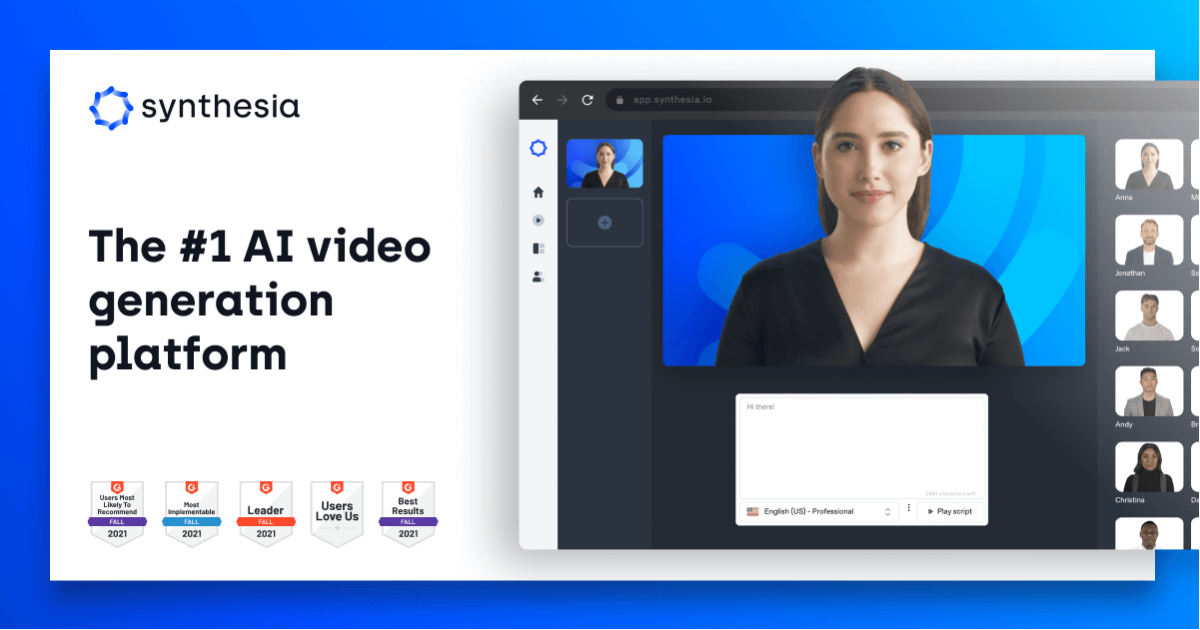
When a company raises $200 million in Series E funding during January 2026, investors are betting on more than potential. They're backing proven market demand and sustainable growth. Synthesia's funding round came alongside a 44% year-over-year increase in headcount to 706 employees, signaling aggressive expansion in a category the company essentially created: AI avatar-based video generation for enterprise training and communications. Corporate training videos have been expensive and slow to produce for decades. Recording a single 10-minute training module traditionally required booking a studio, hiring a presenter, scheduling a videographer, managing multiple takes, and editing everything together. If you needed to update information or translate content, you essentially started over. Synthesia eliminated this entire production workflow by replacing human presenters with AI avatars.
Forty million dollars in annual recurring revenue. Six months. One browser-based platform. Those numbers would be impressive for any software company, but for Bolt.new, they represent something more significant: the moment when development environments moved permanently into the cloud and never looked back. Traditional software development has always required setup. Install Node.js, configure your environment, manage dependencies, set up local servers, troubleshoot version conflicts. Before writing a single line of code, developers spend hours or even days preparing their machines. Junior developers often spend their first week just getting their environment working. Bolt.new eliminated all of that with WebContainers technology.
The part of this I find most interesting is the geopolitical dimension. With most advanced chip manufacturing concentrated in Taiwan and the ongoing uncertainty around that region, every major AI company has a strategic reason to care about supply chain resilience that goes beyond just cost.
Hot take, the people claiming this is all just a short squeeze with no real legs said the same thing at $40K, $50K, and $60K. At what point does the narrative update?
Respectfully pushing back on the gold narrative here. Gold pulling back 1% on a single volatile day is completely normal profit-taking. Calling it a capital rotation into crypto is a stretch.
Those sandals with this romper are perfect for showing off a fresh pedi! Adding this combo to my summer wishlist