Something the guide doesn't mention is that Ragnarok introduces the term Awakeners alongside Hunters from the original. It's a small world-building detail but it shows the world has changed, not just the protagonist.
Sign up to see more
SignupAlready a member?
LoginBy continuing, you agree to Sociomix's Terms of Service, Privacy Policy

Something the guide doesn't mention is that Ragnarok introduces the term Awakeners alongside Hunters from the original. It's a small world-building detail but it shows the world has changed, not just the protagonist.
What I want to know is whether any of these fifteen have the original creator directly involved in the anime production. Solo Leveling's faithfulness was apparently tied to strict rules from Redice Studio.
From what I understand the novel handles this with some care, suggesting Seongshik had unexplored feelings that the situation brings into focus rather than framing the BL world as the thing that makes him gay. The manhwa adaptation seems to follow the same approach.
In a medium filled with talented artists producing stunning work, making a claim about any series having the "best" art feels bold. Yet Nano Machine consistently delivers combat sequences so fluid, detailed, and visually innovative that even readers who don't typically care about martial arts stories find themselves captivated by the sheer spectacle on display. The series combines traditional murim aesthetics with futuristic sci-fi elements, creating a unique visual identity that stands apart from typical cultivation manhwa. The nano machine implanted in protagonist Cheon Yeo-Woon's body doesn't just give him power. It becomes a storytelling device that allows the artist to visualize techniques, energy flows, and combat analysis in ways other series can't replicate.
Tried building a complex form with conditional logic and multi-step validation. v0 got 80 percent of the way there on the first prompt and the remaining 20 percent took maybe 30 minutes of manual work. That is still a massive win over starting cold.
In a manhwa landscape dominated by dungeon crawling, regression narratives, and power fantasies, The Greatest Estate Developer stands out by asking a simple question: what if the protagonist's greatest weapon wasn't a sword or magic system, but civil engineering knowledge? This bizarre premise transforms into one of the most entertaining, genuinely funny, and surprisingly heartfelt series currently running, proving that innovation in storytelling comes from unexpected places. The series takes the familiar isekai setup where a modern person finds themselves in a fantasy world and completely subverts expectations. Instead of becoming an adventurer or hero, protagonist Kim Suho uses his engineering knowledge to revolutionize construction, infrastructure, and economic development. What sounds like it should be boring becomes absolutely captivating through sharp writing, excellent comedic timing, and genuine passion for showing how infrastructure improves lives.
The $700M valuation after a Series B round tells you that smart money is not treating this as a toy or a trend. The institutional investors who led that round are not easily impressed.
The part about pixel-perfect UI affecting user trust and conversion rates is something product managers need to hear louder. The visual quality gap between a polished app and a slightly-off app is invisible to engineers but immediately obvious to users.
Speaking from experience running a software team, the thing about Claude Code generating 90% of its own codebase is both impressive and slightly concerning from a quality control perspective. At some point we need real data on defect rates in AI written production code at scale.
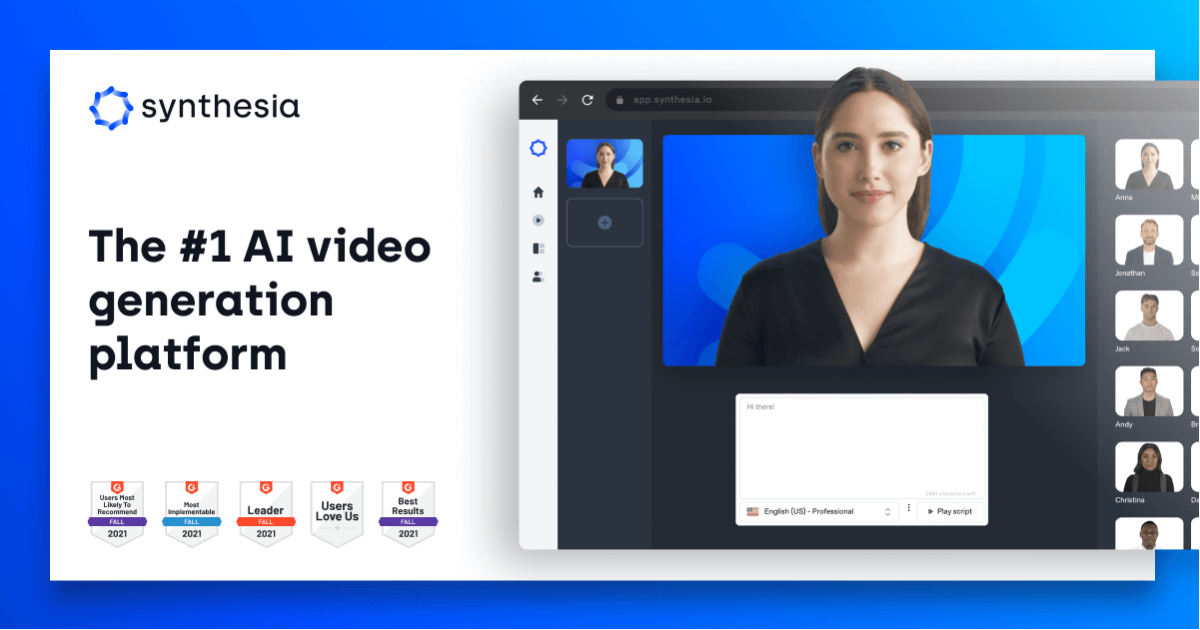
When a company raises $200 million in Series E funding during January 2026, investors are betting on more than potential. They're backing proven market demand and sustainable growth. Synthesia's funding round came alongside a 44% year-over-year increase in headcount to 706 employees, signaling aggressive expansion in a category the company essentially created: AI avatar-based video generation for enterprise training and communications. Corporate training videos have been expensive and slow to produce for decades. Recording a single 10-minute training module traditionally required booking a studio, hiring a presenter, scheduling a videographer, managing multiple takes, and editing everything together. If you needed to update information or translate content, you essentially started over. Synthesia eliminated this entire production workflow by replacing human presenters with AI avatars.
Hot take: the real winners in this trend are not the AI labs building chips, it is the chip design services companies and IP licensors who get paid no matter who wins the AI model competition.
As someone who builds on AI APIs professionally, the move to proprietary is frustrating but understandable. Meta needed to monetize something. Giving away open weights for years built goodwill but not revenue. The real question is whether their API pricing will be competitive with OpenAI and Anthropic.
This is going to play out very differently in different markets. European users with GDPR protections have legal recourse that US or Indian users do not. The risk calculation is genuinely different depending on where you live.
The article mentions that the Strait of Hormuz handles roughly one fifth of global oil supply. That context is important. If Bitcoin becomes a recognized payment mechanism there, the addressable market argument changes entirely.
That last point is maybe the most important thing to understand about where AI capability development is headed. The dangerous capabilities are not separate tracks, they emerge from the same general intelligence improvements. You cannot easily isolate them.
I've been wanting to try mixing kawaii pieces with streetwear. This is giving me so many ideas
The shift style makes it so easy to move around in perfect for dancing at summer weddings
Smart choice keeping the boots ankle length rather than knee high. Keeps it from looking too heavy