
Moved from a software ops role to a datacenter facilities coordinator position last year because my company was restructuring. The learning curve was steep but the job security feels completely different. Much less anxiety.
Sign up to see more
SignupAlready a member?
LoginBy continuing, you agree to Sociomix's Terms of Service, Privacy Policy
Sign up to see more
SignupAlready a member?
LoginBy continuing, you agree to Sociomix's Terms of Service, Privacy Policy

Moved from a software ops role to a datacenter facilities coordinator position last year because my company was restructuring. The learning curve was steep but the job security feels completely different. Much less anxiety.
My friend who got me into ORV literally just texted me this article and now we are both spiraling about when the first trailer is going to drop. This community has been patient for so long.
The article ranking A Returner's Magic Season 2 at fifteen is fair but undersells how much the series improved by the end of season one. The character dynamics got genuinely compelling.
The regression subgenre has exploded in popularity over the past few years, becoming one of the most beloved narrative frameworks in Korean manhwa. The core premise is deceptively simple: a protagonist dies or fails catastrophically, then returns to an earlier point in time with their memories intact. Armed with future knowledge, they get a second chance to change their fate, save loved ones, gain power, or pursue revenge against those who wronged them. What makes regression stories so compelling is the combination of dramatic irony, strategic satisfaction, and emotional depth they provide. Readers know what the protagonist knows, creating tension when other characters make mistakes we can see coming. We feel smart alongside protagonists who use foreknowledge to outmaneuver enemies. And we experience the emotional weight of carrying memories of futures that haven't happened yet, of people who died who are currently alive, of betrayals that haven't occurred.
The manhwa community has been buzzing with anticipation ever since MAPPA Studio announced their adaptation of Omniscient Reader's Viewpoint. With a spring 2026 release date confirmed and 24 episodes planned for the first season, this adaptation represents one of the most ambitious manhwa-to-anime projects ever undertaken. But what makes this series so special that it warranted such a massive production commitment? If you're hearing about Omniscient Reader's Viewpoint for the first time or wondering whether the hype is justified, this guide will prepare you for what promises to be one of the biggest anime releases of the year. We'll cover the story premise, why it's captured millions of readers worldwide, what MAPPA's involvement means, and everything else you need to know before the first episode airs
LINE Webtoon's CEO pledged something like twenty anime series from webtoons back in 2025. The fact that we are actually approaching that number is wild to see in real time.
When Tomb Raider King first exploded onto the manhwa scene, it brought a fresh take on dungeon crawling stories by combining archaeological adventure with ruthless protagonist energy and a treasure-hunting premise that felt genuinely different from typical gate and dungeon narratives. The series built a dedicated fanbase through its satisfying blend of historical artifact powers, strategic relic acquisition, and a protagonist who wasn't afraid to be morally gray in pursuit of his goals. Now, with the anime adaptation confirmed for 2026 as one of the most anticipated manhwa-to-anime projects, Tomb Raider King is experiencing a resurgence. New readers are discovering the series while longtime fans eagerly await seeing Jooheon Suh's relic-hunting adventures brought to life with animation. The timing couldn't be better, as the series has built enough content to support a substantial adaptation while maintaining momentum in its ongoing storyline.
Hot take: vibe coding tools that ignore security are going to cause a crisis. The new v0 at least took that seriously by building compliance controls into the platform. Most competitors have not done that yet.
Curious whether anyone has tried the image editing feature inside the chatbox. The ability to edit images contextually within the same workflow seems powerful for design-heavy projects.
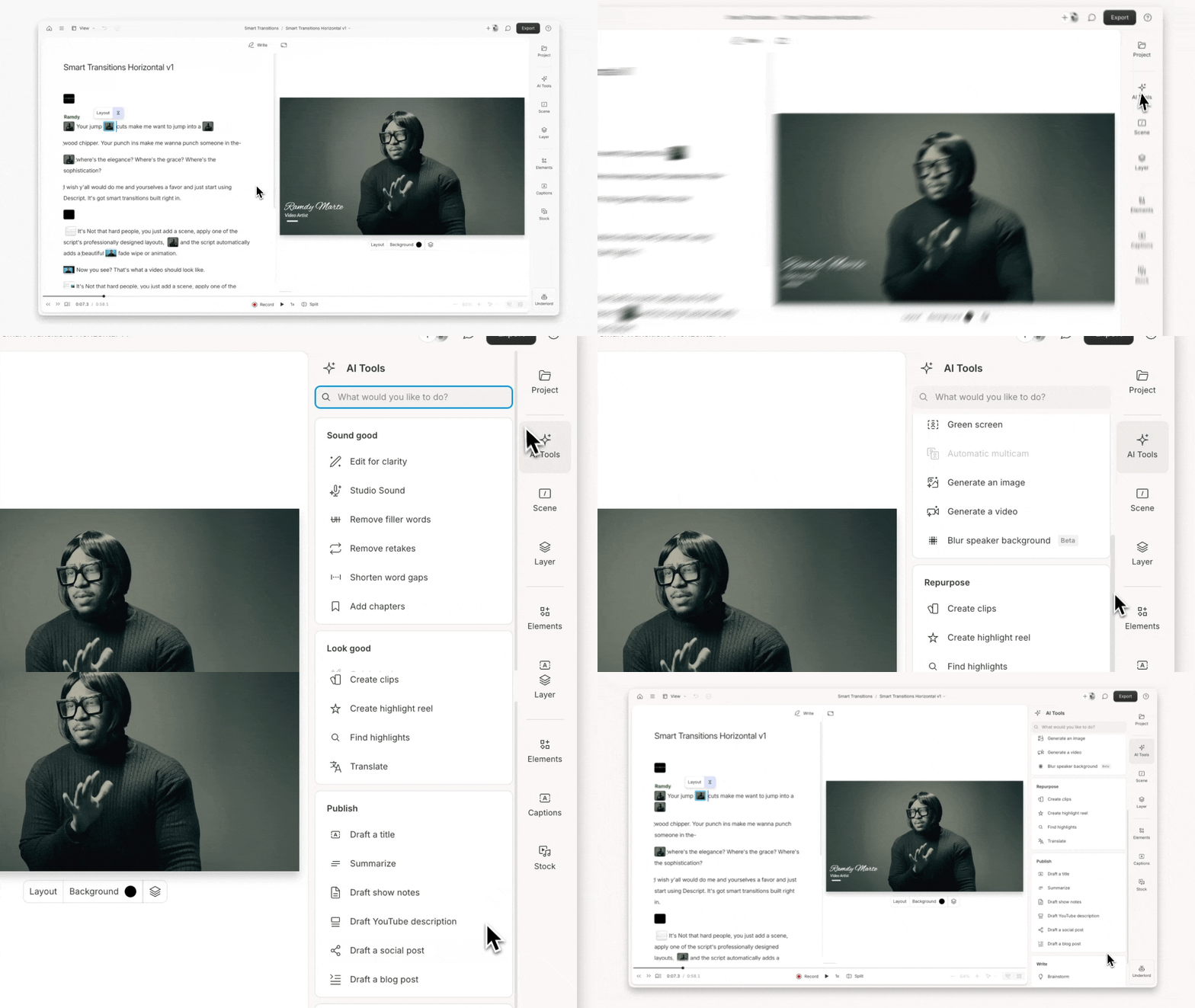
Most people can edit a Google Doc. Delete some words, rearrange sentences, fix typos, add paragraphs. It's intuitive and requires no special training. Now imagine editing video the same way. That's Descript's core innovation, and it transformed video editing from a specialized skill requiring expensive software into something anyone who can edit text can do effectively. Descript started as a transcription tool for podcasters. Record your podcast, upload it to Descript, and get an accurate transcript for show notes. But the founders realized something bigger. If you have a perfect transcript synchronized to audio, you can edit the audio by editing the text. Delete a word from the transcript and that word disappears from the audio. That insight became the foundation for a complete editing platform.
The fact that the web novel is done means at least we're not getting an unfinished story. That alone puts Ragnarok ahead of a lot of ongoing manhwa right now.
Hot take: the real innovation here is not the AI, it is the closed browser feedback loop. Every other tool generates code and wishes you luck. Actually running it and fixing errors automatically is the part that changes everything.
The comparison to having a 1-person team ship what a 4-person team did two years ago is starting to feel conservative honestly.
HeyGen growing at 152% year over year is not a footnote. That is a threat. Revenue advantage can evaporate if the challenger keeps acquiring customers at that rate and then monetizes them.
The collaboration workspace is genuinely where Runway separates from tools that are just generation engines. Iteration and feedback loops between team members is where production time actually lives.
Real talk, the comparison to Gmail is genuinely misleading. Gmail is not a platform where teenagers post videos about their mental health and then slide into each other's DMs about their personal lives. Context matters enormously here.
Join independent creators, thought leaders, and storytellers to share your unique perspectives, and spark meaningful conversations.