The film getting a projected $150 million worldwide opening weekend kind of proves the article's point that the audience for this is enormous regardless of what critics think. Fan enthusiasm for Michael Jackson does not expire.
20
Sign up to see more
SignupAlready a member?
LoginBy continuing, you agree to Sociomix's Terms of Service, Privacy Policy
The film getting a projected $150 million worldwide opening weekend kind of proves the article's point that the audience for this is enormous regardless of what critics think. Fan enthusiasm for Michael Jackson does not expire.
My friend who got me into ORV literally just texted me this article and now we are both spiraling about when the first trailer is going to drop. This community has been patient for so long.
In a medium filled with talented artists producing stunning work, making a claim about any series having the "best" art feels bold. Yet Nano Machine consistently delivers combat sequences so fluid, detailed, and visually innovative that even readers who don't typically care about martial arts stories find themselves captivated by the sheer spectacle on display. The series combines traditional murim aesthetics with futuristic sci-fi elements, creating a unique visual identity that stands apart from typical cultivation manhwa. The nano machine implanted in protagonist Cheon Yeo-Woon's body doesn't just give him power. It becomes a storytelling device that allows the artist to visualize techniques, energy flows, and combat analysis in ways other series can't replicate.

As a longtime murim reader the outer space invasion angle sounded ridiculous to me initially. Three chapters in I completely surrendered to it.
The article describing Omniscient Reader as regression-adjacent is accurate but the series belongs on every quality list regardless of strict genre classification. It is simply the best manhwa being produced right now and the upcoming anime will prove that to a much larger audience.
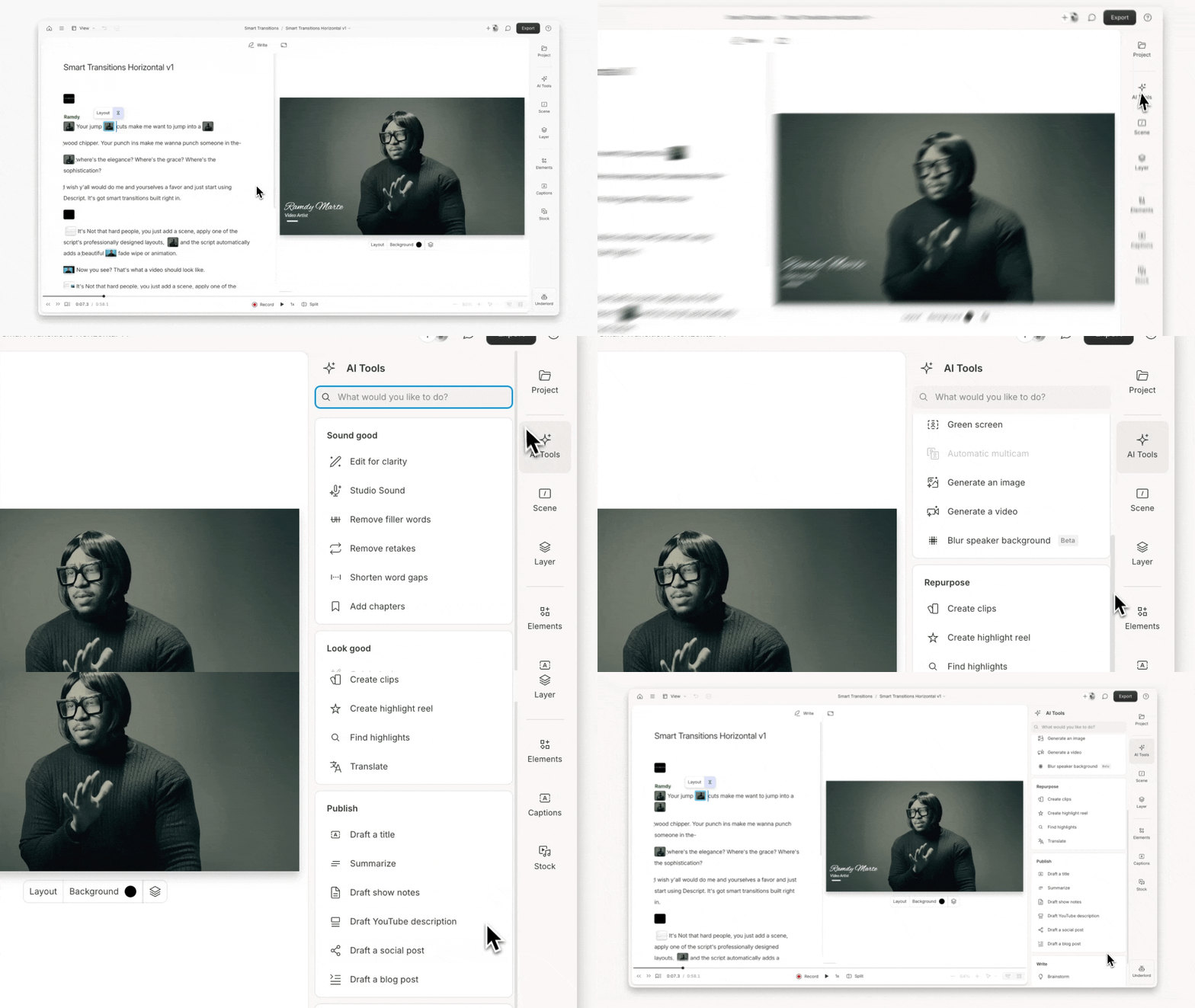
Most people can edit a Google Doc. Delete some words, rearrange sentences, fix typos, add paragraphs. It's intuitive and requires no special training. Now imagine editing video the same way. That's Descript's core innovation, and it transformed video editing from a specialized skill requiring expensive software into something anyone who can edit text can do effectively. Descript started as a transcription tool for podcasters. Record your podcast, upload it to Descript, and get an accurate transcript for show notes. But the founders realized something bigger. If you have a perfect transcript synchronized to audio, you can edit the audio by editing the text. Delete a word from the transcript and that word disappears from the audio. That insight became the foundation for a complete editing platform.
Genuinely one of the fastest product experiences I have ever had. Described a client project in a paragraph, had a demo-ready prototype in an afternoon. Client was impressed. Signed the contract. That is the whole story.
The point about ghostwriting as a metaphor for inhabiting someone else's story is the kind of literary layering that most manhwa would not bother with. Whether the execution lives up to the concept is a different question, but the intent is clearly there.
The eye contact feature is hit or miss depending on your webcam quality and lighting. With decent setup it looks natural enough that most viewers would not notice. With bad lighting it does look slightly uncanny.
When a company raises $200 million in Series E funding during January 2026, investors are betting on more than potential. They're backing proven market demand and sustainable growth. Synthesia's funding round came alongside a 44% year-over-year increase in headcount to 706 employees, signaling aggressive expansion in a category the company essentially created: AI avatar-based video generation for enterprise training and communications. Corporate training videos have been expensive and slow to produce for decades. Recording a single 10-minute training module traditionally required booking a studio, hiring a presenter, scheduling a videographer, managing multiple takes, and editing everything together. If you needed to update information or translate content, you essentially started over. Synthesia eliminated this entire production workflow by replacing human presenters with AI avatars.
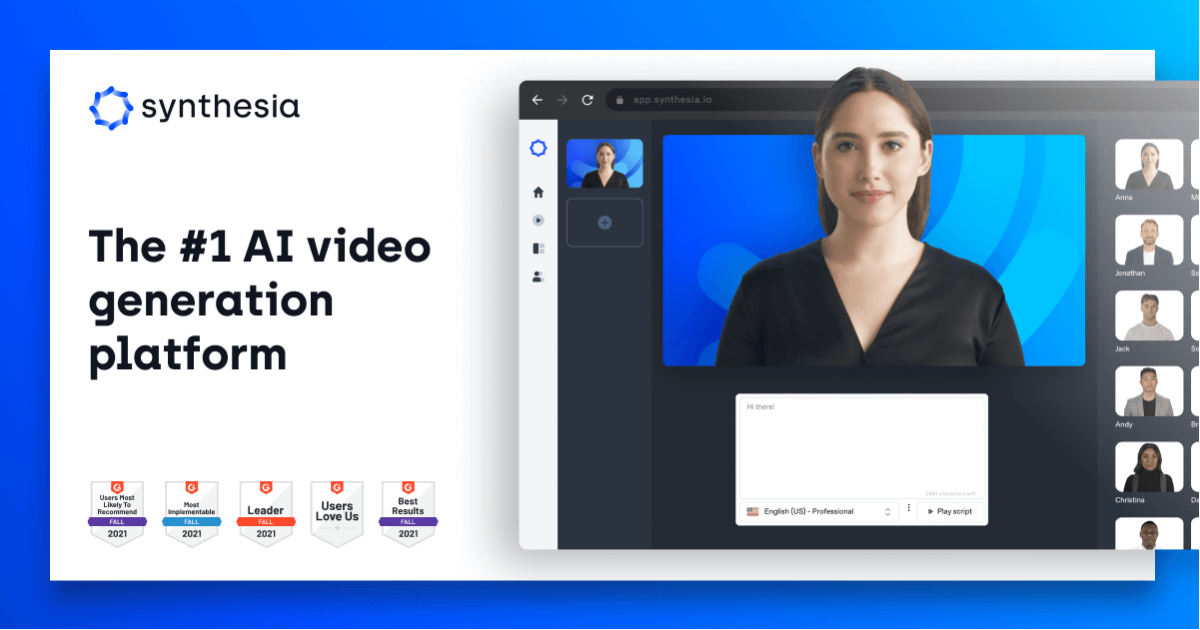
Just wild to me that we went from videos requiring studios and camera crews to write a script, click generate, download in maybe two years.
Developers have a new anxiety in 2026: token anxiety. You're in the middle of debugging a complex problem, the AI is helping you refactor three files simultaneously, and suddenly you wonder if this session is about to cost you $50. That mental tax slows you down and makes you second-guess using the tool you're paying for. Windsurf eliminated that anxiety with a simple decision: flat monthly pricing with no token limits. Fifteen dollars per month. Unlimited usage. No tracking credits or calculating costs per query. That pricing model sounds almost boring compared to the complex token systems other AI coding tools use, but boring is exactly what professional developers want when it comes to pricing. They want predictable costs and unlimited usage so they can focus on writing code instead of budgeting AI queries.

Forty million dollars in annual recurring revenue. Six months. One browser-based platform. Those numbers would be impressive for any software company, but for Bolt.new, they represent something more significant: the moment when development environments moved permanently into the cloud and never looked back. Traditional software development has always required setup. Install Node.js, configure your environment, manage dependencies, set up local servers, troubleshoot version conflicts. Before writing a single line of code, developers spend hours or even days preparing their machines. Junior developers often spend their first week just getting their environment working. Bolt.new eliminated all of that with WebContainers technology.
Wait, does the new $100 Pro tier include the extended context windows that the $200 tier has? The article says the $200 tier includes extended context across all ChatGPT capabilities not just Codex. If the $100 tier does not have that, the value prop gets complicated.
As someone who works in enterprise software, the multi-agent architecture is what I keep coming back to. Spinning up parallel subagents to handle different parts of a task simultaneously is not a gimmick. That is genuinely how complex workflows need to be handled, and very few consumer-facing products have shipped that cleanly.
The global cryptocurrency market capitalization has climbed back above the $2.5 trillion threshold, fueled by a massive liquidation of short positions and renewed institutional interest. Geopolitical developments and shifting investor sentiment combined to create a powerful rally that caught bearish traders off guard, resulting in substantial losses for those betting against the market. According to data from CoinGecko, the total market capitalization of all cryptocurrencies combined increased 1.4% to reach $2.52 trillion on Friday, April 10. Bitcoin experienced a notable surge of over 3%, briefly touching the $73,000 mark before consolidating around $72,000 at the time of writing. Ethereum demonstrated equally impressive strength, pushing past the $2,200 level, while the majority of top 10 cryptocurrencies by market capitalization also posted significant gains.

When you hear “Paris Fashion Week,” your mind races to haute couture, bold statements, and the world’s most glamorous attendees. But on October 4, 2025, the scene got a surprise guest—Meghan Markle, making what might be her most talked-about entrance yet. To call it a “debut” feels almost too neat, as if she’s stepping into a world she’s never touched. Yet, Meghan’s gradual evolution as a style influencer has been anything but accidental. Her Paris moment isn’t just celebrity spectacle; it’s a statement, a pivot, and a nuanced step into a new chapter. Here’s my take on why this matters.

Such a clever mix of textures without being overwhelming. The proportions are spot on