Does anyone know how realistic it is to transition from software development to datacenter ops without an electrical or mechanical engineering background? Genuinely curious what the entry points are.
16
Sign up to see more
SignupAlready a member?
LoginBy continuing, you agree to Sociomix's Terms of Service, Privacy Policy

Does anyone know how realistic it is to transition from software development to datacenter ops without an electrical or mechanical engineering background? Genuinely curious what the entry points are.
The certification path the article describes is solid but incomplete. Do not sleep on vendor-specific training from companies like Vertiv and Schneider Electric. Those credentials carry serious weight with hiring managers at major facilities.
Retirements are a massive factor that the article mentions but does not emphasize enough. There are roughly twice as many datacenter workers over 60 as there are under 30. That knowledge transfer problem is coming fast.
As a long-time Bastard reader, I was slightly nervous about Copycat because sometimes creators peak and then coast. Ten chapters in I can confirm this is absolutely not coasting. Kim seems genuinely energized by this premise.
The Warrior Returns made me genuinely emotional in a way I did not expect from what initially looked like a fish-out-of-water comedy setup. When he sees his family again the series drops its humorous tone completely and the shift is earned.
In a manhwa landscape dominated by dungeon crawling, regression narratives, and power fantasies, The Greatest Estate Developer stands out by asking a simple question: what if the protagonist's greatest weapon wasn't a sword or magic system, but civil engineering knowledge? This bizarre premise transforms into one of the most entertaining, genuinely funny, and surprisingly heartfelt series currently running, proving that innovation in storytelling comes from unexpected places. The series takes the familiar isekai setup where a modern person finds themselves in a fantasy world and completely subverts expectations. Instead of becoming an adventurer or hero, protagonist Kim Suho uses his engineering knowledge to revolutionize construction, infrastructure, and economic development. What sounds like it should be boring becomes absolutely captivating through sharp writing, excellent comedic timing, and genuine passion for showing how infrastructure improves lives.

In a medium filled with talented artists producing stunning work, making a claim about any series having the "best" art feels bold. Yet Nano Machine consistently delivers combat sequences so fluid, detailed, and visually innovative that even readers who don't typically care about martial arts stories find themselves captivated by the sheer spectacle on display. The series combines traditional murim aesthetics with futuristic sci-fi elements, creating a unique visual identity that stands apart from typical cultivation manhwa. The nano machine implanted in protagonist Cheon Yeo-Woon's body doesn't just give him power. It becomes a storytelling device that allows the artist to visualize techniques, energy flows, and combat analysis in ways other series can't replicate.

The AI video generation race just got a clear winner. Runway Gen-4.5 topped the Video Arena leaderboard with a 1,247 Elo score, surpassing both Google Veo 3 and OpenAI Sora 2. For those unfamiliar with Elo ratings, this is the same system used to rank chess players and competitive games. A higher score means more wins in head-to-head comparisons. When real users compare videos side by side without knowing which AI generated them, they consistently choose Runway's output. Runway didn't start as an enterprise video tool. It began as a playground for artists and filmmakers who wanted to experiment with AI-generated visuals. The early versions produced fascinating but inconsistent results. Sometimes you'd get stunning cinematic footage. Other times you'd get distorted motion and unrealistic physics. Gen-4.5 changed that equation by achieving breakthrough consistency in motion quality and physical accuracy.

The manhwa world exploded when Solo Leveling first introduced us to Sung Jinwoo's journey from the weakest hunter to humanity's strongest defender. Now, Solo Leveling Ragnarok brings a fresh perspective to this beloved universe, and fans everywhere are asking the same questions. Can the sequel live up to the original? Do you need to read Solo Leveling first? What makes this continuation worth your time? This guide covers everything you need to know about Solo Leveling Ragnarok, whether you're a longtime fan or someone curious about jumping into the series Solo Leveling Ragnarok is not a reboot or alternate timeline. This is a direct sequel that continues the story years after the original series concluded. The protagonist shifts from Sung Jinwoo to his son, Sung Suho, who must forge his own path in a world still recovering from the catastrophic events his father prevented.

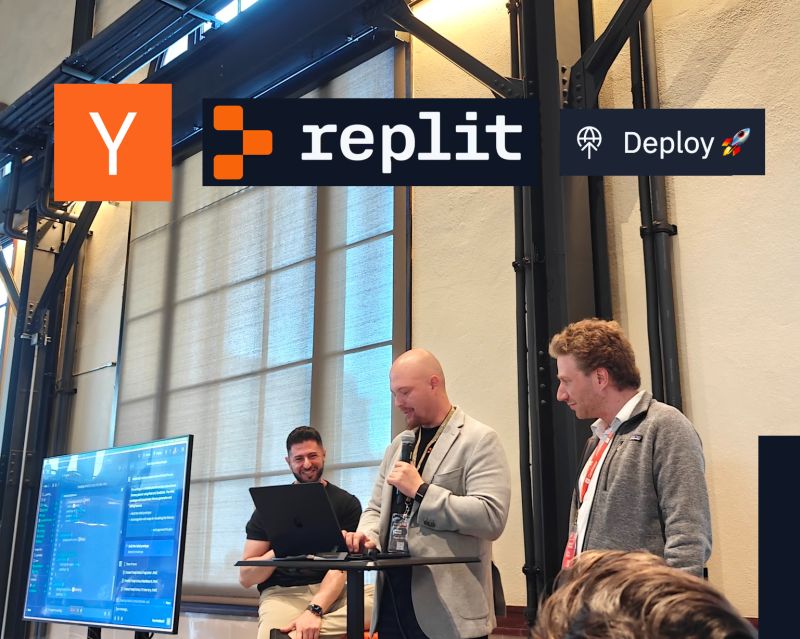
When a company's revenue jumps from $10 million to $100 million in nine months, you pay attention. When that growth comes from an AI agent that builds entire applications autonomously, you realize something fundamental just changed in software development. Replit Agent represents that change, and the numbers prove developers are ready for it. Replit started as a browser-based coding environment for education. Students could write Python or JavaScript without installing anything locally. Teachers loved it because setup time vanished. But the company saw something bigger. If you could run code in the browser, why not let AI write that code? That question led to Agent 3, an AI that doesn't just suggest code completions. It builds entire applications from scratch.
The Explore Mode unlimited generations thing is genuinely underrated. Not having to agonize over every credit means you actually experiment freely instead of second-guessing every prompt.
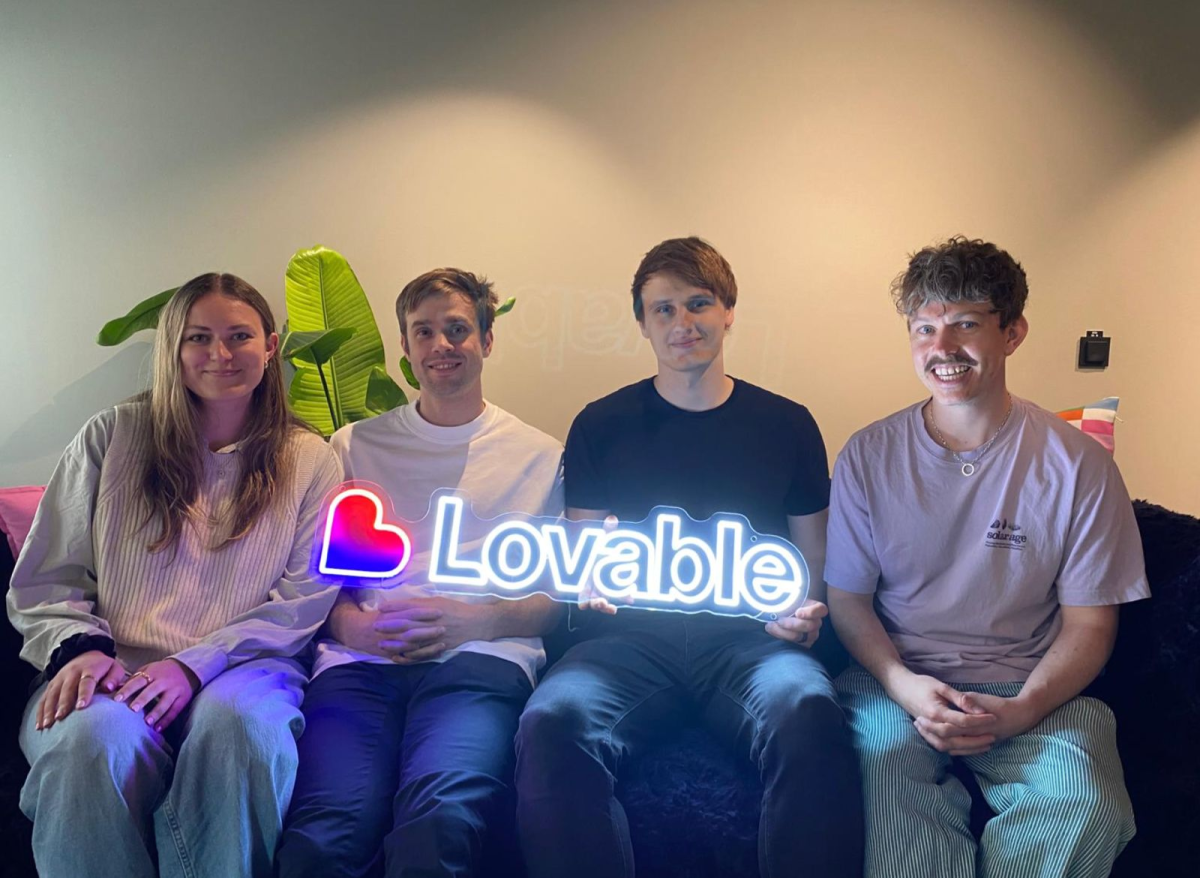
The software development world just witnessed something unprecedented. A European startup called Lovable reached $20 million in annual recurring revenue in just two months, making it potentially the fastest-growing startup in European history. But here's the twist that's making traditional software agencies nervous: they did it by giving non-technical founders the power to build full-stack applications without writing a single line of code. For years, the promise of no-code tools has been the same: anyone can build an app. But the reality has always been different. You'd create a beautiful frontend, get excited about your progress, and then hit the technical cliff. Suddenly you needed to configure databases, set up authentication, manage API keys, and deploy to servers. The "no-code" dream became a "hire-a-developer-anyway" nightmare.
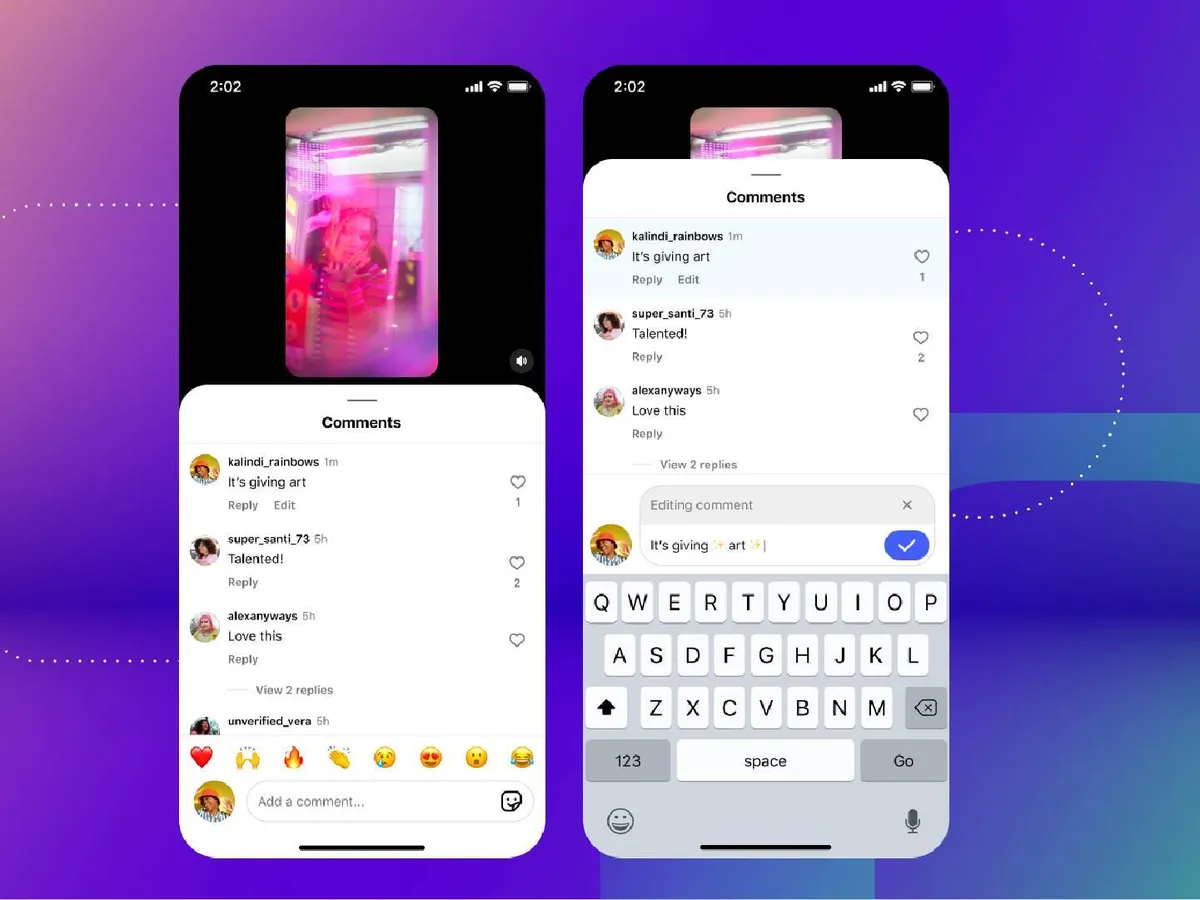
Instagram has rolled out a small but long overdue feature that users have been asking for years. You can now edit your comments after posting them. This simple change solves a very real frustration. Until now, fixing even the smallest typo meant deleting your comment and writing it all over again. That friction is finally gone. But there is a boundary. You get a 15 minute window after posting to make edits. Within that time, you can update your comment as many times as you want. There is also a layer of transparency built in. Once a comment is edited, others will be able to see that it has been modified. However, unlike platforms such as iMessage, Instagram does not show the edit history. What was originally written stays hidden.
Not gonna lie, the subscription tier sprawl from OpenAI is getting exhausting. Free, Go, Plus, $100 Pro, $200 Pro. Just tell me what I get and what it costs without needing a comparison spreadsheet.
Meta has just had one of its most important AI moments yet and the early signals are hard to ignore. Following the launch of its newest AI model Muse Spark, the company’s standalone Meta AI app surged dramatically in popularity, hinting at a much larger shift that is beginning to take shape. The release is particularly significant because it marks the first major AI model rollout under Alexandr Wang, who joined Meta to reboot its AI strategy. This is not just another incremental update. It represents a more aggressive and focused push into the AI race. According to data from Appfigures, Meta AI jumped from number 57 to number 5 on the U.S. App Store within a day of the launch. That kind of movement rarely happens without a strong underlying pull from users. It signals not curiosity but intent.
The artificial intelligence industry is entering a new phase of competition, one that extends far beyond the development of advanced language models and neural networks. Companies are now engaged in an intense struggle to secure the computational infrastructure necessary to train and deploy their AI systems. In this context, Anthropic has reportedly begun exploring the possibility of designing and manufacturing its own specialized processors to power Claude, its flagship conversational AI platform, along with its broader suite of artificial intelligence technologies. This strategic consideration emerges at a critical moment in the global AI sector. The exponential growth in model complexity and capability has created unprecedented demand for high-performance computing resources. Sources familiar with the matter indicate that Anthropic is conducting feasibility studies to determine whether developing proprietary semiconductor technology could reduce its dependence on external hardware vendors while ensuring reliable access to the computing power required for its operations.

You could definitely dress this up or down. I'd even wear it to work with a cardigan
I switched out similar slip ons for platform sneakers and it gave the whole look a different edge. Love how versatile each piece is.