
Feels like diet culture with better PR to me. Now instead of counting calories I have to stress about whether I ate my oats at the approved morning hour.
12
Sign up to see more
SignupAlready a member?
LoginBy continuing, you agree to Sociomix's Terms of Service, Privacy Policy

Feels like diet culture with better PR to me. Now instead of counting calories I have to stress about whether I ate my oats at the approved morning hour.
The article mentions that the series does not require knowledge of previous Kim works, and I want to confirm that as someone who started blind. The storytelling is self-sufficient. However, knowing Bastard made certain visual choices in chapter 4 land with extra weight.
The bones pun potential in the community for this series is completely untapped. That is a missed opportunity.
As someone who reads a lot of murim manhwa, the challenge facing Gosu is real. The cultural context around sect hierarchies and cultivation systems is something anime-only viewers are going to need help with.
The article describes Omniscient Reader as regression-adjacent, which is technically accurate, but Kim Dokja carrying the knowledge of how the story ends while actively choosing to interfere functions exactly like regression memory on an emotional level.
The article describing Season of Blossom as relatively untested territory for romance manhwa anime is interesting because True Beauty Season 2 is also coming this year and it seems like the obvious precedent.
Tried to make a video for a product launch last month and hit the rendering queue at peak hours. For solo creators that is fine. For agencies with client deadlines it is a real operational risk that the article does not mention.
Counterpoint: supervising an AI agent well actually requires significant expertise. If you do not know enough to review what it built, you are shipping things you do not understand. That is a risk most people are not taking seriously enough.
In a manhwa landscape dominated by dungeon crawling, regression narratives, and power fantasies, The Greatest Estate Developer stands out by asking a simple question: what if the protagonist's greatest weapon wasn't a sword or magic system, but civil engineering knowledge? This bizarre premise transforms into one of the most entertaining, genuinely funny, and surprisingly heartfelt series currently running, proving that innovation in storytelling comes from unexpected places. The series takes the familiar isekai setup where a modern person finds themselves in a fantasy world and completely subverts expectations. Instead of becoming an adventurer or hero, protagonist Kim Suho uses his engineering knowledge to revolutionize construction, infrastructure, and economic development. What sounds like it should be boring becomes absolutely captivating through sharp writing, excellent comedic timing, and genuine passion for showing how infrastructure improves lives.

In a medium filled with talented artists producing stunning work, making a claim about any series having the "best" art feels bold. Yet Nano Machine consistently delivers combat sequences so fluid, detailed, and visually innovative that even readers who don't typically care about martial arts stories find themselves captivated by the sheer spectacle on display. The series combines traditional murim aesthetics with futuristic sci-fi elements, creating a unique visual identity that stands apart from typical cultivation manhwa. The nano machine implanted in protagonist Cheon Yeo-Woon's body doesn't just give him power. It becomes a storytelling device that allows the artist to visualize techniques, energy flows, and combat analysis in ways other series can't replicate.

The software development world just witnessed something unprecedented. A European startup called Lovable reached $20 million in annual recurring revenue in just two months, making it potentially the fastest-growing startup in European history. But here's the twist that's making traditional software agencies nervous: they did it by giving non-technical founders the power to build full-stack applications without writing a single line of code. For years, the promise of no-code tools has been the same: anyone can build an app. But the reality has always been different. You'd create a beautiful frontend, get excited about your progress, and then hit the technical cliff. Suddenly you needed to configure databases, set up authentication, manage API keys, and deploy to servers. The "no-code" dream became a "hire-a-developer-anyway" nightmare.
While Synthesia leads in revenue, HeyGen leads in customer acquisition momentum with 152% year-over-year growth in mid-market adoption. That explosive growth rate allowed HeyGen to close much of the customer count gap by late 2025. The company is winning by making avatar video accessible to smaller teams and individual creators who cannot afford enterprise contracts but need professional video capabilities. HeyGen positioned itself for small and medium businesses, marketing teams, content creators, and solo entrepreneurs rather than enterprise learning and development departments. This market segment values affordability, ease of use, and creative flexibility over governance features and advanced integrations. Average contract values are roughly one-third of Synthesia's, reflecting this different customer profile.

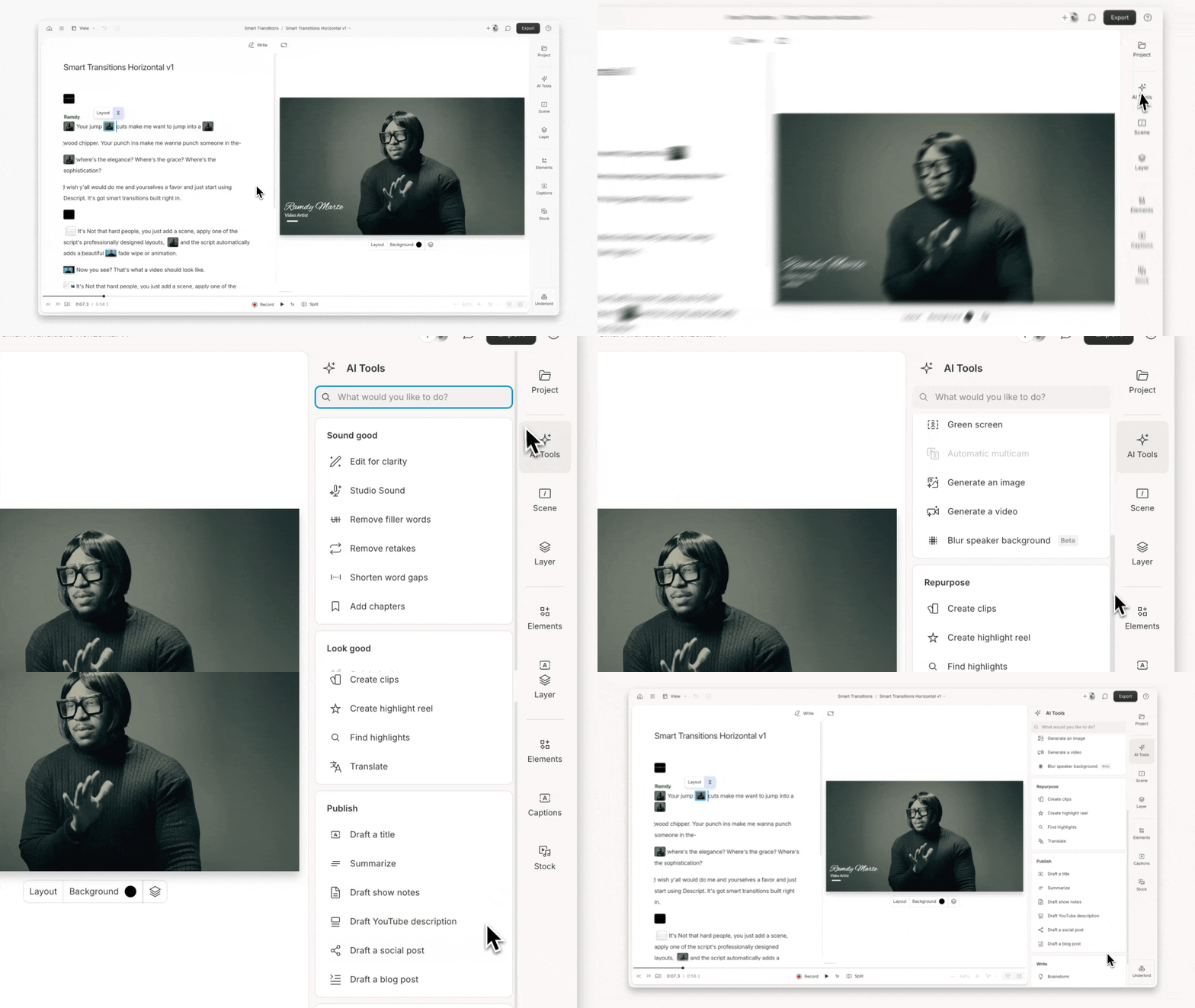
Most people can edit a Google Doc. Delete some words, rearrange sentences, fix typos, add paragraphs. It's intuitive and requires no special training. Now imagine editing video the same way. That's Descript's core innovation, and it transformed video editing from a specialized skill requiring expensive software into something anyone who can edit text can do effectively. Descript started as a transcription tool for podcasters. Record your podcast, upload it to Descript, and get an accurate transcript for show notes. But the founders realized something bigger. If you have a perfect transcript synchronized to audio, you can edit the audio by editing the text. Delete a word from the transcript and that word disappears from the audio. That insight became the foundation for a complete editing platform.
The five-tier structure kind of works if you think about it. Go for light use, Plus for daily professional use, the new $100 for heavy daily coding, and $200 for teams who need priority everything. The positioning logic is there.
The bit about evolving into visible revision logs like collaborative tools is the future I actually want. Comment threads on big posts become almost like documents. Seeing the history of how a conversation changed would be fascinating and would hold people accountable.
The WhatsApp comparison is interesting since WhatsApp also does not show version history on edited messages. It seems like Meta has a consistent internal policy across its apps to show the edited label but hide original content.
Those leggings would also work great with an oversized knit sweater for fall
My concern is keeping those white sneakers clean during summer adventures. Any tips?