anyone else find it kind of wild that governments are literally adding brain capital metrics to economic dashboards now. that's a huge deal that barely got covered.
1
Sign up to see more
SignupAlready a member?
LoginBy continuing, you agree to Sociomix's Terms of Service, Privacy Policy

anyone else find it kind of wild that governments are literally adding brain capital metrics to economic dashboards now. that's a huge deal that barely got covered.
Sports anime and manga have delivered countless memorable series over the decades, from Slam Dunk's basketball brilliance to Haikyuu's volleyball excellence. These stories typically follow familiar patterns: talented but inexperienced protagonist joins a team, forms bonds with teammates, faces rivals, grows through competition, and ultimately pursues championship glory. The formula works because it taps into universal themes about effort, teamwork, and self-improvement. The Boxer, created by JH, takes everything you expect from sports stories and systematically deconstructs it. The protagonist doesn't love boxing. He doesn't form deep bonds with teammates. He doesn't overcome challenges through friendship and determination. Instead, the manhwa presents one of the darkest, most psychologically complex examinations of combat sports ever created, wrapped in stunningly minimalist artwork that elevates the narrative to something approaching high art.

Still cannot believe this series does not have an anime adaptation confirmed yet. The fight choreography is so clearly animated already in your head when you read it.
The article describing the system genre as feeling like playing your favorite RPG is accurate but it's actually better because you don't have to grind yourself. You get all the dopamine of watching someone else grind and none of the repetitive gameplay.
The regression subgenre has exploded in popularity over the past few years, becoming one of the most beloved narrative frameworks in Korean manhwa. The core premise is deceptively simple: a protagonist dies or fails catastrophically, then returns to an earlier point in time with their memories intact. Armed with future knowledge, they get a second chance to change their fate, save loved ones, gain power, or pursue revenge against those who wronged them. What makes regression stories so compelling is the combination of dramatic irony, strategic satisfaction, and emotional depth they provide. Readers know what the protagonist knows, creating tension when other characters make mistakes we can see coming. We feel smart alongside protagonists who use foreknowledge to outmaneuver enemies. And we experience the emotional weight of carrying memories of futures that haven't happened yet, of people who died who are currently alive, of betrayals that haven't occurred.

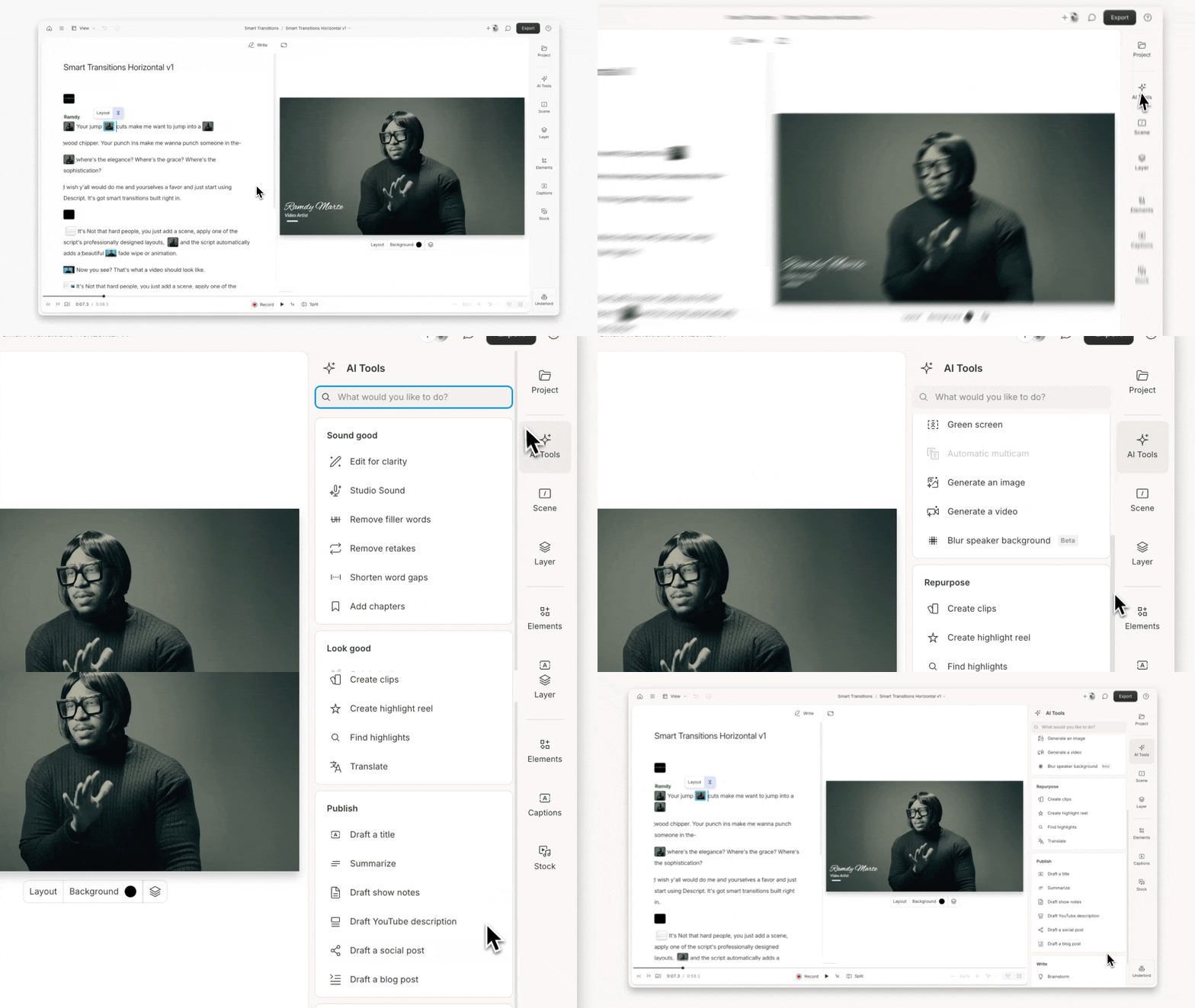
Most people can edit a Google Doc. Delete some words, rearrange sentences, fix typos, add paragraphs. It's intuitive and requires no special training. Now imagine editing video the same way. That's Descript's core innovation, and it transformed video editing from a specialized skill requiring expensive software into something anyone who can edit text can do effectively. Descript started as a transcription tool for podcasters. Record your podcast, upload it to Descript, and get an accurate transcript for show notes. But the founders realized something bigger. If you have a perfect transcript synchronized to audio, you can edit the audio by editing the text. Delete a word from the transcript and that word disappears from the audio. That insight became the foundation for a complete editing platform.
Can someone explain how the security actually works at scale though? Row-level security through Supabase sounds fine for an MVP but what about a production app with 50,000 users and sensitive data?
When a company raises $200 million in Series E funding during January 2026, investors are betting on more than potential. They're backing proven market demand and sustainable growth. Synthesia's funding round came alongside a 44% year-over-year increase in headcount to 706 employees, signaling aggressive expansion in a category the company essentially created: AI avatar-based video generation for enterprise training and communications. Corporate training videos have been expensive and slow to produce for decades. Recording a single 10-minute training module traditionally required booking a studio, hiring a presenter, scheduling a videographer, managing multiple takes, and editing everything together. If you needed to update information or translate content, you essentially started over. Synthesia eliminated this entire production workflow by replacing human presenters with AI avatars.

The article mentioned that 4% of all public GitHub commits are now authored by Claude Code with projections of 20% by year end. If that 20% projection is accurate, the implications for junior developer hiring are going to be severe.
The part about persistent inflation complicating Federal Reserve policy is buried too deep in this article. A 0.4% core PCE reading is not a small number and it deserves more weight than a brief mention at the end.
The IMF director saying the world cannot protect the international monetary system against massive cyber risks is not the kind of statement you expect in a tech product announcement news cycle. Wild week.
Anthropic on Tuesday unveiled an advanced artificial intelligence model designed specifically to identify software vulnerabilities, marking a significant development in the intersection of AI and cybersecurity. The model, named Claude Mythos Preview, will be available exclusively to a carefully selected group of companies as part of Project Glasswing, a new security initiative that aims to strengthen digital defenses while preventing malicious exploitation. The San Francisco based AI company has chosen to severely restrict access to Claude Mythos Preview due to its powerful capability to detect security weaknesses and software flaws. This decision reflects growing concerns about dual use AI technologies that could be weaponized by adversaries if they fell into the wrong hands.

Anyone tried this dress with a straw hat? I feel like it would be perfect for a picnic!