
The decision to present the Pepsi burn as a triumph of willpower rather than the beginning of a serious addiction is exactly the kind of choice that makes this film feel like PR rather than art.
17
Sign up to see more
SignupAlready a member?
LoginBy continuing, you agree to Sociomix's Terms of Service, Privacy Policy

The decision to present the Pepsi burn as a triumph of willpower rather than the beginning of a serious addiction is exactly the kind of choice that makes this film feel like PR rather than art.
My brother switched from network admin to datacenter facilities two years ago and now manages power infrastructure for a major colo. He keeps telling me to follow him. After reading this, I think he is right.
The technology sector is experiencing a paradox. While headlines scream about mass layoffs at major tech companies, a critical shortage is quietly building in one of the most essential areas of digital infrastructure. Datacenters, the physical backbone of our digital world, are facing an unprecedented demand surge, and there simply are not enough skilled professionals to build and maintain them. Countries across the globe are rushing to establish their own datacenter infrastructure. From India's ambitious plans to become a datacenter hub to the European Union's push for data sovereignty, and emerging markets in Southeast Asia and Latin America building their first large scale facilities, the construction boom is just beginning.

The article glosses over the fact that the original novel has Arzen killing people including Elliot and treats him as a standard ice prince archetype to be melted. A character who murders the protagonist for a romantic deception is not just emotionally distant. That backstory deserves more scrutiny.
I started reading the manhwa last month after hearing about the anime and finished everything available in about two weeks. The Sleepy-C artwork is stunning and the emotional gut punches are real.
What is the etiquette when you send OtterPilot to a meeting with external clients who never agreed to be recorded? That feels like a relationship risk beyond just the legal one.
As someone who works in venture-backed startups, the product validation workflow described here is exactly what we do now. Founders are expected to show traction before raising, and Bolt compresses the time to traction dramatically.
The article makes the ROI case almost entirely on cost reduction. That is the right argument for procurement but it is the wrong framing for learning strategy. We should be asking whether people are actually better at their jobs afterward.
84 percent of developers are using AI tools now. The debate is no longer whether to adopt but which tool fits which workflow. Pricing clarity is increasingly the tiebreaker.
The manhwa has over 1.6 billion cumulative views worldwide according to some reports. This is not a niche property hoping for an audience. The audience already exists and it is enormous.
The manhwa world exploded when Solo Leveling first introduced us to Sung Jinwoo's journey from the weakest hunter to humanity's strongest defender. Now, Solo Leveling Ragnarok brings a fresh perspective to this beloved universe, and fans everywhere are asking the same questions. Can the sequel live up to the original? Do you need to read Solo Leveling first? What makes this continuation worth your time? This guide covers everything you need to know about Solo Leveling Ragnarok, whether you're a longtime fan or someone curious about jumping into the series Solo Leveling Ragnarok is not a reboot or alternate timeline. This is a direct sequel that continues the story years after the original series concluded. The protagonist shifts from Sung Jinwoo to his son, Sung Suho, who must forge his own path in a world still recovering from the catastrophic events his father prevented.

The part about course creators translating content into languages they do not speak is the use case that stops me cold every time I think about it. That would have been science fiction five years ago.
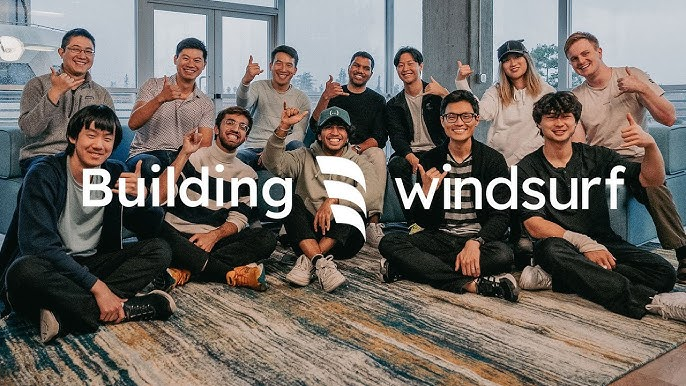
Developers have a new anxiety in 2026: token anxiety. You're in the middle of debugging a complex problem, the AI is helping you refactor three files simultaneously, and suddenly you wonder if this session is about to cost you $50. That mental tax slows you down and makes you second-guess using the tool you're paying for. Windsurf eliminated that anxiety with a simple decision: flat monthly pricing with no token limits. Fifteen dollars per month. Unlimited usage. No tracking credits or calculating costs per query. That pricing model sounds almost boring compared to the complex token systems other AI coding tools use, but boring is exactly what professional developers want when it comes to pricing. They want predictable costs and unlimited usage so they can focus on writing code instead of budgeting AI queries.
When a company's revenue jumps from $10 million to $100 million in nine months, you pay attention. When that growth comes from an AI agent that builds entire applications autonomously, you realize something fundamental just changed in software development. Replit Agent represents that change, and the numbers prove developers are ready for it. Replit started as a browser-based coding environment for education. Students could write Python or JavaScript without installing anything locally. Teachers loved it because setup time vanished. But the company saw something bigger. If you could run code in the browser, why not let AI write that code? That question led to Agent 3, an AI that doesn't just suggest code completions. It builds entire applications from scratch.
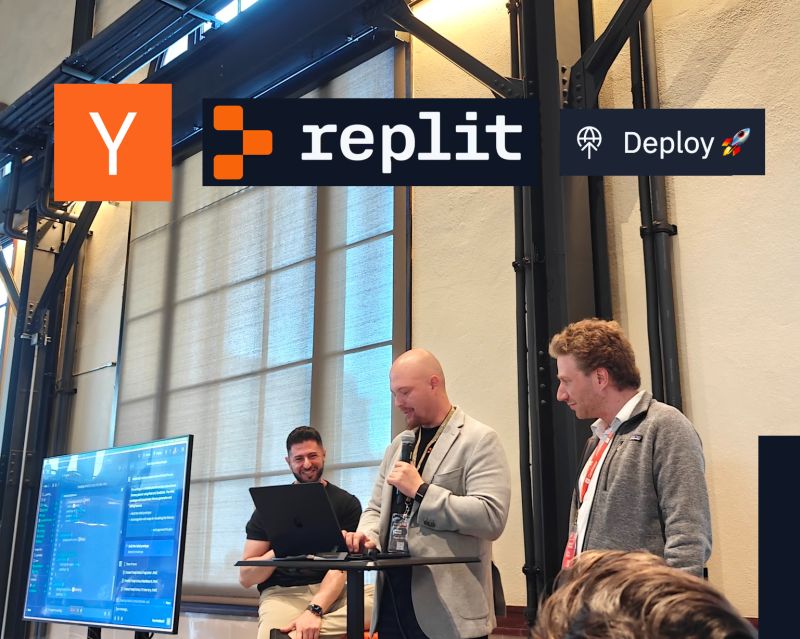
Forty million dollars in annual recurring revenue. Six months. One browser-based platform. Those numbers would be impressive for any software company, but for Bolt.new, they represent something more significant: the moment when development environments moved permanently into the cloud and never looked back. Traditional software development has always required setup. Install Node.js, configure your environment, manage dependencies, set up local servers, troubleshoot version conflicts. Before writing a single line of code, developers spend hours or even days preparing their machines. Junior developers often spend their first week just getting their environment working. Bolt.new eliminated all of that with WebContainers technology.
The designer-developer relationship has been tense for decades. Designers create pixel-perfect mockups in Figma. Developers translate them to code and somehow everything looks slightly wrong. Fonts don't match. Spacing is inconsistent. Buttons have different corner radiuses. Both sides get frustrated, blame each other, and the product suffers. V0 by Vercel is fixing this problem by generating production-quality React components that look exactly like the designs. The rebrand from v0.dev to v0.app in January 2026 signaled expanded ambitions beyond just UI component generation. Vercel positioned the tool for full-stack web development, though its core strength remains frontend excellence. That strategic clarity matters because trying to be everything often means excelling at nothing. V0 chose to dominate the handoff between design and code before expanding into other areas.

The AI video generation race just got a clear winner. Runway Gen-4.5 topped the Video Arena leaderboard with a 1,247 Elo score, surpassing both Google Veo 3 and OpenAI Sora 2. For those unfamiliar with Elo ratings, this is the same system used to rank chess players and competitive games. A higher score means more wins in head-to-head comparisons. When real users compare videos side by side without knowing which AI generated them, they consistently choose Runway's output. Runway didn't start as an enterprise video tool. It began as a playground for artists and filmmakers who wanted to experiment with AI-generated visuals. The early versions produced fascinating but inconsistent results. Sometimes you'd get stunning cinematic footage. Other times you'd get distorted motion and unrealistic physics. Gen-4.5 changed that equation by achieving breakthrough consistency in motion quality and physical accuracy.

The comparison between v0 and general-purpose AI coding tools is the key distinction the article gets right. Purpose-built training on frontend design patterns is what produces components that look like a human designer made deliberate choices, not a computer filling in defaults.
The comparison to WeChat as a super app is interesting but incomplete. WeChat's dominance came from geography and regulatory protection in a single market. Meta is trying to pull off a similar integration across dozens of markets with radically different regulatory environments. That is a fundamentally harder problem.
Wait, did anyone else catch that Meta is actually removing end-to-end encryption from Instagram DMs too? So TikTok gets all the heat while Meta quietly does the same thing and gets a pass?