
Skeptical of the job security argument, honestly. They said the same thing about semiconductor fabs and financial trading floors. Every industry eventually automates the parts it can and shrinks the parts it cannot.
24
Sign up to see more
SignupAlready a member?
LoginBy continuing, you agree to Sociomix's Terms of Service, Privacy Policy

Skeptical of the job security argument, honestly. They said the same thing about semiconductor fabs and financial trading floors. Every industry eventually automates the parts it can and shrinks the parts it cannot.
The Frontera family dynamics are what surprised me most. The parents reacting to their suddenly competent and strange son provides so much quiet emotional material.
The article talks about how Jooheon wins through intelligence and preparation as much as raw strength. That is genuinely what makes rereads of early chapters so rewarding. You see the setup for plans that pay off much later.
read the whole thing in like two days and genuinely didn't know what to do with myself after. felt weirdly hollowed out in the best possible way.
The article's title says this will change how you see sports manhwa and honestly it is more accurate to say it changes how you see sports stories in any medium. The questions it asks apply everywhere.
The social mobility point the article makes about male characters in historical fantasy settings is accurate but I want to add that Elliot specifically being a minor villain rather than a protagonist or love interest complicates that mobility significantly. He has male privilege in the setting but no narrative privilege.
Tomb Raider King has Fuji TV and Kansai TV carrying the Japanese broadcast in July 2026. That level of traditional TV distribution alongside streaming is a signal that the project has serious commercial backing.
Basically without major spoilers, the Itarim are entities from other universes who see Earth as unclaimed territory now that the system's original purpose is over. Their power level makes the original gate monsters look like warm-up enemies.
Debugging AI-generated code is genuinely harder than debugging code you wrote yourself. You did not make the decisions, so you do not have the mental model for why the component is structured the way it is. That is a real cost the article does not mention.
Anyone who has ever sat in a meeting where a developer and a designer are literally arguing about whether a border radius is 4px or 6px will understand exactly why this article exists.
In a manhwa landscape dominated by dungeon crawling, regression narratives, and power fantasies, The Greatest Estate Developer stands out by asking a simple question: what if the protagonist's greatest weapon wasn't a sword or magic system, but civil engineering knowledge? This bizarre premise transforms into one of the most entertaining, genuinely funny, and surprisingly heartfelt series currently running, proving that innovation in storytelling comes from unexpected places. The series takes the familiar isekai setup where a modern person finds themselves in a fantasy world and completely subverts expectations. Instead of becoming an adventurer or hero, protagonist Kim Suho uses his engineering knowledge to revolutionize construction, infrastructure, and economic development. What sounds like it should be boring becomes absolutely captivating through sharp writing, excellent comedic timing, and genuine passion for showing how infrastructure improves lives.

Read the first thirty chapters last week for the first time. The nano machine interface felt gimmicky at first then by chapter fifteen I realized I was using it to predict what Cheon Yeo-Woon was going to do before he did it. The art made me feel like I was also analyzing the fight.
The fact that a healthcare platform built by a non-technical founder hit a million euros in recurring revenue in five months is either the most inspiring thing I have read this month or a sign that we should all be slightly worried about healthcare software quality.
Forty million dollars in annual recurring revenue. Six months. One browser-based platform. Those numbers would be impressive for any software company, but for Bolt.new, they represent something more significant: the moment when development environments moved permanently into the cloud and never looked back. Traditional software development has always required setup. Install Node.js, configure your environment, manage dependencies, set up local servers, troubleshoot version conflicts. Before writing a single line of code, developers spend hours or even days preparing their machines. Junior developers often spend their first week just getting their environment working. Bolt.new eliminated all of that with WebContainers technology.
The designer-developer relationship has been tense for decades. Designers create pixel-perfect mockups in Figma. Developers translate them to code and somehow everything looks slightly wrong. Fonts don't match. Spacing is inconsistent. Buttons have different corner radiuses. Both sides get frustrated, blame each other, and the product suffers. V0 by Vercel is fixing this problem by generating production-quality React components that look exactly like the designs. The rebrand from v0.dev to v0.app in January 2026 signaled expanded ambitions beyond just UI component generation. Vercel positioned the tool for full-stack web development, though its core strength remains frontend excellence. That strategic clarity matters because trying to be everything often means excelling at nothing. V0 chose to dominate the handoff between design and code before expanding into other areas.

The supply chain risk designation from the Pentagon is huge and kind of undercuts the Project Glasswing story. You're launching a cybersecurity model with Apple and Microsoft and Amazon as partners but the US Department of Defense just called you a risk. Those two things happening at the same time are wild.
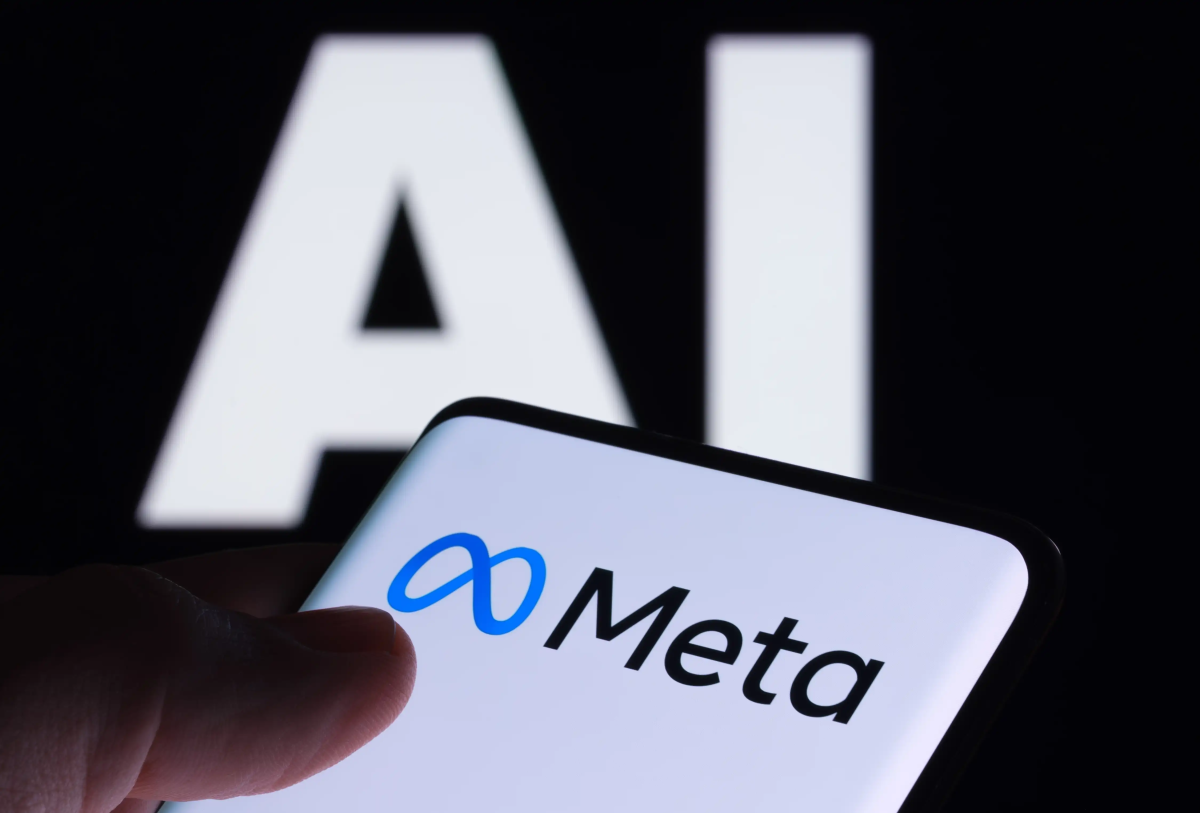
Meta has just had one of its most important AI moments yet and the early signals are hard to ignore. Following the launch of its newest AI model Muse Spark, the company’s standalone Meta AI app surged dramatically in popularity, hinting at a much larger shift that is beginning to take shape. The release is particularly significant because it marks the first major AI model rollout under Alexandr Wang, who joined Meta to reboot its AI strategy. This is not just another incremental update. It represents a more aggressive and focused push into the AI race. According to data from Appfigures, Meta AI jumped from number 57 to number 5 on the U.S. App Store within a day of the launch. That kind of movement rarely happens without a strong underlying pull from users. It signals not curiosity but intent.
Hot take, the people claiming this is all just a short squeeze with no real legs said the same thing at $40K, $50K, and $60K. At what point does the narrative update?
The artificial intelligence industry is entering a new phase of competition, one that extends far beyond the development of advanced language models and neural networks. Companies are now engaged in an intense struggle to secure the computational infrastructure necessary to train and deploy their AI systems. In this context, Anthropic has reportedly begun exploring the possibility of designing and manufacturing its own specialized processors to power Claude, its flagship conversational AI platform, along with its broader suite of artificial intelligence technologies. This strategic consideration emerges at a critical moment in the global AI sector. The exponential growth in model complexity and capability has created unprecedented demand for high-performance computing resources. Sources familiar with the matter indicate that Anthropic is conducting feasibility studies to determine whether developing proprietary semiconductor technology could reduce its dependence on external hardware vendors while ensuring reliable access to the computing power required for its operations.
Anthropic on Tuesday unveiled an advanced artificial intelligence model designed specifically to identify software vulnerabilities, marking a significant development in the intersection of AI and cybersecurity. The model, named Claude Mythos Preview, will be available exclusively to a carefully selected group of companies as part of Project Glasswing, a new security initiative that aims to strengthen digital defenses while preventing malicious exploitation. The San Francisco based AI company has chosen to severely restrict access to Claude Mythos Preview due to its powerful capability to detect security weaknesses and software flaws. This decision reflects growing concerns about dual use AI technologies that could be weaponized by adversaries if they fell into the wrong hands.