
This is literally what Barack Obama and others have talked about with wearing the same type of clothes every day. Cognitive load management is ancient wisdom with new branding.
12
Sign up to see more
SignupAlready a member?
LoginBy continuing, you agree to Sociomix's Terms of Service, Privacy Policy

This is literally what Barack Obama and others have talked about with wearing the same type of clothes every day. Cognitive load management is ancient wisdom with new branding.
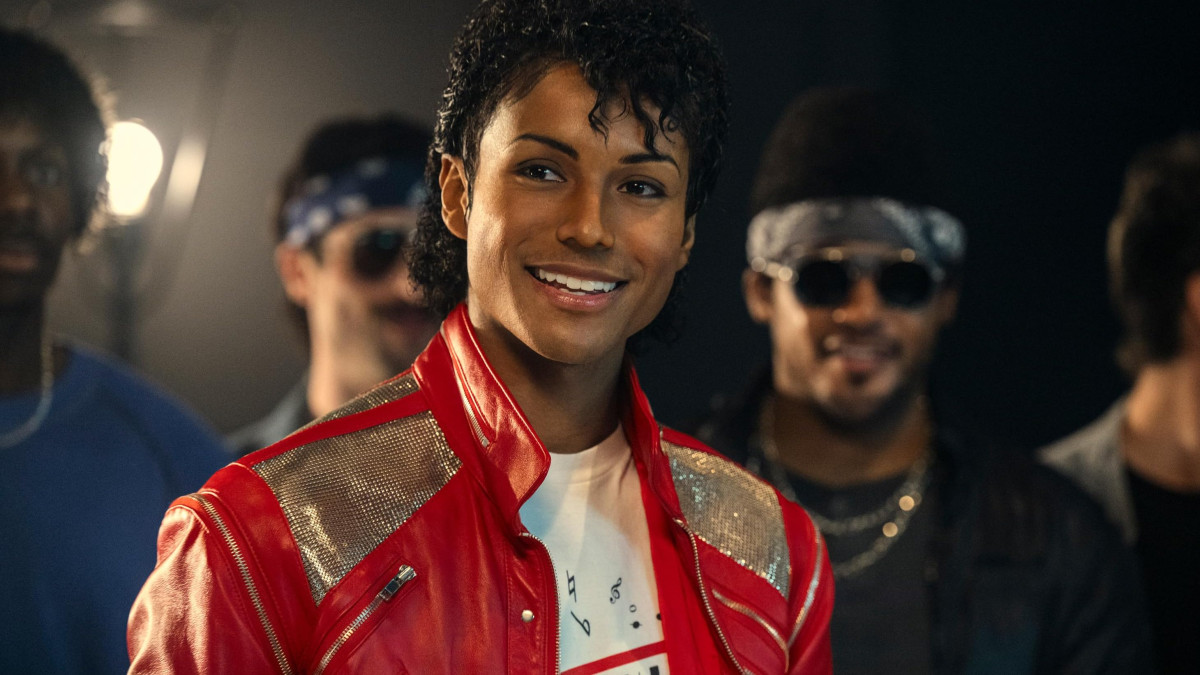
The Michael movie review verdict is in, and it is more complicated than the 26% Rotten Tomatoes score suggests. Antoine Fuqua's long-delayed Michael Jackson biopic, simply titled Michael, hit theaters this weekend with Jaafar Jackson playing his late uncle, and the critical response has been brutal. The BBC gave it one star. Roger Ebert's site called it a filmed playlist in search of a story. Yet early audience reactions on social media have been warmer, ticket pre-sales suggest an $80 million opening, and Variety thought it worked as an engrossing middle-of-the-road biopic. After tracking coverage across more than a dozen outlets over the past 48 hours, I think the honest answer to "should you watch this?" depends almost entirely on what you want from a music biopic, and this guide breaks down exactly what the film delivers, what it skips, and who will actually enjoy sitting through its two-hour-and-nine-minute runtime.
Already dreading the eventual Copycat adaptation discourse because no director is going to capture what Hwang does with the vertical scroll format and the way silence is deployed between panels.
Three years ago I was a network engineer at a mid-size company. Pivoted to datacenter infrastructure, took some certifications, and am now managing network build-outs for a new hyperscale campus. Best career decision I ever made.
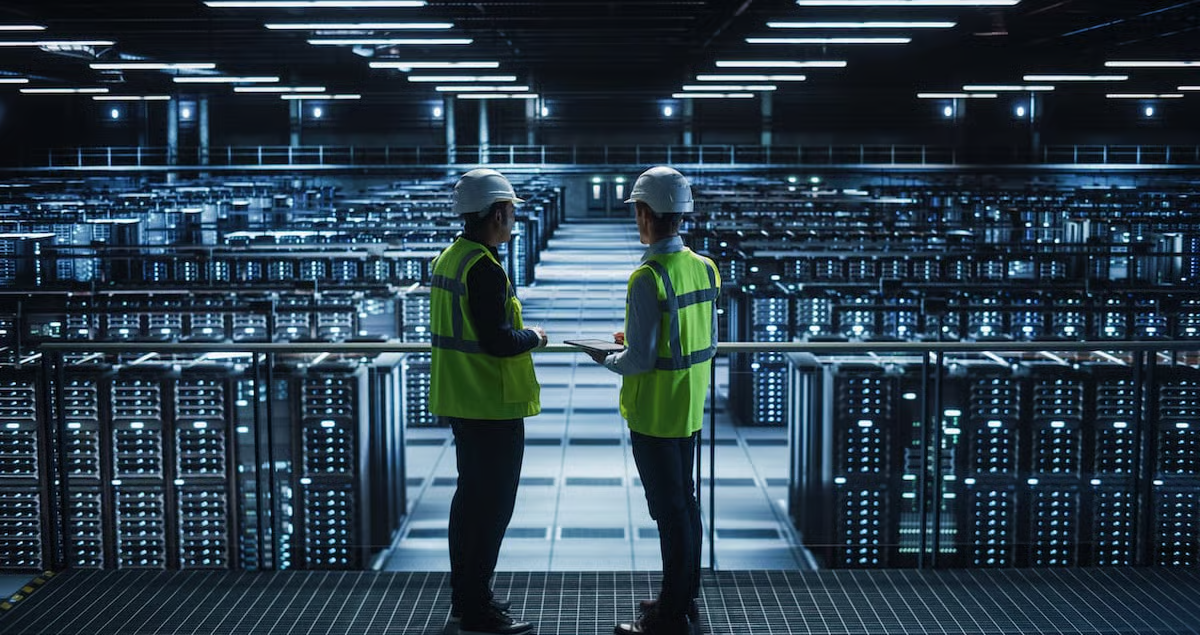
The technology sector is experiencing a paradox. While headlines scream about mass layoffs at major tech companies, a critical shortage is quietly building in one of the most essential areas of digital infrastructure. Datacenters, the physical backbone of our digital world, are facing an unprecedented demand surge, and there simply are not enough skilled professionals to build and maintain them. Countries across the globe are rushing to establish their own datacenter infrastructure. From India's ambitious plans to become a datacenter hub to the European Union's push for data sovereignty, and emerging markets in Southeast Asia and Latin America building their first large scale facilities, the construction boom is just beginning.
The bones pun potential in the community for this series is completely untapped. That is a missed opportunity.
Everyone in these comments is sleeping on how important the art quality difference is for beginners. Solo Leveling is the right starting point partly because the art alone communicates the power fantasy better than most series explain it in text.
Genuine question, for readers who finished the full web novel, how do you feel about the manhwa being the adaptation source? Are the differences significant enough to matter?
Speaking from experience as someone who teaches economics at a secondary level, the way this series illustrates cost-benefit thinking and return on investment is more intuitive than half the textbooks I use. It's remarkable.
The cat is not a joke by the way. It is established early and keeps having consequences. It is doing legitimate narrative work while also being extremely funny. That balance is a skill.
The part about fonts not matching and spacing being inconsistent in developer-translated designs is painfully specific. Every designer I have ever worked with has that exact complaint. Nice to see someone actually name it.
The multi-IDE plugin support is what got me. My team has three people on JetBrains and two on VS Code and we can all use the same tool without anyone compromising their setup.
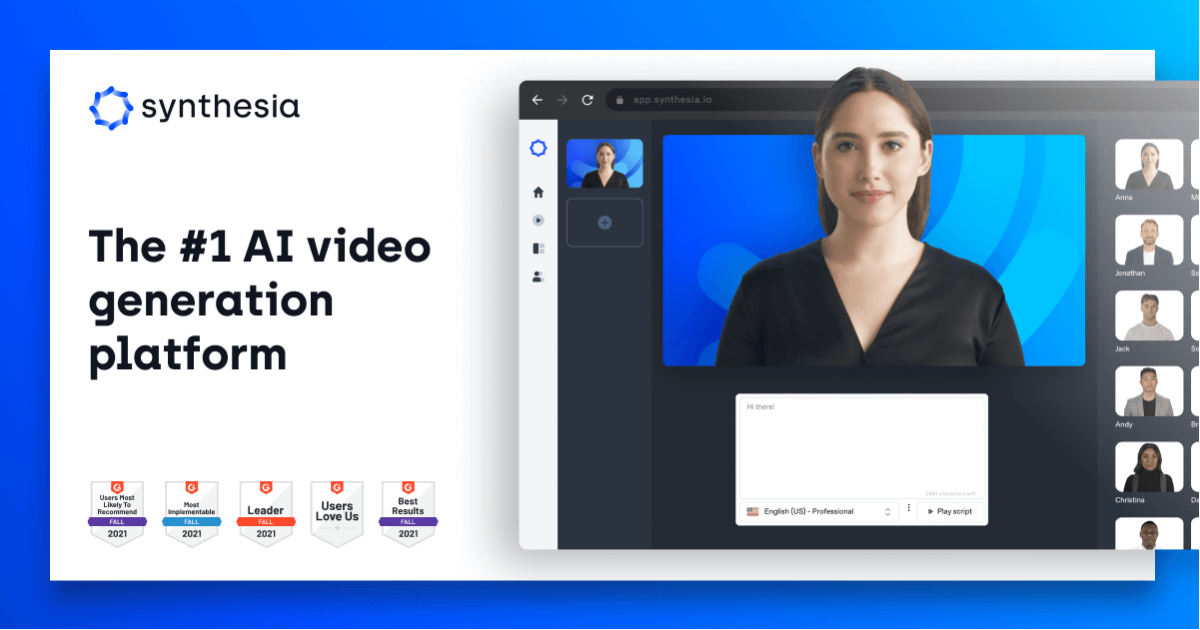
When a company raises $200 million in Series E funding during January 2026, investors are betting on more than potential. They're backing proven market demand and sustainable growth. Synthesia's funding round came alongside a 44% year-over-year increase in headcount to 706 employees, signaling aggressive expansion in a category the company essentially created: AI avatar-based video generation for enterprise training and communications. Corporate training videos have been expensive and slow to produce for decades. Recording a single 10-minute training module traditionally required booking a studio, hiring a presenter, scheduling a videographer, managing multiple takes, and editing everything together. If you needed to update information or translate content, you essentially started over. Synthesia eliminated this entire production workflow by replacing human presenters with AI avatars.
On the model quality question, the benchmarks are all over the place and both companies commission their own evals. What I trust is production usage data. At my company we run A-B tests on complex tasks monthly. Claude wins on multi-step reasoning and long context consistently. Codex wins on raw code generation speed.
The designer-developer relationship has been tense for decades. Designers create pixel-perfect mockups in Figma. Developers translate them to code and somehow everything looks slightly wrong. Fonts don't match. Spacing is inconsistent. Buttons have different corner radiuses. Both sides get frustrated, blame each other, and the product suffers. V0 by Vercel is fixing this problem by generating production-quality React components that look exactly like the designs. The rebrand from v0.dev to v0.app in January 2026 signaled expanded ambitions beyond just UI component generation. Vercel positioned the tool for full-stack web development, though its core strength remains frontend excellence. That strategic clarity matters because trying to be everything often means excelling at nothing. V0 chose to dominate the handoff between design and code before expanding into other areas.
Not gonna lie, the code-name being Avocado is doing a lot of work to make me like this company more than I probably should.
The global cryptocurrency market capitalization has climbed back above the $2.5 trillion threshold, fueled by a massive liquidation of short positions and renewed institutional interest. Geopolitical developments and shifting investor sentiment combined to create a powerful rally that caught bearish traders off guard, resulting in substantial losses for those betting against the market. According to data from CoinGecko, the total market capitalization of all cryptocurrencies combined increased 1.4% to reach $2.52 trillion on Friday, April 10. Bitcoin experienced a notable surge of over 3%, briefly touching the $73,000 mark before consolidating around $72,000 at the time of writing. Ethereum demonstrated equally impressive strength, pushing past the $2,200 level, while the majority of top 10 cryptocurrencies by market capitalization also posted significant gains.
Institutional money is patient. They were buying the dip during two consecutive days of outflows and now the market is validating that positioning. That is a completely different dynamic from 2021 retail mania.
The artificial intelligence industry is entering a new phase of competition, one that extends far beyond the development of advanced language models and neural networks. Companies are now engaged in an intense struggle to secure the computational infrastructure necessary to train and deploy their AI systems. In this context, Anthropic has reportedly begun exploring the possibility of designing and manufacturing its own specialized processors to power Claude, its flagship conversational AI platform, along with its broader suite of artificial intelligence technologies. This strategic consideration emerges at a critical moment in the global AI sector. The exponential growth in model complexity and capability has created unprecedented demand for high-performance computing resources. Sources familiar with the matter indicate that Anthropic is conducting feasibility studies to determine whether developing proprietary semiconductor technology could reduce its dependence on external hardware vendors while ensuring reliable access to the computing power required for its operations.

The glasswing butterfly metaphor works in one more uncomfortable way. Glasswing butterflies survive by being transparent, hiding in plain sight. Whether that describes Anthropic's safety strategy or exposes its limits is a fair question.