This is honestly the first nutrition framework that has felt sustainable to me after years of trying everything. Calorie counting made me anxious at restaurants and this just does not do that.
21
Sign up to see more
SignupAlready a member?
LoginBy continuing, you agree to Sociomix's Terms of Service, Privacy Policy
This is honestly the first nutrition framework that has felt sustainable to me after years of trying everything. Calorie counting made me anxious at restaurants and this just does not do that.
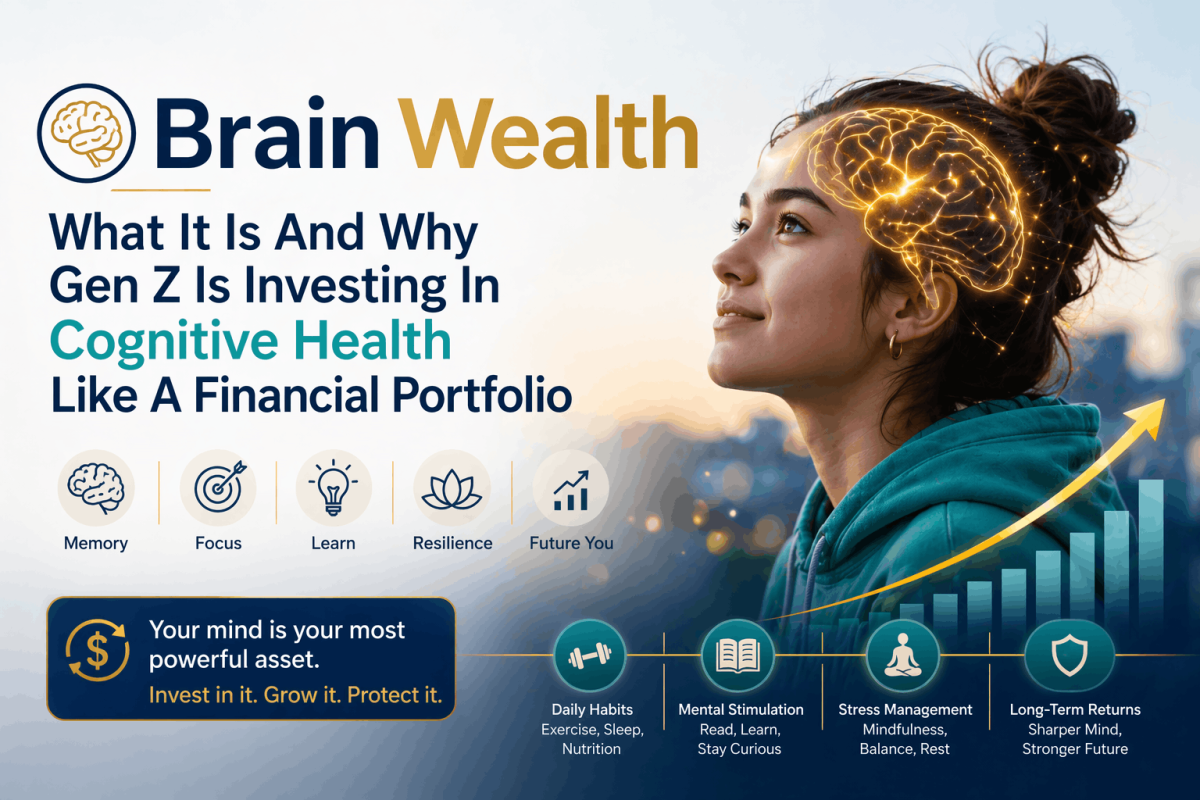
Brain wealth is the lifestyle concept redefining how an entire generation thinks about mental health in 2026, and if you have been treating your cognitive fitness as something to address only when something goes wrong, the shift happening right now will feel either overdue or quietly alarming depending on where you stand. The idea is straightforward but the implications are significant: your cognitive capacity, your ability to focus, adapt, learn, regulate your emotions, and think clearly under pressure, is not a fixed trait you are born with. It is a long-term asset you can actively invest in, protect, and grow.
Bio-harmony eating is the nutrition trend reshaping how people think about food in 2026, and if you have been feeling like calorie counting is making you miserable without actually delivering results, the science behind it will likely resonate immediately. The concept is straightforward - instead of obsessively tracking numbers on a label, you align what you eat, when you eat it, and how much with your body's internal biological clock, your metabolic rhythms, and your gut's own needs. After spending several months testing this approach, shifting my own meals earlier in the day and rebuilding my eating window around natural light cycles, the difference in energy levels and digestion alone was enough to keep me from ever going back to a calorie app. This guide covers what bio-harmony eating actually is, the real science behind it, what a typical day looks like in practice, and who is most likely to benefit.

The article's framing of streaming platforms as accelerators for manhwa anime is correct but undersells how much the Korean government's cultural export strategy has contributed. KOCCA funding and support is behind several of these projects.
The article's point about second chances resonating universally is why this genre crosses cultural and language barriers so effectively. The wish fulfillment is not about power, it is about the universal desire to do better with what you know now.
Genuinely asking, does anyone know if the anime is going to adapt from the original web novel or the manhwa? There are some differences between the two versions, especially around character motivations.
Tower climbing stories have become a dominant force in manhwa, but most follow predictable patterns. A protagonist enters a mysterious tower, gains powers, forms a party, and ascends floors while growing stronger. The formula works because progression feels satisfying and each floor presents new challenges. However, Doom Breaker takes this familiar framework and transforms it into something far more emotionally devastating and psychologically complex than typical tower stories. Also known as SSS-Class Suicide Hunter, Doom Breaker initially appears to be another power fantasy where the protagonist gains an overpowered ability. The premise sounds almost comedic. Kim Gongja can copy any skill by dying, then returns to life to use that ability. But beneath this seemingly absurd power lies a story about pain, sacrifice, redemption, and what it truly means to be a hero when heroism demands everything from you.

My concern is not the tool quality. It is what happens when an entire generation of junior developers never learns to build UI from scratch. Some amount of foundational struggle produces better engineers.
Genuinely curious question: does the video extension feature maintain the same visual coherence as the original clip, or does quality drift noticeably when you start extending past 20 seconds?
In a manhwa landscape dominated by dungeon crawling, regression narratives, and power fantasies, The Greatest Estate Developer stands out by asking a simple question: what if the protagonist's greatest weapon wasn't a sword or magic system, but civil engineering knowledge? This bizarre premise transforms into one of the most entertaining, genuinely funny, and surprisingly heartfelt series currently running, proving that innovation in storytelling comes from unexpected places. The series takes the familiar isekai setup where a modern person finds themselves in a fantasy world and completely subverts expectations. Instead of becoming an adventurer or hero, protagonist Kim Suho uses his engineering knowledge to revolutionize construction, infrastructure, and economic development. What sounds like it should be boring becomes absolutely captivating through sharp writing, excellent comedic timing, and genuine passion for showing how infrastructure improves lives.

The designer-developer relationship has been tense for decades. Designers create pixel-perfect mockups in Figma. Developers translate them to code and somehow everything looks slightly wrong. Fonts don't match. Spacing is inconsistent. Buttons have different corner radiuses. Both sides get frustrated, blame each other, and the product suffers. V0 by Vercel is fixing this problem by generating production-quality React components that look exactly like the designs. The rebrand from v0.dev to v0.app in January 2026 signaled expanded ambitions beyond just UI component generation. Vercel positioned the tool for full-stack web development, though its core strength remains frontend excellence. That strategic clarity matters because trying to be everything often means excelling at nothing. V0 chose to dominate the handoff between design and code before expanding into other areas.
That is the part that keeps me up at night. Thousands of high severity zero-days sitting in every major OS and browser, and the clock is ticking before someone else independently finds them.
Real talk, $343 million in spot ETF inflows in a single day after two days of outflows is not a blip. Institutional money is watching every dip and deploying on weakness.
The coding gap is a real limitation that the article glossed over. Muse Spark trailing the leaders on coding workflows is significant because developers are both the most influential early adopters and the people most likely to build on your platform. Losing that audience to OpenAI or Anthropic has downstream consequences.
The artificial intelligence industry is entering a new phase of competition, one that extends far beyond the development of advanced language models and neural networks. Companies are now engaged in an intense struggle to secure the computational infrastructure necessary to train and deploy their AI systems. In this context, Anthropic has reportedly begun exploring the possibility of designing and manufacturing its own specialized processors to power Claude, its flagship conversational AI platform, along with its broader suite of artificial intelligence technologies. This strategic consideration emerges at a critical moment in the global AI sector. The exponential growth in model complexity and capability has created unprecedented demand for high-performance computing resources. Sources familiar with the matter indicate that Anthropic is conducting feasibility studies to determine whether developing proprietary semiconductor technology could reduce its dependence on external hardware vendors while ensuring reliable access to the computing power required for its operations.
I paired mine with gold hoop earrings instead of the sunglasses for an evening look and it worked perfectly
Such a refreshing take on office wear! Sick of seeing the same old black pants and white shirts