Christmas Eve Eve Proves We'll Turn Anything Into Tradition If It Makes Us Feel Connected
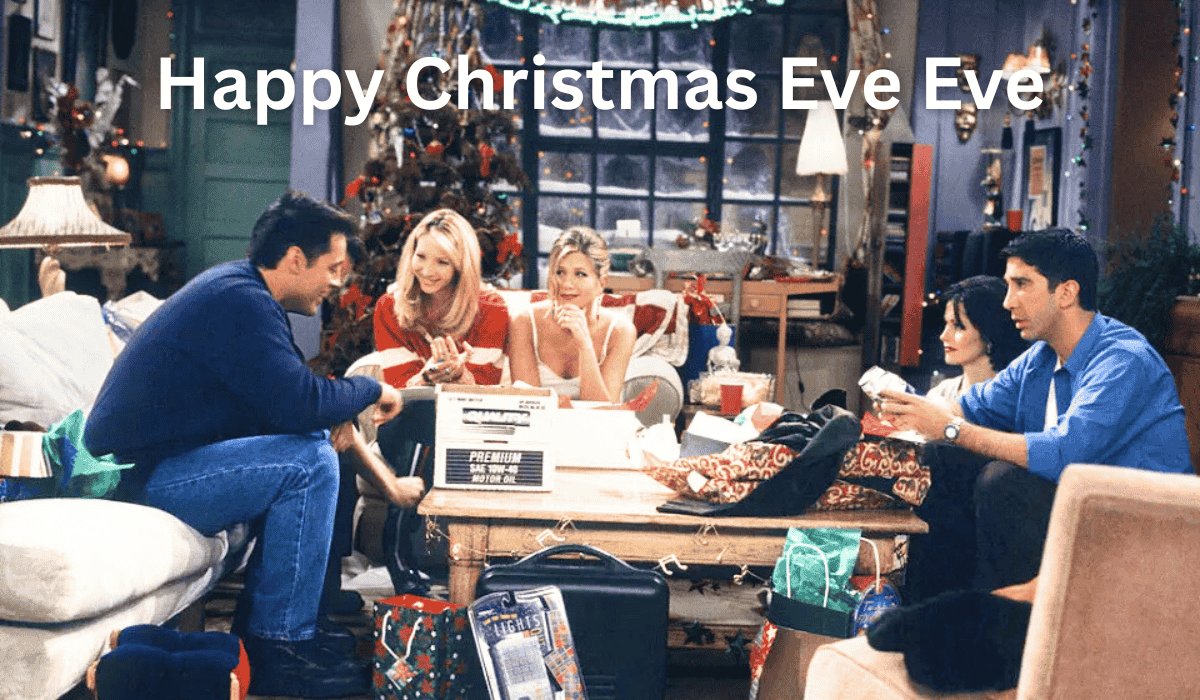
Every December 23, millions of people who haven't watched Friends in years suddenly remember that Phoebe Buffay once said "Happy Christmas Eve Eve" in a 1995 episode. They post the clip, share the meme, text the greeting to their group chats. Some genuinely believe they're participating in a cherished holiday tradition.
Others do it ironically, aware of the absurdity but unable to resist. Either way, a throwaway line from a sitcom that aired before social media existed has become an annual ritual for multiple generations. This should tell us something uncomfortable about how we create meaning in the digital age.
The Line That Should Have Died in 1995
When Lisa Kudrow's Phoebe bounced into Central Perk in Season 2, Episode 9 and cheerfully announced "Hey, Happy Christmas Eve Eve," it was a joke. Not even the episode's main joke. Just a quick character moment establishing Phoebe's quirky tendency to treat every day like it deserves special celebration. The writers likely forgot about it five minutes after filming wrapped. Nobody in 1995 imagined this three-second greeting would outlive most actual Christmas traditions.
Yet here we are, 30 years later, with "Christmas Eve Eve" appearing on office whiteboards, in corporate newsletters, across Instagram stories, and throughout TikTok feeds. Some people earnestly treat December 23 as its own mini-holiday, complete with themed activities and special meals. Others participate purely for the nostalgic callback, signaling their membership in the Friends generation through shared cultural reference. Both groups are doing the same thing: creating artificial connection through borrowed ritual.
The phenomenon reveals how desperately modern culture craves tradition in an era that systematically dismantles everything traditional. We can't agree on which holidays to celebrate, how to celebrate them, or what they mean. Extended families scatter across continents.
Religious observance declines. Consumer culture commercializes everything genuine until meaning evaporates. Into this vacuum, we import fictional traditions from television shows, treating throwaway jokes as sacred rites because we need something, anything, that feels like shared culture.
Why Millennials and Boomers Cling to Different Decades
The generational divide around Christmas Eve Eve is fascinating. Boomers who reference it are typically superfans who watched Friends during its original run and genuinely consider the show important cultural touchstone. Millennials treat it more ironically, aware they're participating in manufactured nostalgia but finding comfort in that very self-awareness. Gen Z mostly encounters it through their older colleagues and relatives, confused about why anyone cares but often playing along.
Each generation's engagement reflects their relationship with television and tradition more broadly. Boomers grew up when TV was genuinely shared experience. Everyone watched the same three networks. Water cooler conversations centered on shows everyone actually saw. A Friends episode airing in 1995 reached tens of millions of simultaneous viewers, creating genuine cultural moments. Referencing Christmas Eve Eve connects them to that era of common experience.
Millennials, by contrast, grew up as that monoculture fractured. They remember collective TV experiences but also witnessed their dissolution as streaming fragmented audiences. For them, Christmas Eve Eve represents both genuine nostalgia for their childhood viewing and ironic commentary on how we desperately cling to pop culture references as substitute for authentic tradition. They're simultaneously sincere and mocking, embodying the complexity of finding meaning in mass media.
Gen Z never experienced television as shared cultural event. They grew up with infinite streaming options, algorithmic recommendations, and completely personalized media diets. To them, the idea that millions of people all watched the same show at the same time feels as foreign as gathering around a radio. When older generations reference Christmas Eve Eve, Gen Z sees something anthropologically interesting: a ritual from an extinct culture being performed by people who remember when it mattered.
The Comfort of Borrowed Meaning
What makes Christmas Eve Eve appealing isn't its inherent meaningfulness. The phrase is nonsense. December 23 doesn't need special acknowledgment any more than December 14 or September 8. We don't celebrate "New Year's Eve Eve Eve" or "Halloween Eve Eve Eve Eve." The appeal lies entirely in shared recognition, the warm feeling of someone understanding your reference and responding appropriately.
This represents a profound shift in how we construct meaning. Traditional holidays evolved organically over centuries, accumulating layers of significance through religious observance, historical events, family practices, and cultural evolution. They mean something because generations invested them with meaning through repeated, sincere observance. Christmas Eve Eve means nothing except that we all saw the same TV show and remember the same joke.
Yet that shared viewing experience, that common reference point, generates genuine feelings of connection and belonging. When your coworker says "Happy Christmas Eve Eve" and you immediately recognize the Friends reference, you've established instant rapport.
You're part of the same cultural cohort. You share memories, even if those memories are of fictional characters in manufactured scenarios. In an atomized society where people lack shared religious beliefs, political values, or even geographic stability, this thin thread of pop culture knowledge becomes precious.
The phenomenon reveals both our adaptability and our desperation. We're adaptable enough to construct new traditions from whatever materials are available, including television catchphrases. We're desperate enough that those thin constructions feel necessary, that we'll treat a throwaway sitcom joke as meaningful ritual because we need so badly to share something with the people around us.
When Irony Becomes Sincerity Becomes Irony Again
The most fascinating aspect of Christmas Eve Eve culture is how participants toggle between ironic and sincere engagement, sometimes within the same interaction. Someone posts the Friends clip on Instagram with the caption "Happy Christmas Eve Eve!!" complete with festive emojis. Are they being ironic or sincere? The answer is yes.
This collapse of ironic distance represents a broader cultural phenomenon. We're too media-savvy to engage with anything purely sincerely, but too starved for meaning to maintain pure irony. So we do both simultaneously, feeling genuine affection for our nostalgic rituals while remaining conscious of their constructed absurdity. We're sincere about our irony and ironic about our sincerity until the distinction becomes meaningless.
Christmas Eve Eve perfectly embodies this state. People genuinely look forward to December 23 as an excuse to reference Friends. They experience authentic joy when someone responds to their greeting with recognition and reciprocation. The warm fuzzy feeling is real, not performed. Yet they're also aware the whole thing is ridiculous, that they're treating a fictional character's improvised greeting as holiday tradition. Both truths coexist without contradiction.
This might actually represent emotional sophistication rather than cultural decay. We've learned to hold multiple perspectives simultaneously, finding genuine meaning in things we simultaneously recognize as artificial. We can participate fully in traditions while maintaining critical awareness of their construction. The irony doesn't diminish the sincerity; it enriches it by acknowledging complexity.
What We Lost and What We're Building
The rise of manufactured traditions like Christmas Eve Eve highlights a genuine loss. We lack the organic, centuries-old rituals that once anchored communities and gave rhythm to years. Those traditions developed slowly, accumulating meaning through repetition across generations. They connected us to our ancestors and descendants through shared observance. Losing them creates genuine grief, even if we can't always articulate what we're mourning.
But maybe we're also building something new. Not better, necessarily, but adapted to our actual circumstances. In a world where people move frequently, families scatter geographically, and traditional institutions lose influence, we need different kinds of traditions. Pop culture references function as portable rituals that transcend location and background. You can find Friends fans anywhere. The shared reference works in Tokyo, Lagos, São Paulo, or Mumbai.
These new traditions also adapt quickly to changing circumstances. When the pandemic cancelled 2020 holiday gatherings, Christmas Eve Eve memes proliferated as people sought connection through screens instead of gatherings. The tradition scaled effortlessly from in-person greetings to digital communication. Try doing that with lighting Hanukkah candles or attending midnight mass.
The portability and flexibility come at a cost, though. Christmas Eve Eve means nothing beyond recognition. There's no deeper significance, no moral teaching, no spiritual dimension. It's purely social, existing only in the moment of shared acknowledgment. When Friends eventually fades from cultural consciousness, as it inevitably will, Christmas Eve Eve dies with it. Traditional holidays survived because they meant something beyond the immediate experience. Our borrowed rituals expire with their source material.
The Question Nobody Wants to Answer
If we're honest, Christmas Eve Eve raises an uncomfortable question: are we building culture or consuming it? Real traditions develop through repeated, sincere practice over time. People light Hanukkah candles because their ancestors did and because the ritual carries meaning beyond the action itself. Christmas Eve Eve exists because a TV show told us it exists. We're not creating it; we're repeating it.
This consumption-based approach to tradition reflects broader cultural patterns. We treat everything as content to be consumed, including meaning itself. Rather than developing our own family rituals or community practices, we adopt pre-packaged ones from media. It requires less effort, less vulnerability, less risk. If your personally invented tradition feels silly or fails to catch on, you experience genuine embarrassment. If you reference a beloved TV show, you're just participating in established culture.
The ease of borrowed traditions makes them appealing but also hollow. They cost nothing emotionally. You don't have to invest yourself in Christmas Eve Eve the way you invest in genuinely creating new family traditions. You're just joining something that already exists, contributing nothing except recognition. It's tradition as spectator sport rather than tradition as lived experience.
Yet judging this too harshly misses something important. People making the effort to say "Happy Christmas Eve Eve" are trying to connect, even if they're using borrowed language. The greeting serves as social glue, creating warmth and familiarity in an increasingly alienated world. Maybe that's enough. Maybe we should be grateful that people seek connection at all rather than criticizing the vehicles they choose.
What This Means for Future Traditions
Christmas Eve Eve offers a preview of how tradition might work in increasingly digital, globalized, secular societies. Rather than inherited rituals passed down through families and communities, we'll have media-based references that spread virally and die quickly. Netflix shows will spawn temporary traditions that last as long as the show remains culturally relevant. TikTok trends will create micro-rituals that feel meaningful for a season before being replaced.
This shift has profound implications for how we understand belonging and identity. Instead of being shaped by the traditions we inherit, we'll choose traditions a la carte from the vast catalog of available media. We'll construct our cultural identity through consumption choices, selecting which shows to watch, which memes to share, which references to adopt. This provides unprecedented freedom but also unprecedented instability.
The next generation will likely find even Christmas Eve Eve quaint and outdated. They'll have their own reference points, their own media touchstones, their own borrowed rituals. And they'll probably wonder why their parents cared so much about a sitcom that ended before smartphones existed. The cycle continues, each generation inventing new traditions from media artifacts, finding meaning in shared consumption, seeking connection through recognition.
The Verdict on Manufactured Nostalgia
So what should we make of Christmas Eve Eve? Is it harmless fun, cultural decay, or something more complex? The honest answer is all three simultaneously. It's harmless because nobody's hurt by people saying a silly greeting. It's decay because it represents our inability to create organic traditions and our dependence on media corporations to provide meaning. It's complex because it reveals genuine human needs for connection and belonging being met through imperfect but available means.
Perhaps the healthiest approach is participation with awareness. Say "Happy Christmas Eve Eve" if it brings you joy or helps you connect with others. Recognize what you're doing, understand its limitations, appreciate its functions. Don't pretend it's anything more than a shared cultural reference, but don't dismiss the value of shared references either. In a fractured world, even thin connections matter.
And maybe, just maybe, use the occasion to think about what traditions you actually want. Not which ones you can borrow from television, but which ones you want to create, practice, and pass down.
Christmas Eve Eve can remind us that we crave ritual and tradition while simultaneously showing us the limitations of borrowed meaning. The reminder might motivate us to invest in something deeper, something genuinely ours, something that might outlast the media that currently shapes us.
Until then, Happy Christmas Eve Eve. And yes, we're all aware of the irony. That's precisely the point.